


Over 60 percent of Australian businesses say they struggle to turn new leads into loyal customers. Understanding marketing funnels is vital because they provide a clear pathway from discovery to purchase, helping companies move from guesswork to measurable growth. By breaking down each stage and revealing how smart strategies convert interest into action, this guide equips Australian entrepreneurs with tools to attract, engage, and retain more customers.
Table of Contents
- Defining Marketing Funnels And Core Concepts
- Key Types Of Marketing Funnels Explored
- How Marketing Funnels Drive Lead Conversion
- Benefits For Service-Based And Retail Businesses
- Common Mistakes When Using Marketing Funnels
Key Takeaways
| Point | Details |
|---|---|
| Understanding Marketing Funnels | Marketing funnels guide consumers from awareness to purchase, helping businesses systematically nurture leads and improve targeting. |
| Diverse Funnel Types | Different types of marketing funnels, such as inbound, outbound, and sales funnels, allow businesses to tailor their strategies to specific objectives and customer behaviours. |
| Importance of Funnel Analysis | Effective funnel analysis identifies potential drop-off points, enabling businesses to optimise customer journeys and increase conversion rates. |
| Continuous Improvement | Businesses should view marketing funnels as evolving systems, continuously refining strategies based on data insights to enhance customer engagement and satisfaction. |
Defining Marketing Funnels And Core Concepts
A marketing funnel represents the strategic journey a potential customer travels from initial awareness to final purchase. At its core, this visual framework helps businesses understand and systematically guide consumer interactions across multiple stages of engagement. Marketing funnels transform complex purchasing pathways into organised, predictable processes that enable precise targeting and strategic interventions.
Traditionally, marketing funnels encompass several key stages that track customer progression: awareness, interest, consideration, intent, and purchase. These stages create a systematic approach for understanding how consumers move through decision-making processes. Each stage requires distinct marketing strategies designed to move potential customers closer to conversion, addressing specific psychological and informational needs.
The fundamental concept behind marketing funnels stems from recognising that not all potential customers will become paying clients. Typically, marketing funnels demonstrate a gradual narrowing, where large numbers of initial prospects are progressively filtered down to a smaller group of committed purchasers. This metaphorical “funnel” shape visually represents how marketing efforts strategically nurture and qualify leads, ensuring businesses can efficiently allocate resources towards the most promising potential customers.
Marketing funnels serve multiple critical functions beyond simple sales tracking. They provide businesses with actionable insights into customer behaviour, help identify potential bottlenecks in the purchasing journey, and enable data-driven refinements to marketing strategies. By meticulously mapping customer interactions and understanding conversion rates at each stage, organisations can develop more targeted, personalised approaches that dramatically improve overall marketing effectiveness.
Key Types Of Marketing Funnels Explored
Marketing funnels come in diverse configurations, each designed to address specific business objectives and customer interaction patterns. Inbound marketing funnels represent a sophisticated approach that attracts potential customers through valuable content, search engine optimisation, and strategic digital engagement. These funnels prioritise organic attraction, drawing prospects through informative blog posts, social media content, and targeted search strategies that naturally guide potential clients towards conversion.
Traditional marketing models like the AIDA framework (Awareness, Interest, Desire, Action) provide a foundational structure for understanding customer progression. Complementing this classical approach, modern marketing funnels expand into more nuanced variations. Outbound marketing funnels, for instance, rely on more direct promotional techniques such as cold calling, traditional advertising, and direct mail campaigns. These strategies actively push marketing messages towards potential customers, creating a more aggressive approach to lead generation and conversion.
Digital marketing has introduced increasingly sophisticated funnel types that leverage advanced technological capabilities. Sales funnels focus specifically on converting leads into paying customers, mapping intricate customer journeys across multiple digital touchpoints. Lead generation funnels concentrate on capturing potential customer information, using targeted landing pages, email capture mechanisms, and strategic content offers to build comprehensive prospect databases. Retention funnels represent another critical variant, designed to transform one-time purchasers into loyal, recurring customers through personalised engagement strategies and ongoing value delivery.
Understanding these diverse marketing funnel types enables businesses to craft more precise, targeted approaches. Each funnel type offers unique advantages, allowing organisations to select and customise strategies that align perfectly with their specific market positioning, customer demographics, and overarching business objectives. The key is flexibility – recognising that no single funnel model suits every business scenario, and being prepared to adapt and blend different approaches for maximum marketing effectiveness.
How Marketing Funnels Drive Lead Conversion
Marketing funnels are powerful mechanisms for systematically transforming potential prospects into committed customers through strategic, multi-stage engagement processes. Lead conversion strategies rely on understanding and optimising each interaction point within the customer journey, ensuring that businesses can effectively guide potential clients from initial awareness to final purchase.
The conversion process involves meticulously mapping customer interactions across multiple touchpoints. Funnel analysis enables businesses to identify critical moments where potential leads might disengage, allowing for targeted interventions that minimise drop-off rates. By implementing sophisticated tracking mechanisms, organisations can pinpoint exactly where prospects lose interest and develop precise strategies to re-engage or redirect them through the purchasing pathway.
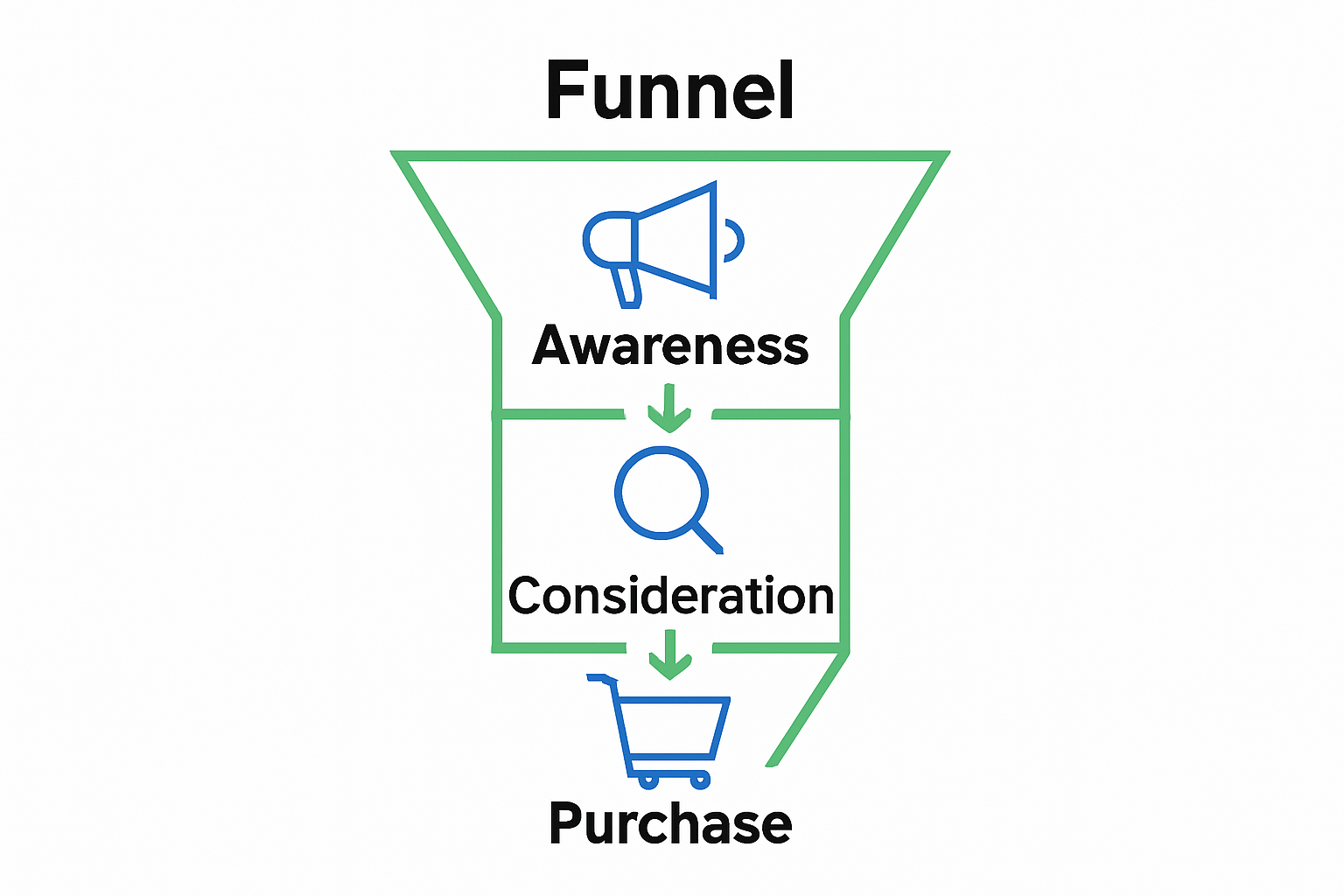
Digital marketing technologies have revolutionised lead conversion techniques, providing unprecedented insights into customer behaviour. Advanced tracking tools enable businesses to create personalised experiences that speak directly to individual customer needs and pain points. Psychological triggers play a crucial role in this process, with marketing funnels designed to address specific emotional and rational motivations that drive purchasing decisions. These sophisticated approaches allow businesses to create compelling narratives that guide potential customers seamlessly from initial curiosity to committed purchase.
Ultimately, effective marketing funnels transform raw lead generation into a structured, predictable system for business growth. By understanding each stage of customer interaction – from awareness and interest through to consideration and conversion – businesses can develop targeted strategies that dramatically improve their ability to attract, engage, and retain high-value customers. The key lies in continuous refinement, using data-driven insights to constantly optimise the funnel’s performance and responsiveness to changing market dynamics.
Benefits For Service-Based And Retail Businesses
Service-based and retail businesses gain substantial strategic advantages through carefully implemented marketing funnels, transforming their approach to customer acquisition and retention. Marketing strategies enable businesses to create targeted, data-driven approaches that systematically address customer needs across different engagement stages. These sophisticated systems allow organisations to move beyond traditional one-size-fits-all marketing techniques, developing nuanced, personalised customer experiences.

The customer journey mapping provides critical insights that directly impact business performance. By understanding precise interaction points, service providers can identify potential friction areas, streamline conversion processes, and develop targeted interventions that address specific customer pain points. Predictive analytics embedded within marketing funnels enable businesses to anticipate customer behaviour, allowing for proactive engagement strategies that significantly improve conversion rates and customer satisfaction.
Retail and service-based enterprises benefit from marketing funnels’ ability to segment and personalise customer interactions. Advanced tracking mechanisms allow businesses to create highly targeted communication strategies, delivering relevant content and offers precisely when customers are most receptive. This approach not only increases immediate sales potential but also builds long-term customer relationships by demonstrating a deep understanding of individual customer preferences and needs.
Ultimately, marketing funnels represent a sophisticated approach to business growth, providing service-based and retail organisations with unprecedented insights and strategic capabilities. By transforming raw customer data into actionable intelligence, businesses can develop more efficient marketing processes, reduce customer acquisition costs, and create more meaningful, lasting customer connections. The key lies in continuous refinement, using data-driven strategies to adapt and evolve marketing approaches in an increasingly complex and competitive business landscape.
Common Mistakes When Using Marketing Funnels
Marketing funnels can quickly become ineffective when businesses fail to understand their fundamental purpose and implementation strategies. Content marketing best practices reveal that many organisations inadvertently sabotage their marketing efforts by making critical errors that dramatically reduce conversion potential. The most significant challenges arise from a lack of strategic understanding and nuanced approach to customer engagement.
One of the most prevalent strategic mistakes involves neglecting proper funnel analysis. Businesses often fail to meticulously track where potential customers disengage, missing crucial opportunities to optimise their conversion pathways. Inadequate segmentation represents another critical error, where companies treat all potential customers identically rather than developing targeted approaches that speak directly to specific audience segments and their unique pain points.
Technical implementation errors can further undermine marketing funnel effectiveness. Many businesses create overly complex funnel structures that confuse potential customers, implementing unnecessary steps that increase friction and reduce conversion likelihood. Psychological barriers play a significant role in this process, with poorly designed funnels failing to address the emotional and rational motivations that drive purchasing decisions. Successful marketing funnels require a delicate balance between informative content, compelling storytelling, and strategic call-to-action mechanisms.
Ultimately, avoiding marketing funnel mistakes requires a holistic, data-driven approach. Businesses must continuously analyse performance metrics, remain adaptable to changing customer behaviours, and develop increasingly sophisticated strategies for engagement. The most successful organisations view their marketing funnels as living systems – constantly evolving, testing, and refining their approaches to maximize conversion potential and build meaningful customer relationships.
Unlock the Power of Marketing Funnels for Breakthrough Business Growth
If you have just explored the Complete Guide to Why Use Marketing Funnels you understand how crucial it is to move beyond just attracting leads and instead create a seamless journey that converts prospects into loyal customers. Many businesses struggle with fragmented marketing efforts, unclear customer pathways, and missed conversion opportunities. This guide highlights how strategic funnel design with stages like awareness, interest, and conversion can eliminate these pain points and focus your marketing on what truly drives results.
At Business Warriors, we specialise in implementing cutting-edge marketing vortex systems that integrate SEO, Google Ads, email marketing and social strategies into one powerful funnel. Our approach is tailored specifically for service-based businesses who want to systematically increase consistent leads and sales without wasting marketing budget. If you want to avoid the common funnel mistakes of poor segmentation and complex processes, our proven Marketing Vortex Method delivers clarity, focus and measurable growth.
Discover how you can confidently scale your online client acquisition with expert guidance from Jarrod Harman himself. Explore more insights in our Uncategorized Archives – Jarrod Harman.
Ready to transform your marketing funnel and boost conversion rates starting today Visit https://jarrodharman.com to learn how Business Warriors can craft a customised, results-driven strategy that fits your business goals. Don’t wait for leads to find you Take control of your growth journey and partner with proven experts in digital marketing now.
Frequently Asked Questions
What is a marketing funnel?
A marketing funnel is a visual framework that outlines the journey a potential customer takes from initial awareness of a product or service to the final purchase decision. It helps businesses understand and streamline customer interactions across various stages of engagement.
Why are marketing funnels important for businesses?
Marketing funnels are important because they provide businesses with actionable insights into customer behaviour, help identify bottlenecks in the purchasing process, and enable data-driven refinements to marketing strategies, ultimately improving conversion rates and customer retention.
What are the key stages of a marketing funnel?
The key stages of a marketing funnel typically include awareness, interest, consideration, intent, and purchase. Each stage requires specific marketing strategies tailored to the psychological and informational needs of potential customers.
How can businesses optimise their marketing funnels?
Businesses can optimise their marketing funnels by meticulously analysing customer interactions, identifying drop-off points, employing targeted interventions, using advanced tracking mechanisms, and continuously refining strategies based on data-driven insights.
Recommended
- 7 Essential Types of Marketing Funnels for Business Growth – Jarrod Harman
- The Essential Guide to Why Use Content Marketing – Jarrod Harman
- Content Marketing Process: Complete Expert Breakdown – Jarrod Harman
- Content Marketing Best Practices: Complete Guide – Jarrod Harman
- B2B Marketing Funnel Guide for SaaS and Real Estate Success – Kadima