


Over ninety percent of Australian businesses believe that social media marketing impacts their bottom line, yet most struggle to convert visibility into steady growth. For service-based owners, the difference between haphazard posting and a strategic digital approach can mean the gap between stagnation and thriving lead generation. Exploring proven techniques and debunking common myths, this article reveals how targeted social media strategies create real connections and drive measurable results for Australian entrepreneurs.
Table of Contents
- Social Media Marketing Defined And Debunked
- Major Platforms And Their Unique Benefits
- How Social Media Fuels Customer Engagement
- Building Brand Authority And Social Proof
- Risks, Mistakes, And Maximising ROI
Key Takeaways
| Point | Details |
|---|---|
| Strategic Approach is Crucial | Social media marketing requires a data-driven strategy, focusing on meaningful engagement rather than simple content posting. |
| Tailored Content is Key | Different platforms demand unique content strategies that align with user behaviours and preferences to enhance effectiveness. |
| Engagement Goes Beyond Likes | Authentic customer engagement is about creating interactive experiences and personalised communication that build strong brand relationships. |
| Measure and Optimise Performance | Regular performance audits and adapting strategies based on meaningful metrics are essential for maximising return on investment in social media marketing. |
Social Media Marketing Defined and Debunked
Social media marketing represents a strategic digital communication approach that goes far beyond simply posting content online. Strategic marketing efforts on social networking platforms have transformed how businesses connect with audiences, leveraging user-generated content and interactive engagement mechanisms to build brand presence.
At its core, social media marketing involves creating and sharing targeted content across various digital platforms to achieve specific business objectives. These objectives might include increasing brand awareness, generating leads, driving website traffic, or directly boosting sales. Modern social media marketing strategies require sophisticated understanding of audience demographics, platform algorithms, and content creation techniques that resonate with specific user segments.
Professional social media marketing distinguishes itself from casual posting through deliberate, data-driven approaches. Scholarly research indicates that effective social media marketing transcends simple broadcasting, instead focusing on creating meaningful interactions that build genuine community engagement. Successful strategies involve understanding platform-specific nuances, crafting compelling narratives, and developing content that provides authentic value to target audiences.
Pro tip: Develop a consistent content calendar that balances promotional material with genuinely useful, entertaining, or educational posts to maintain audience interest and algorithmic visibility.
Major Platforms and Their Unique Benefits
Comprehensive social media platform analysis reveals seven key digital networks that offer distinct marketing opportunities for Australian businesses. Each platform presents unique engagement mechanisms, audience demographics, and strategic communication channels that can dramatically transform how companies connect with potential customers.
Facebook remains a powerhouse for broad audience targeting, offering sophisticated advertising tools and extensive demographic reach. Instagram excels in visual storytelling, particularly for brands with strong aesthetic components like fashion, travel, and lifestyle businesses. Twitter provides real-time communication and thought leadership opportunities, while LinkedIn dominates professional networking and B2B marketing strategies. YouTube continues to be the premier video content platform, enabling long-form educational and brand narrative content.
Strategic approach: Different platforms require tailored content strategies that align with their specific user behaviours and algorithmic preferences. Academic research on social media marketing emphasises the importance of understanding each platform’s unique communication dynamics. This means developing platform-specific content that respects the native user experience rather than employing a one-size-fits-all approach.
Pro tip: Conduct a quarterly audit of your social media platform performance, comparing engagement rates, audience growth, and conversion metrics to refine your multi-channel marketing strategy.
Here’s a quick comparison of major social media platforms and their strategic business benefits:
| Platform | Core Strength | Typical Audience | Best Use for Brands |
|---|---|---|---|
| Broad targeting | Diverse age groups | Community building, ads | |
| Visual content | Young, style-focused | Storytelling, product visuals | |
| Real-time updates | News-oriented, urban | Thought leadership, engagement | |
| Professional links | Professionals, B2B | Networking, expert content | |
| YouTube | Video content | Wide-ranging, global | Tutorials, deeper narratives |
How Social Media Fuels Customer Engagement
Comprehensive meta-analysis of global customer engagement strategies reveals profound psychological mechanisms that transform social media interactions into meaningful business relationships. Modern customers seek more than transactional experiences they desire authentic connections, personalised communication, and brands that demonstrate genuine understanding of their needs and preferences.
Customer engagement on social media transcends simple likes and comments. It involves creating interactive experiences that invite meaningful participation, where users feel valued and heard. Successful engagement strategies leverage emotional intelligence, responding to customer feedback, sharing user-generated content, and developing narrative-driven campaigns that resonate with specific audience segments. Empirical research demonstrates that platforms enabling two-way communication significantly enhance customer loyalty and long-term brand perception.

Key engagement tactics include hosting interactive polls, responding promptly to customer queries, sharing behind-the-scenes content, and creating community-driven initiatives that make followers feel like active participants rather than passive consumers. By humanising brand interactions and demonstrating transparency, businesses can transform social media from a broadcast channel into a powerful relationship-building tool that drives trust, loyalty, and ultimately, commercial success.
Pro tip: Develop a responsive social media engagement protocol that guarantees customer messages receive a personalised response within two hours, demonstrating your commitment to genuine communication.
Building Brand Authority and Social Proof
Strategic psychological frameworks for digital credibility reveal that modern businesses must intentionally craft their online reputation through sophisticated social proof mechanisms. Brand authority is no longer about simply broadcasting achievements but creating genuine, transparent narratives that resonate with target audiences across digital platforms.
Testimonials, client success stories, and user-generated content serve as powerful validation tools that transform passive observers into active believers in a brand’s capabilities. Experimental research in B2B social media advertising demonstrates that strategic social proof can significantly enhance perceived credibility, directly influencing purchase intentions and long-term trust. This means businesses must move beyond traditional marketing approaches and develop nuanced, authentic engagement strategies that showcase real-world impact.
Effective brand authority building requires a multi-dimensional approach. This involves consistently sharing expert insights, participating in industry conversations, highlighting team expertise, and demonstrating thought leadership through high-quality content. By presenting transparent, value-driven narratives that showcase genuine expertise and client success, businesses can create a compelling digital presence that attracts and retains potential customers.
Pro tip: Create a dedicated showcase section on your website and social media platforms that prominently displays client testimonials, case studies, and measurable business outcomes to systematically build social proof.
Risks, Mistakes, and Maximising ROI
Comprehensive research on social media marketing challenges reveals that businesses often struggle with accurately measuring and maximising their digital marketing investments. The most common pitfalls include misaligned performance metrics, unrealistic expectations, and a narrow focus on direct sales rather than holistic brand engagement.
Businesses frequently make critical mistakes such as treating social media as a one-way communication channel, neglecting audience interaction, and failing to develop a nuanced, data-driven strategy. Systematic review of social media marketing risks highlights the importance of developing adaptive analytics frameworks that align social media efforts with broader organisational objectives. This means moving beyond vanity metrics like likes and followers to track meaningful indicators of business impact such as customer acquisition cost, engagement quality, and long-term brand perception.
Maximising return on investment requires a strategic, multifaceted approach. Successful businesses develop comprehensive social media strategies that integrate platform-specific insights, audience segmentation, and continuous performance optimization. This involves regular content audits, experimenting with different engagement techniques, leveraging advanced analytics tools, and maintaining a flexible approach that can quickly adapt to changing digital landscapes and audience preferences.
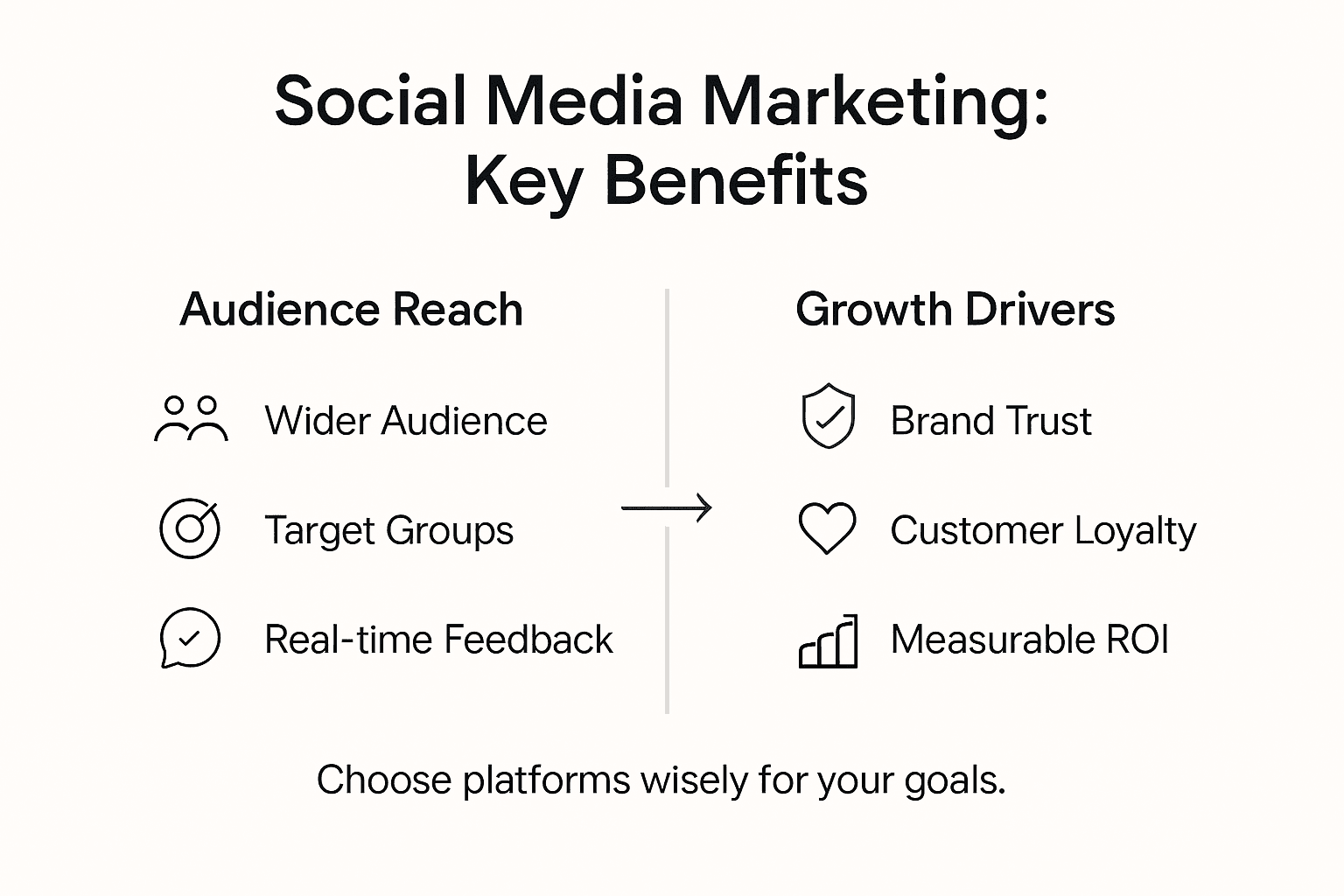
Pro tip: Implement a quarterly social media performance review that goes beyond surface-level metrics, conducting deep-dive analyses into audience behaviour, content effectiveness, and direct correlation with business outcomes.
Summary of common social media marketing risks and optimisation strategies:
| Common Risk | Example Consequence | Optimisation Strategy |
|---|---|---|
| Misaligned metrics | Wasted ad spend | Define clear KPIs |
| Unrealistic expectations | Rapid campaign drop-off | Set data-driven goals |
| Lack of audience interaction | Low engagement, lost loyalty | Encourage two-way communication |
| Focus on vanity metrics | Superficial growth | Track conversion and retention rates |
Unlock the Full Potential of Social Media Marketing for Your Business Growth
Social media marketing can feel overwhelming when trying to create consistent engagement, build authentic customer connections, and generate measurable sales results. This article highlights key challenges like developing meaningful interactions, tailoring content to platform-specific audiences, and avoiding common pitfalls such as focusing on vanity metrics. If you are a service-based business owner struggling to harness social media effectively, you are not alone. These pain points are exactly why a strategic, data-driven approach is essential.
At Business Warriors, we specialise in transforming these challenges into growth opportunities. Using our proven “Marketing Vortex Method,” we integrate social media into a comprehensive sales and marketing system designed specifically for service industries like salons, clinics, and retail businesses. From audience segmentation to advanced analytics and omnichannel campaigning, we help you move beyond basic posting to build real brand authority and customer loyalty. Learn more about our approach in the Uncategorized Archives and discover how Jarrod Harman’s expertise can guide your business towards consistent leads and measurable success at https://jarrodharman.com.
Stop leaving your business growth to chance. Take the next step with a proven system that maximises your social media impact while aligning with your broader marketing goals. Explore how we can help you refine your social media marketing strategy and scale your client acquisition efforts. Visit Business Warriors now and start turning your social media presence into a powerful growth engine.
Frequently Asked Questions
What is social media marketing?
Social media marketing is a strategic approach to creating and sharing content on social platforms to achieve specific business objectives, such as increasing brand awareness, generating leads, and driving sales.
How can social media marketing enhance customer engagement?
Social media marketing enhances customer engagement by fostering interactive experiences where brands and customers communicate directly, share feedback, and participate in community-driven initiatives, which helps build trust and loyalty.
Why is it essential to tailor content for different social media platforms?
Tailoring content for different platforms is essential because each platform has unique audience behaviours and algorithm preferences, which can significantly impact the effectiveness of marketing strategies and user engagement.
What are the common mistakes businesses make in social media marketing?
Common mistakes include treating social media as a one-way communication channel, neglecting audience interaction, and focusing only on vanity metrics instead of meaningful engagement and business impact.
Recommended
- Understanding Social Media Growth for Businesses – Jarrod Harman
- Complete Guide to the Role of Social Media Marketing – Jarrod Harman
- Understanding the Role of Social Media in Modern Business – Jarrod Harman
- Understanding the Advantage of Social Media for Businesses – Jarrod Harman
- The Future of Video Marketing: Key Trends and Strategies