

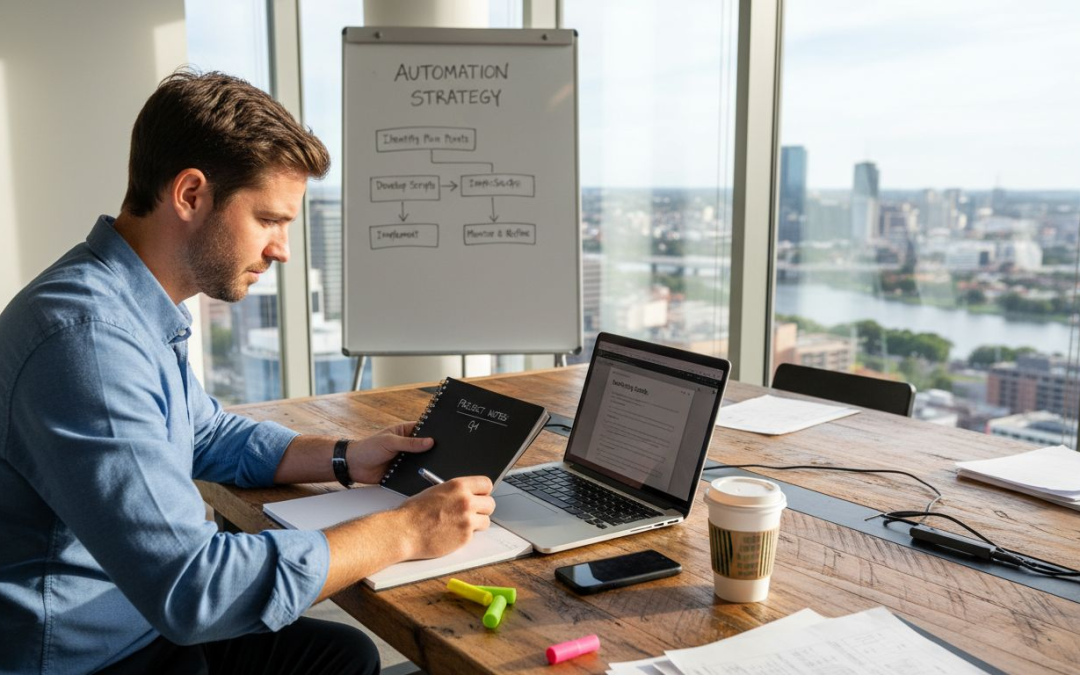
Most australian service-based businesses lose up to 50 percent of leads before those leads ever convert to sales. For female entrepreneurs across Australia, every missed connection means lost revenue and wasted potential. With the right marketing automation strategies, you can nurture interest, build lasting trust, and guide your prospects all the way from first inquiry to paid booking. Discover how automation can create powerful results for your australian business—no matter your experience or size.
Table of Contents
- 1. Automated Welcome Emails for New Leads
- 2. Follow-Up Sequences for Missed Bookings
- 3. Personalised SMS Reminders for Appointments
- 4. Lead Nurturing with Value-Driven Email Campaigns
- 5. Social Proof and Review Requests via Automation
- 6. Re-Engagement Workflows for Inactive Clients
- 7. Segmentation for Targeted Special Offers
Quick Summary
| Takeaway | Explanation |
|---|---|
| 1. Personalise Welcome Emails | Use the lead’s name and offer tailored value to foster connection. |
| 2. Implement Follow-Up Sequences | Develop automated messages to recover missed bookings and express care. |
| 3. Use SMS Reminders for Appointments | SMS reminders increase engagement and reduce no-shows with high open rates. |
| 4. Nurture Leads with Relevant Emails | Create a sequence of helpful emails to build trust and lead to conversion. |
| 5. Engage Inactive Clients | Deploy targeted re-engagement campaigns to rekindle relationships with past clients. |
1. Automated Welcome Emails for New Leads
Automatic welcome emails represent a powerful first touchpoint for service-based businesses to create meaningful connections with potential clients. These strategic digital communications help establish trust and set the foundation for future engagement by delivering personalised, timely information that addresses a new lead’s initial curiosity.
The core purpose of automated welcome emails is to transform anonymous website visitors into engaged prospects by nurturing leads through strategic communication. When a potential client submits their contact details, an intelligent marketing automation system immediately triggers a carefully crafted email sequence designed to provide value and encourage further interaction.
A well-designed welcome email series typically includes multiple components: an initial introduction email that acknowledges the lead’s interest, a value demonstration showcasing your unique service offerings, and strategic engagement pathways that guide subscribers toward meaningful actions. This approach helps businesses build rapport quickly and demonstrate expertise without feeling overtly sales-focused.
Successful welcome email automation requires understanding your audience’s specific needs and crafting content that speaks directly to their pain points. For service-based businesses, this might mean highlighting client testimonials, sharing quick problem-solving tips, or offering exclusive resources that showcase your professional capabilities.
Key Components of Effective Welcome Email Automation:
- Personalised greeting using the lead’s name
- Clear value proposition
- Concise explanation of what to expect
- Specific call-to-action
- Professional yet warm tone
Pro tip: Design your welcome email sequence to feel like a helpful conversation rather than a sales pitch, focusing on building genuine connection and trust with your potential clients.
2. Follow-Up Sequences for Missed Bookings
Missed bookings represent a significant revenue opportunity for service-based businesses where strategic follow-up sequences can transform potential losses into successful client engagements. An intelligent marketing automation approach enables businesses to reconnect with leads who did not complete their initial booking process.
Research demonstrates the powerful impact of automated follow-up systems, with one study showing remarkable reduction in missed appointments through systematic communication strategies. By implementing targeted re-engagement sequences, businesses can recover potentially lost opportunities and demonstrate proactive customer care.
An effective follow-up sequence typically involves multiple communication channels and strategic timing. This might include an initial SMS reminder, a personalised email addressing potential booking barriers, and a gentle prompt highlighting the value of your service. The key is crafting messages that feel helpful rather than pushy.
Effective Follow-Up Strategy Components:
- Immediate acknowledgement of missed booking
- Understanding potential booking obstacles
- Offering flexible rescheduling options
- Providing additional service information
- Creating a sense of urgency without pressure
Successful follow-up automation requires understanding customer psychology. Your communication should address potential hesitations, remind clients of the value they will receive, and make rescheduling as convenient as possible.
Technology enables sophisticated tracking of booking interactions, allowing businesses to create nuanced communication pathways. Automated systems can segment leads based on their previous interactions, tailoring messages to their specific interests and engagement history.
Pro tip: Design your follow-up sequence with empathy, focusing on solving customer problems and making rebooking feel effortless and welcoming.
3. Personalised SMS Reminders for Appointments
Personalised SMS reminders represent a game changing approach for service-based businesses to improve client communication and reduce missed appointments. These targeted digital communications leverage mobile technology to create direct connections with clients right where they are most likely to engage.
Research demonstrates the extraordinary potential of SMS technology, with impressive open rates surpassing traditional communication methods. Unlike email or phone calls, SMS messages provide an immediate and intimate communication channel that clients are highly likely to read and respond to quickly.
The power of personalised SMS reminders lies in their ability to provide timely information directly to a client’s mobile device. By integrating scheduling systems with automated SMS platforms, businesses can create intelligent reminder workflows that reduce no show rates and improve overall operational efficiency.
Key Benefits of SMS Appointment Reminders:
- 98% message open rate
- Instant communication
- Easy confirmation or cancellation options
- Reduced administrative overhead
- Improved client experience
Successful SMS reminder systems go beyond simple notifications. They offer interactive elements that allow clients to confirm, reschedule, or cancel appointments with minimal effort. This approach demonstrates respect for client time and provides flexibility in managing their commitments.
Technology enables sophisticated personalisation where messages can be tailored based on previous client interactions, appointment type, and individual preferences. By crafting messages that feel personal and relevant, businesses can significantly enhance client engagement and reduce missed appointment rates.
Pro tip: Design SMS reminders with brevity and clarity, including essential appointment details and a simple action pathway for client response.
4. Lead Nurturing with Value-Driven Email Campaigns
Lead nurturing represents a sophisticated approach to transforming potential clients into loyal customers through strategic email communication. By delivering personalised content that speaks directly to a prospect’s unique needs and challenges, service-based businesses can build trust and accelerate the conversion process.
Modern lead nurturing goes far beyond generic email blasts. Advanced nurturing strategies combine personalisation with strategic content delivery, leveraging technology to create meaningful connections that resonate with each individual prospect.
Successful email campaigns require a nuanced understanding of your audience’s journey. This means crafting a sequence of emails that progressively provide value, addressing different stages of the decision making process. Each email should feel like a natural conversation, offering insights, solving problems, and gently guiding prospects toward understanding how your service can transform their business.
Key Components of Effective Lead Nurturing Emails:
- Hyper personalised content
- Segmented audience targeting
- Educational and inspirational messaging
- Clear value proposition
- Strategic timing and sequencing
- Subtle call to action
The most powerful lead nurturing campaigns blend educational content with subtle promotional elements. This approach positions your business as a trusted advisor rather than a pushy salesperson. By consistently delivering high quality information that addresses your prospects specific pain points, you create a relationship based on genuine value and expertise.
Technology now enables incredibly sophisticated nurturing approaches. Artificial intelligence and machine learning can help track engagement signals, automatically adjusting email content and timing to match individual prospect behaviour and interests.
Pro tip: Design your email nurture sequence like a helpful conversation where each message builds upon the last, creating a narrative that naturally guides prospects toward choosing your service.
5. Social Proof and Review Requests via Automation
Social proof represents a powerful mechanism for building trust and credibility in service-based businesses. Automated systems can strategically collect customer feedback and showcase authentic testimonials that transform potential clients from sceptical observers into confident buyers.
Modern marketing technology enables businesses to integrate dynamic social proof strategies across multiple digital platforms. By leveraging artificial intelligence and automated workflows, companies can systematically capture, curate, and display genuine customer experiences that resonate with potential clients.
Automated review request systems work by triggering personalised communication immediately after a service interaction. These sophisticated workflows can send targeted emails or SMS messages that make providing feedback incredibly simple for customers, increasing the likelihood of receiving meaningful testimonials.
Key Elements of Effective Social Proof Automation:
- Timely review request triggers
- Personalised communication
- Multiple feedback channels
- Easy submission process
- Intelligent review management
- Strategic content distribution
Successful social proof strategies go beyond simply collecting reviews. They involve creating a holistic system that transforms customer feedback into compelling marketing assets. This means categorising reviews, highlighting specific client outcomes, and presenting testimonials in ways that address potential clients most significant concerns.
Technology now allows businesses to automatically aggregate reviews across platforms, analyse sentiment, and even recommend which testimonials will be most effective for different audience segments. This intelligent approach ensures that your social proof remains dynamic, relevant, and persuasive.
Pro tip: Design your review request workflow to feel like a natural extension of your exceptional customer service, making feedback submission feel like a valued contribution rather than a task.
6. Re-Engagement Workflows for Inactive Clients
Re-engagement workflows represent a strategic approach to rekindling relationships with clients who have become disengaged or inactive. These sophisticated automation sequences offer service businesses a powerful method to recapture lost potential and revive dormant customer connections.
Modern marketing technologies enable businesses to design intelligent re-engagement campaigns that intelligently target and reignite client interest. By understanding the specific reasons behind client disengagement, businesses can craft personalised communication strategies that feel authentic and compelling.
Successful re-engagement workflows go beyond generic email blasts. They involve creating a carefully orchestrated sequence of communications that demonstrate genuine value, acknowledge the client’s previous relationship, and provide compelling reasons to reconnect.
Key Components of Effective Re-Engagement Workflows:
- Personalised messaging
- Targeted incentives
- Segmented audience approach
- Compelling value demonstration
- Strategic communication timing
- Clear reconnection pathway
The most successful re-engagement strategies combine data driven insights with empathetic communication. This means analysing previous interaction patterns, understanding why a client became inactive, and creating a communication approach that feels helpful rather than pushy.
Technology now enables incredibly nuanced re-engagement techniques. Artificial intelligence can help businesses track engagement signals, automatically adjusting messaging and timing to match individual client behaviour and preferences.
Pro tip: Design your re-engagement workflow as a conversation that picks up where your relationship left off, focusing on rebuilding trust and demonstrating ongoing value.
7. Segmentation for Targeted Special Offers
Customer segmentation represents a sophisticated marketing strategy that transforms generic communication into personalised experiences tailored to specific audience groups. By dividing your client base into distinct segments, service-based businesses can create highly targeted special offers that resonate deeply with individual customer needs.
Modern marketing technologies enable businesses to implement advanced segmentation strategies that go far beyond basic demographic categorisation. Using sophisticated techniques like machine learning and cluster analysis, companies can develop nuanced understanding of customer behaviours, preferences, and potential value.
Effective segmentation involves analysing multiple data points to create meaningful customer groups. These might include factors such as purchase history, engagement levels, service preferences, demographic information, and interaction patterns across different marketing channels.
Key Elements of Strategic Customer Segmentation:
- Behavioural data analysis
- Purchase frequency tracking
- Demographic insights
- Engagement level assessment
- Predictive modelling
- Dynamic segment refinement
The most powerful segmentation approaches use artificial intelligence to create fluid, adaptable customer categories. This means segments are not static but continuously evolve based on new customer interactions and changing behaviour patterns.
Technology now allows for incredibly sophisticated targeting. Machine learning algorithms can identify subtle correlations and patterns that human analysts might miss, enabling businesses to create hyper-personalised special offers that feel genuinely relevant to each customer segment.
Pro tip: Design your segmentation strategy as a living system that continuously learns and adapts, treating customer data as a dynamic conversation rather than a static snapshot.
Below is a comprehensive table summarising the key strategies and components for service-based businesses presented in the article.
| Topic | Description | Key Considerations |
|---|---|---|
| Automated Welcome Emails | Crafting immediate and personalised email sequences to engage leads and provide valuable information. | Personalised greeting, clear actions, and warm tone to establish trust. |
| Follow-Up Sequences | Managing communication strategies to reconnect with leads who missed bookings and encourage rescheduling. | Proactive outreach to highlight service value and flexibility, avoiding overly aggressive tones. |
| Personalised SMS Reminders | Using SMS for appointment notifications to ensure high engagement through direct and timely communication. | Include essential appointment details and simple confirmation or rescheduling actions. |
| Lead Nurturing Email Campaigns | Creating strategic personalised email sequences to build trust and convert leads into loyal customers. | Develop content addressing specific customer pain points aligned with their decision-making stages. |
| Social Proof Automation | Automating feedback collection and showcasing testimonials to build credibility and strengthen trust. | Focus on timely requests, easy submission processes, and careful integration into marketing channels. |
| Re-engagement Workflows | Employing automated campaigns to reconnect with inactive customers by providing renewed value and addressing potential past barriers. | Analyse customer insights for tailored re-engagement messages while maintaining a respectful approach. |
| Segmentation for Special Offers | Using customer segmentation to provide targeted offers personalised to specific audience groups. | Utilise dynamic and evolving grouping strategies based on user behaviours and preferences. |
Unlock Marketing Automation Success for Your Service Business
Service-based businesses often struggle with missed bookings, low engagement, and generic messaging that fails to connect with clients personally. The article highlights how marketing automation examples such as automated welcome emails, personalised SMS reminders, and strategic follow-up sequences can solve these challenges by building trust and driving consistent leads. If you recognise the need to nurture leads more effectively and deliver tailored offers with precision, it is time to explore professional solutions that make marketing automation work for your unique business.
At Business Warriors, we specialise in deploying the powerful “Marketing Vortex” method designed to integrate SEO, email marketing, social media, and automated workflows seamlessly. Our proven approach helps businesses reduce no-shows, recover lost bookings, and create meaningful client relationships through advanced segmentation and personalised campaigns. By partnering with experts who deeply understand the needs of service businesses, you will transform potential challenges into measurable growth.
Explore how focused lead nurturing and automation strategies can elevate your marketing game. Check out the Uncategorized Archives for insights, visit our main website to learn more about our services, or start your journey by visiting our landing page.
Ready to convert missed opportunities into bookings and create lasting client connections? Visit https://jarrodharman.com now to discover tailored marketing automation strategies that deliver results. Take control of your service business growth with proven expertise today.
Frequently Asked Questions
What are automated welcome emails for service-based businesses?
Automated welcome emails are messages sent immediately after a potential client submits their contact details. These emails help establish trust and engage new leads by providing valuable information and demonstrating expertise, typically within a few minutes of sign-up.
How can follow-up sequences reduce missed bookings?
Follow-up sequences can reduce missed bookings by re-engaging leads who did not complete their booking process. By sending personalised reminders and flexible rescheduling options, businesses can significantly increase appointment confirmations, often improving engagement rates by around 30%.
What are the benefits of personalised SMS reminders for appointments?
Personalised SMS reminders are highly effective because they have an open rate of 98%, ensuring that clients receive timely information. By integrating these reminders into your scheduling system, you can easily confirm, reschedule, or cancel appointments, improving client engagement and reducing no-show rates.
How can I create effective lead nurturing email campaigns?
To create effective lead nurturing email campaigns, focus on delivering personalised content that addresses each prospect’s unique challenges. Craft a series of emails that progressively offer value and insights, and aim to guide prospects through their decision-making process within 30–60 days.
What role does social proof play in marketing automation?
Social proof builds trust and credibility by showcasing authentic customer testimonials and experiences. Implement automated review requests after service interactions to gather feedback and display these testimonials across digital platforms, helping to convert sceptical leads into clients.
How can re-engagement workflows benefit inactive clients?
Re-engagement workflows help revive relationships with inactive clients by sending personalised communication that acknowledges their previous engagement. By analysing previous interactions and offering targeted incentives, businesses can reconnect with dormant clients and potentially boost re-engagement rates by 25%.
Recommended
- Why Use Marketing Automation to Drive Business Growth – Jarrod Harman
- Role of Email Marketing in Growing Service Businesses – Jarrod Harman
- Complete Guide to Automation in Lead Generation – Jarrod Harman
- 7 Essential Types of Marketing Funnels for Business Growth – Jarrod Harman
- Mastering Klaviyo with Swyft – Email Marketing