


Running a beauty or wellness business in Australia means juggling client expectations and fierce competition. Finding ways to turn interested prospects into loyal customers feels challenging when every interaction matters. Understanding modern lead conversion techniques can help you focus on high-quality leads, nurture relationships, and drive revenue growth. This guide highlights targeted research and actionable strategies proven to increase client acquisition, making business growth more predictable and sustainable.
Table of Contents
- Lead Conversion Strategies Explained Thoroughly
- Varieties And Stages Of Lead Conversion
- Essential Buyer Persona And Targeting Tactics
- Omnichannel Marketing Vortex Strategies In Action
- The Role Of Ai And Automation In Conversions
- Mistakes To Avoid And Measuring Performance
Key Takeaways
| Point | Details |
|---|---|
| Strategic Engagement is Crucial | Effectively converting leads requires targeted communication that aligns with customer needs throughout their journey. |
| Data-Driven Approach | Utilising customer insights and analytics enables businesses to personalise interactions and improve conversion rates. |
| AI and Automation Enhance Processes | Implementing AI tools can streamline workflows and provide predictive insights, significantly boosting lead conversion efficiency. |
| Avoid Common Pitfalls | Maintaining consistency in follow-up and refining communication strategies are essential for successful lead conversion. |
Lead conversion strategies explained thoroughly
Lead conversion is the strategic process of transforming potential prospects into paying customers through targeted engagement and systematic approach. By understanding how to effectively move potential clients through your sales pipeline, businesses can significantly increase their revenue and growth potential.
The core of successful lead conversion involves multiple sophisticated strategies, including:
- Targeted Research: Understand your ideal customer profile
- Lead Scoring: Prioritise high-potential prospects
- Multichannel Engagement: Interact across digital platforms
- Personalised Communication: Tailor messaging to individual needs
- Consistent Follow-up: Maintain persistent yet non-intrusive contact
Modern lead conversion requires a data-driven methodology. Precise customer journey mapping enables businesses to track interactions, predict behaviours, and design targeted interventions that convert interested parties into committed customers.
Successful conversion strategies also demand tight alignment between marketing and sales teams. This collaboration ensures that leads are not just generated but systematically nurtured through each stage of the purchasing decision. By implementing advanced tracking mechanisms and developing responsive communication protocols, organisations can dramatically improve their conversion rates.
Key Performance Indicators (KPIs) for measuring lead conversion success include:
- Conversion rate percentage
- Average time from lead to sale
- Customer acquisition cost
- Lead-to-customer ratio
- Revenue generated per lead
Effective lead conversion is not about quantity, but quality of engagement.
Pro tip: Regularly audit and refine your lead conversion process by tracking detailed metrics and implementing continuous improvement strategies.
Varieties and stages of lead conversion
Lead conversion represents a dynamic, multi-stage process where potential customers transition from initial awareness to committed buyers. Complex buyer journeys require nuanced understanding of individual customer needs and strategic engagement approaches.
The lead conversion journey typically encompasses several distinctive stages:
- Awareness Stage: Initial customer discovery of product/service
- Interest Stage: Developing curiosity and exploring potential solutions
- Consideration Stage: Actively evaluating different options
- Decision Stage: Preparing to make a purchasing commitment
- Retention Stage: Transforming one-time buyers into loyal customers
Each stage demands unique communication strategies and targeted interventions. Successful businesses recognise that lead conversion is not a linear progression but a sophisticated, adaptive process requiring continuous refinement and personalised approach.

Key conversion varieties include:
Here’s a comparison of key lead conversion methods and their business impact:
| Conversion Method | Distinctive Feature | Typical Application | Business Impact |
|---|---|---|---|
| Digital Conversion | Automated online interactions | Web-based lead forms, email, social | Scales reach and lowers acquisition cost |
| Direct Sales Conversion | Personal relationship building | Telemarketing, face-to-face meetings | Increases trust and closes complex sales |
| Referral Conversion | Leverages social proof | Customer recommendations, partnerships | Elevates trust and improves conversion rate |
| Content-Driven Conversion | Educational resource focus | Webinars, blogs, whitepapers | Positions brand as authority |
| Automated Conversion | AI-driven process automation | Chatbots, automated messaging | Accelerates response and personalisation |
- Digital Conversion: Online interactions through websites, social media, and email marketing
- Direct Sales Conversion: Personal interactions via phone, meetings, or presentations
- Referral Conversion: Leads generated through existing customer recommendations
- Content-Driven Conversion: Attracting leads through valuable, informative resources
- Automated Conversion: Using sophisticated marketing technologies and AI-driven interactions
Effective lead conversion transcends transactional interactions, focusing on building genuine relationships.
Pro tip: Develop a comprehensive lead tracking system that monitors progression through each conversion stage, enabling real-time strategy adjustments.
Essential buyer persona and targeting tactics
Buyer personas represent sophisticated, data-driven profiles that transform marketing strategies from generic approaches to precisely targeted communications. Detailed market segmentation enables businesses to craft hyper-personalised engagement strategies that resonate deeply with specific customer groups.
Creating comprehensive buyer personas involves gathering critical insights across multiple dimensions:
- Demographic Information: Age, gender, income, location
- Professional Context: Job role, industry, career aspirations
- Behavioural Patterns: Online interactions, purchasing habits
- Psychological Attributes: Motivations, challenges, decision-making triggers
- Communication Preferences: Preferred channels, content types
Effective targeting tactics go beyond traditional demographic profiling. Modern businesses must develop nuanced understanding of customer psychology, leveraging advanced data collection methods and sophisticated analytical tools to create dynamic, evolving persona representations.
Key targeting strategies include:
The following table contrasts traditional lead targeting with AI-powered persona strategies:
| Aspect | Traditional Targeting | AI-Powered Targeting |
|---|---|---|
| Data Sources | Manual surveys, CRM entries | Real-time behavioural analytics |
| Personalisation Level | Basic demographic segments | Hyper-personalised at individual level |
| Adaptability | Updated periodically | Continuously adapts with new data |
| Campaign Effectiveness | Moderate conversion rates | Higher, more efficient conversions |
- Psychographic Segmentation: Understanding deeper emotional drivers
- Behavioural Targeting: Tracking and predicting customer actions
- Predictive Persona Modelling: Using AI to anticipate customer needs
- Cross-Channel Integration: Maintaining consistent persona insights
- Continuous Persona Refinement: Regularly updating persona profiles
Successful targeting transforms generic marketing into personalised customer conversations.
Pro tip: Implement a systematic quarterly review process to update and refine your buyer personas, ensuring they remain accurate and relevant.
Omnichannel marketing vortex strategies in action
Omnichannel marketing represents a sophisticated approach to customer engagement that transcends traditional single-channel communication strategies. Seamless customer experiences require businesses to create integrated, adaptive interactions that flow effortlessly across multiple touchpoints.
Key components of effective omnichannel strategies include:
- Digital Platform Integration: Synchronising websites, mobile apps, and social media
- Consistent Messaging: Maintaining uniform brand voice across channels
- Real-Time Data Synchronisation: Tracking customer interactions instantly
- Personalised Customer Journeys: Adapting communications based on individual preferences
- Unified Customer Profiles: Creating comprehensive interaction histories
Successful omnichannel approaches demand sophisticated technological infrastructure and strategic alignment. Businesses must invest in advanced customer relationship management (CRM) systems, analytics platforms, and integrated communication technologies that enable seamless information flow and personalised engagement.
Critical implementation strategies encompass:
- Technology Stack Consolidation: Integrating disparate marketing systems
- Cross-Channel Data Analytics: Understanding customer behaviour comprehensively
- Automated Interaction Mapping: Tracking customer touchpoints automatically
- Predictive Engagement Modelling: Anticipating customer needs proactively
- Continuous Performance Optimization: Regularly refining interaction strategies
Omnichannel success transforms disconnected interactions into cohesive customer experiences.
Pro tip: Develop a centralized customer data platform that aggregates insights from all channels, enabling real-time personalisation and strategic decision-making.
The role of AI and automation in conversions
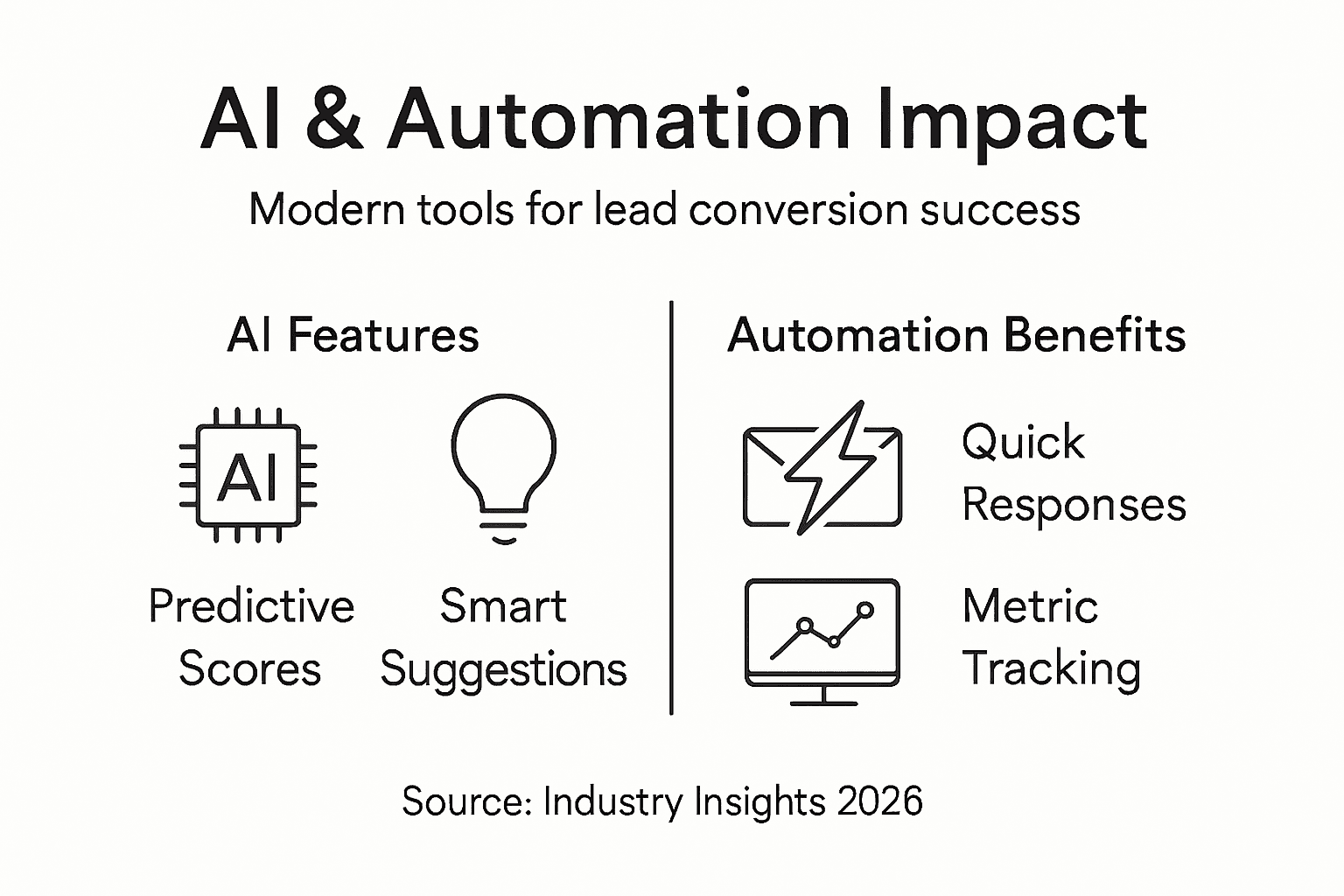
Artificial Intelligence has revolutionised marketing and sales strategies, transforming how businesses approach lead generation and conversion processes. AI-powered marketing solutions enable hyper-personalised interactions that dramatically improve customer engagement and conversion rates.
Key AI and automation capabilities include:
- Predictive Lead Scoring: Identifying highest-potential prospects
- Automated Workflow Management: Streamlining repetitive tasks
- Dynamic Content Personalization: Tailoring messaging in real-time
- Intelligent Customer Segmentation: Creating precise targeting groups
- Conversational AI Interfaces: Enabling 24/7 customer interactions
Advanced AI technologies are transforming traditional sales approaches by providing unprecedented insights into customer behaviour and preferences. Sophisticated machine learning algorithms can analyse complex datasets, predict customer needs, and recommend optimal engagement strategies with remarkable precision.
Critical AI-driven conversion strategies encompass:
- Intelligent Lead Qualification: Using advanced algorithms to rank prospects
- Automated Communication Workflows: Triggering personalised interactions
- Predictive Customer Behaviour Modelling: Anticipating purchase likelihood
- Real-Time Performance Optimization: Continuously refining engagement tactics
- Integrated Data Intelligence: Consolidating insights across platforms
AI transforms data into actionable intelligence, turning potential leads into committed customers.
Pro tip: Implement a robust AI-powered CRM system that integrates machine learning capabilities to continuously improve lead conversion strategies.
Mistakes to avoid and measuring performance
Lead conversion requires strategic precision and continuous performance evaluation to maintain effective sales pipelines. Comprehensive lead scoring models help businesses accurately qualify leads and mitigate potential conversion challenges.
Common mistakes that undermine lead conversion effectiveness include:
- Inconsistent Follow-up: Failing to respond promptly to potential leads
- Generic Communication: Using one-size-fits-all messaging
- Neglecting Data Quality: Maintaining outdated or inaccurate customer information
- Overlooking Lead Nurturing: Rushing sales processes
- Ignoring Feedback Loops: Not learning from unsuccessful conversion attempts
Measuring performance demands a holistic approach to tracking key performance indicators that provide meaningful insights into conversion strategies. Businesses must develop robust metrics that go beyond surface-level measurements, diving deep into the nuanced dynamics of customer interactions and sales potential.
Critical performance metrics to monitor include:
- Lead Conversion Rate: Percentage of leads transformed into customers
- Lead Response Time: Speed of initial engagement
- Customer Acquisition Cost: Total investment per converted lead
- Lead Quality Score: Predictive potential of incoming leads
- Conversion Velocity: Time taken to move leads through sales funnel
Performance measurement is not about numbers, but understanding the story behind the data.
Pro tip: Implement a dynamic dashboard that tracks real-time conversion metrics, enabling immediate strategic adjustments.
Take Your Lead Conversion Strategies to the Next Level with Business Warriors
The article highlights the challenges in transforming potential leads into loyal customers through strategic, data-driven approaches like targeted research, personalised communication and omnichannel engagement. If you are striving to overcome inconsistent follow-ups, generic messaging or poor lead nurturing, you are not alone. The need for sophisticated, AI-backed systems and seamless sales-to-marketing alignment is greater than ever before. You want more than just numbers — you want real results that build relationships and grow your business sustainably.
Discover how Business Warriors, with their unique Marketing Vortex Method, specialises in crafting scalable, omnichannel sales and marketing systems designed specifically for service-based businesses like salons, clinics and ecommerce stores. Visit Uncategorized Archives – Jarrod Harman to explore practical insights and join the many Australian business owners gaining clarity and measurable success. Take control of your lead conversion journey now by visiting https://jarrodharman.com and learn how to implement proven strategies that generate consistent, qualified leads and boost sales. Act today and transform your prospects into paying customers with expert guidance tailored to your industry and goals.
Frequently Asked Questions
What are lead conversion strategies?
Lead conversion strategies are systematic approaches designed to transform potential prospects into paying customers through targeted engagement and a deep understanding of customer needs.
How do targeted research and lead scoring improve lead conversion?
Targeted research enables businesses to understand their ideal customer profile, while lead scoring prioritises high-potential prospects, ensuring resources are focused on leads most likely to convert.
Why is omnichannel marketing important for lead conversion?
Omnichannel marketing ensures a seamless customer experience across multiple touchpoints, allowing businesses to maintain consistent messaging and personalised communication that enhances engagement and conversion rates.
How can AI and automation enhance the lead conversion process?
AI and automation improve the lead conversion process by providing predictive lead scoring, automated workflows, dynamic content personalisation, and intelligent customer segmentation, resulting in more effective and timely customer interactions.
Recommended
- 10 Effective Lead Generation Strategies for Businesses – Jarrod Harman
- How to Generate Leads in Digital Marketing: Proven Strategies – Jarrod Harman
- Lead Generation Strategies – Boost Sales Online Fast – Jarrod Harman
- How to Increase Website Leads with Omnichannel Marketing – Jarrod Harman
- Sales Funnel Real Estate: Boost Conversions Fast