


Running a service-based business in Perth means the next client is always top of mind, yet relying on word-of-mouth or old methods rarely fills your books. Busy female business owners know that attracting quality leads takes more than a simple website or an occasional social post. Embracing a structured, multi-channel lead generation campaign can turn sporadic inquiries into a reliable stream of prospects eager for your services, letting you reclaim your time and plan for real growth.
Table of Contents
- What Is A Lead Generation Campaign?
- Types Of Lead Generation Strategies Online
- Key Elements For Successful Campaigns
- Common Pitfalls And How To Avoid Them
Key Takeaways
| Point | Details |
|---|---|
| Structured Lead Generation Campaigns Drive Growth | Implementing a structured lead generation campaign turns sporadic inquiries into a predictable flow of qualified prospects. |
| Multi-Channel Approach is Essential | Combine SEO, paid ads, email marketing, and social media to create a cohesive strategy that reinforces each channel. |
| Quality Over Quantity Matters | Focus on attracting high-quality leads from your ideal customer profile instead of generating a high volume of unqualified leads. |
| Consistent Nurturing and Follow-Up Are Crucial | Automated follow-up sequences ensure no leads fall through the cracks, enhancing conversion rates and nurturing relationships. |
What Is a Lead Generation Campaign?
A lead generation campaign is a structured, multi-channel effort designed to attract potential customers and convert them into interested prospects. Rather than waiting for people to find you, these campaigns actively reach out, engage, and qualify people who fit your ideal customer profile.
At its core, a lead generation campaign uses a blend of sales and marketing techniques to systematically identify, attract, and nurture prospects across digital channels. For service-based businesses in Perth—whether you’re running a salon, clinic, or professional practice—this means moving beyond traditional cold calling to leverage automation, data, and targeted messaging.
How Lead Generation Campaigns Work
These campaigns operate across multiple touchpoints simultaneously:
- Awareness stage: You catch attention through SEO, paid Google Ads, Meta advertising, or social media content
- Interest stage: Prospects engage with your website, landing pages, or email sequences
- Conversion stage: They provide contact details, book a consultation, or request more information
- Nurturing stage: You build relationships through follow-up messaging and personalised communication
The real power lies in combining these channels strategically. A well-designed campaign doesn’t rely on just one method; it uses SEO to drive organic traffic, Google Ads to capture high-intent searchers, email marketing to nurture leads, and social media content to build credibility and top-of-mind awareness.
Why Your Service Business Needs This Approach
Your clients don’t all discover you the same way. One prospect might find you through a Google search, another through a Facebook ad, and a third through a referral. A lead generation campaign meets them wherever they are and guides them toward booking with you.
Without a structured campaign, you’re relying on word-of-mouth or hoping people stumble across you online. That’s not scalable. A campaign turns discovery into a repeatable system.
A structured lead generation campaign transforms sporadic inquiries into a predictable, sustainable flow of qualified prospects ready to buy your services.
The Core Elements You’ll Need
Successful campaigns typically include:
- A clear understanding of your ideal client profile
- High-performing landing pages or website pages optimised for conversions
- Compelling messaging that speaks to your prospect’s pain points
- Multiple ad and content channels working together (SEO, paid ads, social, email)
- A tracking system to measure which campaigns drive actual bookings
- Follow-up sequences to convert interested prospects into paying clients
This integrated approach—similar to what Business Warriors calls the Marketing Vortex—ensures that every pound spent on marketing works harder because channels reinforce each other rather than operating in isolation.
Pro tip: Start by identifying which channels your ideal clients already use—Google Search, Facebook, Instagram, or LinkedIn—then build your campaign to meet them there first before expanding to additional channels.
Types of Lead Generation Strategies Online
Online lead generation isn’t one-size-fits-all. Different strategies work for different business types, audiences, and goals. The most successful campaigns combine multiple approaches rather than relying on a single channel.
Here are the primary strategies you’ll encounter and how they work for service-based businesses in Perth.
Search Engine Optimisation (SEO)
SEO focuses on getting found when potential clients actively search for your services. When someone in Perth searches “best dermatologist” or “hair salon near me,” you want your business appearing at the top of Google results.
This strategy works by:
- Optimising your website content for relevant keywords your ideal clients use
- Building authority through quality backlinks and mentions
- Improving website speed, mobile-friendliness, and user experience
- Creating detailed service pages that answer common questions
SEO takes time but generates highly qualified leads—people actively looking for what you offer.

Paid Advertising (Google Ads and Meta Ads)
Paid advertising puts your business directly in front of interested prospects right now. Google Ads targets people searching for your services, whilst Meta Ads (Facebook and Instagram) target specific demographics and interests.
These campaigns work quickly and give you immediate visibility. Unlike SEO, you control exactly when your ads appear and how much you spend daily.
Both approaches use AI-enhanced targeting and personalisation to reach the right people with the right message at the right time.
Content Marketing and Blogging
Content marketing builds trust by providing valuable information before prospects become clients. Blog posts, guides, videos, and webinars address pain points your ideal clients experience.
A salon might create content about hair care routines, whilst a clinic might publish guides about common health concerns. This positions you as an expert and keeps your business top-of-mind.
Email Marketing
Once you capture a prospect’s email, personalised email campaigns nurture them toward a booking. Email sequences might include educational content, special offers, or appointment reminders.
Email has one of the highest returns on investment because you’re communicating directly with people who’ve already shown interest.
Social Media Engagement and Advertising
Social platforms like Instagram, Facebook, and LinkedIn let you build community, showcase your work, and run targeted ads. Service businesses benefit enormously from visual content—before-and-after photos, client testimonials, behind-the-scenes videos.
Social media serves dual purposes: organic engagement builds loyalty, whilst paid social ads capture new leads.
Here is a summary comparing popular online lead generation strategies for service-based businesses:
| Channel | Typical Use Case | Speed of Results | Key Strength |
|---|---|---|---|
| Search Engine Optimisation (SEO) | Reaching active searchers | Slow (months) | High-quality, intent-driven leads |
| Google/Meta Ads | Immediate visibility to ideal clients | Fast (days) | Precise audience targeting |
| Content Marketing | Building authority and trust | Medium (weeks-months) | Educates, nurtures, builds trust |
| Email Marketing | Nurturing warm leads | Fast after list grows | High ROI, direct communication |
| Social Media Advertising | Brand awareness and lead capture | Fast to medium | Very visual, drives engagement |
The most effective online lead generation strategies work together, not in isolation. Each channel reinforces the others, creating momentum that drives more bookings.
How These Strategies Connect
Successful campaigns don’t pick one strategy and ignore the rest. Instead, they layer them:
- SEO brings organic traffic to your website
- Google Ads captures high-intent searchers immediately
- Content establishes authority and answers questions
- Email nurtures leads you’ve captured
- Social media builds community and brand awareness
This integrated approach—the Marketing Vortex—ensures every marketing pound works harder because channels reinforce each other.
Pro tip: Start with the two channels where your ideal clients spend time most, master those completely, then expand to additional channels once you’re seeing consistent results.
Key Elements for Successful Campaigns
Not every lead generation campaign succeeds. The difference between campaigns that drive consistent bookings and those that fizzle comes down to having the right foundational elements in place.
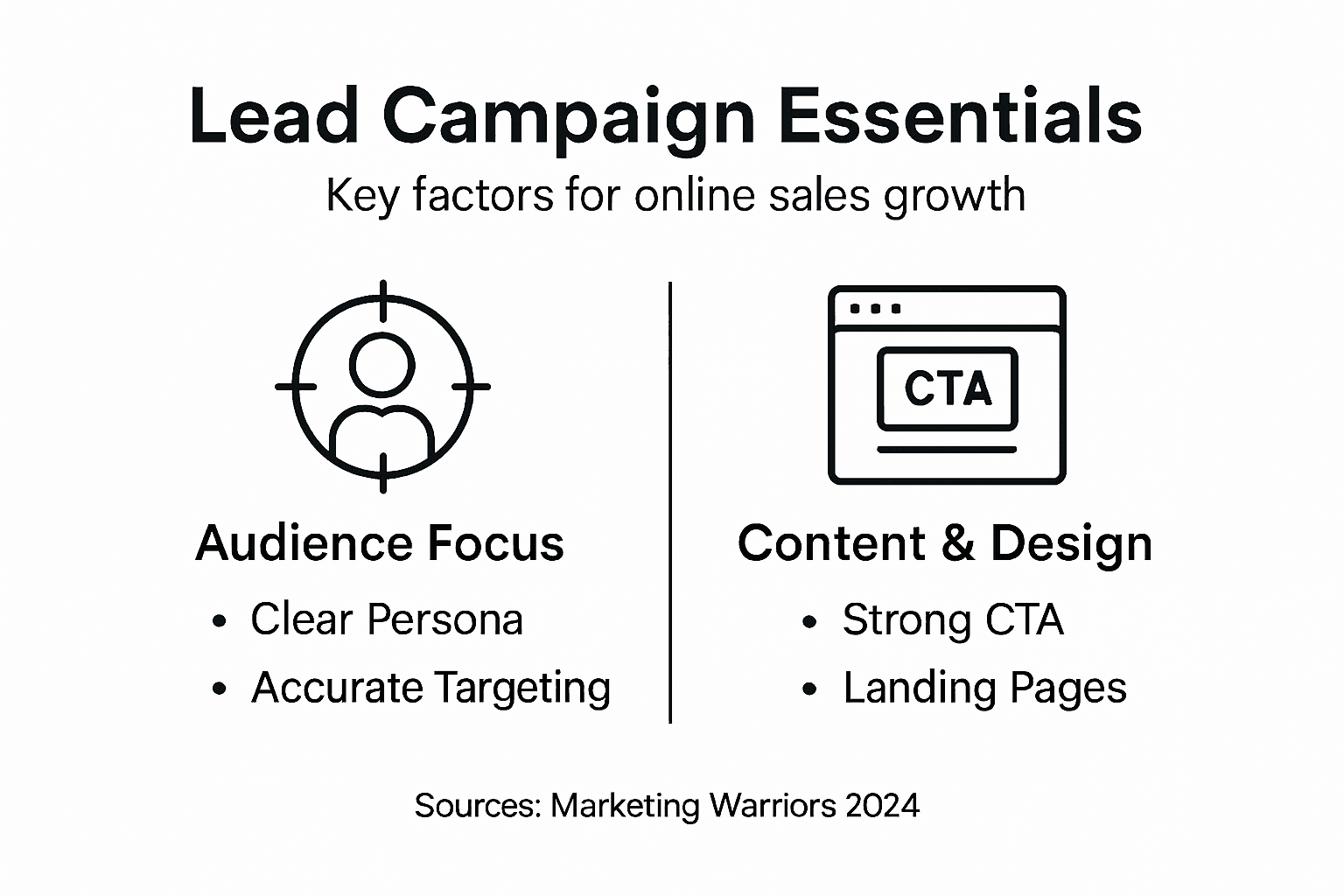
Here’s what separates winning campaigns from the rest.
Understanding Your Target Audience Deeply
You can’t hit a target you haven’t defined. Successful campaigns begin with detailed customer personas—specific descriptions of your ideal clients, including their demographics, pain points, goals, and how they search online.
Instead of “women interested in beauty services,” your persona might be: “Sarah, 42, runs a small business, values professional appearance, searches for “quick hair treatments Perth” on her phone during lunch breaks.”
The more specific your persona, the more precisely you can target ads, craft messaging, and choose which channels to use.
Compelling Content and Strong Calls-to-Action
Content that resonates with your audience builds trust. But content alone isn’t enough—you need strong call-to-action mechanisms that tell prospects exactly what to do next.
A clear call-to-action might be “Book a free consultation,” “Download our guide,” or “Claim your spot today.” Without it, interested prospects disappear.
Optimised Landing Pages and Conversion Points
Landing pages are where the magic happens. These are dedicated pages designed specifically to convert visitors into leads or clients.
A landing page for your salon might feature:
- A compelling headline explaining the benefit (“Achieve salon results at home”)
- High-quality images or videos showing your work
- Clear, concise copy addressing client pain points
- A simple form or booking button above the fold
- Social proof like testimonials or before-and-after photos
Every element serves one purpose: moving the visitor toward action.
Multi-Channel Execution with Consistent Messaging
Successful campaigns don’t rely on one channel. They layer together SEO, paid ads, email, and social media—but with consistent messaging across all of them.
When a prospect sees your ad on Facebook, then finds you through Google Search, then receives your email follow-up, the experience feels cohesive rather than random.
Measurement, Tracking, and Continuous Optimisation
You can’t improve what you don’t measure. Lead quality and conversion tracking tells you which campaigns drive actual bookings, not just clicks.
Track metrics like:
- Cost per lead (how much each inquiry costs)
- Conversion rate (percentage of leads becoming clients)
- Return on ad spend (revenue generated per pound spent)
- Which traffic source brings your best clients
This data guides your next decision—whether to increase spending on a winning channel or adjust a struggling one.
Automated Follow-Up and Lead Nurturing
Automation tools ensure no lead falls through the cracks. When a prospect fills out a form, they should immediately receive a confirmation email and be added to a nurturing sequence.
Automation might include welcome emails, educational content, special offers, and appointment reminders—all triggered automatically based on prospect behaviour.
The difference between good campaigns and great ones is relentless focus on measurement and willingness to adjust based on what the data reveals.
Pro tip: Before launching a campaign, decide which metric matters most—cost per lead, booking rate, or client lifetime value—then build your tracking and optimisation strategy around that single goal.
Common Pitfalls and How to Avoid Them
Most businesses waste money on lead generation because they repeat the same mistakes. Understanding these pitfalls separates campaigns that fail from those that generate consistent bookings and sales growth.
Here are the mistakes you must avoid.
Chasing Quantity Over Quality
The biggest mistake? Prioritising lead volume over lead quality. Generating 1000 unqualified leads wastes your budget and your team’s time. One qualified lead from someone ready to book is worth ten uninterested inquiries.
Quality leads come from targeting your ideal customer profile precisely. A dermatology clinic doesn’t need 500 leads from teenagers; they need 20 leads from people aged 40-60 with disposable income and skin concerns.
Focus your ad spend and content on attracting the right people, not just any people.
Neglecting Customer Needs and Mindset
Campaigns fail when they don’t address what your prospects actually care about. You might emphasise your 20 years of experience, but your ideal client wants to know you can fit them in quickly.
Understanding your customer’s needs and mindset means researching what keeps them awake at night and crafting messaging that speaks to that.
Interview past clients. Ask what problems you solved for them. Use their language in your ads and website copy.
Capturing Leads Then Abandoning Them
You spend money acquiring a lead, then do nothing. They fill out your form and—silence. Three weeks later they contact a competitor instead.
This happens because businesses lack systematic lead nurturing. Every lead captured should enter an automated follow-up sequence:
- Welcome email within 2 hours
- Educational content emails over the following week
- Gentle reminders about booking or purchasing
- Special offers to incentivise action
Without nurturing, 90% of leads never convert.
Poor Campaign Targeting and Outdated Tools
Running ads without proper targeting wastes money. Posting on Facebook when your clients use LinkedIn means you’re paying for irrelevant traffic.
Reliance on outdated lead capture technology and poor targeting also sabotages results. Modern automation tools integrate your ads, email, and follow-up seamlessly so nothing falls through the cracks.
Before launching, ensure your targeting settings match your ideal customer profile precisely.
Marketing and Sales Not Working Together
Marketing generates leads, sales closes them. But if these teams don’t communicate, leads slip away. Marketing might send unqualified leads to sales, or sales might complain quality is poor without giving feedback.
The fix: Align marketing with sales efforts. Define what a qualified lead looks like together. Have sales report back on which leads convert best so marketing can refine targeting.
Ignoring Long-Term Relationship Building
Lead generation isn’t about one transaction. It’s about building relationships that create repeat clients and referrals.
Campaigns that focus only on initial conversion miss the bigger picture. A client who books once might book five times over their lifetime if you stay in touch.
The most profitable lead generation campaigns treat the first booking as the beginning of a relationship, not the end of the campaign.
Pro tip: Audit your current lead generation process end-to-end: How many days pass between someone clicking your ad and receiving first contact? If it’s more than a few hours, you’re losing conversions.
To help avoid costly mistakes, this table highlights common campaign pitfalls and ways to prevent them:
| Common Pitfall | Impact on Business | How to Prevent |
|---|---|---|
| Prioritising quantity over quality | Wastes budget, low conversion | Refine audience targeting |
| Poor lead nurturing | Lost opportunities, low bookings | Set up automated follow-ups |
| Outdated targeting/tools | Irrelevant traffic, low ROI | Update tools and targeting settings |
| Marketing and sales misalignment | Qualified leads slip away | Regular feedback and collaboration |
| Ignoring ongoing relationships | Fewer repeat clients, referrals | Implement long-term engagement |
Unlock Consistent Leads and Sales Growth with the Marketing Vortex
If you are tired of chasing leads that don’t convert or struggling to create a predictable sales pipeline, the solution lies in a proven, integrated strategy that unites SEO, paid ads, email marketing and social media into one powerful system. At Business Warriors, we understand that identifying your ideal client and nurturing them consistently is crucial to turning enquiries into loyal customers. Our unique Marketing Vortex approach is designed specifically for service-based businesses ready to elevate their online client acquisition and achieve sustainable growth.
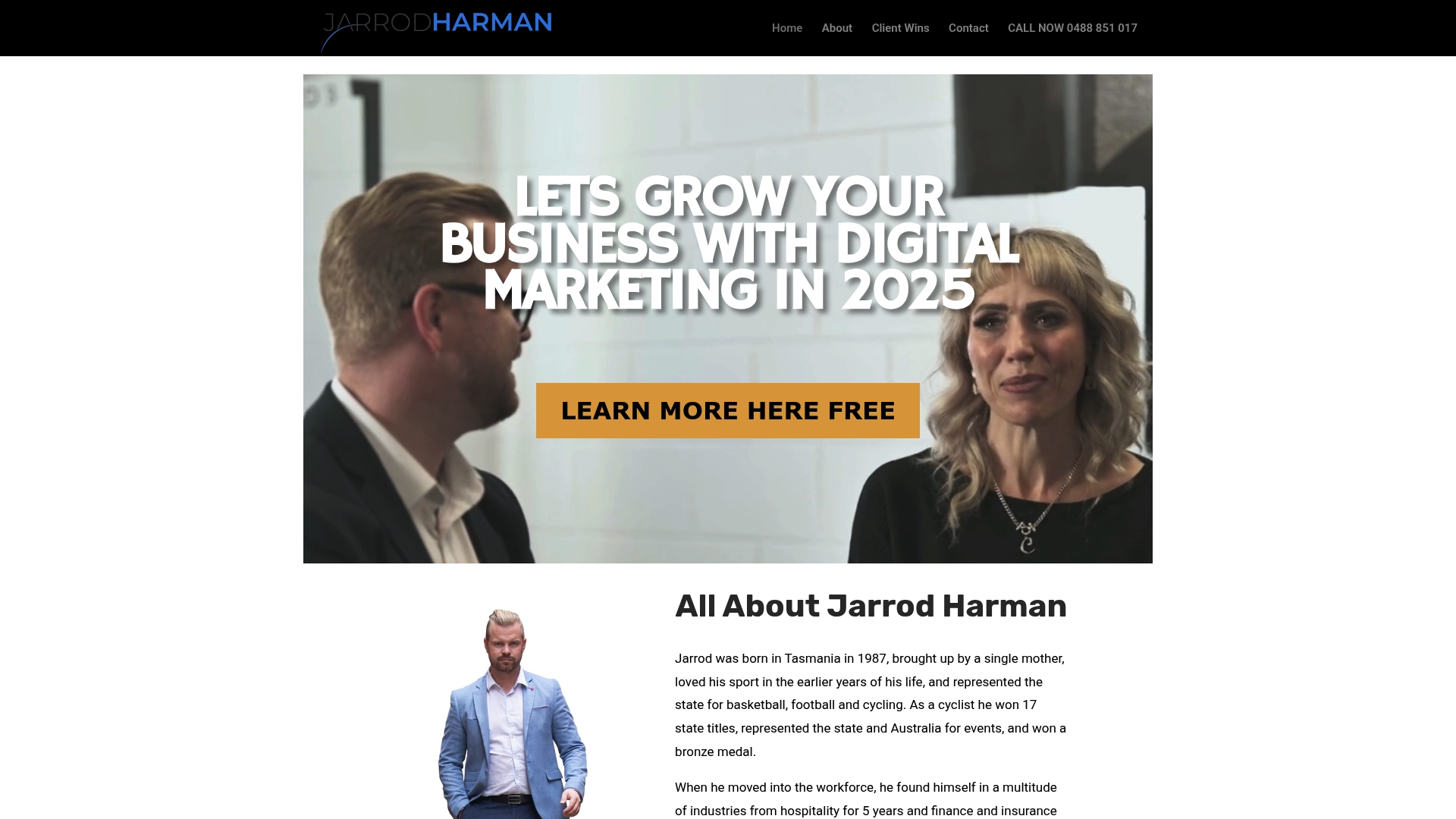
Ready to stop wasting marketing budget on scattered efforts and start generating high-quality leads that book? Visit Jarrod Harman today to discover how our expert team combines data-driven campaigns with compelling messaging and follow-up automation. Learn more about our scalable marketing systems, see real client success stories, and join a community committed to results. Take the next step now and transform your marketing into a well-oiled lead generation engine.
Frequently Asked Questions
What is a lead generation campaign?
A lead generation campaign is a structured effort using various sales and marketing techniques to attract potential customers and convert them into qualified prospects.
How do lead generation campaigns work?
These campaigns operate through multiple stages: awareness, interest, conversion, and nurturing, utilising channels like SEO, paid ads, email marketing, and social media.
What are the core elements needed for a successful lead generation campaign?
Successful lead generation campaigns require a clear understanding of your ideal client, high-converting landing pages, compelling messaging, multiple ad channels, a tracking system, and effective follow-up sequences to nurture leads.
Why is it important to understand your target audience for a lead generation campaign?
Understanding your target audience allows you to create detailed customer personas, enabling precise targeting of ads and messaging that directly address their needs and pain points, ultimately leading to higher conversion rates.