


Growing a service-based business in Australia often means finding meaningful ways to stand out and attract the right clients online. With consumer behaviour shifting quickly towards digital platforms, understanding content marketing as a core digital strategy is now essential for ladies leading their own ventures. This guide reveals exactly how strategic content creation and distribution can shape genuine customer connections, drive engagement, and set your services apart in a crowded Australian market.
Table of Contents
- Defining Content Marketing In Digital Strategy
- Types Of Content Marketing Explained
- How Content Marketing Drives Engagement
- Comparing Content Marketing To Other Digital Tactics
- Risks, Costs And Common Mistakes To Avoid
Key Takeaways
| Point | Details |
|---|---|
| Content Marketing Focus | Content marketing prioritises building long-term relationships through valuable, engaging content rather than immediate sales. |
| Diverse Content Types | A successful strategy includes a mix of content formats, such as blogs, videos, and podcasts, tailored to audience preferences. |
| Data-Driven Decisions | Regular audience research and performance analysis are essential for refining content strategies to meet evolving customer needs. |
| Avoid Common Mistakes | Businesses should develop a clear content strategy and consistently update content to maintain relevance and quality. |
Defining Content Marketing in Digital Strategy
Content marketing represents a strategic approach to creating and distributing valuable, relevant, and consistent digital content designed to attract and retain a clearly defined audience. In the digital transformation era, content marketing has become a critical mechanism for organisations seeking meaningful online engagement with their target customers.
The core objectives of content marketing extend far beyond traditional advertising, focusing instead on providing genuine value through informative, educational, and entertaining digital assets. These assets can include:
- Blog posts and articles
- Informative videos
- Podcasts and audio content
- Infographics and visual guides
- Social media content
- Webinars and online workshops
- Interactive digital experiences
Successful content marketing strategically aligns digital content with specific business goals while addressing the genuine needs, questions, and interests of the target audience. Audience-centric content becomes the primary vehicle for building trust, establishing thought leadership, and creating meaningful connections in the digital landscape.
By developing a sophisticated content marketing approach, businesses can effectively:
- Build brand awareness
- Establish industry credibility
- Generate high-quality leads
- Nurture potential customer relationships
- Improve search engine visibility
Digital content strategy requires a nuanced understanding of audience preferences, search behaviours, and engagement patterns. Modern marketers must leverage data-driven insights to craft content that resonates authentically with their target demographic.
Pro tip: Conduct regular audience research and develop detailed customer personas to ensure your content marketing remains precisely targeted and highly relevant.
Types of Content Marketing Explained
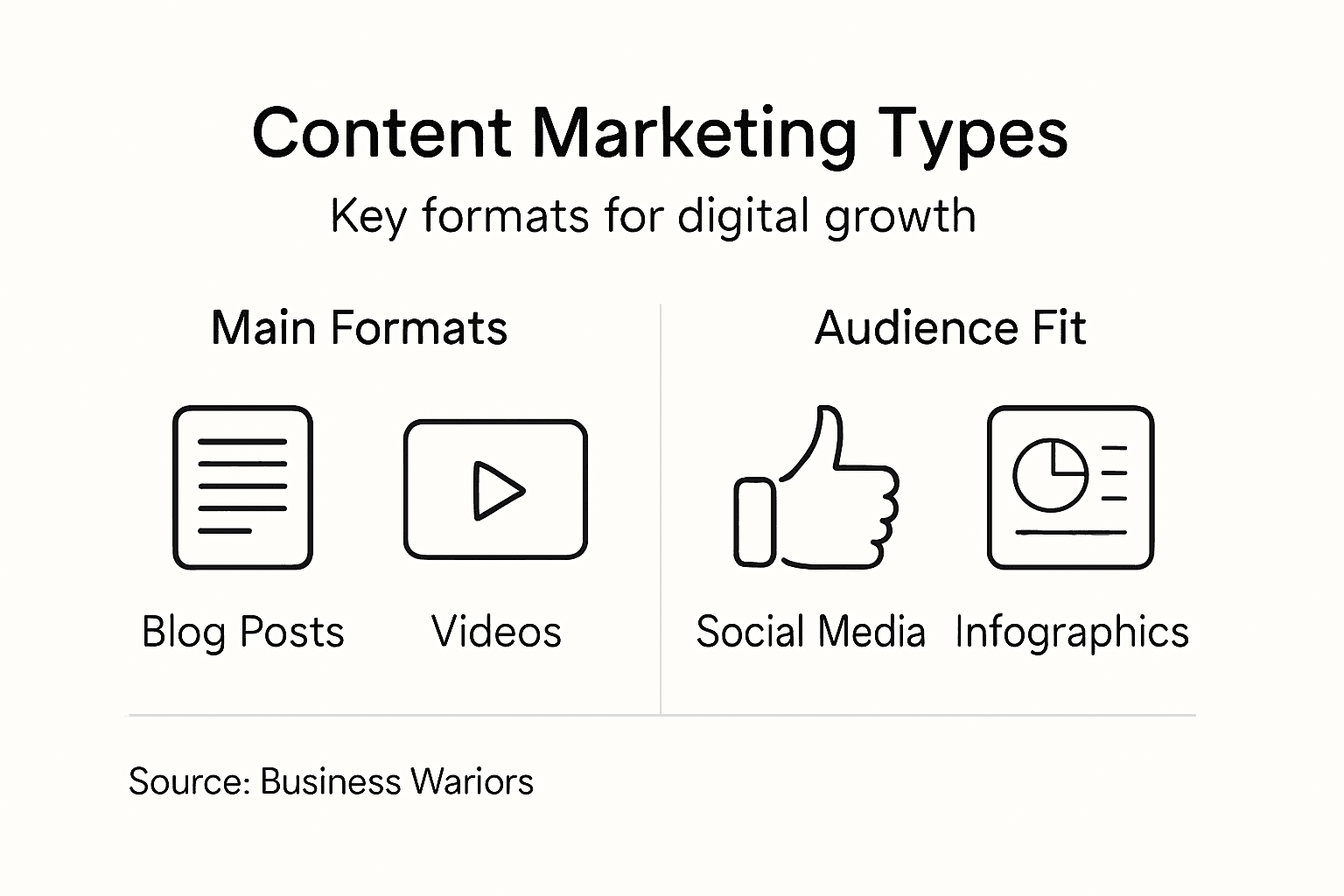
Content marketing encompasses a diverse array of digital communication strategies designed to engage and inform target audiences. Multiple content types offer unique advantages for businesses seeking to connect with potential customers across different digital platforms.
The primary types of content marketing include:
- Blog Posts: Long-form written content providing in-depth insights and valuable information
- Video Content: Engaging visual storytelling that captures audience attention quickly
- Podcasts: Audio-based content allowing deep exploration of topics
- Infographics: Visual representations of complex data and information
- Social Media Posts: Short-form content designed for rapid engagement
- Email Newsletters: Targeted communication delivering personalised information
- Webinars: Interactive online presentations and training sessions
- Ebooks: Comprehensive digital publications exploring specific subjects
Digital content strategies require careful selection of formats that align with audience preferences and business objectives. Each content type serves specific purposes, from building brand awareness to generating leads and establishing thought leadership.
Here’s a summary of how each content marketing format aligns with specific business goals and audience needs:
| Content Format | Best Audience Fit | Business Impact |
|---|---|---|
| Blog Posts | Researchers, learners | Boosts organic visibility |
| Video Content | Visual, time-poor viewers | Enhances engagement |
| Podcasts | Commuters, niche audiences | Builds long-term loyalty |
| Infographics | Data-driven, busy readers | Simplifies complex topics |
| Social Media Posts | Mobile users, broad reach | Drives quick brand awareness |
| Email Newsletters | Subscribers, existing leads | Strengthens retention |
| Webinars | Professionals, prospects | Educates and nurtures leads |
| Ebooks | Deep researchers, buyers | Showcases expertise |
Effective content marketing demands a strategic approach to content creation, considering factors such as audience demographics, platform capabilities, and communication goals. Successful marketers often integrate multiple content types to create a comprehensive and engaging digital presence.
Pro tip: Develop a diverse content mix and regularly analyse performance metrics to understand which formats resonate most effectively with your target audience.
How Content Marketing Drives Engagement
Transformative digital interactions are at the core of modern content marketing strategies, enabling businesses to forge deeper connections with their target audiences. By creating valuable, relevant content, organisations can transform passive consumers into active participants in their brand narrative.
The key mechanisms of content marketing engagement include:
- Creating interactive experiences
- Personalising content delivery
- Encouraging user-generated responses
- Building community connections
- Providing genuine value beyond traditional advertising
- Addressing specific audience pain points
- Establishing authentic brand personality
Customer-centric content goes beyond simple information delivery, focusing instead on building meaningful relationships. Strategic content marketing approaches leverage multiple touchpoints to create a comprehensive engagement ecosystem that nurtures potential customers through their entire decision-making journey.
Successful engagement strategies require deep understanding of audience behaviours, preferences, and digital consumption patterns. Brands must continuously analyse performance metrics, adapting their content to evolving audience expectations and technological capabilities.
Content marketing transforms audiences from passive viewers into active brand participants.
By integrating diverse content formats and maintaining a consistent, value-driven approach, businesses can create sustainable engagement models that drive long-term customer loyalty and business growth.

Pro tip: Develop a robust analytics framework to track content performance across different platforms, enabling data-driven refinement of your engagement strategies.
Comparing Content Marketing to Other Digital Tactics
Digital marketing strategies encompass a broad spectrum of tactics, each with unique approaches to engaging potential customers. While traditional digital marketing often focuses on immediate conversions, content marketing distinguishes itself through a more nuanced, relationship-driven approach.
Key differences between content marketing and other digital tactics include:
- Conversion Focus:
- Digital Ads: Immediate sales and clicks
- Content Marketing: Long-term relationship building
- Audience Interaction:
- PPC: Transactional engagement
- Content Marketing: Educational and conversational
- Cost Effectiveness:
- Paid Advertising: High upfront costs
- Content Marketing: Lower ongoing investment
- Longevity:
- Social Media Ads: Temporary visibility
- Content Marketing: Sustained audience value
Strategic depth separates content marketing from more direct digital tactics. Where pay-per-click advertising and social media marketing seek rapid, measurable outcomes, content marketing invests in creating substantive value that builds trust and credibility over time.
Successful digital strategies often integrate multiple approaches, recognising that content marketing complements rather than replaces other digital marketing techniques. The most effective marketing ecosystems leverage the strengths of various tactics, creating a comprehensive approach that addresses different stages of the customer journey.
To highlight strategic differences, here’s a comparison between content marketing and traditional digital tactics:
| Aspect | Content Marketing | Traditional Digital Tactics |
|---|---|---|
| Approach | Relationship-driven | Conversion-focused |
| Cost Structure | Ongoing, scalable investment | High upfront ad spend |
| Engagement Type | Educational, interactive | Transactional, immediate |
| Value Duration | Sustained, evergreen content | Short-lived visibility |
Pro tip: Develop an integrated digital marketing strategy that balances immediate conversion tactics with long-term content marketing approaches.
Risks, Costs and Common Mistakes to Avoid
Content marketing requires strategic planning and awareness of potential pitfalls that can undermine digital success. Critical errors can significantly compromise marketing effectiveness, making it essential to understand and proactively address potential risks.
Common content marketing mistakes include:
-
Strategic Errors:
- Lacking a clear content strategy
- Ignoring audience research
- Inconsistent publishing schedules
- Failing to define specific marketing objectives
-
Content Quality Issues:
- Producing low-quality, generic content
- Neglecting content updating and refreshing
- Over-optimising for SEO at the expense of reader value
- Creating content without genuine audience insights
Financial considerations play a crucial role in content marketing investment. While content marketing generally requires lower upfront costs compared to traditional advertising, businesses must budget for:
- Content creation expenses
- Professional writing or design services
- Content distribution and promotion
- Analytics and performance tracking tools
- Potential outsourcing or agency support
Successful content marketing demands continuous learning and adaptation. Organisations must develop robust measurement frameworks to track performance, understand audience engagement, and refine their strategies based on empirical insights.
Effective content marketing is a long-term investment in building meaningful audience relationships.
Pro tip: Develop a comprehensive content audit process to regularly evaluate and improve your content marketing approach, ensuring ongoing relevance and effectiveness.
Unlock the Full Potential of Your Content Marketing Strategy Today
Are you struggling to consistently create audience-centric content that builds trust and drives quality leads? This article highlights how content marketing is about more than just publishing posts it requires deep audience research, strategic planning, and diverse content types to engage and nurture prospects effectively. If your business is seeking to break through the noise and establish authentic connections, you need a proven, integrated approach to digital marketing.

At Business Warriors, we specialise in deploying the “Marketing Vortex” Method™, a comprehensive system that blends SEO, social media, Google Ads, and content marketing into an omnichannel strategy tailored for service-based businesses. Our expertise helps you avoid common pitfalls such as inconsistent publishing and generic content production by delivering measurable results with clear client guarantees. Explore our success stories and gain insights on how to maximise your marketing efforts by visiting the Uncategorized Archives – Jarrod Harman. Don’t settle for short-lived digital tactics when you can build sustained engagement with expert guidance.
Take the next step to scale your online presence with confidence. Visit Jarrod Harman’s website now and discover how to transform your content marketing into a powerful client acquisition engine.
Frequently Asked Questions
What is content marketing?
Content marketing is a strategic approach focused on creating and distributing valuable, relevant, and consistent digital content to attract and retain a clearly defined audience, ultimately driving engagement and building brand loyalty.
How does content marketing differ from traditional advertising?
Content marketing prioritises long-term relationship building through informative and engaging content, while traditional advertising typically focuses on immediate conversions and transactional engagements.
What types of content are effective in a content marketing strategy?
Effective content types include blog posts, videos, podcasts, infographics, social media posts, email newsletters, webinars, and ebooks, each serving specific purposes aligned with audience needs and business goals.
What are common mistakes to avoid in content marketing?
Common mistakes include lacking a clear content strategy, ignoring audience research, producing low-quality content, inconsistent publishing schedules, and failing to define specific marketing objectives.
Recommended
- What Is Digital Marketing? Complete Expert Overview – Jarrod Harman
- Content Marketing Best Practices: Complete Guide – Jarrod Harman
- Understanding What is Online Marketing and Its Importance – Jarrod Harman
- Why Use Digital Marketing: Complete Expert Guide – Jarrod Harman
- Content Marketing: Alles, was du wissen musst – Onlinemarketing360