


Did you know that businesses with well-defined SEO goals are up to 13 times more likely to see positive ROI from their online efforts? Setting clear objectives and understanding what resources you need can make all the difference in ecommerce. Targeted planning helps you take control of your growth potential, paving the way for better visibility, higher sales, and effective use of your marketing budget.
Table of Contents
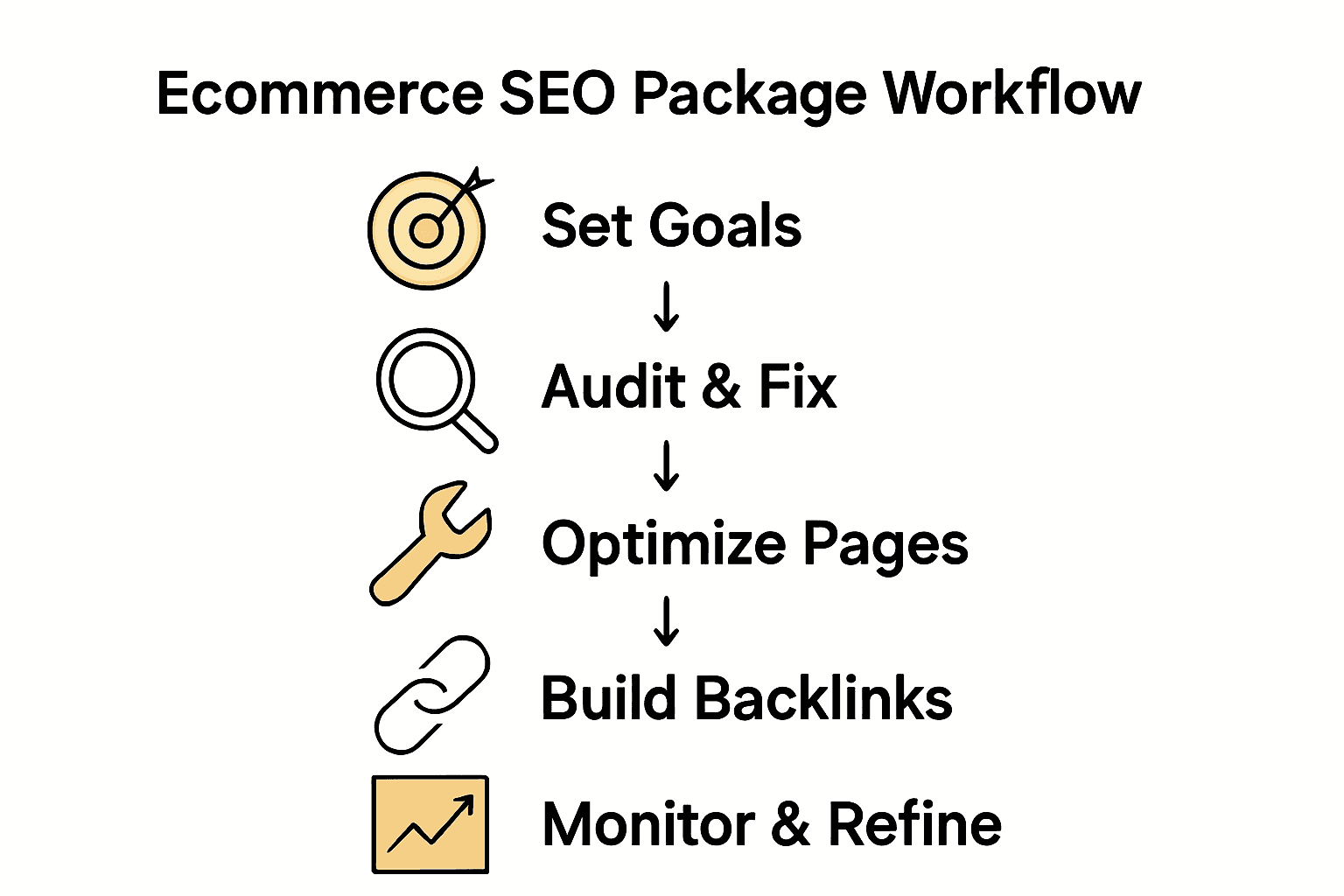
- Step 1: Identify Ecommerce Seo Goals And Required Resources
- Step 2: Audit Your Store And Address Technical Seo Issues
- Step 3: Optimize Product Pages And Category Content
- Step 4: Build High-Quality Backlinks For Ecommerce Sites
- Step 5: Monitor Performance And Refine Seo Strategies
Quick Summary
| Key Point | Explanation |
|---|---|
| 1. Set clear ecommerce SEO goals | Identify specific objectives like traffic increase or conversion improvement to guide your strategy. |
| 2. Audit for technical SEO issues | Regularly conduct technical audits to fix crawlability, speed, and indexing problems that affect visibility. |
| 3. Optimize product and category pages | Ensure all content includes relevant keywords, thorough descriptions, and user engagement to attract visitors. |
| 4. Build high-quality backlinks | Focus on obtaining authoritative, relevant backlinks to enhance your site’s credibility and ranking. |
| 5. Monitor and refine SEO strategies | Use analytics tools to track performance and adjust your strategies quarterly for ongoing improvement. |
Step 1: Identify ecommerce SEO goals and required resources
Successfully launching an ecommerce SEO strategy requires strategic planning and clear objective setting. This step helps you map out precisely what you want to achieve and what resources you will need to get there.
Starting with goal identification means understanding your specific business outcomes. According to research from the University of West London, Small and Medium Enterprises need a clear web presence strategy that goes beyond just having an operational website. Your SEO goals might include increasing organic search visibility, improving conversion rates, or expanding market reach.
To effectively set your ecommerce SEO goals, consider these key focus areas:
- Search engine rankings for targeted product keywords
- Organic traffic volume and quality
- Conversion rate improvements
- Customer acquisition cost reduction
- Market segment penetration
Resource allocation is critical. As Arts University London suggests, you need to build authority by understanding technical SEO considerations and tracking measurable outcomes.
Here’s a summary of key ecommerce SEO goals and required resources:
| SEO Goal | Example Metrics | Essential Resources |
|---|---|---|
| Improve search rankings | Keyword positions Impressions |
SEO analysis tools Technical experts |
| Increase organic traffic | Site visits Session quality |
Content creators Analytics platforms |
| Boost conversion rates | Sales Conversion percentage |
UX optimisation Tracking tools |
| Reduce customer acquisition cost | Cost per acquisition | Budget management SEO tools |
| Expand market reach | New user segments Geographical spread |
Market research Content strategists |
Required resources typically include:
- SEO analysis tools
- Content creation capabilities
- Technical website optimization expertise
- Analytics and tracking platforms
- Budget for potential paid SEO services
Pro Tip: Align your SEO goals directly with your broader business objectives to ensure meaningful impact.
With clear goals and resources mapped out, you are now ready to develop a targeted ecommerce SEO strategy that drives real business growth.
Step 2: Audit your store and address technical SEO issues
Understanding and resolving technical SEO issues can dramatically improve your ecommerce store’s search engine performance and user experience. This critical step involves identifying and fixing hidden problems that might be holding back your online visibility.
According to Coursera, an SEO audit helps break down website optimization into manageable strategic parts by exploring how search engines evaluate your site. A comprehensive technical audit covers multiple critical areas:
- Website crawlability
- Site speed and performance
- Mobile responsiveness
- URL structure
- Internal linking
- Indexation issues
- Duplicate content
SEO Direct recommends using specialized crawling tools like Screaming Frog, Deep Crawl, and Google Webmaster Tools to uncover issues not immediately visible. These tools help highlight specific technical problems that could be undermining your search rankings.
When conducting your technical SEO audit, pay special attention to:
- Page load times
- Broken links
- Missing alt tags
- Incorrect redirects
- Sitemap accuracy
- Schema markup implementation
- Mobile optimization
Pro Tip: Regularly scheduled technical audits can prevent small issues from becoming major ranking obstacles.
After identifying technical issues, prioritize fixes based on potential impact and work closely with your development team to implement changes systematically.
With a clean technical foundation, you are now prepared to optimize your content and enhance your ecommerce store’s search engine performance.

Step 3: Optimize product pages and category content
Turning your ecommerce site into a search engine magnet requires strategic content optimization across all product and category pages. This step focuses on transforming your online store into a keyword rich destination that attracts and converts potential customers.
According to Arts University London, building authority means understanding how Google measures content quality and developing skills to create valuable organic website traffic. This involves crafting content that speaks directly to your target audience while meeting search engine requirements.
Key areas to optimize include:
- Product titles and descriptions
- Category page headings
- Image alt text
- Unique product specifications
- Customer review integrations
- Structured data markup
SEO Direct emphasizes that on page optimization is crucial for ranking. Every product and category page must be meticulously edited to target specific keywords through header tags title tags meta descriptions and body content.
Focus on creating comprehensive product descriptions that:
- Answer potential customer questions
- Include relevant keywords naturally
- Highlight unique product benefits
- Provide clear technical specifications
- Use persuasive yet informative language
Pro Tip: Write for humans first search engines second. Authenticity and value always trump keyword stuffing.
Carefully review each page to ensure your content is original engaging and provides genuine value to potential buyers. With optimized content you are setting the stage for improved search rankings and increased organic traffic.
Your next step is to develop a robust internal linking strategy that further enhances your ecommerce SEO performance.
Step 4: Build high-quality backlinks for ecommerce sites
Backlinks remain a critical component of successful ecommerce SEO strategies that can significantly boost your online visibility and search engine rankings. This step focuses on developing a robust backlink acquisition approach that enhances your site’s authority and credibility.
According to Arts University London, building authority requires understanding how search engines evaluate content quality and developing strategic skills to generate valuable organic website traffic. This means creating link building strategies that go beyond simple quantity and focus on genuine relevance and quality.
Effective backlink strategies for ecommerce sites include:
- Product review collaborations
- Influencer partnership programs
- Guest blogging on industry websites
- Creating shareable infographics
- Participating in industry forums
- Developing linkable resource content
- Hosting webinars or online events
SEO Direct emphasizes the importance of site architecture in distributing link authority. Your backlink strategy should aim to maximize link equity distribution across category and product pages to improve overall site ranking potential.
When pursuing backlinks consider these quality indicators:
- Domain authority of linking sites
- Relevance to your industry
- Traffic potential of linking websites
- Organic and natural link placement
- Diversity of link sources
Pro Tip: Quality trumps quantity. One exceptional backlink from a reputable site outweighs dozens of low quality links.
Consistently monitor your backlink profile using tools like Ahrefs or SEMrush to track progress and identify new opportunities. Regularly audit your links to remove potentially harmful connections.
With a strategic backlink approach in place you are now positioned to amplify your ecommerce site’s search engine performance and attract more targeted organic traffic.
Step 5: Monitor performance and refine SEO strategies
Continuous monitoring and strategic refinement are essential for maintaining and improving your ecommerce site’s search engine performance. This step focuses on transforming raw data into actionable insights that drive ongoing SEO success.
According to UK Research and Innovation, website monitoring should provide comprehensive insights including visitor statistics device usage content engagement user behavior and traffic sources. Understanding these metrics allows you to make informed decisions about your SEO strategy.
Key performance indicators to track include:
- Organic search traffic volume
- Keyword ranking positions
- Conversion rates
- Bounce rates
- Average time on site
- Click through rates
- Referral traffic sources
Coursera recommends a structured approach to performance review that involves:
- Assessing site crawlability
- Evaluating indexing status
- Analyzing site health metrics
- Prioritizing technical improvements
- Creating actionable strategic recommendations
Utilize robust analytics tools like Google Analytics Google Search Console and SEMrush to gather comprehensive performance data. These platforms provide deep insights into your websites search engine behavior and user interactions.
Pro Tip: Review your SEO metrics monthly but implement changes quarterly to allow sufficient time for strategy evaluation.
Pay special attention to:
- Emerging keyword opportunities
- Underperforming content pages
- Changing search intent trends
- Competitor ranking movements
- Technical performance bottlenecks
Regularly updating your SEO approach based on data driven insights ensures your ecommerce site remains competitive and continues to attract quality organic traffic.
With a systematic monitoring and refinement process in place you are now equipped to adapt and thrive in the dynamic world of search engine optimization.
Elevate Your Ecommerce Success with Proven Marketing Strategies
If you are feeling overwhelmed with improving your ecommerce SEO or unsure how to turn increased rankings into real sales growth this article offers the clear blueprint your business needs. It highlights key challenges like setting measurable SEO goals and fixing technical issues that stall your progress. At Business Warriors we understand how frustrating it is to invest time and effort without seeing results.

Take the next step by partnering with experts who specialise in scalable sales and marketing systems designed specifically for service-based and ecommerce businesses. Our unique Marketing Vortex method integrates SEO with Google Ads and social media to deliver consistent leads and fast sales growth. Discover practical insights and real client success stories by exploring the Uncategorized Archives – Jarrod Harman or start your transformative journey today at https://jarrodharman.com. Don’t let stalled SEO hold your business back act now and unlock your full online potential.
Frequently Asked Questions
How can an ecommerce SEO package improve my site’s rankings?
An ecommerce SEO package enhances your site’s rankings by optimizing product and category pages with targeted keywords, improving technical elements, and acquiring quality backlinks. Start by conducting a comprehensive SEO audit to identify opportunities for optimization.
What specific metrics should I track to measure success after implementing the ecommerce SEO package?
Track metrics like organic search traffic volume, conversion rates, and keyword ranking positions to gauge success. Regularly review these metrics monthly to adjust your strategy and improve performance.
How long does it take to see results from an ecommerce SEO package?
You can typically expect to see results within 30–60 days of implementing an ecommerce SEO package. Focus on continuous optimization and monitoring to maintain and enhance your search engine rankings.
What resources do I need to support my ecommerce SEO efforts?
Essential resources include SEO analysis tools, content creation capabilities, and technical optimization expertise. Assemble a team or allocate a budget to ensure that you can effectively address all aspects of your SEO strategy.
How do I create effective backlinks for my ecommerce site?
To create effective backlinks, focus on collaborating with relevant industry influencers, guest blogging, and developing shareable content. Aim for high-quality backlinks that are contextually relevant to enhance your site’s authority and improve search rankings.
What technical SEO issues should I prioritize when optimizing my ecommerce site?
Prioritize technical SEO issues like site speed, mobile responsiveness, and internal linking structure. Conduct a thorough technical audit and address the most critical issues first to maximize your site’s search engine performance.