


Trying to stand out online as a beauty business owner can feel overwhelming when every salon and clinic seems to post the same content. In Australia’s busy beauty and wellness market, your success depends on more than pretty photos—clients want a seamless, trustworthy experience from their first click to their next booking. By understanding how digital marketing strategies influence sales growth and client loyalty, you can turn online browsers into loyal, repeat customers who choose you every time.
Table of Contents
- Defining Digital Marketing for Beauty Businesses
- Why Digital Marketing Matters for Your Beauty Business
- The Core Functions of Digital Marketing
- Digital Marketing in the Beauty Industry Context
- Core Channels and Their Unique Roles
- Search Engine Optimisation (SEO)
- Paid Advertising (Google Ads and Meta Ads)
- Social Media Marketing
- Email Marketing
- How These Channels Work Together
- Client Acquisition and Retention Strategies
- The Acquisition Side: Bringing New Clients In
- The Retention Side: Turning Clients Into Loyalists
- Building Emotional Connection for Long-Term Loyalty
- Measuring What Works
- Omnichannel Integration for Consistent Growth
- Why Omnichannel Matters More Than Ever
- Building Your Omnichannel System
- The Technology Behind It
- Practical Omnichannel in Action
- Getting Started With Omnichannel
- Measuring Success with Data and Analytics
- The Critical Metrics You Need to Track
- Setting Up Your Analytics Foundation
- Real-Time Analytics and Decision-Making
- Using Data to Optimise Your Marketing
Key Takeaways
| Point | Details |
|---|---|
| Integration of Channels | An effective digital marketing strategy for beauty businesses integrates multiple channels like SEO, social media, and email marketing to create a seamless client experience. |
| Focus on Client Relationships | Building trust and offering personalised experiences through digital marketing can transform first-time clients into repeat customers. |
| Measurement is Key | Tracking essential metrics such as Customer Acquisition Cost and Conversion Rate helps refine marketing strategies and improve profitability. |
| Omnichannel Approaches | Consistency across all digital touchpoints enhances client engagement and ensures they receive a cohesive brand experience regardless of the platform. |
Defining Digital Marketing for Beauty Businesses
Digital marketing for beauty businesses goes far beyond posting photos on Instagram. It’s the complete system of using online channels to attract clients, build trust, and keep them coming back for more bookings. For salon owners, spa directors, and beauty professionals, this means strategically combining multiple tactics to create a cohesive client journey.
At its core, digital marketing involves reaching your ideal clients where they already spend time: searching on Google, scrolling social media, checking emails, and browsing websites. Unlike traditional advertising, you can measure exactly who clicked, when they visited, and whether they booked. That data becomes your competitive advantage.
The beauty industry faces unique digital challenges. Social media engagement and influencer collaborations directly influence your booking rates and client loyalty. Your clients expect personalized experiences, seamless booking processes, and authentic connections with your brand before they ever walk through the door.
Why Digital Marketing Matters for Your Beauty Business
Traditional word-of-mouth alone won’t cut it anymore. Most people searching for a new salon, aesthetician, or wellness clinic start online. If you’re not visible on Google Maps, social media, or search results, they’ll find your competitor instead.
Digital marketing helps you:
- Attract qualified clients actively searching for your services
- Build your reputation through reviews, testimonials, and social proof
- Stay top-of-mind through email and social media reminders
- Track which marketing efforts actually generate revenue
- Reduce your cost per booking over time
You’re not just promoting services; you’re building relationships. A woman considering her first aesthetic treatment wants to see your work, read reviews from people like her, and feel confident before booking. Digital marketing creates that trust pathway.
The Core Functions of Digital Marketing
Digital marketing isn’t one tactic. It’s an integrated system. Think of it like your product range: you wouldn’t sell only one service and expect to hit your revenue targets. Similarly, relying on just one marketing channel leaves money on the table.
The main functions work together:
- Search engine optimisation (SEO) gets your website ranking for local searches (“skin clinic near me”, “best beauty salon in Perth”)
- Paid advertising (Google Ads, Meta Ads) puts your ads directly in front of ready-to-book clients
- Social media marketing builds your community and showcases your expertise
- Email marketing stays connected with past clients and converts prospects into bookings
- Content creation establishes you as the authority in your niche
- Website optimisation ensures visitors actually convert to bookings
Each function serves a purpose, but they work best together. A client might discover you through Google search, see your work on Instagram, read reviews on your website, receive an email with a special offer, and then book. That entire journey is digital marketing.
Digital Marketing in the Beauty Industry Context
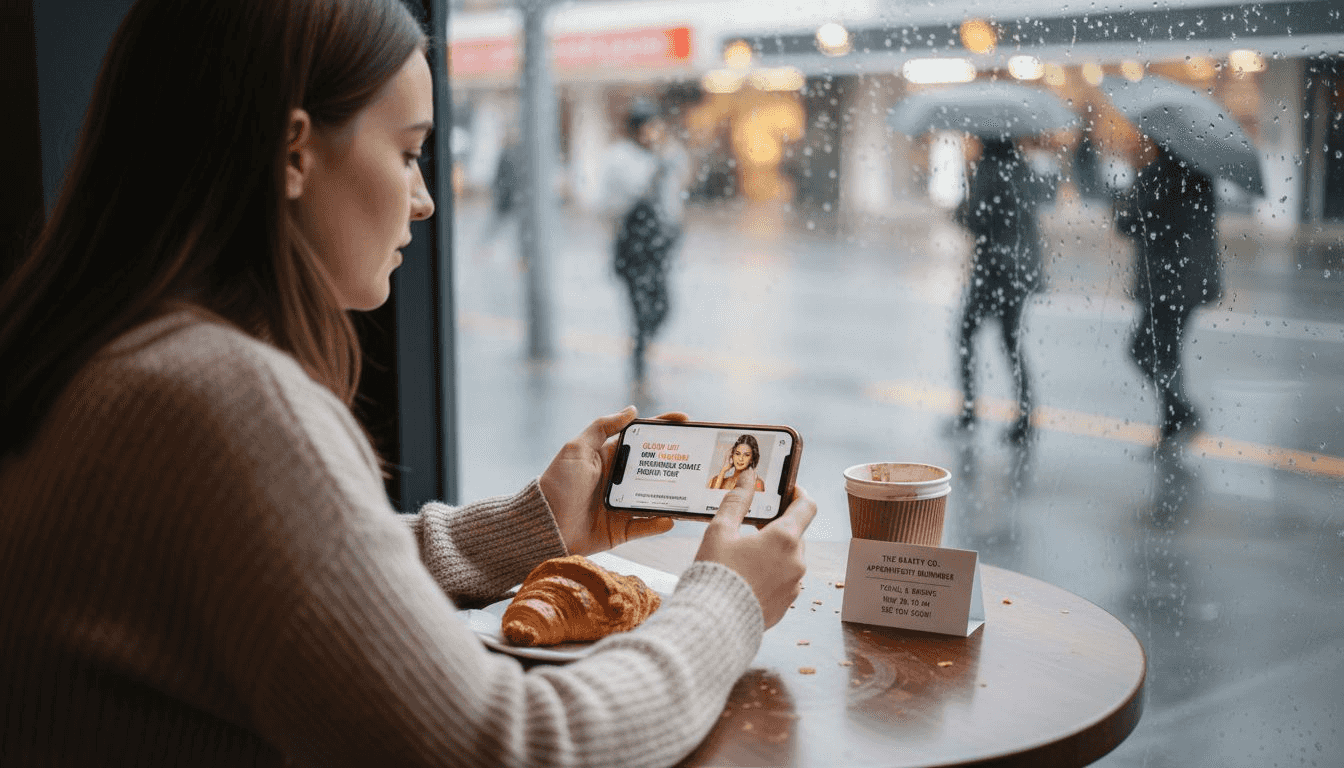
Beauty businesses operate differently from other service sectors. Your clients are making aesthetic, personal decisions. They’re looking for specific practitioners, results, and vibes that match their values. Digital channels like e-commerce, social media, and mobile platforms have fundamentally changed consumer behaviour in the beauty space, creating both opportunities and competition.
Your digital marketing strategy needs to account for:
- Visual storytelling (before-and-afters, video walkthroughs, aesthetic feeds)
- Local targeting (clients want someone nearby)
- Mobile-first experiences (most beauty searches happen on phones)
- Authentic community building (trust is currency in beauty)
- Personalisation at scale (clients want to feel seen, even if you’re growing)
This is where the Marketing Vortex approach makes a real difference. By integrating SEO, paid ads, social media, email, and content into one cohesive system, you eliminate the guesswork and create predictable lead flow.
Digital marketing for beauty businesses is about being visible, trustworthy, and convenient—exactly when and where your ideal client is looking.
Pro tip: Start by identifying where your ideal client spends the most time online (Instagram, Google, Facebook, TikTok), then build your marketing presence there first before expanding to other channels.
Core Channels and Their Unique Roles
Each digital marketing channel serves a different purpose in your client journey. Think of them as different doors into your business. Some attract people just starting to look for your services. Others convert people ready to book right now. The best strategy uses multiple channels together, creating overlapping touchpoints that build momentum.
Core digital channels include search ads, display ads, social media ads, email marketing, and mobile advertising, each with specific strengths for reaching and engaging your ideal clients. Understanding what each channel does best prevents wasted marketing spend and accelerates your growth.
Below is a comparison of the primary digital marketing channels used by beauty businesses, detailing their strengths, speed of results, and best use cases:
| Channel | Notable Strength | Speed of Results | Best Use Case |
|---|---|---|---|
| SEO | Sustainable traffic | Slow (months) | Local discovery and long-term leads |
| Paid Advertising | Immediate visibility | Fast (days) | Promotions and rapid client acquisition |
| Social Media | Community building | Medium (weeks-months) | Personal brand and trust development |
| Email Marketing | Repeat bookings | Fast (days-weeks) | Retaining and reactivating past clients |
Search Engine Optimisation (SEO)
SEO gets your website ranking naturally on Google when someone searches for your services. A woman in Perth searching “best beauty salon near me” or “skin treatments for sensitive skin”—that’s where SEO matters. No paid ads needed. Just visibility from doing the work right.
SEO takes time but compounds over months. Once you rank for key searches, you get consistent traffic without ongoing ad spend. For beauty businesses, local SEO is crucial because your clients are geographically limited. You don’t need clients from Sydney if you’re based in Melbourne.
What SEO does best:
- Attracts people actively searching for your specific services
- Builds long-term, sustainable traffic without daily ad costs
- Establishes credibility through search engine authority
- Captures high-intent prospects (they’re ready to buy)
- Works 24/7 once optimised
Paid Advertising (Google Ads and Meta Ads)
Google Ads puts your business at the top of search results immediately. Someone searches “aesthetician near me”, and your ad appears first. Instant visibility. You pay per click, so you control costs precisely.
Meta Ads (Facebook and Instagram) target people based on interests, location, age, and behaviour. You’re showing ads to women aged 35-50 interested in skincare, wellness, and beauty. They might not be searching right now, but they’re your ideal clients scrolling their feed.
Paid advertising works fast. Unlike SEO, which takes months, you can get bookings within days. It’s perfect for promotions, new service launches, or filling your calendar quickly.
When to use paid ads:
- You need bookings this month, not three months from now
- You’re launching a new service or special offer
- You want to test new markets or service areas
- You need predictable, consistent client flow
Social Media Marketing
Social media is where your clients spend 2-3 hours daily. Instagram shows your work through before-and-afters and aesthetic content. Facebook builds community through comments and discussions. TikTok reaches younger audiences with personality-driven content.
Social media builds trust differently than other channels. People see real transformations, read genuine reviews, and connect with your personality. This matters enormously in beauty because clients are choosing you personally, not just your services.
Social media’s unique strengths:
- Showcases your work through visual storytelling
- Builds emotional connection with your brand
- Encourages user-generated content (clients tagging you)
- Creates community and loyalty
- Provides content for paid retargeting ads
Email Marketing
Email reaches clients you already have. Past clients, people who visited your website, prospects who showed interest—email stays top-of-mind. When they need your services again, you’re the first person they think of.
Email has the highest return on investment of any channel when done right. A woman who had a great experience with you six months ago receives your email about a seasonal promotion. She books immediately. That’s email working.
Email does this well:
- Converts past clients into repeat bookings
- Nurtures prospects who visited but didn’t book
- Personalises messaging based on client history
- Builds loyalty through exclusive offers
- Costs very little to send at scale
How These Channels Work Together
The real power emerges when channels overlap. Someone discovers you through a Google search (SEO), sees your Instagram ads (paid), visits your website, gets retargeted on Facebook, receives an email about a promotion, and books. That entire journey is orchestrated digital marketing.
You don’t choose one channel. You build a system where:
- SEO attracts search traffic consistently
- Paid ads accelerate bookings and test new audiences
- Social media builds trust and community
- Email converts browsers into repeat clients
The strongest beauty businesses don’t rely on one channel doing all the work—they build overlapping systems that reinforce each other and create multiple pathways to booking.
Pro tip: Start with SEO and email marketing for sustainable growth, then layer in paid ads to fill booking gaps and test new service offerings faster.
Client Acquisition and Retention Strategies
Acquisition and retention are two sides of the same coin. Acquisition brings new clients through your door. Retention keeps them coming back, spending more, and referring their friends. Most beauty businesses focus heavily on acquisition and neglect retention, which costs them thousands in lost revenue annually.
Here’s the reality: acquiring a new client costs significantly more than keeping an existing one happy. A woman who’s already experienced your work, trusts you, and loves the results? She books again without hesitation. That’s pure profit with minimal marketing spend.
The Acquisition Side: Bringing New Clients In
Acquisition happens across all the digital channels we discussed. SEO attracts searchers. Paid ads target ready-to-book prospects. Social media builds awareness. Email nurtures website visitors. The goal is simple: get qualified people to book their first appointment with you.
Effective acquisition strategies share common traits:
- Clear messaging about what makes your business unique
- Trust signals (reviews, before-and-afters, credentials)
- Easy booking process (no friction)
- Targeted reach (not wasting budget on wrong audiences)
- Trackable results (knowing which channel brought each client)
Your acquisition strategy should answer: Who are you trying to attract, where are they online, and what message makes them want to book?
The Retention Side: Turning Clients Into Loyalists
Retention is where most businesses leave money on the table. You spend hundreds acquiring a client, they have one great experience, and then you never contact them again. They forget about you. When they need your services in six months, they search Google and find your competitor.
Retaining existing customers is significantly more cost-efficient than acquisition, and increases customer lifetime value through targeted engagement. For beauty businesses, this means systematic follow-up, loyalty programs, and creating reasons for clients to book again.
Retention strategies that work:
- Email reminders about booking their next appointment (personalised based on service type)
- Loyalty programs offering rewards for repeat bookings or referrals
- Exclusive offers for past clients (they booked before, they get VIP treatment)
- Quality customer service that makes them feel valued, not just transactional
- Omnichannel touchpoints reaching them on their preferred platforms
Building Emotional Connection for Long-Term Loyalty
Beauty services are personal. Your clients aren’t just buying a service; they’re investing in how they feel about themselves. That emotional connection determines whether they stay or leave.
Personalisation and emotionally engaging customer experiences strengthen loyalty significantly. Remember details about their preferences, their concerns, their goals. When they return, reference something from their last visit. Show them you actually care, not just that you want their money.
Loyalty-building tactics:
- Know their name, their service preferences, and their goals
- Send personalised follow-ups after their appointment
- Surprise them with small perks (free express service, complimentary add-on)
- Create a community (group events, exclusive Facebook group)
- Make them feel like insiders, not just customers
Measuring What Works
You can’t improve what you don’t measure. Track these numbers:
- New client acquisition cost (total marketing spend divided by new clients)
- Repeat booking rate (percentage of clients who book a second time)
- Average client lifetime value (total revenue from one client across all bookings)
- Referral rate (percentage of bookings coming from existing client referrals)
- Email open and click-through rates from your automated follow-ups
The strongest beauty businesses don’t choose between acquisition and retention—they build systems that continuously attract new clients while systematically converting existing clients into loyal repeat bookers who refer their friends.
Pro tip: Create a 30-day follow-up email sequence after a client’s first appointment—something like “How did your appointment go?”, then “Time to book your next visit”, then a special retention offer—this single system drives 20-30% of repeat bookings with minimal effort.
Omnichannel Integration for Consistent Growth
Omnichannel integration means your client has a seamless experience whether they discover you on Google, book via Instagram, receive email reminders, or walk into your salon. The experience feels connected, not fragmented. They’re not starting from scratch on each platform.
Most beauty businesses operate in silos. Their Instagram team doesn’t talk to their Google Ads person. Email marketing exists separately. SEO happens in isolation. Clients see inconsistent messaging, different branding, conflicting information. That confusion costs bookings.
Omnichannel marketing integrates all channels around the customer to provide seamless, personalised experiences across every touchpoint. When done right, it creates predictable growth and stronger loyalty because clients feel understood, regardless of how they engage with you.
Why Omnichannel Matters More Than Ever
Your ideal client doesn’t use just one channel. She might search Google on her phone during lunch, see your Instagram ad that evening, click through to your website, then check her email for a booking confirmation. That’s four different interactions, ideally all feeling like one cohesive brand experience.
Without omnichannel integration, each touchpoint tells a different story. Your Google Ads message focuses on price. Your Instagram shows luxury vibes. Your email sounds impersonal. Your website is outdated. The client gets confused and books with someone else who feels more polished.
Building Your Omnichannel System
Omnichannel requires three foundational elements:
1. Unified messaging across all channels
Your brand voice, visual identity, and core message stay consistent whether someone encounters you on Google, Facebook, Instagram, email, or TikTok. A woman should immediately recognise your brand, regardless of the platform.
2. Connected data and customer insights
You track where each client came from, what they clicked, what they purchased, and what they responded to. This data flows between systems so you understand their complete journey, not fragmented pieces.
3. Coordinated campaigns that reinforce each other
Your SEO strategy feeds content to social media. Paid ads retarget website visitors via email. Email drives people back to special landing pages. Each channel pushes clients toward the next logical step.
The Technology Behind It
Unified brand presence and data utilisation tools such as CRM and marketing automation are essential to fostering loyalty and sustainable growth. For beauty businesses, this means:
- A booking system that tracks all client appointments and preferences
- Email marketing software connected to your booking data
- CRM (Customer Relationship Management) that stores every interaction
- Analytics showing which channel brought which client
- Content calendar ensuring consistent messaging across platforms
You don’t need expensive enterprise software. Many beauty businesses start with Mailchimp for email, a basic CRM, and their booking system’s built-in reporting.
Practical Omnichannel in Action
Here’s how it works for a beauty salon:
- Woman searches “skin clinic near me” and finds you via SEO
- She visits your website, sees testimonials, explores services
- A Facebook ad reminds her you exist (retargeting)
- She doesn’t book immediately, so she gets an email: “Complete your booking”
- Two weeks later, she books her first appointment via your website
- After her appointment, an automated email thanks her and suggests next steps
- 30 days later, another email reminds her to rebook
- She books again, and your CRM notes her service preferences for future communication
That entire journey is orchestrated omnichannel marketing. Each touchpoint builds on the previous one.
Getting Started With Omnichannel
Don’t try to perfect every channel simultaneously. Start where your clients are, then expand.
- Month 1-2: Get your Google presence and website solid
- Month 2-3: Add one social platform (usually Instagram for beauty)
- Month 3-4: Launch basic email automation for past clients
- Month 4+: Expand to additional channels based on performance data
Omnichannel doesn’t mean being everywhere; it means being consistent, connected, and strategic everywhere you choose to show up.
Pro tip: Start by mapping your client’s complete journey from discovery to rebook, then identify which touchpoints are missing or disconnected—fix those gaps before expanding to new channels.
Measuring Success with Data and Analytics
You can’t improve what you don’t measure. Most beauty business owners spend marketing money without knowing which channels actually generate bookings. They assume Instagram is working because it feels active. They hope Google Ads is profitable without checking the numbers. That guesswork wastes thousands annually.
Data-driven decision-making transforms marketing from a guessing game into a predictable system. You see exactly what’s working, double down on it, and eliminate what isn’t. That’s how you accelerate growth without increasing your marketing budget.
The Critical Metrics You Need to Track
Key metrics such as conversion rates, Customer Acquisition Cost, Return on Advertising Spend, and Customer Lifetime Value form the foundation of marketing measurement. For beauty businesses, these metrics reveal whether your marketing system actually generates profit or just activity.
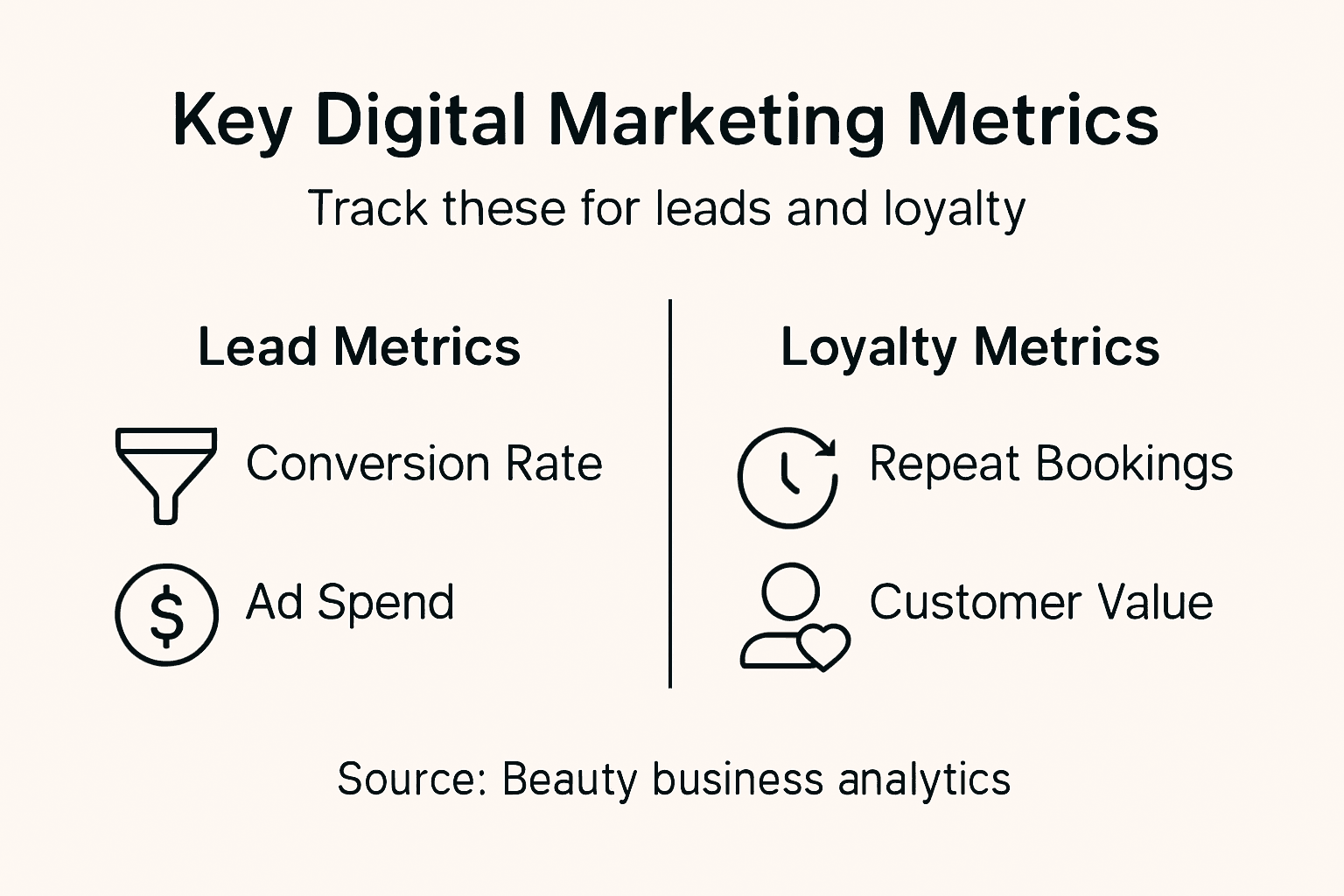
The essential metrics are:
To clarify the value of tracking marketing performance, here is a summary table of essential metrics and what they reveal for beauty businesses:
| Metric | What It Measures | Actionable Insight Provided |
|---|---|---|
| Customer Acquisition Cost | Cost to gain one new client | Budget efficiency and channel ROI |
| Conversion Rate | Website visitors who book | Booking process effectiveness |
| Return on Ad Spend (ROAS) | Revenue per dollar spent on ads | Ad performance and profitability |
| Customer Lifetime Value | Total client revenue over time | Retention impact and upsell opportunities |
- Customer Acquisition Cost (CAC): Total marketing spend divided by new clients acquired. If you spend $500 and gain five clients, your CAC is $100 per client.
- Conversion Rate: Percentage of website visitors who book. If 100 people visit and 10 book, your conversion rate is 10%.
- Return on Advertising Spend (ROAS): Revenue generated divided by ad spend. Spend $1,000 on ads, generate $5,000 in bookings, your ROAS is 5:1 (excellent).
- Customer Lifetime Value (CLV): Total revenue from one client across all bookings. A client who books five times at $200 each has a CLV of $1,000.
Setting Up Your Analytics Foundation
You need the right tools talking to each other. Without integration, you’re piecing together fragmented data that doesn’t tell the real story.
Essential tools:
- Google Analytics: Tracks website visitors, where they came from, and what they clicked
- Google Ads: Shows ad spend, clicks, and conversions from paid search
- Meta Ads Manager: Reports on Facebook and Instagram ad performance
- Email marketing platform: Tracks email open rates, click rates, and conversions
- Booking system: Records which clients booked, when, and which service they chose
- CRM: Connects all this data so you see each client’s complete journey
You don’t need expensive enterprise software. Start with free Google Analytics, your booking system’s built-in reporting, and one email platform like Mailchimp.
Real-Time Analytics and Decision-Making
Real-time analytics and predictive modelling enhance campaign effectiveness and ROI measurement across diverse digital contexts. For beauty businesses, this means checking performance weekly, not yearly.
What to monitor weekly:
- How many new leads came in from each channel
- How many of those leads converted to bookings
- Cost per booking by channel
- Email open and click-through rates
- Website traffic sources and behaviour
Then ask: Which channel brings the lowest-cost, highest-quality clients? Double that channel’s budget. Which channel wastes money? Pause it and reallocate that budget.
Using Data to Optimise Your Marketing
Data reveals problems invisible to intuition. Your Instagram feels busy but brings zero bookings. Your Google Ads cost $200 per booking. Your email list opens at 5%, which is terrible. These aren’t opinions; they’re facts that demand action.
Your marketing metrics tell you exactly where to focus improvement efforts. Low conversion rate? Improve your website or booking process. High CAC? Your targeting needs refinement. Low CLV? Your retention system needs work.
The process:
- Measure current performance
- Identify your weakest metric
- Test one change to improve it
- Measure again after 30 days
- Keep changes that work, discard those that don’t
Data removes emotion from marketing decisions. Instead of guessing, you know. Instead of hoping, you optimise.
Pro tip: Create a simple weekly dashboard showing your five most important metrics—new leads, bookings, cost per booking, email open rate, and website conversion rate—review it every Monday morning to spot trends and adjust your strategy accordingly.
Unlock Predictable Leads and Loyal Clients with the Marketing Vortex Method
Struggling to boost your beauty or service-based business’s leads and retention as described in the Functions of Digital Marketing: Boosting Leads and Loyalty article? You are not alone. Many business owners face challenges integrating SEO, paid ads, social media, and email into a seamless system that grows bookings while keeping your current clients coming back.
At Business Warriors, we specialise in turning that digital marketing complexity into an effective omnichannel strategy. Our proven Marketing Vortex method combines all core digital functions into one unstoppable funnel helping you attract the right clients, build emotional connections, and maximise your client lifetime value. With deep expertise focused on beauty, wellness, and service sectors, we help you eliminate guesswork and create measurable, scalable results.
Ready to stop wasting marketing dollars on disjointed efforts and start seeing predictable growth? Visit https://jarrodharman.com to explore how our team can partner with you for tailored SEO packages, paid advertising management, email nurturing systems, and social media strategies designed specifically for your business needs. Don’t miss out—connect now to elevate your client acquisition and retention with strategies proven to deliver.
Discover success stories and essential insights in the Uncategorized Archives – Jarrod Harman and take control of your business growth today.
Frequently Asked Questions
What are the core functions of digital marketing for beauty businesses?
Digital marketing for beauty businesses includes several core functions such as search engine optimisation (SEO), paid advertising, social media marketing, email marketing, content creation, and website optimisation. Each function plays a unique role in attracting and retaining clients.
How does SEO help boost leads for beauty businesses?
SEO helps beauty businesses by improving their visibility in search engine results, attracting clients who are actively searching for related services. Effective local SEO ensures that businesses appear in searches when potential clients seek services nearby.
What role does social media play in client loyalty?
Social media fosters client loyalty by building authentic connections and communities around beauty brands. It showcases transformations and encourages user-generated content, which helps establish trust and encourages past clients to return.
Why is email marketing important for beauty businesses?
Email marketing is essential for turning past clients into repeat bookings. It allows businesses to stay top-of-mind, provide personalised offers, and keep clients engaged, leading to higher retention and loyalty rates.
Recommended
- 10 Effective Lead Generation Strategies for Businesses – Jarrod Harman
- How to Get Leads for Digital Marketing: Proven Aussie Steps – Jarrod Harman
- How to Generate Leads in Digital Marketing: Proven Strategies – Jarrod Harman
- What Is Digital Marketing? Complete Expert Overview – Jarrod Harman
- 7 Effective Lead Generation Strategies for Your Business – AEONCUT PPF Pre-cut Cutting software
- 7 bewährte Tipps für bessere Kundenbindung im E-Commerce | aLIVE Support