


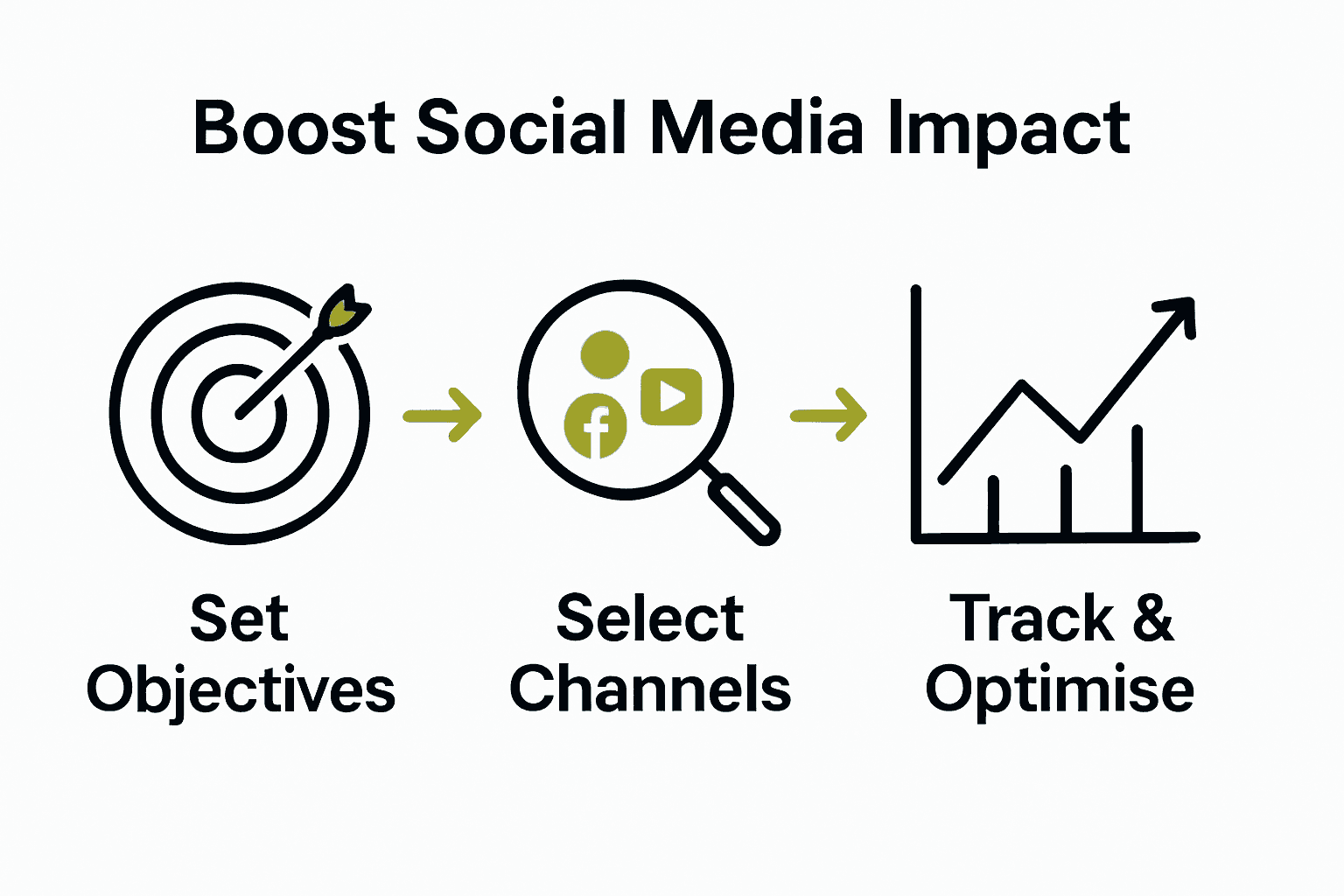
Over 80 percent of australian businesses use social media, yet many struggle to see real results. Setting clear objectives and understanding where your audience spends time online makes a huge difference. Whether you aim to reach new customers or build lasting engagement, having a focused strategy helps your australian brand thrive. This guide reveals practical steps to sharpen your social media approach and drive measurable progress.
Table of Contents
- Step 1: Define Clear Social Media Objectives
- Step 2: Select Platforms Aligned With Your Audience
- Step 3: Develop Engaging Omnichannel Content
- Step 4: Implement Consistent Posting and Interaction
- Step 5: Track Metrics and Optimise Performance
Quick Summary
| Key Insight | Explanation |
|---|---|
| 1. Set Clear Objectives | Define specific social media goals that align with overall business objectives for effective measurement. |
| 2. Choose Relevant Platforms | Select social media channels that match your target audience’s demographics and content preferences for maximum engagement. |
| 3. Create Engaging Content | Develop a cohesive omnichannel content strategy that resonates with your audience while adapting to each platform’s strengths. |
| 4. Maintain Consistent Interaction | Establish a regular posting schedule and engage with your audience to build anticipation and loyalty. |
| 5. Monitor and Optimise Metrics | Track relevant metrics to refine your strategy, ensuring continuous improvement based on performance data. |
Step 1: Define Clear Social Media Objectives
Establishing precise social media objectives is the foundational strategy for creating meaningful online impact. Your social media goals must directly align with your broader business outcomes and provide a clear roadmap for digital engagement.
According to St Lawrence University, successful departments define specific goals for their social media accounts and measure success by directly aligning metrics with those objectives. For your business, this might mean identifying key performance indicators such as increased brand awareness, lead generation, customer engagement, or direct sales conversions.
When crafting your social media objectives, consider these strategic approaches:- Quantify your goals with specific numerical targets- Ensure objectives are realistic and achievable within your current resources- Link social media goals to broader marketing and business strategies- Select metrics that genuinely reflect meaningful business outcomesAs William & Mary demonstrates through their comprehensive social media strategy, objectives can encompass building community, supporting brand messaging, offering customer service, and encouraging audience interaction. Your specific goals will depend on your industry, target audience, and unique business needs.
Remember that well-defined objectives transform social media from a random activity into a strategic business tool. They provide direction, focus your efforts, and create a benchmark for measuring your digital marketing success.
Step 2: Select Platforms Aligned With Your Audience
Navigating the complex world of social media requires strategic platform selection that resonates with your specific target demographic. Not all social platforms are created equal, and understanding their unique characteristics is crucial for effective digital engagement.
University of Illinois highlights the critical importance of selecting social media channels that precisely match your audience demographics and content preferences. Each platform demands a nuanced approach tailored to its specific user behaviour and interaction patterns.
Consider these strategic platform selection criteria:- Identify where your target audience predominantly spends their online time- Analyse platform user demographics meticulously- Match content types with platform strengths (video, images, long form text)- Evaluate platform engagement metrics and potential reach
As Grand Rapids Community College emphasises, understanding each platform unique audience and content best practices is fundamental to meaningful user engagement. For service businesses, this might mean prioritising LinkedIn for B2B connections, Instagram for visual storytelling, or Facebook for community building.
To streamline your platform strategy, create a social media marketing plan template that maps your audience insights directly to platform selection. Remember that quality engagement matters far more than simply maintaining a presence across every available channel.
Step 3: Develop Engaging Omnichannel Content
Creating a powerful omnichannel content strategy requires more than simply posting across multiple platforms. Your goal is to craft a cohesive narrative that resonates with your audience while adapting to each platform unique characteristics and audience expectations.
Coursera outlines a strategic eight-step approach to developing a comprehensive social media content strategy. This approach emphasises defining clear goals, understanding your audience deeply, and creating content that is thoughtfully tailored for different platforms while maintaining a consistent brand voice.
Key strategies for developing engaging omnichannel content include:- Maintain consistent brand messaging across all platforms- Adapt content format to each platform strengths- Create platform specific content variations- Use analytics to understand audience engagement- Develop a content calendar for strategic planning
As Worcester State University emphasises, the critical factor is understanding your target audience and creating content that genuinely resonates across various social media channels.
 This means recognising that a LinkedIn professional audience will respond differently to content compared to an Instagram visual audience.
For a comprehensive approach to content creation, explore our content marketing workflow guide which provides deeper insights into developing a systematic and effective content strategy that adapts to the dynamic digital landscape.
Step 4: Implement Consistent Posting and Interaction
Building a robust social media presence demands more than sporadic content publishing. Your strategy must encompass regular, predictable engagement that keeps your audience connected and anticipating your next communication.
St Lawrence University recommends establishing a consistent posting schedule that maintains audience interest and momentum. This involves creating a strategic content calendar that balances frequency, quality, and platform specific nuances.
Key approaches for consistent posting and interaction include:- Schedule content using social media management tools- Develop a content mix of educational, entertaining, and promotional posts- Respond to comments and messages within 24 hours- Track engagement metrics to refine your approach- Create a predictable posting rhythm across platforms
As Worcester State University emphasises, understanding your target audience is crucial to developing meaningful interactions. This means tailoring your communication style, response time, and content depth to match each platform unique audience expectations.
Pro tip: Aim for quality over quantity. Consistent does not mean bombarding followers with content. Instead, focus on creating valuable interactions that genuinely serve your audience needs and reinforce your brand identity.
Step 5: Track Metrics and Optimise Performance
Successful social media marketing requires more than intuition. You need a data driven approach that transforms raw numbers into actionable insights that continuously improve your digital strategy.
St Lawrence University emphasises the critical importance of measuring social media efforts by precisely aligning metrics with your predefined objectives. This means going beyond surface level vanity metrics to understand the genuine impact of your digital engagement.
Key metrics to track and analyse include:- Engagement rates across different platforms- Conversion rates from social media traffic- Reach and impressions of your content- Click through rates on specific posts- Audience growth and demographic shifts- Response times and interaction quality
Coursera highlights the necessity of continually refining your social media strategies based on performance data. This involves regularly reviewing your analytics, identifying patterns, and making strategic adjustments to optimise your content and approach.
For a deeper understanding of performance tracking, explore our guide on search optimisation which provides additional insights into interpreting digital marketing metrics and translating data into meaningful strategic improvements.
Elevate Your Social Media Strategy with Proven Expertise
If you find yourself struggling to turn social media activity into real business growth, you are not alone. This article highlights how clear objectives, platform alignment, engaging omnichannel content and consistent interaction are essential strategies. Yet, many business owners face challenges in implementing these steps effectively. At Business Warriors, we understand these pain points and specialise in transforming social media from a random activity into a powerful, measurable marketing tool that delivers consistent leads and sales.
Ready to move beyond trial and error and start seeing tangible results? Explore how our unique “Marketing Vortex” method integrates SEO, paid ads, email marketing and social media to create a scalable digital presence tailored to your business goals. Visit Uncategorized Archives – Jarrod Harman for practical insights or jump straight into actionable strategies on our landing page. Don’t wait to give your social media presence the professional edge it needs. Connect now with https://jarrodharman.com and start turning your online impact into real-world success.
Frequently Asked Questions
How can I define clear social media objectives for my business?
To define clear social media objectives, first identify specific goals such as increasing brand awareness or generating leads. Write down measurable targets, ensuring they align with your overall business strategy, and evaluate your progress regularly to stay on track.
What platforms should I choose to boost my social media presence?
Select social media platforms based on where your target audience is most active. Research demographics and interactions on each platform, and prioritise those that align with your audience’s preferences, ensuring you focus your efforts where you’ll have the greatest impact.
How do I create engaging content for multiple social media platforms?
Develop engaging content by tailoring your messages to suit the strengths of each platform while maintaining a consistent brand voice. Use a content calendar to plan and organise content, ensuring you adapt formats like videos or images to resonate with each audience effectively.
What is the best way to maintain consistent posting and interaction on social media?
Establish a regular posting schedule to keep your audience engaged and anticipating your content. Use social media management tools to help plan your posts, and aim to respond to audience interactions within 24 hours to foster a strong community connection.
How can I track the performance of my social media efforts?
Track the performance of your social media strategy by monitoring key metrics such as engagement rates, conversion rates, and audience growth. Regularly analyse this data to identify trends and make adjustments to your content strategy, aiming for continual improvement every month.
What steps should I take to optimise my social media performance?
To optimise your social media performance, regularly review your metrics to understand what’s working and what isn’t. Make data-driven adjustments to your content and posting strategies, aiming for at least a 10% improvement in your key metrics within the next quarter.
Recommended
- Create a Social Media Marketing Plan Template for Success – Jarrod Harman
- How to Grow Online Business Through Social Media Effectively – Jarrod Harman
- 7 Creative Social Media Marketing Ideas for Small Business – Jarrod Harman
- 10 Creative Social Media Marketing Ideas to Boost Engagement – Jarrod Harman
- Social Media Automation Guide: Boost Engagement Effortlessly – BizDev Strategy
- 7 Top-Tipps für Social Media Clips für Unternehmen – M-four