1 August 2026
How to grow my small business online: 90-day SEO plan
Learn how to grow my small business online with a focused 90-day SEO plan. Boost visibility, engage customers, and drive sales effectively.
To grow your small business online in Australia, do this first: pick one clear offer, build a single conversion-focused page, start an owned email list, then run low-cost paid tests to validate demand. That single-thread approach consistently outperforms trying to be everywhere at once. In 2026, 87% of consumers start their product and service searches online, which means your visibility is your revenue.
Three quick wins you can complete today:
- Claim your Google Business Profile at business.google.com, it is the fastest free visibility a local Australian business can get, and it feeds directly into Google Maps and local search results.
- Publish one offer page with a clear headline, price or price range, and a single call to action (book, buy, or enquire). One focused page beats a full website that says nothing specific.
- Send 20 personalised direct messages to people who already know you, past clients, warm contacts, community members. The 20-conversation rule is the fastest way to confirm real demand before you spend a dollar on ads.
For broader guidance on building your presence from the ground up, business.gov.au is the most authoritative Australian government resource for small business growth planning.
Table of Contents
- What is your business model, niche and one clear offer?
- Does your website actually convert, or just exist?
- How do Australian customers actually find you online?
- How should you split effort and budget across acquisition channels?
- How do you turn first-time buyers into repeat customers?
- What should you actually measure, and how do you run experiments?
- When should you hire, outsource, or automate?
- Your 90-day growth sprint: a week-by-week plan
- How do online reviews actually grow an Australian small business?
- Should you sell on Australian online marketplaces?
- What payment options do Australian mobile shoppers expect?
- How do you work with Australian influencers and local digital communities?
- What do Australian consumers expect from online customer service?
- Key takeaways
- What actually works in Australia, and what wastes your time
- Business Warriors helps Australian service businesses grow online
- Useful Australian sources and tools
What is your business model, niche and one clear offer?
Most people pick an idea and then try to figure out the model. Flip that. Decide how you will make money first, then shape the idea around it. For Australian small businesses starting out, three models offer the shortest path to first revenue: a service (fastest to sell, lowest setup cost), a digital product (no fulfilment, strong margins), or a membership (recurring income, harder to build but worth it at scale).
Mini workbook prompts to nail your offer:
- Who is your ideal customer, and what does their day look like when the problem you solve is at its worst?
- What single outcome do you deliver, and can you name it in one sentence?
- What is the one offer you will test first, and what price point makes the margin work after your time and costs?
- How will you package it: one-off, retainer, course, or subscription?
Validation checklist before you build anything:
- Talk to 20 potential buyers. If you cannot find 20 people interested enough to have a conversation, the market is either too small or you have not found it yet.
- Run a pre-sale or waitlist with a small deposit. Real money from real people is the only validation that counts.
- Build a single landing page and drive a small amount of traffic to it. Watch what happens before you invest in a full website or product build.
Pro Tip: In Australia, check your model against ACCC consumer law requirements and any industry-specific licensing before you launch. A beauty clinic, financial adviser, and e-commerce store each carry different obligations. The ATO’s e-commerce tax obligations page is worth ten minutes of your time before you take your first payment.
Does your website actually convert, or just exist?
Your website is your conversion engine. Everything else, SEO, ads, social media, sends people there. If the page does not convert, every dollar you spend on traffic is wasted. Fix the page that sells your offer before you touch anything else.
Speed and mobile audit checklist:
- Page load time under 3 seconds. 53% of users abandon a site that takes longer, and 73% of web traffic comes from mobile devices in Australia.
- Mobile layout tested on an actual phone, not just a browser simulator.
- SSL certificate active (the padlock in the browser bar). Google penalises non-HTTPS sites in rankings.
- Simple booking or payment flow. Australians use Stripe, Square, and PayPal widely; Afterpay and Zip are expected in retail and service contexts.
Conversion checklist for your offer page:
- Headline states the outcome, not the process (“Get 30 new bookings a month” beats “Welcome to our salon”).
- Value proposition visible above the fold without scrolling.
- Social proof: Google reviews, before/after results, or a named client outcome.
- Price or price range stated clearly. Hiding the price increases bounce rate.
- One call to action only. Every extra button you add reduces the chance someone clicks any of them.
For CMS, Shopify suits product-based businesses, while WordPress with WooCommerce or Squarespace works well for service businesses and local operators. Whichever you choose, run a quick A/B test on your headline within the first week. Change one word, run it for seven days, and pick the winner.
Pro Tip: Google PageSpeed Insights is free and gives you a specific score with fix-by-fix instructions. Run it on your offer page before you spend a cent on ads. A score below 70 on mobile is costing you customers right now.

How do Australian customers actually find you online?
Local and intent-driven search drive most first-time customers to Australian small businesses. Optimise for both, and you get traffic that is already looking to buy.
Google Business Profile: your fastest local win
- Go to business.google.com and claim your listing.
- Add your exact business name, address, and phone number (NAP). These must match every other directory listing you have.
- Choose the most specific primary category available (e.g. “Beauty Salon” not just “Health”).
- Upload at least ten photos: exterior, interior, team, and work examples.
- Add your services with descriptions and prices where possible.
- Set up the Q&A section with your own questions and answers.
- Request reviews from every satisfied client. Respond to every review, positive or negative.
Local citations matter too. Get your NAP listed consistently on True Local, Yellow Pages Australia, Yelp Australia, and any industry-specific directories. Inconsistent NAP details across directories confuse Google and suppress your local rankings.
On-page SEO that actually moves rankings
Target keyword intent, not just keyword volume. A searcher typing “laser hair removal Perth” is ready to book. One typing “how does laser hair removal work” is researching. Write separate pages for each intent, and do not try to rank one page for both.
Meta title template for a local service business:
[Service] in [Suburb/City] | [Business Name], [Key Benefit]
Example: Laser Hair Removal in Fremantle | Glow Clinic, Book Same Week
Meta description template:
[Outcome] for [audience] in [location]. [Trust signal]. Book online or call [phone].
For technical SEO, prioritise: mobile-first indexing (Google crawls your mobile version first), a clean sitemap submitted via Google Search Console, and no broken internal links. Install Google Search Console from day one. It shows you exactly which queries bring people to your site, which pages rank, and which have indexing problems.
For deeper guidance on increasing online visibility as a service business, Jarrodharman covers the full local SEO checklist with worked examples.
How should you split effort and budget across acquisition channels?
Pick one organic channel and one paid channel, run them for six months, and stack email as your retention layer. Chasing five channels at once produces mediocre results on all of them.
| Channel | Best for | Realistic timeline to results |
|---|---|---|
| SEO content | Long-term organic traffic, local search | 3–6 months to meaningful rankings |
| Short-form video (Reels, TikTok) | Cold audience reach, brand awareness | 4 weeks with consistent posting |
| Google Ads | High-intent buyers, local service searches | 2–4 weeks to first leads (with testing budget) |
| Meta Ads (Facebook/Instagram) | Retargeting, awareness, service bookings | 4 weeks to profitable creative |
| Email/SMS | Retention, repeat bookings, referrals | Immediate for existing list |
Running low-cost ad tests without burning cash
Start with a budget framework that balances spending on proven channels, promising tests, and experiments. For Google Ads, target high-intent local keywords first (“dentist Bondi Junction” rather than “dentist”). For Meta Ads, test three creative variations with a small daily spend before committing to a winner.
Plan for a moderate initial test spend before you find profitable creative. That is not wasted money; it is the cost of data. Run each creative for at least a week before drawing conclusions, and kill anything with a cost per lead more than twice your target.
Sample budget allocations:
- Shoestring ($500/month): 100% on SEO content and Google Business Profile optimisation. Zero paid ads until organic is working.
- Starter ($1,500/month): $800 on content and SEO, $500 on Google Ads (local intent), $200 on email tools and list building.
- Growth ($3,000+/month): $1,000 on SEO and content, $1,200 on Google Ads, $600 on Meta Ads, $200 on email automation.
Content repurposing is how one-person teams stay consistent without burning out. Write one long-form blog post, cut it into three short-form video scripts, pull the key insight for your email newsletter, and turn the best stat into a lead magnet. One piece of content, four distribution points.
For practical social media marketing ideas that work for small Australian businesses, Jarrodharman’s guide covers repurposing and production cadence in detail.
Pro Tip: Short-form video platforms over-index new creators for a short window. The first 30 days on a new account often get disproportionate reach. Post daily for the first four weeks, even if the production quality is rough. Consistency beats polish at the start.
How do you turn first-time buyers into repeat customers?
Retention beats acquisition for return on investment. Acquiring a new customer costs significantly more than keeping an existing one, and your owned email and SMS list is the only channel where you control the reach entirely.
Automated email flows every small business needs:
- Welcome series (days 1, 3, 7): Deliver the lead magnet, introduce your story, make a soft offer.
- Post-purchase nurture (days 2, 7, 14 after first buy): Confirm the purchase, share a usage tip, ask for a review.
- Re-engagement (60 days of silence): Send a “we miss you” with a time-limited offer or new service announcement.
- Win-back (90+ days inactive): One final offer, then move to a suppression list to protect deliverability.
- Referral prompt (after a positive review or repeat purchase): Ask for a referral with a clear incentive.
Segmentation by behaviour:
- One-off buyer: needs a reason to return; send a second-purchase offer within 14 days.
- Repeat buyer: reward loyalty; give early access or a loyalty discount.
- High-LTV customer: treat them as a VIP; personalise communications and offer exclusive access.
Tools that integrate well with Australian payments and booking systems include Klaviyo and Mailchimp for email, and SimpleTexting or MessageMedia for SMS. Both SMS platforms hold Australian carrier agreements and comply with the Spam Act 2003.
A quick compliance note: under Australian Consumer Law and the Spam Act 2003, every marketing email and SMS must include a functional unsubscribe mechanism and your business’s physical address.
What should you actually measure, and how do you run experiments?
Measure the funnel, not vanity metrics. Page views and follower counts feel good but tell you nothing about whether the business is growing. The numbers that matter are conversions, customer acquisition cost (CAC), lifetime value (LTV), and retention cohorts.
KPIs by stage:
- Pre-sale: landing page conversion rate, cost per lead, email opt-in rate. Ignore traffic volume until conversion is above 2%. 88% of users do not return after a negative site experience, so usability is paramount.
- First sale: CAC, average order value, checkout abandonment rate. Ignore social engagement until CAC is under control.
- Scale: LTV:CAC ratio (aim for 3:1 or better), retention cohort by month, referral rate.
Sample budget and timeline table
| Phase | Monthly ad spend | Expected timeline | Key metric |
|---|---|---|---|
| Test | $500–$1,000 | Weeks 1–6 | Cost per lead |
| Optimise | $1,000 or more | Weeks 7–12 | CAC vs LTV |
| Scale | $3,000+ | Month 4 onward | LTV:CAC ratio |
Experiment checklist:
- Write a hypothesis: “Changing the CTA from ‘Learn more’ to ‘Book a free consult’ will increase conversions by X%.”
- Choose one metric to measure.
- Run for a minimum of two weeks or until you have statistical confidence.
- Set a decision rule before you start: if the variant beats control by more than 10%, roll it out.
Analytics-driven marketing consistently produces better returns than gut-feel decisions. Set up GA4 from day one, configure conversion events (not just page views), and check your dashboard weekly, not daily.
When should you hire, outsource, or automate?
Delay hiring until your revenue and processes are repeatable. Bringing on a full-time employee before you have a documented process means you are paying someone to figure out what you have not yet figured out yourself.
Decision checklist before any hire:
- Is this task repeatable and documentable? If yes, it can be outsourced or automated.
- Does it directly affect customer experience? If yes, keep it close until quality is proven.
- Does the time cost exceed the contractor rate? If yes, outsource it.
- Is revenue consistent enough to cover a salary for six months if growth stalls? If not, use contractors.
Role priority order for small businesses:
- Contractor first: copywriter, paid ads manager, web developer, bookkeeper. These are tactical, project-based, and easy to scope.
- Part-time second: customer service, social media coordinator, virtual assistant. These roles need consistency but not full-time hours initially.
- Full-time last: operations manager or marketing manager, only once revenue justifies it.
Automation examples that save real hours:
- AI tools like ChatGPT or Claude for first-draft copy, email sequences, and social captions.
- Calendly or Acuity Scheduling for booking automations that eliminate back-and-forth.
- Xero or MYOB for payment reconciliation and invoicing.
- ManyChat for simple Facebook and Instagram chat automations that qualify leads 24/7.
Access to business financing can accelerate growth when you need to invest in inventory or scale ad spend ahead of revenue. In Australia, the ATO’s small business loan options and state government grants are worth checking before approaching commercial lenders.
Your 90-day growth sprint: a week-by-week plan
A focused 90-day sprint, one offer, one organic channel, one paid channel, and email, consistently outperforms scattered effort across six months. This is the core logic behind the Marketing Vortex method: concentrate force on one system until it produces predictable results, then layer the next channel on top.
90-day timeline

| Phase | Weeks | Focus | Checkpoint |
|---|---|---|---|
| Set up and validate | 1–4 | Offer page live, GBP claimed, email list started, first ad test running | 10+ leads generated, cost per lead known |
| Optimise and repeat | 5 | A/B test headline and CTA, refine ad creative, publish 4 pieces of content, send 4 emails | CAC trending down, open rate healthy |
| Scale or pivot | , | Double budget on winning creative, add second channel, review LTV:CAC | LTV:CAC at 3:1 or better; if not, pause ads and fix conversion |
Scaling rules:
- Double your ad budget only when CAC is profitable for two consecutive weeks.
- Hire when a repeatable process exists and revenue covers six months of salary.
- Pause and fix when cost per lead rises for three consecutive weeks without a clear cause.
For online marketing tips that map directly to this sprint framework, Jarrodharman’s 2026 guide covers the week-by-week detail.
How do online reviews actually grow an Australian small business?
Reviews are not just social proof. In Australia, Google reviews directly influence local search rankings, and Google Business Profile review velocity (how frequently you receive new reviews) is a confirmed local ranking signal. A business with more reviews and high overall ratings can consistently outrank competitors with fewer reviews, even if the competitors have slightly higher individual scores.
Building a review system that runs itself:
- Ask every satisfied client within 24 hours of their experience, while the feeling is fresh. A direct link to your Google review page removes all friction.
- Use an automated post-purchase email or SMS to request a review. The message should be personal, brief, and include the direct link.
- Respond to every review within 48 hours. For negative reviews, acknowledge the issue, offer a resolution, and take the conversation offline. Google rewards responsiveness.
- Display reviews prominently on your website and offer page. Screenshots of Google reviews embedded on a landing page increase conversion rates.
Beyond Google, Australians use Facebook Reviews, ProductReview.com.au, and industry-specific platforms like Houzz (trades and interiors) and RateMyAgent (real estate). Identify where your customers look before they buy, and prioritise those platforms.
The ACCC has clear guidelines on testimonials and reviews: you cannot pay for positive reviews, selectively display only positive feedback, or use fake reviews. Breaching these rules carries significant penalties under Australian Consumer Law.
Should you sell on Australian online marketplaces?
Marketplaces like eBay Australia and Etsy Australia give you access to an existing buyer audience without building your own traffic from scratch. The trade-off is margin: marketplace fees typically run between 6.5% and 15% depending on the platform and category, and you do not own the customer relationship.
When marketplaces make sense:
- You are validating a product idea before investing in a standalone store.
- Your product category has strong existing search volume on that platform (handmade goods on Etsy, electronics and collectibles on eBay).
- You want a secondary revenue channel alongside your own website.
Platform-specific notes for Australia:
- Etsy Australia: Strong for handmade, vintage, and personalised products. Australian sellers list in AUD and can use Etsy Payments, which processes through Stripe. Shipping expectations from Australian buyers are high; use Australia Post’s eParcel integration for tracking.
- eBay Australia: Dominant for electronics, fashion, and general merchandise. eBay’s Managed Payments system handles all transactions. The eBay Australia Seller Hub provides analytics on impressions, click-through rates, and conversion by listing.
- Amazon Australia: Growing rapidly, particularly for household goods and books. Fulfilment by Amazon (FBA) is available in Australia and removes the logistics burden entirely.
The key rule: treat marketplaces as a customer acquisition channel, not a long-term home. Capture buyer emails where platform rules allow, and direct repeat customers to your own website over time.
What payment options do Australian mobile shoppers expect?
Mobile commerce is not a trend in Australia; it is the default. Most Australians complete purchases on a phone, which means your checkout must be built for a small screen and a short attention span.
Payment options Australian buyers expect:
- Afterpay and Zip: Buy-now-pay-later is mainstream in Australian retail and service bookings. Businesses that do not offer it lose a measurable share of younger buyers.
- Apple Pay and Google Pay: One-tap checkout reduces cart abandonment significantly. Both are supported by Stripe, Square, and most major Australian payment gateways.
- PayPal: Still widely trusted, particularly for first-time purchases from unfamiliar brands.
- Direct bank transfer (BPAY and PayID): Common for B2B and higher-value service invoices.
For service businesses taking bookings, Square Appointments and Timely both offer mobile-optimised booking flows with integrated payment collection. Stripe is the developer-friendly option for custom checkout builds.
A mobile checkout that requires more than three taps to complete will lose customers. Test your own checkout on a phone monthly. If you would abandon it, your customers will too.
How do you work with Australian influencers and local digital communities?
Influencer marketing in Australia works best when the partnership is genuinely local and niche-specific. A Perth-based beauty clinic partnering with a Melbourne macro-influencer who has no local audience is spending money on reach that cannot convert to bookings.
Finding the right Australian partners:
- Micro-influencers (5,000–50,000 followers) with a local or niche audience typically deliver better conversion rates than macro accounts. Their audiences trust them more, and their rates are accessible for small businesses.
- Search Instagram and TikTok for location tags in your city and relevant hashtags in your category. The accounts appearing consistently in those searches are your best partnership candidates.
- Australian influencer platforms like Tribe and Hypetap connect brands with vetted creators and handle contracts and payments.
Local digital communities worth joining:
- Facebook Groups for your local business district or industry (e.g. “Perth Small Business Network”).
- LinkedIn communities for B2B service businesses.
- Industry-specific Slack groups and forums where your ideal clients spend time.
Partnerships do not have to mean paid sponsorships. Cross-promotions, guest posts, podcast appearances, and joint giveaways with complementary businesses in your area can generate significant reach at near-zero cost. A physiotherapy clinic and a yoga studio share an audience but do not compete; a joint campaign benefits both.
For social media advertising best practices that apply directly to influencer and paid social campaigns, Coleman Web Designs covers the creative and targeting fundamentals.
What do Australian consumers expect from online customer service?
Australian consumers expect fast, direct, and honest responses. The cultural norm here leans away from scripted corporate language and toward plain-spoken, personal communication. A reply that sounds like it came from a real person will always outperform a templated auto-response.
Response time expectations:
- Social media comments and DMs: within 2–4 hours during business hours.
- Email enquiries: same business day, or within 24 hours at the outside.
- Google review responses: within 48 hours.
- Live chat: under 2 minutes, or set clear offline hours.
Practical engagement practices:
- Use ManyChat or Tidio for automated first-response on Facebook and Instagram. The automation handles the initial reply and qualifies the enquiry; a human follows up within the hour.
- Set up a Google Business Profile messaging feature so customers can contact you directly from search results.
- Create a simple FAQ page that answers the five questions you get asked most often. This reduces inbound volume and improves SEO simultaneously.
- After resolving a complaint, follow up 48 hours later to confirm the customer is satisfied. That single follow-up generates more positive reviews and referrals than almost any other tactic.
Australian Consumer Law gives buyers strong rights around refunds, returns, and service guarantees. Being transparent about your policies upfront, and honouring them without argument, is both a legal requirement and the fastest way to build a reputation that generates word-of-mouth growth.
Key takeaways
The single most important principle for growing your small business online in Australia is this: pick one offer, build one conversion-focused page, start your owned email list, and run one paid test before adding any further complexity.
| Point | Details |
|---|---|
| Start with one offer and one page | A focused offer page with a clear CTA converts far better than a full website with no specific goal. |
| Local SEO and GBP come first | Claiming and optimising your Google Business Profile is the fastest free visibility available to any Australian small business. |
| Plan for $200–$500 in ad testing | Expect an initial period of test spend before paid ads become profitable; this is data, not waste. |
| Measure CAC, LTV and retention | Vanity metrics like page views tell you nothing; track cost per acquisition and lifetime value from your first sale. |
| Jarrodharman’s Marketing Vortex | Business Warriors’ integrated SEO, paid ads, email and social system is built for Australian service businesses ready to scale predictably. |
What actually works in Australia, and what wastes your time
The most common mistake Australian small business owners make online is starting with too many channels. A salon owner running Google Ads, posting daily on three social platforms, sending a weekly newsletter, and trying to rank for SEO simultaneously will do all of them poorly. The businesses that break through pick one system, run it for 90 days, and only add the next channel once the first is producing consistent results.
The second trap is chasing vanity metrics. Follower counts, impressions, and website visits feel like progress. They are not. A business with 400 Instagram followers and a 12% email conversion rate is in a far stronger position than one with 40,000 followers and no list.
Under-pricing is the third failure mode, and it is particularly common in the Australian service sector. Competing on price against larger operators with lower cost bases is a race you cannot win. The businesses that grow sustainably online compete on specificity: a clearer offer, a more defined audience, and a stronger proof of outcome.
The turnaround pattern we see most often at Business Warriors looks like this: a service business has been running ads for six months with no clear results, posting inconsistently on social media, and wondering why the phone is not ringing. The fix is almost never a new channel. It is almost always a clearer offer, a faster-loading page, and a systematic approach to collecting and displaying reviews. Within 90 days of fixing those three things, the existing ad spend starts producing leads.
Business Warriors helps Australian service businesses grow online
If the plan above is clear but the execution feels like more than your current capacity allows, that is exactly the situation Business Warriors was built for. The agency’s Marketing Vortex approach combines SEO, Google Ads, Meta advertising, email marketing, and web development into one integrated system, so your channels reinforce each other rather than competing for your attention.
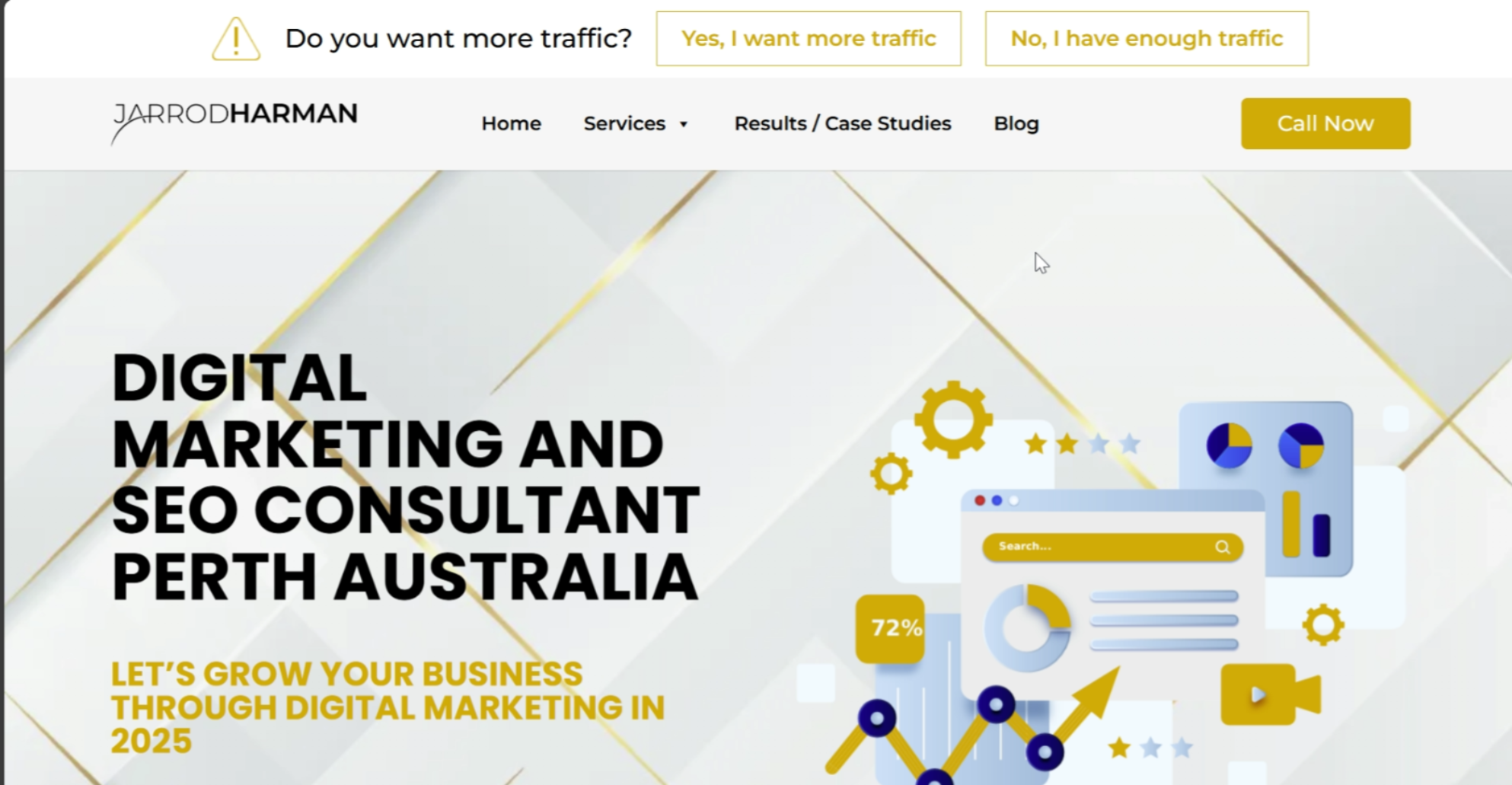
Business Warriors works with Australian service businesses, clinics, salons, law firms, e-commerce brands, and multi-location operators who have a real marketing budget and are ready to implement. The agency offers SEO ranking guarantees and bookings-per-month guarantees, which means the results are measurable and accountable, not just promised. Jarrod Harman and the team are based in Perth and serve clients across Australia.
If you are generating revenue but growth has plateaued, or you have tried ads without a clear system behind them, the proven client acquisition strategies page outlines exactly how Business Warriors approaches the first 90 days with a new client. Book a strategy call directly from that page to get a specific plan for your business.
Useful Australian sources and tools
Government and authoritative resources:
- business.gov.au, Guide to growing your business: The Australian government’s central resource for small business growth planning, grants, and compliance.
- NSW Government, Grow your business: State-level support programmes, mentoring, and funding options for NSW businesses.
- Grow with Google APAC: Free training and tools for getting your business online, including Google Business Profile setup guides.
Tools that work well for Australian small businesses:
- CMS and e-commerce: Shopify (product businesses), WordPress with WooCommerce (flexible), Squarespace (service businesses and portfolios).
- Payments: Stripe, Square, PayPal, Afterpay, Zip. All support AUD and comply with Australian financial regulations.
- Email marketing: Klaviyo (e-commerce), Mailchimp (general small business). Both offer free tiers up to a subscriber limit.
- Booking and scheduling: Acuity Scheduling, Timely, Square Appointments. All integrate with Australian payment gateways.
- SEO and analytics: Google Search Console (free, essential), Google Analytics 4 (free), Ahrefs or SEMrush for keyword research (paid, worth it once you are investing in content).
- SMS marketing: MessageMedia and SimpleTexting both hold Australian carrier agreements and comply with the Spam Act 2003.
Free vs paid trade-off: Start with free tiers on every tool until you have validated revenue. Klaviyo, Mailchimp, and Google Search Console give you everything you need in the first six months at no cost. Upgrade to paid tiers when the free limits constrain a specific capability you are actively using, not before.