


Running a busy salon or wellness clinic in Australia, you know how hard it is to fill your calendar without wasting money on ads no one clicks. Traditional cold calls rarely attract the people you truly want as clients. With inbound lead generation, you draw prospects who are actively searching for the services you provide, building genuine trust and long-term relationships. This article shows how clear, ethical online strategies can help Australian service business owners create sustainable growth without intrusive tactics or legal risks.
Table of Contents
- Inbound Lead Generation Explained Clearly
- Core Methods Driving Inbound Results
- Key Steps in the Inbound Process
- Pitfalls and Common Legal Traps
Key Takeaways
| Point | Details |
|---|---|
| Focus on Inbound Marketing | Attract prospects by creating valuable content that addresses their pain points, leading them to seek your services. |
| SEO is Crucial | Optimising your website for search terms relevant to your business is essential for driving organic traffic. |
| Build Genuine Relationships | Use email nurturing to maintain contact with interested prospects, providing valuable content to build trust. |
| Legal Compliance Matters | Ensure adherence to Australian laws regarding data privacy and advertising standards to avoid fines and protect your reputation. |
Inbound Lead Generation Explained Clearly
Inbound lead generation is fundamentally different from traditional sales tactics. Rather than interrupting potential customers with cold calls or unsolicited emails, inbound focuses on attracting prospects who are actively searching for solutions you provide.
The core principle is simple: create valuable content that addresses your target audience’s pain points. When someone searches for a solution to their problem, your helpful content appears, builds trust, and naturally leads them towards your services.
This approach works exceptionally well for service-based business owners. Women running salons, spas, wellness clinics, or beauty businesses often find that organic traffic converts better than paid interruptions. Prospects arrive already interested and qualified.
How Inbound Differs From Outbound
Outbound marketing pushes your message outward—think cold calling, billboards, or direct mail. You’re interrupting someone’s day hoping they need what you sell.
Inbound marketing pulls people toward you through valuable content. Creating content that addresses customer needs means prospects find you when they’re ready to buy, not when you decide to reach out.
Here’s what makes inbound superior for sustainable growth:
To clarify the differences, here’s a side-by-side comparison of inbound and outbound lead generation:
| Aspect | Inbound Lead Generation | Outbound Lead Generation |
|---|---|---|
| Approach | Attracts prospects actively seeking solutions | Reaches out to cold audiences |
| Customer Intent | High—prospects are already interested | Low—prospects may not be ready or aware |
| Cost Over Time | Decreases as content compounds | Remains steady or increases with outreach |
| Relationship Building | Builds trust through valuable content | Difficult, often viewed as intrusive |
| Sustainability | Generates ongoing leads from owned assets | Relies on continuous spending and effort |
- Builds genuine trust and authority in your niche
- Attracts pre-qualified prospects already seeking solutions
- Generates continuous traffic from search engines and social platforms
- Costs significantly less per lead than paid advertising alone
- Creates sustainable competitive advantage through owned content
The Three Key Components
Search engine optimisation (SEO) forms the foundation. When you optimise your website and blog content for keywords your customers search for, you attract organic traffic. This means ranking for terms like “best beauty therapist near me” or “holistic wellness clinic in Perth.”

Content marketing provides the value that keeps prospects engaged. Blog posts, videos, guides, and case studies answer questions your ideal clients are asking. This positions you as an expert worth hiring.
Lead capture systems convert interested visitors into actual leads. Email signup forms, consultation request buttons, and booking systems turn website traffic into actionable contacts.
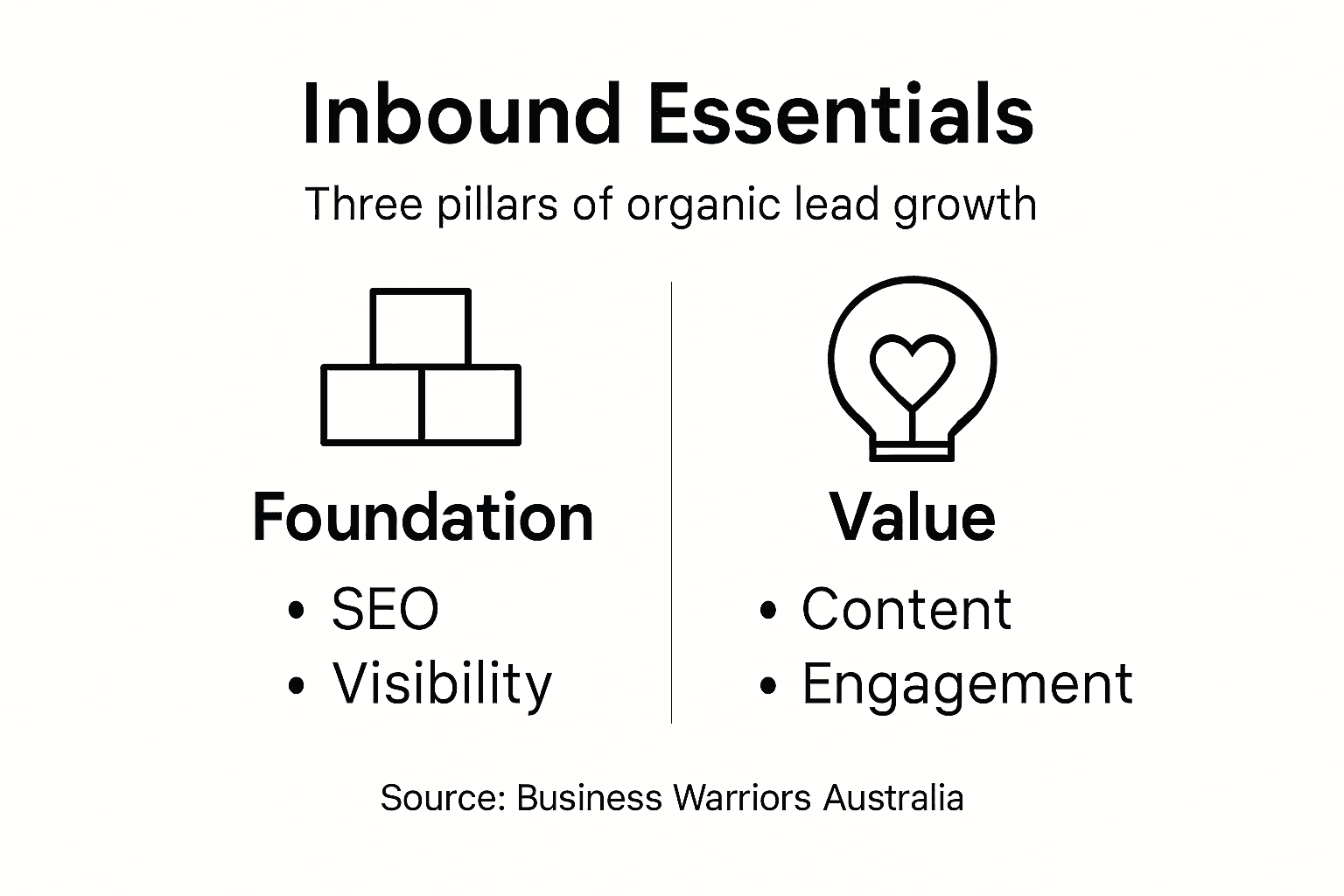
When these three work together, lead generation becomes a sustainable, scalable process rather than a constant hustle.
Why Your Service Business Needs This
As a service-based business owner, your reputation and expertise are your greatest assets. Inbound marketing amplifies both. When you consistently publish helpful content addressing client concerns, search engines rank you higher, and potential customers view you as the obvious choice.
Many Australian service businesses still rely entirely on referrals or paid ads. Both work, but inbound creates a third revenue stream that compounds over time. Each blog post you publish continues attracting traffic months or years later.
Social media marketing and paid advertising (Google Ads, Meta ads) still play important roles. But they work best when combined with inbound strategies. Your ads point to valuable content rather than hard-sell landing pages.
Inbound lead generation transforms how prospects discover you—they find you because you’ve already solved their problem in your content.
Pro tip: Start with one high-value keyword your ideal clients search for (like “[service type] in [your location]”), create comprehensive content addressing that topic, and optimise it for search. Track rankings monthly to see organic traffic growth without increasing ad spend.
Core Methods Driving Inbound Results
Inbound lead generation works through several interconnected methods that work together to attract and convert prospects. Understanding each method helps you see where to invest your marketing effort and how they support one another.
These core methods transform your business from constantly chasing leads into a system where qualified prospects come to you. For Australian service-based business owners, this shift changes everything about how you grow.
Search Engine Optimisation (SEO)
SEO is the foundation of sustainable inbound results. When you optimise your website for search engine ranking, prospects find you organically when searching for solutions you provide.
Here’s how SEO drives inbound leads:
- Keyword research identifies what your ideal clients search for
- On-page optimisation ensures your content matches search intent
- Technical SEO makes your website fast and crawlable
- Backlink building establishes authority and trust
- Local SEO captures searches like “beauty therapist near me”
The beauty of SEO is that it compounds. Every optimised page continues attracting traffic months and years after you publish it. Unlike paid ads that stop working when you stop paying, SEO builds lasting visibility.
Content Marketing That Converts
Content marketing provides the value that attracts prospects and builds your authority. This includes blog posts, videos, case studies, webinars, and downloadable guides addressing your clients’ pain points.
Your content should answer the questions your prospects are actually asking. If you run a wellness clinic, create content about natural pain relief, stress management, or holistic health approaches your ideal clients search for.
Effective content marketing:
- Positions you as the expert in your niche
- Builds trust before any sales conversation happens
- Provides genuine value your audience needs
- Improves search engine rankings through quality signals
- Creates multiple entry points for prospects at different stages
Email Marketing and Lead Nurturing
Once someone shows interest by signing up for your list, email nurtures them towards a decision. Email is where relationships deepen and trust compounds.
Many prospects aren’t ready to book immediately. They’re exploring options, comparing alternatives, or gathering information. Email keeps you top-of-mind during this consideration phase.
Lead nurturing through email means:
- Sending relevant, helpful content on a consistent schedule
- Sharing case studies showing your results
- Offering special promotions or limited-time offers
- Answering common objections before sales conversations
Paid Advertising Supporting Organic Efforts
Google Ads and Meta advertising (Facebook/Instagram) accelerate inbound results when combined with organic methods. Your ads should point to valuable content, not hard-sell pages.
Paid ads work best as a supplement to SEO and content. They amplify your reach while you’re building organic visibility. Together, they create a diversified lead generation system that doesn’t depend entirely on any single channel.
The most effective inbound systems combine SEO, content, email, and strategic paid advertising into one cohesive machine.
Pro tip: Create one pillar piece of content per quarter addressing your clients’ biggest challenges, optimise it for search, then use paid ads to jumpstart traffic while waiting for organic rankings. Repurpose this content into multiple formats—blog, video, podcast, email series—to maximise return on your content investment.
Key Steps in the Inbound Process
The inbound process follows a logical sequence that moves prospects from awareness through to becoming loyal clients. Each step builds on the previous one, creating a system that works even when you’re not actively selling.
Understanding this process helps you see where to invest your marketing effort and how everything connects. For service-based business owners, this framework transforms sporadic lead generation into a predictable, scalable machine.
Step 1: Attract
The attraction phase is about getting your ideal prospects to notice you exist. This happens through SEO, content marketing, social media, and paid advertising working together.
Your goal here is visibility with the right audience. You want prospects searching for solutions you provide to discover your content, not random browsers who’ll never become clients.
Attraction tactics include:
- Publishing blog posts addressing client pain points
- Creating social media content sharing expertise
- Running Google Ads targeting specific keywords
- Using Meta advertising to reach your ideal demographic
- Building local SEO presence for location-based searches
Attraction is the widest part of your funnel. Cast a wide net with quality content, knowing most won’t become clients immediately. The goal is getting them to your website or social channels.
Step 2: Engage
Engagement happens when prospects interact with your content and take an action showing interest. They might download a guide, sign up for your email list, book a consultation, or follow your social media.
This is where prospects move from passive observers to active participants. They’re raising their hands saying, “I’m interested in learning more.”
Create clear opportunities for engagement:
- Email signup forms offering valuable content
- Consultation request buttons on your website
- Lead magnets like guides, checklists, or templates
- Quiz or assessment tools personalising the experience
- Social media calls-to-action directing to your website
Make engagement easy. Remove friction from the process. The simpler you make it for prospects to show interest, the more will take action.
Step 3: Nurture
Once someone engages, nurturing keeps them moving towards a decision. This is where lead nurturing through email and content becomes your secret weapon.
Most prospects won’t be ready to buy immediately. Nurturing bridges the gap between initial interest and purchase readiness. You stay top-of-mind, build trust, and address concerns through helpful content.
Nurturing happens through:
- Email sequences sharing valuable information
- Case studies demonstrating your results
- Educational content answering common questions
- Testimonials and social proof building confidence
- Limited-time offers creating urgency
Step 4: Convert
Conversion is when a prospect becomes a paying client. This might be booking a service, completing a purchase, or signing a contract.
Conversion requires a clear next step and minimal barriers. Make it obvious what prospects should do when they’re ready to work with you.
The inbound process doesn’t end at conversion—it’s where your relationship truly begins and long-term value is built.
Pro tip: Map out your specific inbound process by listing exactly how prospects move from step one (finding you) through to conversion. Identify gaps where prospects drop off, then create content or systems filling those gaps. Test and refine this process monthly based on where you’re losing prospects.
Pitfalls and Common Legal Traps
Inbound lead generation sits in a complex legal landscape. Whilst organic methods are generally safer than aggressive outbound tactics, there are still pitfalls that can damage your business, reputation, and revenue.
Understanding these traps helps you build a lead generation system that’s both effective and legally sound. Ignorance isn’t a defence—compliance is your responsibility.
Data Privacy and Consent Requirements
Australian privacy laws require explicit consent before collecting and using customer data. The Privacy Act 1988 (Cth) sets strict rules about how you gather, store, and communicate with prospects.
When someone signs up for your email list, you must have clear documentation of their consent. They need to know exactly what they’re signing up for and how you’ll use their information.
Common consent mistakes include:
- Pre-ticked email signup boxes (illegal in Australia)
- Vague descriptions of how you’ll use data
- Collecting data without clear, upfront consent
- Failing to honour unsubscribe requests promptly
- Sharing data with third parties without permission
Proper consent documentation protects your business from legal action and demonstrates good faith to regulators. Keep records showing when and how someone consented.
Lead Quality and Misrepresentation
Buying cheap leads from questionable sources often creates problems. Low-quality leads waste your marketing budget and can expose you to liability if those leads were obtained unethically.
Some lead brokers recycle leads, sell the same contact repeatedly, or source leads through deceptive practices. You inherit those legal risks when you purchase their leads.
Protect yourself by:
- Building your own organic lead lists through legitimate channels
- Verifying lead source quality before purchasing
- Avoiding vendors with unclear sourcing practices
- Focusing on organic inbound strategies attracting high-intent prospects
- Auditing lead quality regularly
Advertising Compliance
Your ads must comply with Australian advertising standards and platform-specific rules. Google Ads, Meta (Facebook/Instagram), and other platforms have strict guidelines about claims, targeting, and transparency.
Misleading ad copy, unsubstantiated claims, or deceptive targeting can result in ad account suspension, fines, or worse.
Common advertising pitfalls:
- Making unproven medical or health claims
- Using misleading before/after images
- Targeting minors without proper restrictions
- Hiding material information in fine print
- Running ads for prohibited services
Email Marketing Compliance
The Spam Act 2003 (Cth) governs commercial email in Australia. Every marketing email must include your business details, a clear unsubscribe link, and accurate subject lines.
Sending unsolicited marketing emails to people who haven’t opted in violates the law. Even one non-compliant email can trigger penalties.
Legal compliance in lead generation isn’t bureaucratic burden—it’s competitive advantage. Your compliant system builds trust whilst competitors face fines.
Pro tip: Conduct a compliance audit of your entire lead generation system right now: review consent records, check email templates for required disclosures, audit ad accounts for prohibited claims, and document your lead sources. Fix issues before regulators find them—proactive compliance costs less than defending violations.
Here’s a summary of common legal pitfalls and their implications for Australian inbound marketers:
| Legal Pitfall | Example in Practice | Consequence for Business |
|---|---|---|
| Lack of Consent | Using pre-ticked signup boxes | Fines, reputation damage |
| Unsubstantiated Claims | Advertising unproven health results | Ad suspension, legal penalties |
| Poor Lead Source Quality | Buying recycled or deceptive leads | Budget waste, regulatory exposure |
| Non-compliant Emails | Missing unsubscribe options in campaigns | Spam Act breaches, business fines |
| Misleading Ad Content | Hidden fees, before/after photo misuse | Account bans, consumer complaints |
Unlock Sustainable Growth with Proven Inbound Strategies
If you face the challenge of attracting consistent, qualified leads without relying solely on paid ads or cold outreach then embracing the inbound lead generation concepts from this article is essential. Building trust through SEO optimised content, nurturing prospects with email sequences and integrating paid advertising smartly can transform how your business gains clients. However managing these moving parts effectively often requires expert guidance tailored to your industry.
At Business Warriors, we specialise in helping service-based businesses implement the powerful Marketing Vortex Method, an omnichannel strategy that combines SEO, Google Ads, Meta advertising and email marketing into a cohesive machine designed to multiply your leads and bookings rapidly. Our team understands the unique demands of salons, wellness clinics and other service enterprises and delivers proven, transparent systems that deliver measurable growth while avoiding legal pitfalls highlighted in the article.
Stop losing potential clients in the clutter and start attracting high-intent prospects who are already searching for your services. Visit Jarrod Harman’s website to discover how our innovative strategies and client success stories can empower your business. Take the first step towards scalable online growth and join the many Australian businesses already thriving with our expert marketing support today.
Frequently Asked Questions
What is inbound lead generation?
Inbound lead generation is a marketing strategy that focuses on attracting prospects by creating valuable content that addresses their needs, rather than interrupting them with traditional outbound tactics.
How does inbound lead generation differ from outbound marketing?
Inbound marketing pulls leads towards you through valuable content, while outbound marketing pushes messages out to potential customers, often through cold calls or unsolicited ads.
What are the main components of an effective inbound lead generation strategy?
The main components include search engine optimisation (SEO) to increase visibility, content marketing to provide value, and lead capture systems to convert visitors into leads.
Why is SEO important for inbound lead generation?
SEO is crucial because it helps your content rank higher in search engine results, making it easier for potential customers to find your solutions organically, which can lead to higher conversion rates.