


Over 60 percent of australian businesses now invest in influencer marketing as a core strategy to stand out online. In a crowded digital space where traditional ads are often ignored, connecting with consumers through trusted personalities can give brands a real edge. Understanding how influencer marketing works means discovering how brands reach the right audience, build trust, and create lasting impact in ways that no standard campaign can match.
Table of Contents
- What Is Influencer Marketing? Core Concepts Explained
- Types of Influencers and Campaign Models
- Key Benefits for Businesses and Brands
- Cost, ROI, and Performance Considerations
- Risks, Pitfalls, and Common Mistakes
Key Takeaways
| Point | Details |
|---|---|
| Influencer Marketing Dynamics | Utilises social media influencers as authentic marketing channels to connect brands with engaged audiences. |
| Diverse Influencer Types | Includes macro-influencers for broad reach and micro-influencers for niche engagement, offering various campaign strategies. |
| Business Advantages | Enhances brand awareness and consumer trust, transforming marketing into meaningful interactions. |
| Performance Evaluation | Requires a strategic approach to measure ROI effectively, focusing on engagement rates and audience alignment. |
What Is Influencer Marketing? Core Concepts Explained
Influencer marketing represents a dynamic digital strategy that leverages social media personalities to promote brands, products, and services. At its core, this approach transforms social media influencers into powerful marketing conduits that connect businesses directly with highly engaged target audiences.
These digital personalities are not mere advertising channels but human brands who cultivate deep emotional connections with followers. Research indicates that influencers strategically attach themselves to audience needs, creating authentic relationships that drive purchasing decisions and reshape brand perceptions. By sharing personal experiences, demonstrating product utility, and providing social proof, influencers transform traditional marketing paradigms.
The mechanics of influencer marketing involve strategic partnerships between brands and content creators who possess significant social media followings. These collaborations can range from sponsored content and product reviews to affiliate marketing and long-term brand ambassadorships. Successful influencer marketing hinges on selecting personalities whose audience demographics, values, and engagement metrics align precisely with a brand’s target market. This targeted approach allows businesses to penetrate niche markets with unprecedented precision and credibility, bypassing traditional advertising’s inherent distrust.
Key strategic elements of influencer marketing include:
- Audience reach and engagement metrics
- Authenticity and trust-building
- Targeted content creation
- Measurable conversion tracking
- Cross-platform content distribution
By understanding these core concepts, businesses can harness influencer marketing as a potent mechanism for building brand awareness, driving conversions, and establishing meaningful connections with potential customers in an increasingly digital marketplace.
Types of Influencers and Campaign Models
Influencer marketing encompasses a diverse ecosystem of content creators, each characterised by unique audience sizes, engagement patterns, and specialisation domains. Computational studies have systematically categorised influencers across multiple dimensions, revealing sophisticated strategies for brand collaboration and audience targeting.

Macro-Influencers represent high-profile personalities with substantial follower bases ranging from 100,000 to over a million. These influencers typically include celebrities, professional athletes, and well-known content creators who deliver broad reach but often come with higher collaboration costs. Micro-Influencers, conversely, possess smaller yet highly engaged audiences between 10,000 to 100,000 followers, specialising in niche markets and delivering exceptional engagement rates and authenticity.
Research highlights multiple campaign models designed to maximise influencer marketing effectiveness. Advanced ranking methodologies enable brands to identify optimal influencers by analysing posting behaviours, social network dynamics, and audience interaction patterns. These models typically fall into several strategic categories:
- Sponsored Content Campaigns
- Product reviews
- Dedicated brand showcases
- Integrated storytelling
- Affiliate Marketing Models
- Commission-based promotions
- Unique tracking links
- Performance-driven partnerships
- Ambassador Programs
- Long-term brand relationships
- Consistent content integration
- Deep brand immersion
The sophistication of modern influencer marketing lies in its ability to transcend traditional advertising constraints, creating genuine connections through carefully selected content creators who resonate authentically with targeted audience segments.
Key Benefits for Businesses and Brands
Influencer marketing provides businesses with a powerful strategy to amplify brand visibility, engage target audiences, and drive measurable marketing outcomes. Research demonstrates that these collaborations offer multifaceted advantages beyond traditional advertising approaches, creating genuine connections with potential customers.
Comprehensive studies highlight several critical benefits for brands leveraging influencer partnerships. These include enhanced brand awareness, increased consumer trust, and significantly improved purchase intentions. The mobile-driven convenience of influencer content allows brands to reach highly targeted audience segments with unprecedented precision, transforming how businesses communicate their value propositions.
The emotional dimension of influencer marketing represents another profound advantage. Social media influencers function as human brands capable of building deep emotional attachments with followers. Research exploring social network dynamics reveals that these connections translate into tangible marketing benefits such as:
- Increased brand loyalty
- Higher engagement rates
- More authentic audience interactions
- Targeted reach into niche market segments
- Cost-effective alternative to traditional advertising
By strategically selecting influencers who authentically align with brand values, businesses can transform marketing from a transactional interaction into a meaningful conversation, ultimately driving consumer trust, brand recognition, and sustainable growth.
Cost, ROI, and Performance Considerations
Influencer marketing demands a strategic approach to evaluating financial investments and potential returns. Advanced computational frameworks have emerged to help businesses optimise their influencer selection processes, providing sophisticated methods for assessing cost-effectiveness and marketing performance.
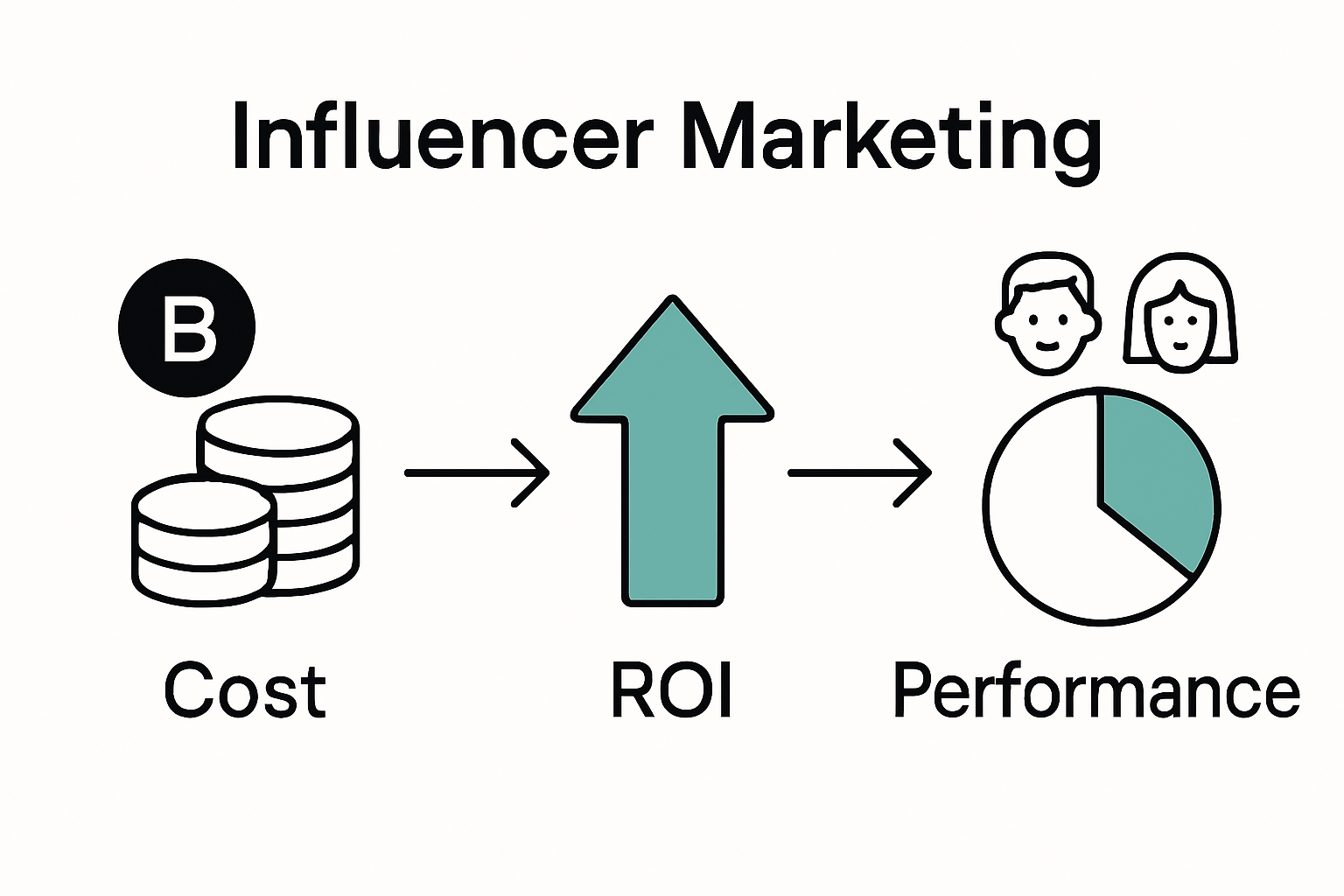
Performance metrics play a crucial role in determining the success of influencer campaigns. Time-aware simulation technologies enable marketers to develop more precise evaluation models, allowing businesses to predict and measure campaign outcomes with unprecedented accuracy. These analytical approaches consider multiple variables, including audience engagement, conversion rates, brand visibility, and direct revenue generation.
Key considerations for evaluating influencer marketing investments include:
- Audience reach and demographic alignment
- Engagement rate per content piece
- Cost per thousand impressions (CPM)
- Conversion tracking
- Long-term brand value generation
- Comparative performance against traditional marketing channels
Successful ROI assessment requires a holistic approach that goes beyond immediate financial returns, examining both quantitative metrics and qualitative brand impact. By implementing rigorous evaluation frameworks, businesses can transform influencer marketing from an experimental strategy to a precise, data-driven marketing investment.
Risks, Pitfalls, and Common Mistakes
Influencer marketing presents complex challenges that can significantly undermine campaign effectiveness if not carefully navigated. Research examining marketing dynamics reveals that perceived inauthenticity represents one of the most critical risks, potentially causing substantial damage to brand reputation and consumer trust.
Companies frequently encounter multiple strategic pitfalls when implementing influencer partnerships. Computational studies highlight the importance of understanding nuanced contextual factors that extend beyond simple audience reach. These risks include misalignment between brand values and influencer personas, inadequate compliance with regulatory guidelines, and neglecting critical performance metrics that truly indicate campaign effectiveness.
Key risks and common mistakes in influencer marketing include:
- Prioritising follower count over genuine engagement
- Insufficient background checks on potential influencer partners
- Overlooking platform-specific content requirements
- Failing to establish clear contractual expectations
- Neglecting audience demographic alignment
- Inadequate performance tracking mechanisms
- Ignoring potential brand safety concerns
Successful influencer marketing demands a sophisticated, multifaceted approach that transcends simplistic metrics. Brands must develop robust vetting processes, maintain transparent communication, and continuously evaluate partnership effectiveness to mitigate potential risks and maximise marketing investments.
Unlock the Full Potential of Influencer Marketing with Proven Strategies
If you are aiming to harness the real advantages of influencer marketing you already understand how crucial it is to find authentic connections and targeted engagement to build trust and boost sales. Many businesses face the challenge of choosing the right influencers and creating campaigns that truly reflect their brand values while driving measurable results. The concepts discussed around audience reach quality over quantity and performance tracking resonate strongly with business owners who want to turn digital partnerships into sustainable growth.
Business Warriors specialises in helping service-based businesses like salons clinics and ecommerce stores master these exact challenges through our innovative Marketing Vortex method. We combine SEO Google Ads Meta advertising and social media strategies designed specifically for your brand to amplify your marketing efforts and maximise your ROI while ensuring your influencer collaborations bring value and authenticity.
Explore insightful strategies and client success stories at the Uncategorized Archives – Jarrod Harman to see how intensely focused marketing can transform your lead generation and sales processes.

Ready to step beyond basic influencer marketing and implement a data-driven approach that guarantees measurable results Visit https://jarrodharman.com today and discover how partnering with Business Warriors can give you the marketing arsenal needed to achieve consistent growth and outpace competitors. Your next level of success in online client acquisition is just one click away.
Frequently Asked Questions
What are the key benefits of influencer marketing for businesses?
Influencer marketing offers businesses enhanced brand awareness, increased consumer trust, and improved purchase intentions. It’s an effective way to reach targeted audience segments with genuine connections, resulting in greater brand loyalty and engagement.
How do I choose the right influencer for my brand?
Selecting the right influencer involves considering their audience demographics, engagement rates, authenticity, and how well their values align with your brand. Collaborating with influencers who genuinely resonate with your target audience is crucial for campaign success.
What types of campaigns can I run with influencers?
You can implement various influencer marketing campaigns, such as sponsored content, affiliate marketing models, and ambassador programs. Each type offers unique ways to engage audiences and achieve specific marketing objectives.
What are some common mistakes to avoid in influencer marketing?
Common pitfalls include prioritising follower count over engagement, failing to conduct thorough background checks on influencers, and neglecting to align influencer personas with brand values. Establishing clear expectations and tracking performance metrics are also vital to avoid these mistakes.
Recommended
- Influencer Marketing Strategies: Complete Guide – Jarrod Harman
- Understanding Social Media Marketing Advantages and Disadvantages – Jarrod Harman
- The Essential Guide to Why Use Content Marketing – Jarrod Harman
- Complete Guide to the Role of Social Media Marketing – Jarrod Harman
- Why Instagram Growth Matters: Complete Guide for Influencers – Hexrate