


You know how difficult it can feel juggling treatment bookings, client enquiries, and the constant need for fresh leads in Australia’s beauty and wellness industry. The right content strategy transforms scattered marketing efforts into a system that actually nurtures your best clients and grows your bookings. Discover how a marketing content strategist can help you speak directly to your ideal audience, maximise every campaign, and scale your service business with strategies tailored for your unique Australian market.
Table of Contents
- What Is A Marketing Content Strategist?
- Roles And Key Responsibilities In Australia
- Essential Skills For Effective Content Strategy
- Types Of Strategies For Service Businesses
- Mistakes To Avoid And Best Practices
Key Takeaways
| Point | Details |
|---|---|
| Role of a Marketing Content Strategist | They design and manage content strategies tailored to client needs, ensuring effective audience engagement throughout the customer journey. |
| Importance of Data Analysis | Continuous measurement and analysis of content performance are crucial for optimising strategies and improving client acquisition. |
| Creating Cohesive Content | Develop pillar and cluster content that addresses specific client pain points while enhancing SEO and establishing authority. |
| Avoiding Common Mistakes | Prioritise quality over quantity in content creation, ensure a clear strategy is in place, and regularly update existing content to maintain relevance. |
What Is a Marketing Content Strategist?
A marketing content strategist is someone who plans, develops, and manages marketing content aligned with your business’s core objectives. Think of them as the architect behind your content engine. They’re not just writing blog posts or creating social media updates. They’re the strategist who figures out what your audience actually needs to hear, when they need to hear it, and across which channels it will drive the most meaningful results for your business.
In your beauty and wellness business, a marketing content strategist would be the person responsible for understanding your ideal client’s journey from the moment they first discover you through to becoming a loyal, repeat customer. They research your target audience deeply, identifying the questions they’re asking, the problems they’re trying to solve, and the emotional triggers that motivate their purchasing decisions. They then create a cohesive content strategy that addresses these needs through various formats—blog articles about skincare routines, video tutorials showcasing your treatments, testimonial content from satisfied clients, and social media posts that build trust and credibility. Beyond just creating content, they’re orchestrating when that content gets distributed, how it connects to your paid advertising efforts like Google Ads or Meta campaigns, and how it supports your broader sales funnel to generate consistent bookings.
The role extends into content auditing and analytics. Your strategist constantly measures what’s working. Are certain blog posts driving qualified enquiries? Which social media posts are generating the most engagement from people in your target demographic? How is your SEO content performing in search results for the keywords your potential clients are actually searching for? They’re collecting this data, identifying patterns, and refining the strategy continuously. This is where SEO strategy becomes critical. A skilled marketing content strategist understands how to layer keyword research, AI-powered content optimisation, and technical SEO into their content creation process. They know how to position your content so it ranks in Google searches, gets mentioned alongside industry authorities, and attracts high-intent clients actively looking for services like yours. They also collaborate cross-functionally with your website team, your paid advertising specialists managing Google Ads budgets, your social media managers, and your email marketing efforts to ensure everything works together seamlessly.
For service-based business owners like yourself, understanding what a marketing content strategist does helps you recognise whether you need this expertise in-house or through an agency partnership. Many successful beauty and wellness entrepreneurs eventually realise they can’t be both the expert delivering treatments and the marketing strategist building the client acquisition system at the same time. That’s when bringing in specialised support becomes transformative for scaling.
Pro tip: Start by auditing your existing content—blog posts, social media, email sequences—and score each piece based on whether it directly addresses a question or concern your ideal client has. This simple exercise reveals whether your current content is strategically aligned or scattered across different messages.
Roles and Key Responsibilities in Australia
In Australia, the role of a marketing content strategist has evolved significantly as businesses recognise the critical link between strategic content and sustainable customer acquisition. Content strategists manage online marketing campaigns and develop strategic partnerships that align content creation directly with measurable business objectives. For Australian service-based businesses, particularly those in beauty and wellness sectors, this means having someone who understands not just the local market dynamics but also how to position your offerings within Australia’s competitive digital space. The role goes beyond simply producing content. It involves liaising with business managers to clarify goals, conducting thorough audits of existing content to identify gaps, and collaborating with internal teams and external creators to ensure every piece serves a strategic purpose.
The key responsibilities of a marketing content strategist in Australia fall into several interconnected areas. First, there’s the strategic planning phase where they analyse your target market, understand your competitive landscape, and develop a content roadmap that addresses client pain points and decision-making stages. For your beauty or wellness business, this means identifying what potential clients are searching for online, what questions they’re asking before booking, and how to position your expertise to answer those questions. Then comes content creation oversight, where they don’t necessarily write every piece themselves but coordinate with writers, video creators, and designers to produce varied formats that resonate with your audience. They manage SEO strategy by researching keywords that drive qualified traffic, ensuring content is optimised for search engines whilst maintaining genuine value for readers. They also oversee content management systems and marketing strategy implementation, managing workflows, publishing schedules, and the technical aspects that keep content flowing consistently. Additionally, they bridge the gap between organic and paid channels, ensuring your blog content supports your Google Ads campaigns, your social media strategy complements your Meta advertising spend, and your email sequences nurture leads generated from all sources.

Another critical responsibility involves measurement and optimisation. Australian content strategists track performance metrics across all channels. They monitor which blog posts generate qualified leads, analyse engagement rates on social media posts by audience segment, and measure how content contributes to your overall conversion rates. They use this data to refine messaging, identify which content formats perform best with your specific demographic, and adjust the strategy based on what’s actually working rather than assumptions. For beauty and wellness businesses, this might mean discovering that video content about treatment processes converts better than written guides, or that specific pain point topics attract your ideal client segment consistently. They also manage relationships across departments. A skilled strategist works with your web developers to ensure site structure supports SEO, collaborates with your social media managers to maintain consistent messaging, coordinates with your paid advertising team to ensure landing pages match ad copy, and communicates with your sales team about which content is generating the highest-quality leads. This cross-functional collaboration is what transforms scattered content efforts into a cohesive client acquisition system.
Pro tip: Map out your client’s decision journey from awareness to booking, then assign specific content pieces to each stage—awareness content might be blog posts answering common questions, consideration content could be treatment comparison guides or testimonials, and decision content might include your service pages optimised for conversion—this ensures your content strategist knows exactly what to create and where it fits into your broader business system.
Essential Skills for Effective Content Strategy
Building an effective content strategy requires a specific mix of skills that blend creative thinking with analytical rigour. The foundation starts with audience research and persona development. You need to genuinely understand who your ideal clients are, what keeps them awake at night, and what language they use when searching for solutions. For your beauty and wellness business, this means going beyond basic demographics. It means knowing whether your ideal client searches for “anti-ageing facials” or “facial rejuvenation treatments,” whether they’re researching on Instagram or Google, and what objections they typically have before booking. This research directly informs every content decision you make, from blog topics to social media messaging to video content. Without it, you’re essentially guessing.
Another critical skill is SEO and content optimisation. This isn’t about stuffing keywords into sentences. It’s about understanding audience needs and aligning content strategically with how search engines work and what your potential clients are actually hunting for online. A strong content strategist knows how to research keywords that indicate purchase intent, optimise page structure so search engines understand your content, and create material that ranks in Google whilst genuinely answering client questions. They understand technical SEO basics that affect how your website performs. They know the difference between transactional keywords (“book beauty treatment near me”) and informational keywords (“how to prepare for a facial”), and they strategically use both. They’re also across AI-powered SEO tools that help accelerate keyword research and content optimisation whilst maintaining the human creativity that makes your brand voice distinct. The ability to layer AI tools into your workflow without losing your authentic brand perspective is increasingly expected in 2025.
Data analysis and strategic planning complete the technical side of content strategy. This includes developing an editorial calendar that maps content across seasons, campaigns, and client journey stages, then measuring what actually works. A skilled strategist tracks metrics like organic traffic growth, engagement rates by content type, conversion rates from specific blog posts, and how content supports your paid advertising efforts. They know which Google Ads keywords convert best and can create supporting blog content that feeds qualified leads into your sales funnel. They’re comfortable with analytics dashboards and can identify patterns. For instance, they might discover that “before and after” content drives more bookings than educational content, or that email sequences following specific blog posts generate the highest client lifetime value. Then they adjust the strategy accordingly.
Beyond the technical skills sit storytelling and brand voice development paired with collaboration and project management. Your content strategist needs to articulate your unique perspective in a way that resonates emotionally with your audience. They craft narratives around your treatments, client transformations, and expertise that build trust and differentiate you from competitors. This human element can’t be automated. They also manage timelines, coordinate with your writers and videographers, ensure consistency across channels, and keep everyone aligned on messaging. In 2025, the most valuable strategists combine all these abilities whilst staying adaptable as technology evolves. They leverage AI for efficiency but make distinctly human strategic decisions about what your business needs to communicate and why.
Pro tip: Start building your data foundation now by tracking which content types your audience engages with most using Google Analytics, Meta pixel data, and email open rates, then prioritise creating more of what’s already working before investing time in experimental formats.
Types of Strategies for Service Businesses
Service-based businesses like yours require content strategies fundamentally different from product-based companies. Your clients aren’t just purchasing a service; they’re purchasing trust, expertise, and outcomes. This is where content strategy becomes your most powerful differentiator. The core approach involves defining your ideal client with precision, understanding their specific pain points, and selecting content types that position you as the expert they want to work with. For a beauty or wellness business, this means moving beyond generic content about skincare benefits. It means creating content that addresses the exact hesitations your ideal client has before booking. Maybe she’s worried about whether a particular treatment will work for her sensitive skin, or she’s unsure what to expect during her first appointment, or she’s questioning whether the investment is worth it. Your content strategy directly addresses these objections before she even contacts you.
The strategic approach involves building what’s known as pillar content and cluster content around key topics. Essentially, you create comprehensive, authoritative content pieces on broad topics relevant to your service, then support them with more targeted, specific content that links back to these pillars. For example, a pillar piece might be a comprehensive guide on “everything you need to know about facial treatments,” with cluster content addressing specific questions like “hydrating facials for dry skin,” “chemical peels for acne-prone skin,” and “anti-ageing facial techniques.” This structure signals authority to search engines, improves your SEO performance, and gives potential clients multiple entry points into your content. The specific content types that work best for service businesses include long-form blog posts addressing pain points and questions, case studies and testimonials demonstrating real client results, video content showing your expertise and treatment processes, downloadable guides and checklists, webinars or live training sessions, email sequences nurturing leads through the decision journey, and social media content building community and trust. Each format serves a strategic purpose in your client acquisition funnel.
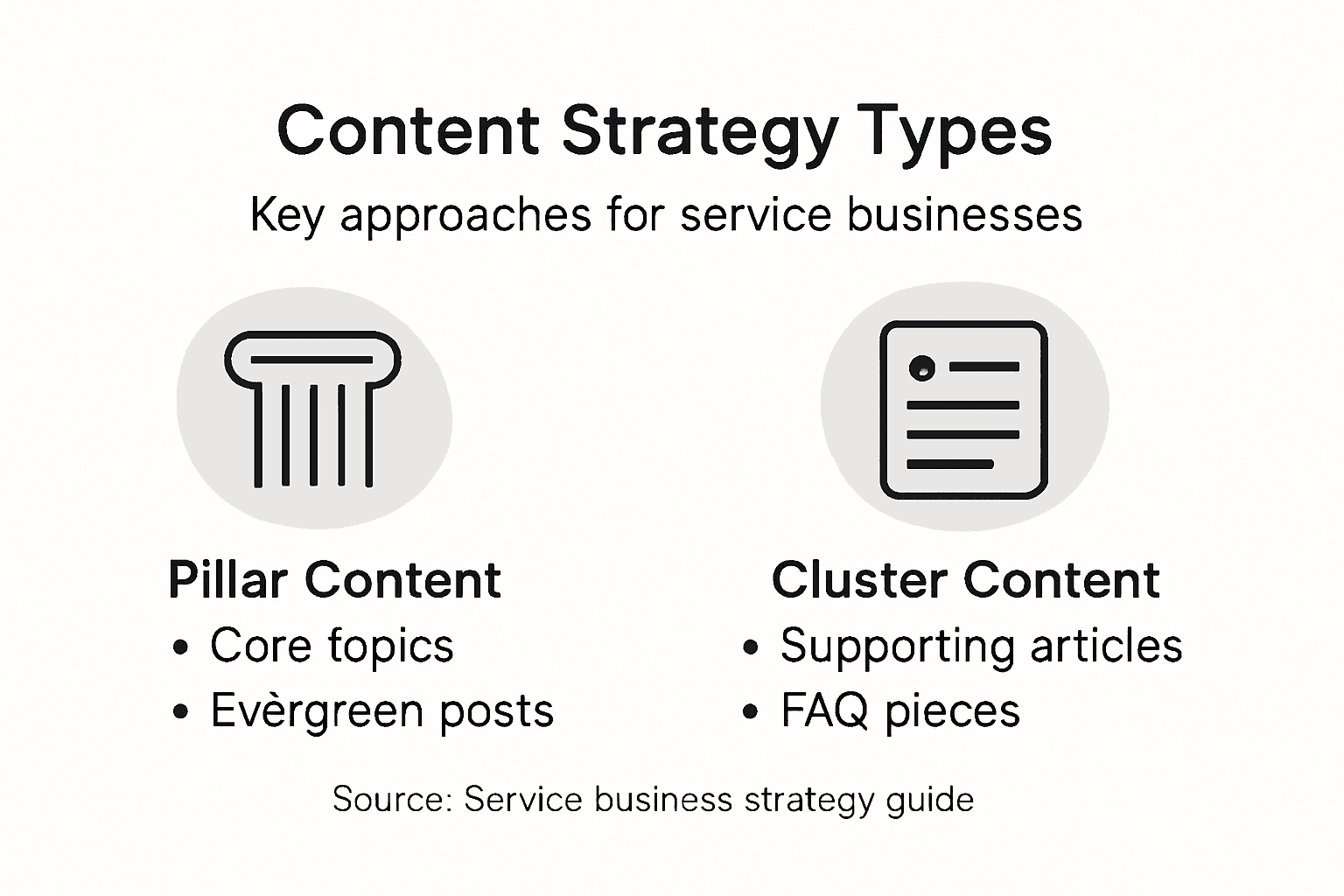
Here’s a comparison of pillar and cluster content strategies for service-based businesses:
| Strategy Type | Description | SEO Benefits | Impact on Client Acquisition |
|---|---|---|---|
| Pillar Content | Comprehensive guides on broad topics | Establishes website authority | Attracts curious, high-value leads |
| Cluster Content | Focused articles linked to pillars | Improves keyword relevance | Answers specific client questions |
| Combined Approach | Integrates pillars with clusters | Highest rankings for related terms | Builds trust throughout journey |
Beyond content format, your strategy needs to address the unique challenge of service businesses: time. You’re already stretched delivering treatments, managing staff, and handling operations. A content strategy that demands hours of your personal time weekly simply won’t work. This is where strategic planning becomes critical. You identify which team members contribute content (perhaps your most experienced therapist shares expertise on video, or your receptionist notices common client questions that become blog topics), you batch content creation to maximise efficiency, and you leverage tools like AI writing assistants and templates to accelerate production without sacrificing quality. The goal isn’t perfection; it’s consistency and relevance. A strategist helps you establish expertise and build trust through targeted content that demonstrates you understand your client’s journey. They ensure your content strategy integrates with your paid advertising efforts so blog content supports your Google Ads campaigns, email sequences nurture leads generated from Meta ads, and your organic content builds the authority that makes your paid ads more effective. This omnichannel approach multiplies your return on marketing investment because organic and paid efforts reinforce each other rather than competing for attention.
The measurement piece completes the strategy. You’re tracking which content generates qualified leads, which topics attract your ideal client segment versus tire-kickers, and how content contributes to bookings. Does your blog content about skin concerns generate higher-quality leads than lifestyle content? Are before-and-after video posts driving more enquiries than educational carousel posts on Instagram? Are email sequences following specific blog topics generating repeat bookings at higher rates? These insights shape your ongoing strategy, ensuring you’re investing your limited time in content that actually drives business results.
Below is a summary of performance metrics a content strategist tracks and their value for beauty and wellness businesses:
| Metric | What It Measures | Why It Matters |
|---|---|---|
| Qualified Leads | Enquiries from ideal clients | Assesses targeting accuracy |
| Engagement Rate | Audience interactions | Gauges interest in content format |
| Conversion Rate | Bookings generated | Evaluates effectiveness of messaging |
| Client Lifetime Value | Revenue per customer | Informs long-term strategy decisions |
Pro tip: Audit your past client conversations and identify the top 10 questions prospects ask before booking, then build your content strategy specifically addressing these questions in different formats (blog posts, videos, social media carousels, email sequences) so you’re capturing search traffic and providing the reassurance needed at every stage of the decision journey.
Mistakes to Avoid and Best Practices
Many beauty and wellness business owners start creating content with genuine enthusiasm, only to watch their efforts fizzle without generating meaningful results. The culprits are usually predictable mistakes that undermine even well-intentioned strategies. The first major mistake is prioritising quantity over quality. You might think posting three blog articles weekly or filling your social media feed daily will accelerate results. The reality is different. Search engines reward comprehensive, genuinely useful content over thin material published frequently. Your ideal clients prefer following businesses that share deep expertise rather than surface-level advice. When you’re stretched producing mediocre content constantly, you’re stealing time from creating the valuable pieces that actually drive bookings. A single, thoroughly researched blog post about “how to prepare your skin for a professional facial treatment” with proper SEO optimisation will outperform ten generic posts about skincare trends. Quality signals authority. Quantity signals desperation.
Another critical mistake is lacking a clear content strategy before creation begins. This is where many business owners stumble. They create content reactively, posting about whatever feels relevant that day, rather than strategically. They don’t define their ideal client clearly, so their messaging scatters across conflicting audiences. They don’t identify which content topics drive qualified enquiries versus vanity metrics. They don’t map content to specific stages of the client journey. Then they’re confused why their social media gets engagement but no bookings. Successful strategies require setting specific goals and developing detailed buyer personas so every piece of content serves a documented purpose. Before you publish anything, you should know exactly which client problem it addresses, where it appears in the customer journey, and what action you want readers to take.
Other common pitfalls include neglecting to update existing content, misapplying SEO tactics, and overlooking content distribution. Many business owners publish blog posts then abandon them. Search engines favour fresh, regularly updated content. If you published an article about “five popular facial treatments” two years ago, updating it with current information, new examples, and improved SEO optimisation typically outperforms publishing entirely new content. Misapplying SEO means stuffing keywords into sentences unnaturally, optimising for search volume rather than search intent, or creating content for keywords that don’t actually drive qualified leads to your business. You might rank highly for “affordable facials” when your ideal client searches for “luxury facial treatments,” attracting price-sensitive prospects who never become paying clients. And distribution matters enormously. Creating high-value content that meets audience needs requires continually optimising through performance analysis and ensuring your content actually reaches people. Publishing brilliant content to your blog then hoping people find it is naive. Effective distribution means promoting content across email lists, social channels, paid ads, and partnerships. It means understanding which distribution channels your ideal client actually uses. A 50-year-old woman researching anti-ageing treatments might find you through Google search or email marketing but never see your TikTok content.
Best practices centre on alignment and consistency. Define your ideal client with specificity, then ensure every content piece speaks directly to her concerns. Establish clear business objectives before creating content. Map specific content to specific outcomes. Create a realistic content calendar you can actually maintain rather than an optimistic schedule that collapses after two months. Track performance metrics ruthlessly. Does your blog content generate enquiries or just traffic? Which email sequences drive repeat bookings? Which social media content types generate the most meaningful engagement? Use these insights to refine your strategy continuously. Partner your organic content with paid advertising so your expertise reaches ideal clients actively searching for solutions. Consider your content an investment in long-term authority and client acquisition, not a quick-fix tactic.
Pro tip: Before publishing any new content, ask yourself three questions: (1) Does this directly address a question or concern my ideal client has? (2) Where does this fit in her journey from awareness to booking? (3) What action do I want her to take after reading this? If you can’t answer all three confidently, the content needs work before publishing.
Elevate Your Marketing Strategy with Proven Expertise
The article highlights the challenges service-based businesses face in creating and managing an effective content strategy that drives consistent client acquisition. If you are struggling to align your marketing content with your business goals, wrestle with SEO optimisation, or want to integrate organic efforts with paid advertising like Google Ads and Meta campaigns, you are not alone. Achieving clarity and consistency in your content to convert ideal clients requires a strategic, data-driven approach combined with creative storytelling — exactly what the “Marketing Vortex” Method delivers.
Discover how Business Warriors, led by Jarrod Harman, can partner with you to build scalable sales and marketing systems specifically designed for service-based businesses. With niche expertise in beauty, wellness, and professional services, we integrate SEO, Google Ads, social media and email marketing into an omnichannel strategy that reduces risk and maximises bookings. Don’t let your marketing efforts be scattered and ineffective. Take the next step now by exploring proven strategies tailored for your growth at Uncategorized Archives – Jarrod Harman.
Ready to transform your client acquisition system and outpace the competition? Learn more at Jarrod Harman and start partnering with a team committed to delivering measurable results. Take action today to turn content into your most powerful business asset.
Frequently Asked Questions
What does a marketing content strategist do?
A marketing content strategist plans, develops, and manages marketing content that aligns with a business’s objectives, ensuring that it addresses the needs of the target audience at each stage of their journey.
Why is SEO important for a marketing content strategist?
SEO is crucial because it helps ensure that content ranks well in search engine results, attracts qualified traffic, and addresses client needs effectively, positioning your business as an authority in your industry.
How can a content strategist help my beauty and wellness business?
A content strategist can create a cohesive content strategy that resonates with your target audience, optimises your content for search engines, and ultimately drives client acquisition and retention through various formats like blogs, videos, and social media posts.
What skills are essential for an effective marketing content strategist?
Essential skills include audience research, SEO and content optimisation, data analysis, storytelling, and project management. These combine to create a strategic approach that balances creativity with analytical thinking.
Recommended
- Social Media Business Strategist: Accelerating Growth Online – Jarrod Harman
- The Essential Guide to Why Content Marketing Matters – Jarrod Harman
- 7 Essential Types of Marketing Strategies for Business Growth – Jarrod Harman
- The Essential Guide to Why Use Content Marketing – Jarrod Harman
- Why Content Marketing Matters: Complete Guide for UK SMEs – Paul Baguley