


More than 85 percent of australian businesses rely on social media to attract and retain customers. For female entrepreneurs navigating Australia’s fast-paced service industries, mastering digital marketing is no longer optional. Strategic social media approaches can directly grow your audience, deepen relationships, and drive steady leads. This guide reveals how to choose the right platforms, craft engaging campaigns, and safeguard your brand while measuring impactful results.
Table of Contents
- Defining Social Media in Digital Marketing
- Major Platforms and Their Unique Benefits
- Core Strategies for Lead Generation and Growth
- Managing Risks and Brand Safety on Social Media
- Measuring ROI and Optimising Social Campaigns
Key Takeaways
| Point | Details |
|---|---|
| Effective Platform Selection | Identify and focus on social media platforms where your target audience is most active to enhance marketing effectiveness. |
| Diverse Marketing Strategies | Employ a mix of content-driven, engagement-focused, conversion-oriented, and relationship-building strategies for comprehensive social media approaches. |
| Lead Generation Techniques | Implement interactive content and personalised messaging to effectively capture potential customer information and enhance engagement. |
| Performance Measurement | Use advanced analytics to measure ROI and optimise campaigns, incorporating both quantitative and qualitative metrics for a holistic view of performance. |
Defining Social Media in Digital Marketing
Social media marketing represents a strategic digital approach where businesses leverage online platforms to connect, engage, and promote their brands directly to targeted audiences. Social media websites enable promotional strategies through user-generated content, interactive engagement, and viral sharing mechanisms that transcend traditional advertising boundaries.
At its core, social media marketing involves creating and distributing compelling digital content across platforms like Facebook, Instagram, LinkedIn, and Twitter to build brand awareness, generate leads, and drive customer interactions. These platforms provide sophisticated targeting capabilities that allow businesses to reach specific demographic groups with unprecedented precision, transforming how organisations communicate and market their products or services.
Understanding social media marketing requires recognising its multifaceted nature. Strategic frameworks highlight four primary implementation approaches that businesses can adopt: content-driven strategies, engagement-focused tactics, conversion-oriented campaigns, and relationship-building methodologies. Each approach offers unique advantages for digital marketing success, enabling businesses to craft personalised communication strategies that resonate with their target audience.
Pro Tip – Strategic Platform Selection: Carefully analyse your target audience’s preferred social media platforms and concentrate your marketing efforts on channels where your ideal customers are most active, rather than attempting to maintain a presence everywhere simultaneously.
Major Platforms and Their Unique Benefits
Comprehensive global social media platform insights reveal a dynamic digital landscape where each platform offers unique marketing opportunities. Understanding these platforms’ distinctive characteristics enables businesses to craft targeted, effective digital marketing strategies that maximise audience engagement and brand visibility.
Facebook remains a powerhouse for broad demographic reach, offering sophisticated advertising tools and extensive audience targeting capabilities. Instagram excels in visual storytelling, particularly for brands with strong aesthetic appeal, while LinkedIn provides a professional networking environment ideal for B2B marketing and thought leadership content. TikTok has emerged as a critical platform for reaching younger audiences through short-form video content, demonstrating remarkable engagement potential for brands willing to embrace creative, authentically produced marketing approaches.

Comparative platform analysis highlights critical marketing considerations across different digital channels. Each platform presents unique strengths: YouTube dominates long-form video content, X (formerly Twitter) enables real-time communication and trending discussions, Pinterest offers strong visual discovery features, and WhatsApp provides intimate, direct messaging capabilities for customer engagement. Successful digital marketing strategies now require nuanced understanding of these platform-specific characteristics.
Pro Tip – Platform Alignment: Select social media platforms strategically by matching your brand’s content style, target audience demographics, and marketing objectives with each platform’s inherent strengths and user behaviour patterns.
Here’s a summary comparing major social media platforms for marketing effectiveness:
| Platform | Best For | Audience Demographic | Unique Marketing Feature |
|---|---|---|---|
| Broad reach | All age groups | Advanced ad targeting tools | |
| Visual branding | Millennials & Gen Z | Shoppable posts for e-commerce | |
| B2B and networking | Professionals, executives | Thought leadership content | |
| TikTok | Short-form video ads | Gen Z, younger users | Viral challenge and paid hashtag ads |
| YouTube | Long-form video storytelling | All age groups | In-depth content & monetisation |
| X (Twitter) | Real-time engagement | Urban, news-focused users | Trending topics & rapid responses |
| Visual discovery | Predominantly female users | Product catalogues & idea boards | |
| Direct messaging | Global, varied demographics | Private group communication |
Core Strategies for Lead Generation and Growth
Advanced social media lead generation strategies have transformed how businesses capture and nurture potential customers in the digital ecosystem. Modern approaches move beyond traditional marketing tactics, leveraging sophisticated technologies and targeted communication methods to create meaningful connections with prospective clients.
Successful lead generation requires a multifaceted approach that combines strategic content creation, precise audience targeting, and intelligent engagement techniques. Targeted lead generation strategies involve developing compelling content that addresses specific customer pain points, utilising AI-powered segmentation tools to identify and reach ideal customer profiles, and creating personalised communication pathways that guide potential clients through the sales funnel.
Digital marketing professionals must focus on creating value-driven interactions across social media platforms. This involves developing interactive content like webinars, downloadable resources, and targeted lead magnets that encourage potential customers to share their contact information. Businesses can enhance lead generation by implementing sophisticated tracking mechanisms, employing retargeting strategies, and using platform-specific advertising tools that allow for granular demographic and behavioural targeting.
Pro Tip – Strategic Lead Capture: Design lead generation assets that provide genuine value to your target audience, focusing on solving specific problems rather than purely promotional content, and always ensure a seamless, low-friction process for potential clients to engage with your offerings.
The following table compares lead generation techniques for social media marketing:
| Technique | Core Activity | Business Impact |
|---|---|---|
| Interactive Content | Quizzes, live Q&A, webinars | Higher engagement and conversions |
| Lead Magnets | Free downloads, offers | Expands email/contact database |
| Retargeting Campaigns | Ads to previous visitors | Increased conversion and ROI |
| AI-Based Segmentation | Data-driven targeting | Precision in reaching ideal clients |
| Personalised Messaging | Custom offers, chat outreach | Builds trust and accelerates sales |
Managing Risks and Brand Safety on Social Media
Comprehensive risk management frameworks have become critical for organisations navigating the complex digital landscape of social media. Modern businesses must develop sophisticated strategies that protect their brand reputation while maintaining authentic online engagement, recognising the potential vulnerabilities inherent in digital communication platforms.
Brand safety requires a proactive, multi-layered approach addressing potential risks across different dimensions. This includes developing robust internal policies that guide employee social media conduct, implementing advanced monitoring technologies to detect potential reputation threats, and creating rapid response protocols for managing potential crisis situations. Digital reputation management involves continuous surveillance of online conversations, understanding sentiment trends, and quickly addressing potential negative narratives before they escalate.
Strategic risk mitigation techniques encompass several critical elements. These include establishing clear communication guidelines, training staff on appropriate social media interactions, leveraging AI-powered sentiment analysis tools, and developing comprehensive crisis communication strategies. Businesses must also focus on transparency, authenticity, and consistent messaging across all digital platforms to build and maintain audience trust.
Pro Tip – Reputation Protection: Develop a comprehensive social media policy that provides clear guidelines for employee online behaviour, and establish a dedicated crisis management team capable of responding quickly and effectively to potential reputation challenges.
Measuring ROI and Optimising Social Campaigns
Comprehensive performance measurement frameworks have revolutionised how businesses evaluate their social media marketing effectiveness. Traditional metrics are no longer sufficient, requiring sophisticated, multidimensional approaches that capture both financial and qualitative campaign impacts.
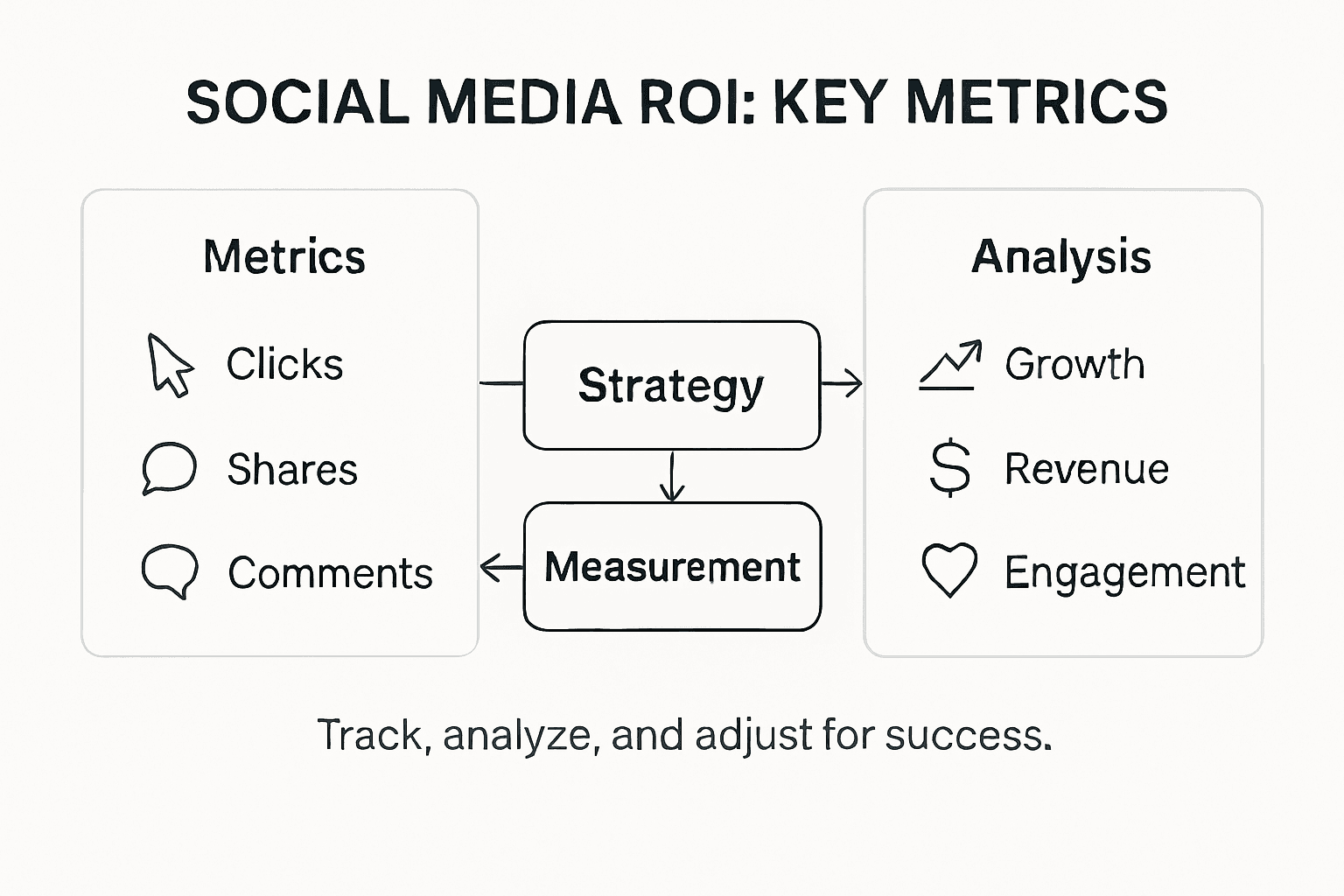
Successful ROI analysis demands a nuanced strategy integrating quantitative and qualitative indicators. Key Performance Indicators (KPIs) should extend beyond simple engagement metrics like likes and shares, incorporating deeper insights such as conversion rates, customer acquisition costs, lifetime value, and direct revenue attributable to social media efforts. Advanced tracking technologies enable businesses to create sophisticated attribution models that map customer journeys and understand precise social media campaign contributions.
Strategic ROI optimization techniques require continuous monitoring, testing, and refinement. This involves implementing robust analytics platforms, conducting regular performance audits, and developing adaptive campaign strategies that respond quickly to emerging data insights. Businesses must cultivate a culture of data-driven decision-making, using advanced segmentation, A/B testing, and predictive analytics to continuously improve marketing effectiveness.
Pro Tip – Holistic Performance Tracking: Develop a comprehensive dashboard that integrates multiple data sources, combining financial metrics, engagement statistics, and customer behaviour insights to provide a 360-degree view of your social media marketing performance.
Unlock Your Social Media Potential with Proven Strategies
Struggling to convert social media efforts into consistent leads and sales? This article highlights key challenges like developing content-driven strategies, managing brand safety, and measuring ROI effectively. At Business Warriors, we understand these pain points and offer tailored solutions using our unique Marketing Vortex method. We help service-based businesses, especially in beauty and wellness sectors, master social media platforms to engage the right audience and generate meaningful growth.
Ready to transform your social media marketing into a powerful client acquisition tool? Discover how Jarrod Harman’s expertise and our comprehensive digital marketing services can accelerate your business success. Explore real success stories and strategic insights at Uncategorized Archives – Jarrod Harman or visit our main site https://jarrodharman.com to take the first step towards outpacing your competition today.
Frequently Asked Questions
What is social media marketing?
Social media marketing is a strategic digital approach where businesses use online platforms to connect, engage, and promote their brands to targeted audiences through compelling content.
How can businesses measure the effectiveness of their social media marketing efforts?
The effectiveness of social media marketing can be measured by tracking various KPIs, including engagement metrics, conversion rates, customer acquisition costs, and revenue generated from specific campaigns.
What are the main benefits of using social media platforms for marketing?
Social media platforms offer unique marketing benefits such as advanced targeting capabilities, enhanced brand visibility, direct customer engagement, and opportunities for viral sharing that transcend traditional advertising methods.
How should businesses choose which social media platforms to use for marketing?
Businesses should choose social media platforms based on their target audience’s preferences, content style, and specific marketing objectives, focusing on channels where their ideal customers are most active.
Recommended
- Complete Guide to the Role of Social Media Marketing – Jarrod Harman
- Create a Social Media Marketing Plan Template for Success – Jarrod Harman
- What Is Digital Marketing? Complete Expert Overview – Jarrod Harman
- Why Use Digital Marketing: Complete Expert Guide – Jarrod Harman
- Rolle von Online-Marketing für KMU-Erfolg