


Most advice about marketing misses the power of a great story. Australian brands are discovering that over 60 percent of consumers trust narrative-driven marketing more than traditional ads. In a crowded marketplace, connecting with people emotionally can set a business apart. This guide explores how storytelling transforms marketing efforts, helping Australian companies build trust, foster loyalty, and create memorable brand experiences that truly resonate.
Table of Contents
- Defining Storytelling In Modern Marketing
- Types Of Storytelling Techniques For Brands
- Key Elements Of Effective Brand Stories
- Driving Engagement And Trust Through Stories
- Common Mistakes And How To Avoid Them
Key Takeaways
| Point | Details |
|---|---|
| Storytelling Transforms Marketing | Modern storytelling connects brands with consumers on an emotional level, fostering engagement and brand loyalty. |
| Diverse Techniques Enhance Narratives | Brands should employ emotional storytelling, customer journeys, and data-driven strategies for impactful narratives. |
| Authenticity is Key | Effective brand stories must reflect genuine values and foster transparency to build trust with audiences. |
| Engage Through Co-Creation | Successful storytelling encourages audience participation, making consumers active contributors to the brand narrative. |
Defining Storytelling in Modern Marketing
Storytelling in marketing represents a strategic communication approach that transcends traditional advertising by creating meaningful narratives that connect brands with audiences on an emotional level. Modern marketing storytelling is not about selling products directly, but about crafting compelling experiences that resonate with consumers’ values, aspirations, and personal identities.
In today’s digital landscape, storytelling has evolved beyond simple linear narratives. Brands now leverage sophisticated narrative techniques across multiple platforms, integrating digital storytelling strategies that engage audiences through interactive and immersive content. These narratives are designed to trigger emotional responses, build trust, and establish deeper connections that transform passive consumers into active brand advocates.
Effective marketing storytelling requires understanding complex consumer psychology and developing narratives that speak directly to audience motivations. Successful brands recognise that modern consumers seek authenticity, transparency, and meaningful experiences. By constructing narratives that showcase brand values, solve customer challenges, and demonstrate genuine understanding of audience needs, organisations can create powerful emotional connections that drive engagement and loyalty.
Key elements of contemporary marketing storytelling include:
- Personalisation of brand narratives
- Multichannel narrative distribution
- User-generated content integration
- Data-driven narrative development
- Emotional intelligence in story creation
Understanding storytelling as a strategic marketing tool requires recognising its potential to transform traditional transactional relationships into meaningful, long-term brand interactions.
Types of Storytelling Techniques for Brands
Brands today employ diverse storytelling techniques that go beyond traditional marketing approaches, creating narratives that engage audiences on multiple levels. Emotional storytelling remains a powerful strategy, where brands craft narratives that tap into universal human experiences, connecting with consumers through shared values and aspirations. These stories are not just about product features, but about creating meaningful connections that resonate deeply with target audiences.
One sophisticated approach involves leveraging generative AI for personalised narrative creation, which allows brands to develop highly targeted and adaptive storytelling experiences. This technique enables marketing teams to generate dynamic content that speaks directly to individual consumer preferences, transforming generic messaging into tailored, emotionally compelling narratives that feel uniquely crafted for each audience segment.
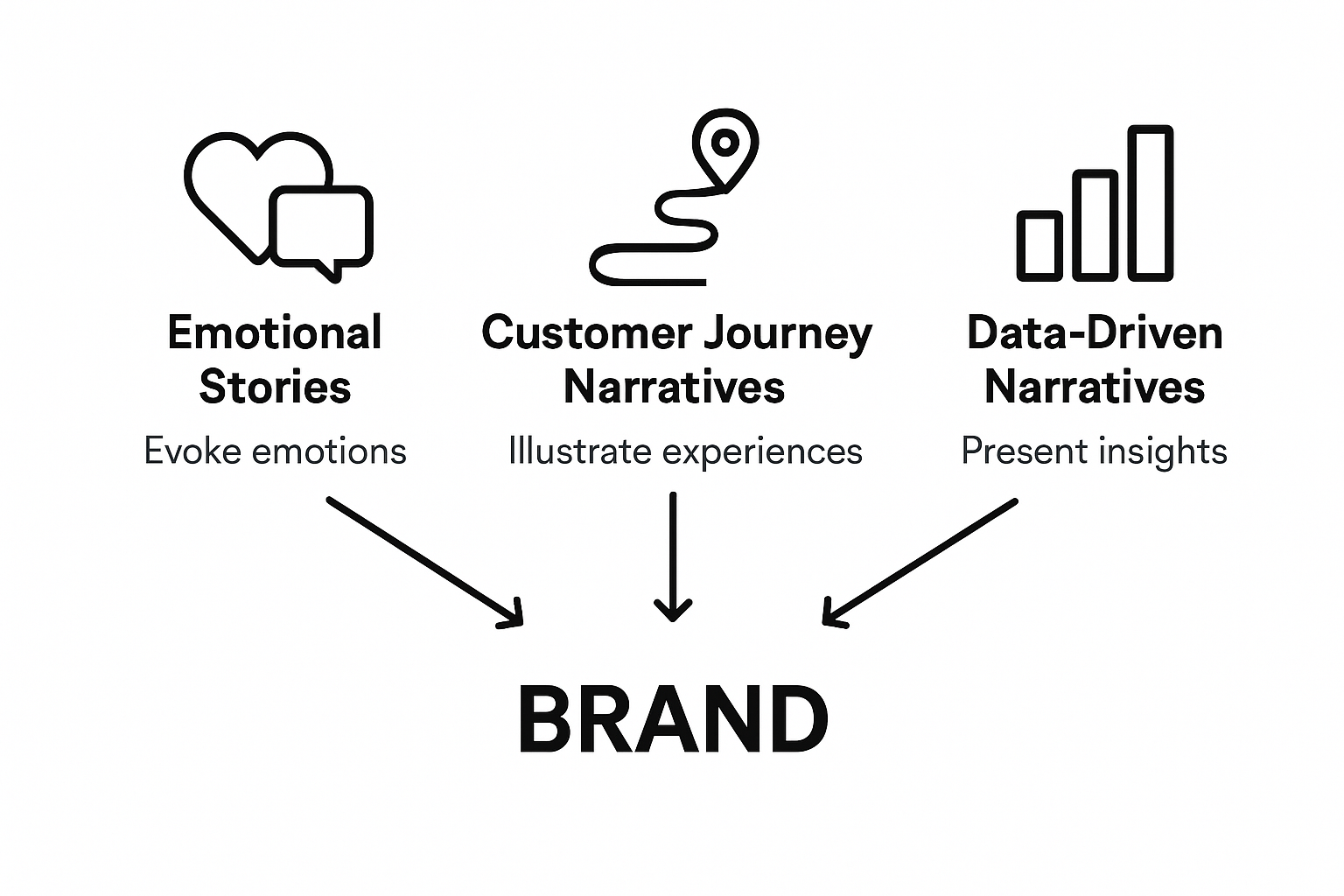
Another prominent storytelling technique involves testimonial and journey narratives, where brands showcase real-world experiences through customer success stories. These narratives often follow a transformative arc similar to traditional storytelling structures – introducing a challenge, presenting the brand as a solution, and demonstrating tangible outcomes. By highlighting authentic customer experiences, brands build credibility and trust while creating aspirational narratives that potential customers can see themselves within.
Key storytelling techniques include:
- Emotional resonance storytelling
- Customer journey narratives
- Brand purpose-driven storytelling
- Interactive and immersive narrative experiences
- Data-driven personalised storytelling
Successful brands understand that modern storytelling is not about broadcasting messages, but creating genuine connections that invite audiences to become active participants in the brand’s ongoing narrative.
Key Elements of Effective Brand Stories
Constructing a powerful brand story requires a strategic approach that goes beyond simple narrative creation. Effective brand storytelling communication demands a careful integration of communication theory, narrative structure, and marketing insight. The most compelling stories are those that transcend traditional promotional content, instead creating an emotional landscape where consumers can see themselves as active participants in the brand’s journey.

The core elements of a successful brand story include authenticity, emotional resonance, and a clear narrative arc. Authenticity stands as the foundation, requiring brands to develop narratives that genuinely reflect their values, mission, and unique identity. This means moving beyond surface-level marketing tactics and creating stories that reveal the human side of the brand – its challenges, motivations, and genuine commitment to solving customer problems.
Structurally, effective brand stories follow a predictable yet engaging narrative pattern. They typically begin by identifying a specific challenge or pain point that resonates with the target audience, introduce the brand as a transformative solution, and conclude by demonstrating the tangible impact of that solution. This storytelling approach transforms marketing from a transactional interaction into a meaningful dialogue that builds long-term brand loyalty and emotional connection.
Key components of compelling brand narratives include:
- Genuine emotional authenticity
- Clear and relatable narrative structure
- Demonstration of brand values
- Personal and human-centric approach
- Consistent narrative across multiple platforms
Ultimately, the most powerful brand stories are those that invite audiences to become co-creators, seeing themselves as integral to the brand’s ongoing narrative and mission.
Driving Engagement and Trust Through Stories
Storytelling has emerged as a critical mechanism for building meaningful connections in marketing and organisational communication. Modern brands recognise that engagement is no longer about broadcasting messages, but creating genuine narratives that invite audience participation and emotional investment. This approach transforms marketing from a transactional interaction into a collaborative storytelling experience where consumers become active participants rather than passive recipients.
Advanced storytelling techniques now incorporate data-driven narrative strategies that make complex information accessible and compelling. Innovative data storytelling methods leverage visual mechanisms like slideshows, videos, and interactive content to translate intricate concepts into digestible, engaging narratives. By transforming raw data into human-centric stories, brands can communicate sophisticated insights while maintaining audience interest and comprehension.
Trust emerges as the fundamental currency in contemporary storytelling. Successful brands craft narratives that demonstrate transparency, vulnerability, and authentic commitment to their audience’s needs. These stories go beyond product features, revealing the human motivations, challenges, and values that drive the organisation. By consistently showing genuine understanding and providing meaningful solutions, brands can cultivate deep, long-lasting relationships built on mutual respect and shared experiences.
Key strategies for driving engagement through storytelling include:
- Humanising brand narratives
- Creating emotionally resonant content
- Demonstrating genuine value proposition
- Encouraging audience co-creation
- Maintaining narrative consistency across platforms
Ultimately, powerful storytelling transcends traditional marketing approaches, transforming brand communication into a dynamic, interactive dialogue that connects with audiences on a profound, emotional level.
Common Mistakes and How to Avoid Them
Systematic analysis of storytelling frameworks reveals critical pitfalls that brands frequently encounter when developing marketing narratives. Inauthentic storytelling represents the most significant error, where organisations craft stories that feel manufactured or disconnected from their genuine brand identity. This approach immediately erodes consumer trust, creating a narrative distance that prevents meaningful emotional engagement.
Another prevalent mistake involves oversimplification of complex brand experiences. Brands often attempt to reduce their entire value proposition into a single, generic narrative that lacks nuance and depth. Effective storytelling requires acknowledging the multifaceted nature of customer experiences, presenting stories that reflect genuine complexity while remaining accessible and compelling. This means moving beyond surface-level messaging to explore the genuine challenges, motivations, and transformative potential that underpin the brand’s mission.
Many organisations also falter by treating storytelling as a one-way communication channel rather than an interactive dialogue. Successful brand narratives invite audience participation, creating space for customer perspectives, experiences, and interpretations. This approach transforms storytelling from a passive marketing technique into a collaborative process where consumers become co-creators of meaning. By embracing vulnerability, demonstrating genuine listening, and allowing multiple narrative perspectives, brands can create more authentic and resonant communication strategies.
Key mistakes to avoid in brand storytelling include:
- Forcing artificial emotional connections
- Neglecting audience perspective
- Maintaining an overly corporate tone
- Inconsistent narrative across platforms
- Failing to demonstrate genuine brand values
Ultimately, effective storytelling requires a delicate balance between strategic communication and authentic human connection, recognising that the most powerful narratives emerge from genuine understanding and mutual respect.
Elevate Your Brand Storytelling with Proven Marketing Strategies
The article highlights the power of authentic storytelling to build trust and emotional connections with your audience. If you are a business owner facing challenges in creating genuine narratives that resonate and convert, our unique “Marketing Vortex” method at Business Warriors can transform your approach. We focus on personalised, omnichannel marketing strategies that integrate SEO, Google Ads, social media and email marketing to bring your story to life and attract the right clients consistently.

Ready to move beyond generic messaging and develop marketing that truly reflects your brand values and customer needs? Explore how our data-driven, emotionally intelligent storytelling solutions can help you generate meaningful engagement and loyal customers. Visit our Uncategorized Archives – Jarrod Harman for insights and join the conversation. Discover expert guidance, client success stories, and tailored strategies at https://jarrodharman.com. Your next-level marketing journey starts here.
Frequently Asked Questions
What is the importance of storytelling in modern marketing?
Storytelling in modern marketing is crucial as it creates emotional connections between brands and consumers. It shifts focus from direct selling to crafting narratives that resonate with audiences’ values and identities, fostering engagement and loyalty.
How can brands effectively use storytelling techniques?
Brands can effectively use storytelling techniques by incorporating emotional storytelling, customer journey narratives, and personalised content. This approach allows them to connect deeply with their audience and invite their participation in the brand’s narrative.
What are common pitfalls in brand storytelling?
Common pitfalls in brand storytelling include inauthentic narratives, oversimplification of complex experiences, and failing to invite audience participation. Avoiding these mistakes helps maintain trust and engagement with consumers.
How does data-driven storytelling enhance brand narratives?
Data-driven storytelling enhances brand narratives by translating complex information into engaging, human-centric stories. This approach helps brands communicate sophisticated insights effectively while maintaining audience interest and involvement.