3 August 2026
Types of branding strategies for business owners: 10 explained
Discover the essential types of branding strategies for business owners. Learn how to combine them for a powerful brand presence.
TL;DR:
- Most businesses succeed by combining two to four core branding types to deliver consistent messaging across channels.
- Effective brand strategy begins with clear positioning, followed by identity and customer experience, guided by data.
Most businesses need to work across ten core branding strategy types: personal, product, service, corporate, retail, online/digital, offline, cultural/geographic, conscious/purpose, and local. According to industry literature, most successful businesses combine 2–4 of these types to keep messaging consistent across touchpoints rather than trying to execute all ten at once.
The ten types at a glance:
- Personal branding, builds the individual behind the business
- Product branding, makes a specific product instantly recognisable
- Service branding, highlights the experience and outcome of a service
- Corporate branding, shapes how the whole organisation is perceived
- Retail branding, controls the in-store and ecommerce environment
- Online/digital branding, manages presence across SEO, social, and paid channels
- Offline branding, print, events, signage, and physical touchpoints
- Cultural/geographic branding, ties identity to a place or community
- Conscious/purpose branding, leads with values and social mission
- Local branding, targets a defined geographic market
The mix matters because each type activates different channels. A service business in Melbourne running Google Ads needs online branding to be tight. A Perth-based clinic building word-of-mouth needs local and personal branding working together. Practitioners like Jarrod Harman at Business Warriors consistently find that clients who try to execute all ten types simultaneously spread budget too thin and end up with inconsistent messaging everywhere.
Table of Contents
- What branding actually means, strategy, identity, and experience
- Why branding matters for Australian businesses right now
- The 10 types of branding strategies, what each one means for your business
- 1. Personal branding
- 2. Product branding
- 3. Service branding
- 4. Corporate branding
- 5. Retail branding
- 6. Online/digital branding
- 7. Offline branding
- 8. Cultural/geographic branding
- 9. Conscious/purpose branding
- 10. Local branding
- How to choose the right branding strategy for your business
- Common pitfalls and what experienced practitioners actually do differently
- How brand story and messaging work inside each branding strategy
- Measuring whether your branding strategy is actually working
- Key takeaways
- Why the “pick one and perfect it” advice is wrong
- How Business Warriors helps you build and execute the right brand strategy
- Further reading and useful sources
What branding actually means, strategy, identity, and experience
Brand strategy is the decision layer: it answers who you serve, why you exist, and how you want to be perceived relative to competitors. Brand identity is the expression layer, your name, logo, colour palette, and tone of voice. Branding as customer experience is what people actually feel when they interact with you across every touchpoint.
“A brand strategy should be data-driven: customer research, competitor analysis, and clear audience segmentation are essential steps before any creative work begins.”, Adobe Express
The confusion between these three layers is where most budget gets wasted. A business that jumps straight to designing a logo before clarifying its positioning ends up with a beautiful visual that communicates nothing useful. Strategy comes first, identity second, experience third. That sequence is not optional.
A short example for each layer: a law firm’s strategy might be “trusted adviser for small business owners in regional Queensland.” Its identity is the navy-and-gold colour scheme, the approachable headshot photography, and the plain-English copy. Its experience is how quickly the receptionist answers the phone and whether the website actually answers the questions clients type into Google.
Why branding matters for Australian businesses right now
Strong branding drives recognition, commands a price premium, and builds the kind of loyalty that reduces your cost per acquisition over time. For Australian service businesses especially, where referrals and repeat bookings drive revenue, a consistent brand is a direct commercial asset.
The digital shift has made this more urgent, not less. Consistent branding across online channels improves recognition and sales outcomes when combined with SEO and social strategies. That means your Google Business Profile, your Meta ads creative, your website copy, and your email sequences all need to feel like the same brand. When they do not, paid traffic converts poorly and organic rankings stagnate.
Three specific reasons to act now:
- AI-driven discovery is changing brand visibility. Tools like ChatGPT, Perplexity, and Google’s AI Overviews now surface brand mentions in generated answers. If your brand is not appearing in those outputs, a competitor’s is. Monitoring AI-answer visibility is now a legitimate brand metric alongside traditional search rankings.
- Social sentiment moves fast. A single viral complaint or a wave of positive reviews can shift brand perception in days. Tracking sentiment on Instagram, Google Reviews, and Facebook is no longer optional for businesses spending on paid media.
- Paid channel efficiency depends on brand clarity. Google Ads and Meta campaigns perform materially better when the landing page, ad creative, and brand promise are aligned. Inconsistent branding inflates cost-per-click and tanks Quality Scores.
Pro Tip: Before you spend a dollar on Google Ads or Meta, run a quick brand audit: does every customer touchpoint, website, social profiles, email footer, Google Business Profile, tell the same story? If not, fix the inconsistency first. Paid traffic amplifies whatever brand impression already exists, good or bad.
The 10 types of branding strategies, what each one means for your business
Industry taxonomy identifies ten commonly accepted branding types. Here is what each one means in practice, with channel notes and an Australian-relevant example for each.
1. Personal branding
Personal branding markets an individual’s expertise, perspective, and personality rather than a product or company. It is the dominant strategy for consultants, coaches, lawyers, financial advisers, and any professional where clients are buying the person as much as the service.

In Australia, this plays out heavily on LinkedIn and Instagram. A financial planner in Sydney who publishes weekly short-form video commentary on superannuation changes builds trust with prospective clients before a single sales conversation happens. SEO matters here too: Google ranks author pages and personal websites when someone searches your name plus your specialty.
Implementation tips: Publish consistently on 1–2 platforms rather than spreading thin. Optimise your LinkedIn profile for the keywords your ideal clients search. Build a personal website with an “about” page that ranks for your name. For a deeper playbook, the personal branding on social media guide covers the 2026 channel priorities in detail.
2. Product branding
Product branding makes a specific product instantly recognisable through name, packaging, visual identity, and positioning. Think of how a bottle of Bundaberg Rum communicates heritage and Australiana before you read a single word on the label.

This type suits manufacturers, FMCG brands, and ecommerce businesses where the product itself is the primary purchase driver. SEO for product branding focuses on category keywords and product-specific search terms. Google Shopping ads and Meta catalogue campaigns are the natural paid channels.
Implementation tips: Nail the packaging and product photography first, these assets drive conversion across every channel. Build a product-specific landing page optimised for the product name plus category terms. Run Google Shopping campaigns with tightly matched product titles.
3. Service branding
Service branding highlights the outcome and experience of an intangible offering. Law firms, clinics, digital agencies, and cleaning companies all live here. The challenge is making something invisible feel concrete and trustworthy.
Australian service businesses win this by leading with results and social proof: before-and-after case studies, Google review counts, and specific outcome claims (“booked out 3 weeks in advance”) do more than any tagline. SEO for service branding targets problem-aware keywords (“best physio for lower back pain Brisbane”) rather than brand-name searches.
Implementation tips: Build a reviews acquisition process into every client interaction. Create service-specific landing pages targeting local search terms. Use Google Ads to capture high-intent searches while organic SEO builds.
4. Corporate branding
Corporate branding shapes how the entire organisation is perceived by customers, employees, investors, and the media. It sits above product and service branding and provides the unifying logic for everything else.
For Australian businesses expanding nationally or attracting enterprise clients, corporate branding is the credibility layer. A well-executed corporate brand makes recruitment easier, supports PR, and gives sales teams a story to tell. It also influences how your brand appears in AI-generated summaries, large language models pull from press releases, Wikipedia-style entries, and authoritative media mentions.
Implementation tips: Invest in a clear brand positioning statement and publish it consistently across your website, LinkedIn company page, and media kit. Pursue earned media coverage in Australian trade publications to build the citation footprint that feeds AI visibility.
5. Retail branding
Retail branding controls the physical and digital environment where purchase decisions happen. In-store, this means lighting, music, display layout, and signage. Online, it means the ecommerce experience, product page design, and checkout flow.
Australian retailers like Kmart have built enormous brand equity through a consistent in-store experience that signals value without feeling cheap. For businesses with both physical and digital locations, the brand experience must feel continuous, a customer who discovers you on Instagram and then walks into your store should feel the same brand energy.
Implementation tips: Audit your ecommerce platform for brand consistency: product images, copy tone, and colour palette should match your social presence. For physical stores, map the customer journey from carpark to checkout and identify every touchpoint where the brand can speak.
6. Online/digital branding
Online branding is the most channel-rich of the ten types, covering your website, SEO, social media, email, paid advertising, and increasingly, your presence inside AI-generated answers. For most Australian businesses, this is the highest-leverage branding type because it operates 24/7 and is measurable.
SEO is the foundation. A well-optimised website that ranks for the right keywords generates brand impressions at zero marginal cost per click. Layered on top: Meta ads for awareness and retargeting, Google Ads for high-intent capture, and an email sequence that keeps your brand front-of-mind between purchase cycles. Generative Engine Optimisation (GEO) is the newest layer, structuring your content so that AI tools like ChatGPT and Perplexity cite your brand when answering questions in your category.
Implementation tips: Treat your website as a brand asset, not just a brochure. Publish authoritative content that answers the questions your customers type into Google and AI tools. Run a branded keyword campaign on Google Ads to protect your name from competitors. Check the online branding checklist for a step-by-step audit framework.
Pro Tip: GEO is not a separate strategy, it is an extension of good SEO. Structure your content with clear headings, direct answers, and named entities (your brand, your location, your specialty). AI tools favour content that is specific, well-cited, and structured for quick extraction.
7. Offline branding
Offline branding covers every physical touchpoint: print advertising, direct mail, events, sponsorships, outdoor signage, radio, and TV. For many Australian businesses, offline branding is where brand awareness was built historically, and it still carries weight in regional markets and older demographics.
The mistake is treating offline and online as separate budgets with separate strategies. A radio ad that drives listeners to a website with a completely different look and feel destroys the brand impression the ad just created. Offline and online branding need to share the same positioning, colour palette, and tone.
Implementation tips: Use UTM parameters and dedicated landing pages to measure offline campaign performance online. Align print and outdoor creative with your digital brand guidelines. For events and sponsorships, build a social media amplification plan before the event, not after.
8. Cultural/geographic branding
Geographic branding ties your identity to a specific place or community. It works for tourism operators, regional food producers, local service businesses, and any brand where provenance is a selling point. “Made in Margaret River” carries genuine brand value for wine producers. “Perth’s most trusted” carries weight for a local service business.
This type also extends to cultural alignment, brands that authentically connect with Indigenous Australian communities, multicultural audiences, or specific regional identities build loyalty that generic national brands cannot replicate.
Implementation tips: Claim and optimise your Google Business Profile with location-specific keywords. Build local citations across Australian directories. Run geo-targeted Google Ads and Meta campaigns to the specific postcodes you serve.
9. Conscious/purpose branding
Purpose branding leads with a social, environmental, or ethical mission. Authentic purpose-driven messaging delivers stronger emotional connection and guides naming, messaging pillars, and channel selection. Australian consumers, particularly under-40 demographics, respond to brands that take a clear stance.
Xero’s sponsorship of community sport and its focus on small business empowerment is a local example of purpose branding done at scale. For smaller businesses, purpose branding might mean a commitment to local suppliers, a percentage-of-revenue donation model, or a clear environmental policy.
Implementation tips: The purpose must be genuine and specific, vague claims about “giving back” are ignored. Publish measurable commitments and report on them annually. Weave the purpose into your SEO content strategy: “sustainable [category] in [city]” is a real search term with real intent.
10. Local branding
Local branding is a focused version of geographic branding specifically for businesses that serve a defined community. It is the dominant strategy for tradies, clinics, salons, restaurants, and any business where proximity drives the purchase decision.
Google’s local search algorithm rewards businesses with strong Google Business Profile optimisation, consistent NAP (name, address, phone) citations, and a steady stream of genuine reviews. For local businesses, this is the single highest-ROI branding investment available.
Implementation tips: Optimise your Google Business Profile completely, including services, photos, and Q&A. Build a review acquisition system. Run local service ads if your category supports them. Publish suburb-specific content pages targeting “[service] in [suburb]” keywords.
How to choose the right branding strategy for your business
The decision comes down to six variables: your audience, your primary channels, your business model, your scale, your budget, and what you can actually measure. Work through this checklist before briefing an agency or starting any creative work.
Decision checklist:
- Who is your primary audience and where do they spend time online?
- What channels currently drive your leads or sales?
- Is your business model product, service, or hybrid?
- Are you local, national, or building toward both?
- What is your monthly marketing budget and how much can go to brand vs. performance?
- What does success look like in 90 days, 12 months, and 3 years?
- Do you have the content production capacity (video, photography, copy) to execute consistently?
- How will you measure brand performance beyond revenue, SEO impressions, branded search volume, AI mention frequency, social sentiment?
Budget and timeline guide:
| Scope | Indicative time | What is included |
|---|---|---|
| Brand audit and positioning refresh | 4–6 weeks | Positioning statement, messaging hierarchy, competitor review |
| Full strategy and identity | 3–4 months | Research, positioning, naming, visual identity, brand guidelines |
| Phased rollout across channels | 6–12 months | SEO, paid media, social, email, ongoing measurement |
For Australian service businesses with a $50–$150 daily ad budget, the most practical starting point is online branding plus local branding, with personal branding layered in if the owner is the face of the business. Add conscious branding only if the purpose is genuinely embedded in operations, not as a marketing add-on.
Common pitfalls and what experienced practitioners actually do differently
The most expensive mistake in branding is the visual-first trap. Businesses commission a logo redesign, spend $10,000–$30,000 on a new identity, and then discover the positioning was never clarified. The result is a beautiful brand that says nothing. Practitioners estimate that 60–80% of branding budgets are wasted when identity work precedes positioning.
Three other common mistakes:
- Poor audience segmentation. A single brand message trying to speak to CEOs, technical buyers, and end users simultaneously resonates with none of them. Different stakeholders need tailored narratives that map to their own success metrics, all under one unified brand mission.
- Single-channel thinking. Building a strong Instagram presence while ignoring SEO means your brand is invisible to anyone who searches Google. The channels reinforce each other, organic search builds the foundation, paid amplifies it, social sustains it.
- Ignoring AI visibility. If your brand is not appearing in ChatGPT, Perplexity, or Google AI Overviews when someone asks a question in your category, you are losing brand impressions to competitors who have structured their content for AI extraction. This is the newest and most underinvested brand metric in Australia right now.
Measurement checklist for ongoing brand health:
- Branded search volume (Google Search Console)
- SEO impressions and click-through rate for target keywords
- AI mention frequency (test your category questions in ChatGPT, Perplexity, and Google AI Overviews monthly)
- Social sentiment score (positive vs. negative mentions across platforms)
- Google review count and average rating
- Paid media Quality Score and cost-per-click trends
- Direct traffic as a proxy for brand recall
Pro Tip: Set a monthly “AI audit” reminder. Ask ChatGPT and Perplexity: “Who are the best [your service] providers in [your city]?” If your brand does not appear, your content strategy needs more named entities, more specific claims, and more authoritative citations. This is GEO in practice.
For practical guidance on building real trust through consistent messaging, the branding tips for business owners resource covers the authenticity and messaging fundamentals in detail.
How brand story and messaging work inside each branding strategy
Brand story is not a “about us” page. It is the narrative thread that runs through every piece of communication and makes your brand feel coherent rather than transactional. The story changes in emphasis depending on which branding type you are executing.
In personal branding, the story is the founder’s journey and point of view. In corporate branding, it is the organisation’s mission and why it exists beyond profit. In conscious branding, the story is the cause and the measurable progress toward it. In local branding, the story is community connection and proximity.
Messaging hierarchy sits underneath the story. Most brands need three layers: a primary positioning statement (one sentence), three to five key messages (one sentence each), and proof points for each message (data, case studies, testimonials). This hierarchy ensures that whether someone reads a Google Ad, a social post, or a 2,000-word blog article, they receive the same core brand claim.
The channel implications are direct. SEO content needs the primary positioning statement embedded naturally in page titles, meta descriptions, and H1 headings. Google Ads copy needs the key messages compressed into 30-character headlines. Meta ad creative needs the brand story visible in the first three seconds of video. When the messaging hierarchy is documented, all of these executions become faster and more consistent.
Measuring whether your branding strategy is actually working
Brand measurement has expanded well beyond awareness surveys. Modern brand KPIs now include AI-answer visibility, sentiment trends across social platforms, SEO impressions, and branded query share alongside the traditional metrics.
A practical measurement framework for Australian businesses:
Short-term indicators (monthly): branded search volume in Google Search Console, Google review count and rating, social follower growth and engagement rate, paid media Quality Score.
Medium-term indicators (quarterly): organic keyword rankings for target terms, direct traffic volume, share of voice in your category on social platforms, AI mention frequency across major tools.
Long-term indicators (annually): net promoter score or customer satisfaction survey, revenue attributed to organic/brand channels, cost-per-acquisition trends across paid channels, brand recall in customer surveys.
The connection between branding and SEO performance is direct and measurable. When brand consistency improves, branded search volume rises. When branded search volume rises, Google interprets your domain as more authoritative and organic rankings improve. When organic rankings improve, paid media costs fall because Quality Scores benefit from higher organic relevance. The 2025 marketing trends for Aussie businesses article covers how AI visibility monitoring fits into this measurement stack.
Key takeaways
Most businesses get the best return from a focused mix of 2–4 branding strategy types chosen to match their primary channels, audience segments, and budget, not from attempting all ten at once.
| Point | Details |
|---|---|
| Start with strategy, not design | Positioning and messaging must be locked before any identity or creative work begins to avoid costly rework. |
| Mix 2–4 types deliberately | Choose types that match your primary channels: online and local for most service businesses; add personal if the owner is the face. |
| AI visibility is a brand metric now | Check monthly whether your brand appears in ChatGPT and Perplexity answers for your category keywords. |
| Measure beyond revenue | Track branded search volume, SEO impressions, social sentiment, and review count as leading indicators of brand health. |
| Jarrodharman’s integrated approach | Business Warriors combines SEO, GEO, Google Ads, Meta, and social into a single Marketing Vortex system that aligns brand strategy with measurable channel performance. |
Why the “pick one and perfect it” advice is wrong
The conventional wisdom that a small business should “pick one branding strategy and nail it before adding another” sounds disciplined. In practice, it produces brands that are invisible on half the channels their customers actually use.
A service business that executes personal branding brilliantly on Instagram but ignores local SEO will be outranked by a competitor with a mediocre Instagram presence and a well-optimised Google Business Profile. The customer searching “best physio near me” at 9pm does not care how good your Instagram content is. They are going to click the top three Google results.
The real discipline is not picking one type. It is picking the right 2–4 types and executing them with genuine consistency rather than spreading effort across all ten. That means one clear positioning statement, one documented messaging hierarchy, and one set of brand guidelines that every channel execution draws from. The businesses that get this right spend less on paid media over time because their organic and brand channels carry more weight.
How Business Warriors helps you build and execute the right brand strategy
Business Warriors, based in Perth and serving clients across Australia, takes a different approach to branding than most agencies. Rather than selling a logo refresh or a social media package in isolation, the team starts with a discovery process that clarifies positioning, audience segmentation, and channel priorities before any creative work begins.
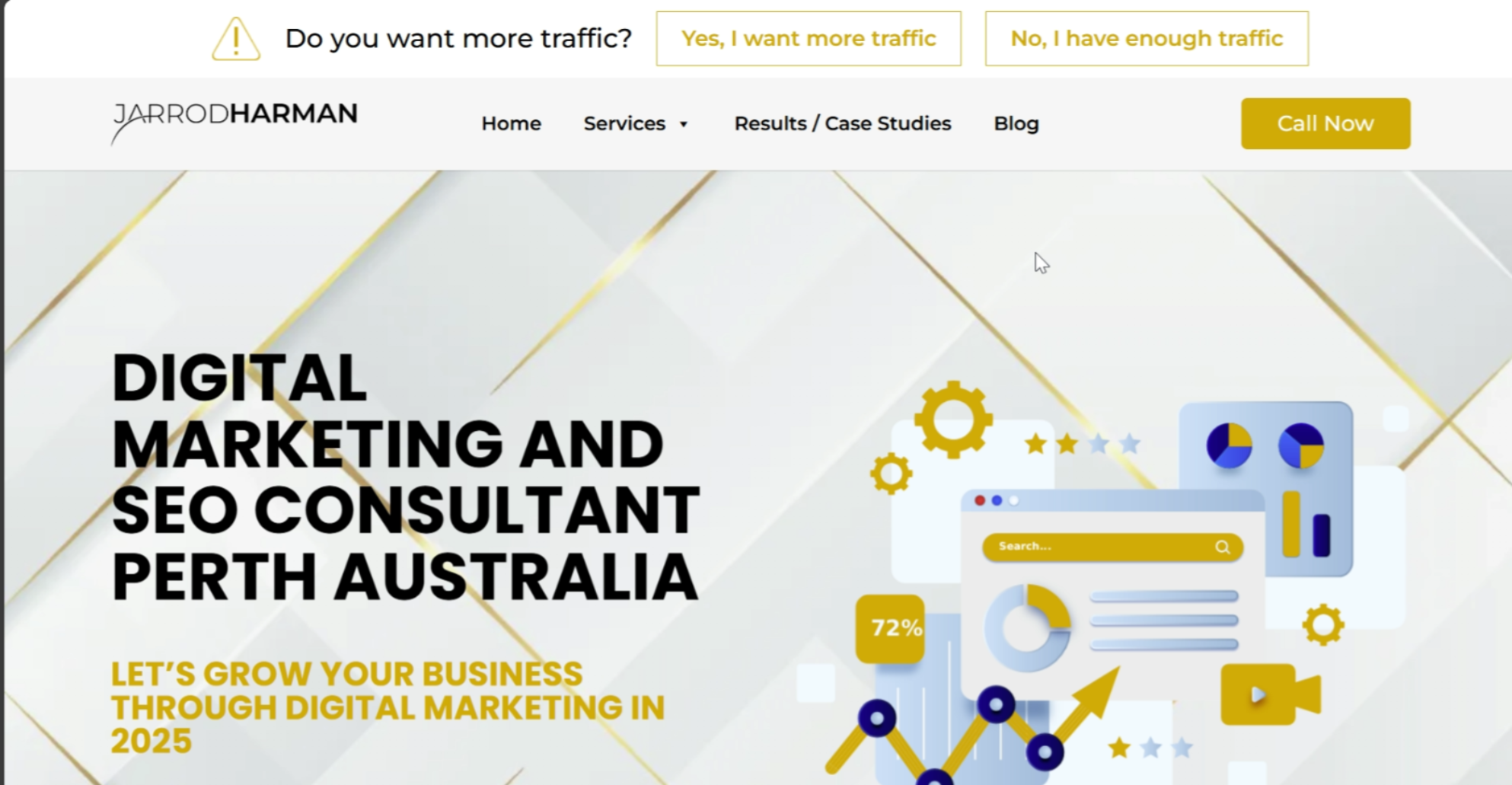
The practical outcome for clients: a documented brand strategy that feeds directly into SEO content planning, Google Ads copy, Meta creative briefs, and email sequences. Every channel speaks the same brand language because they all draw from the same strategic foundation. The Marketing Vortex method integrates SEO, GEO optimisation, paid media, and social into one system, so brand investment compounds rather than sitting in separate silos.
Services include brand strategy workshops, SEO and GEO optimisation, Google Ads and Meta Ads management, website development, social media content, and comprehensive reporting. If you want to understand which branding types are right for your business and how to connect them to measurable channel performance, get in touch with the Business Warriors team to start the conversation.
Further reading and useful sources
- NielsenIQ, Branding overview: industry-level context on branding types and why hybrid approaches outperform single-type strategies.
- Toimi, Brand strategy guide: practitioner-level guidance on sequencing strategy before identity, with the visual-first trap explained in detail.
- Epsilon, How to develop brand strategy: covers AI visibility monitoring, social sentiment tracking, and modern brand measurement KPIs.
- Salesforce, Branding strategies for small businesses: evidence-based commentary on purpose-led branding and the revenue impact of consistent digital branding.
- VistaPrint, 10 types of branding explained: the primary taxonomy reference for the ten branding types covered in this article.
- Adobe Express, The ultimate guide to brand strategy: framework for data-driven brand strategy including research, segmentation, and messaging stages.