


Over 85 percent of australian businesses are investing in multichannel marketing as customers expect seamless experiences wherever they shop. With each platform offering unique ways to connect, the pressure to deliver consistent messaging is higher than ever. Understanding how these approaches work together can help you reach more customers, create better brand loyalty, and drive real business growth backed by measurable results.
Table of Contents
- Defining Multichannel Marketing In Business
- Common Channels And Their Unique Strengths
- How Multichannel Strategies Drive Growth
- Integrating Channels For Consistent Results
- Avoiding Pitfalls And Maximising Roi
Key Takeaways
| Point | Details |
|---|---|
| Multichannel Marketing Importance | Businesses must engage customers across various platforms to meet diverse preferences and enhance brand influence. |
| Unique Channel Strengths | Each marketing channel has distinct advantages, requiring tailored strategies to maximise engagement and effectiveness. |
| Growth Mechanisms | Effective multichannel strategies can significantly boost market reach, customer acquisition, and revenue optimisation. |
| Channel Integration Necessity | Seamless integration of channels ensures consistent messaging and a unified customer experience, essential for success. |
Defining Multichannel Marketing in Business
Multichannel marketing represents a strategic approach where businesses engage customers across multiple communication and sales platforms simultaneously. Researchers have demonstrated that this method involves selling products and services through diverse channels to meet varied customer preferences and enhance brand influence.
At its core, multichannel marketing acknowledges that modern consumers interact with brands through numerous touchpoints. These might include physical stores, online websites, mobile applications, social media platforms, email marketing, telephone sales, and digital advertising channels. The strategic objective is to create a seamless, integrated experience that allows customers to engage with a brand through their preferred method.
The primary benefits of multichannel marketing extend beyond simple convenience. By implementing a comprehensive strategy, businesses can:
- Increase brand visibility across different customer segments
- Provide more personalised communication experiences
- Capture data and insights from multiple interaction points
- Improve overall customer engagement and loyalty
- Optimise marketing spend by understanding channel performance
Successful multichannel marketing requires sophisticated tracking, consistent messaging, and an understanding of how different customer groups prefer to interact with brands. This approach demands advanced technological integration, data analytics capabilities, and a nuanced understanding of consumer behaviour across digital and physical platforms.
Common Channels and Their Unique Strengths
Multichannel marketing encompasses a diverse range of communication platforms that enable businesses to connect with customers through multiple touchpoints. Marketing experts highlight that common channels include physical stores, digital platforms, social media, mobile devices, direct mail, and online websites, each offering distinct strategic advantages for engaging potential customers.
Digital channels have dramatically transformed marketing landscapes, providing unprecedented opportunities for targeted communication. Contemporary research demonstrates that e-commerce platforms offer remarkable convenience and extensive product selections, while physical retail spaces continue to provide immersive, tactile shopping experiences that digital environments cannot fully replicate.
Let’s explore the unique strengths of key marketing channels:
-
Physical Stores
- Immediate product interaction
- Personal customer service
- Tactile shopping experience
-
Digital Websites
- 24/7 accessibility
- Comprehensive product information
- Easy comparison shopping
-
Social Media
- Direct customer engagement
- Viral marketing potential
- Targeted advertising capabilities
-
Mobile Platforms
- Instant communication
- Location-based marketing
- Personalised notifications
Successful multichannel strategies require sophisticated integration, allowing seamless transitions between channels while maintaining consistent brand messaging and customer experience. Modern businesses must invest in technological infrastructure and data analytics to track customer interactions across these diverse platforms effectively.

How Multichannel Strategies Drive Growth
Multichannel marketing strategies have become a critical mechanism for businesses seeking sustainable growth in today’s complex consumer landscape. Research demonstrates that implementing a comprehensive multichannel approach allows retailers to significantly expand market penetration and enhance overall financial performance by strategically leveraging multiple communication platforms.
Comprehensive studies reveal that multichannel shoppers consistently demonstrate higher spending patterns compared to single-channel consumers. This phenomenon emerges from the enhanced customer experience created by seamless, integrated marketing approaches that cater to individual preferences and provide multiple engagement touchpoints.
The primary growth mechanisms of multichannel strategies include:
-
Expanded Market Reach
- Access to diverse customer segments
- Increased brand visibility
- Reduced geographical limitations
-
Enhanced Customer Acquisition
- Multiple entry points for potential customers
- Personalised engagement strategies
- Improved conversion opportunities
-
Revenue Optimization
- Higher customer lifetime value
- Reduced customer acquisition costs
- More sophisticated targeting capabilities
Successful multichannel growth requires sophisticated data integration, advanced analytics, and a deep understanding of customer behaviour across different platforms. Businesses must continuously adapt their strategies, leveraging technological innovations and consumer insights to create responsive, dynamic marketing ecosystems that drive sustainable growth and competitive advantage.
Integrating Channels for Consistent Results
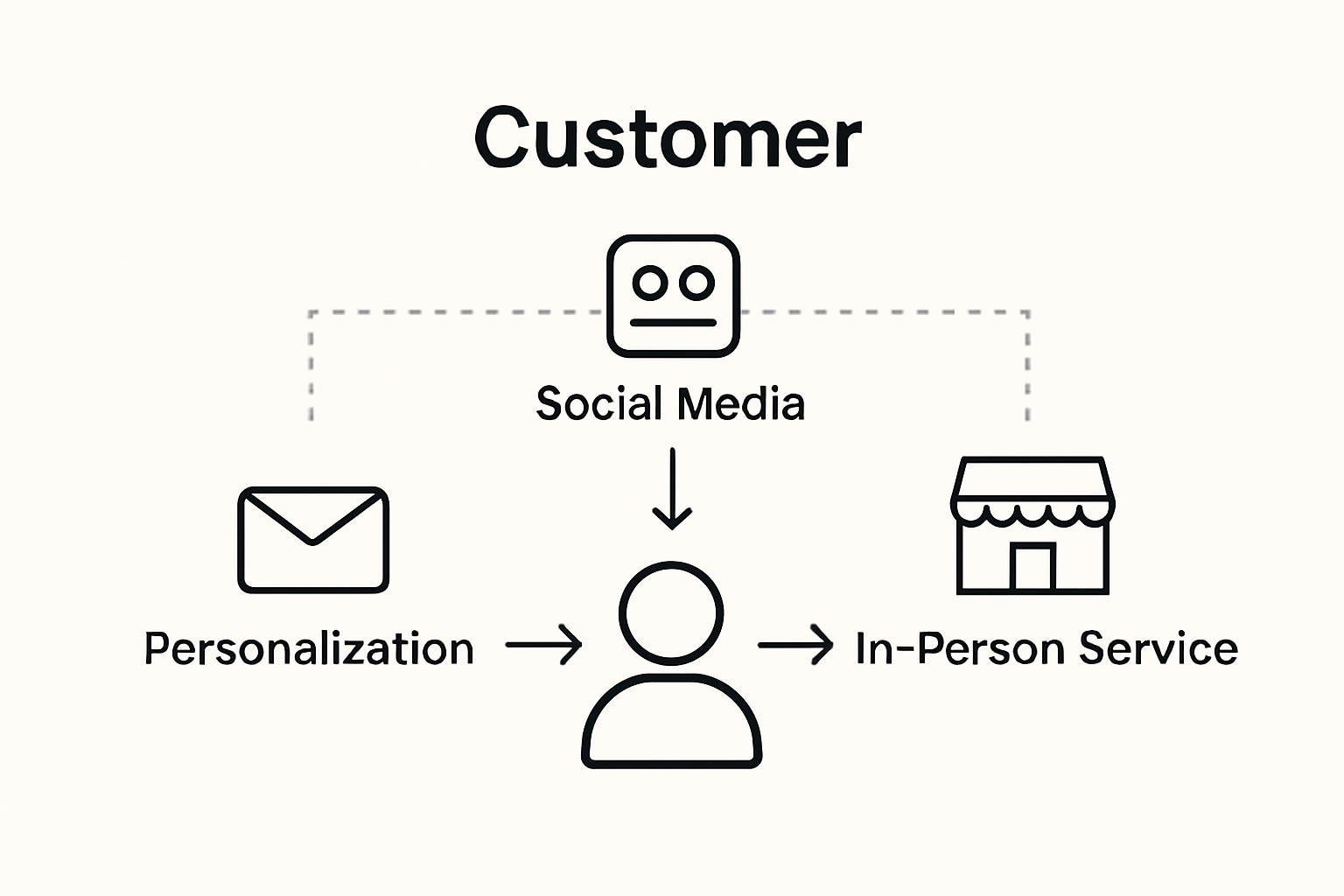
Channel integration represents the sophisticated backbone of successful multichannel marketing strategies, transforming disconnected communication platforms into a unified customer experience. Advanced research demonstrates that effective integration ensures a seamless service journey by maintaining consistent messaging and brand representation across diverse engagement touchpoints.
Competitive marketing frameworks highlight the importance of coordinating multiple channels, including mass media, social advertising, and viral marketing strategies, to maximise reach and performance. The goal is creating a holistic ecosystem where each channel reinforces and complements the others, providing customers with a smooth, interconnected experience.
Key principles of successful channel integration include:
-
Unified Messaging
- Consistent brand voice
- Synchronised communication themes
- Aligned visual identity
-
Data Synchronisation
- Integrated customer profiles
- Real-time information sharing
- Comprehensive interaction tracking
-
Technological Infrastructure
- Centralised marketing platforms
- Automated cross-channel communication
- Seamless data transfer mechanisms
Modern businesses must invest in sophisticated technological solutions that enable real-time data exchange, predictive analytics, and personalised customer interactions. This approach transforms multichannel marketing from a fragmented communication strategy into a dynamic, responsive system that adapts to individual customer preferences and behaviours.
Avoiding Pitfalls and Maximising ROI
Multichannel marketing strategies require meticulous planning and execution to prevent potential performance setbacks. Comprehensive research highlights that improper implementation can significantly negatively impact business performance, making strategic approaches critical for sustainable growth and successful channel management.
Strategic marketing insights emphasise the importance of developing targeted programs that align with multichannel shopper preferences. Businesses must cultivate a nuanced understanding of how different customer segments interact across various platforms to maximise return on investment and enhance overall marketing effectiveness.
Key strategies for mitigating multichannel marketing risks include:
-
Strategic Planning
- Comprehensive market research
- Detailed customer segment analysis
- Clear performance benchmarking
-
Technology Integration
- Robust data management systems
- Cross-channel tracking capabilities
- Automated performance analytics
-
Continuous Optimization
- Regular performance audits
- Adaptive marketing approaches
- Rapid response to channel performance variations
Successful multichannel marketing demands a dynamic approach that balances technological sophistication with deep customer insights. Businesses must remain agile, continuously refining their strategies to address emerging market trends, technological innovations, and shifting consumer behaviours while maintaining a laser focus on measurable, sustainable growth.
Unlock the Full Potential of Multichannel Marketing with Proven Strategies
Understanding multichannel marketing is essential for businesses looking to thrive in today’s competitive landscape. This article highlights the challenges of integrating multiple channels to deliver consistent, personalised experiences that drive growth and customer loyalty. If you are a business owner feeling overwhelmed by managing diverse platforms or uncertain how to unify your marketing efforts for maximum impact you are not alone. The key is a strategic, data-driven approach that leverages sophisticated tracking, unified messaging, and seamless customer journeys.

At Business Warriors, we specialise in transforming complex multichannel marketing challenges into measurable growth opportunities. Through Jarrod Harman’s unique Marketing Vortex Method and customised strategies, we empower service-based businesses and retailers to scale their online client acquisition efforts using SEO, Google Ads, social media, email marketing and more—all integrated for consistent results. Ready to take control of your multichannel strategy and build a marketing ecosystem that delivers predictable leads and sales? Visit https://jarrodharman.com to explore how our expert insights, client success stories and hands-on coaching can help you implement a winning approach today. Your next level of business growth starts with a proven partner who understands the nuances of multichannel marketing and how to convert it into real-world success.
Discover more about our approach and results-driven processes at Business Warriors | Digital Marketing Agency and join a community committed to elevating service-based industries through innovative marketing strategies.
Frequently Asked Questions
What is multichannel marketing?
Multichannel marketing is a strategy that allows businesses to engage customers across multiple communication and sales platforms, enhancing brand influence and catering to varied customer preferences.
How does multichannel marketing improve customer engagement?
By providing customers with various touchpoints—such as physical stores, websites, social media, and mobile platforms—multichannel marketing creates a seamless and integrated experience that meets individual customer needs and preferences.
What are the key benefits of implementing a multichannel marketing strategy?
The main benefits include increased brand visibility, enhanced customer engagement, personalized communication, improved customer loyalty, and optimized marketing spending by leveraging data insights from various channels.
How can businesses effectively integrate their marketing channels?
Businesses can effectively integrate their marketing channels by ensuring consistent messaging, synchronising data across platforms, and establishing a robust technological infrastructure that allows for seamless communication and real-time tracking of customer interactions.