


More than 60 percent of australian businesses feel unsure about where to begin with content marketing. Without a solid framework, even the best ideas rarely reach the right people or drive real results. Tackling each step with clear intent helps you identify your audience, sharpen your goals, and craft messages that actually convert. Discover how a structured, data-driven approach will make every marketing effort count and fuel sustainable growth.
Table of Contents
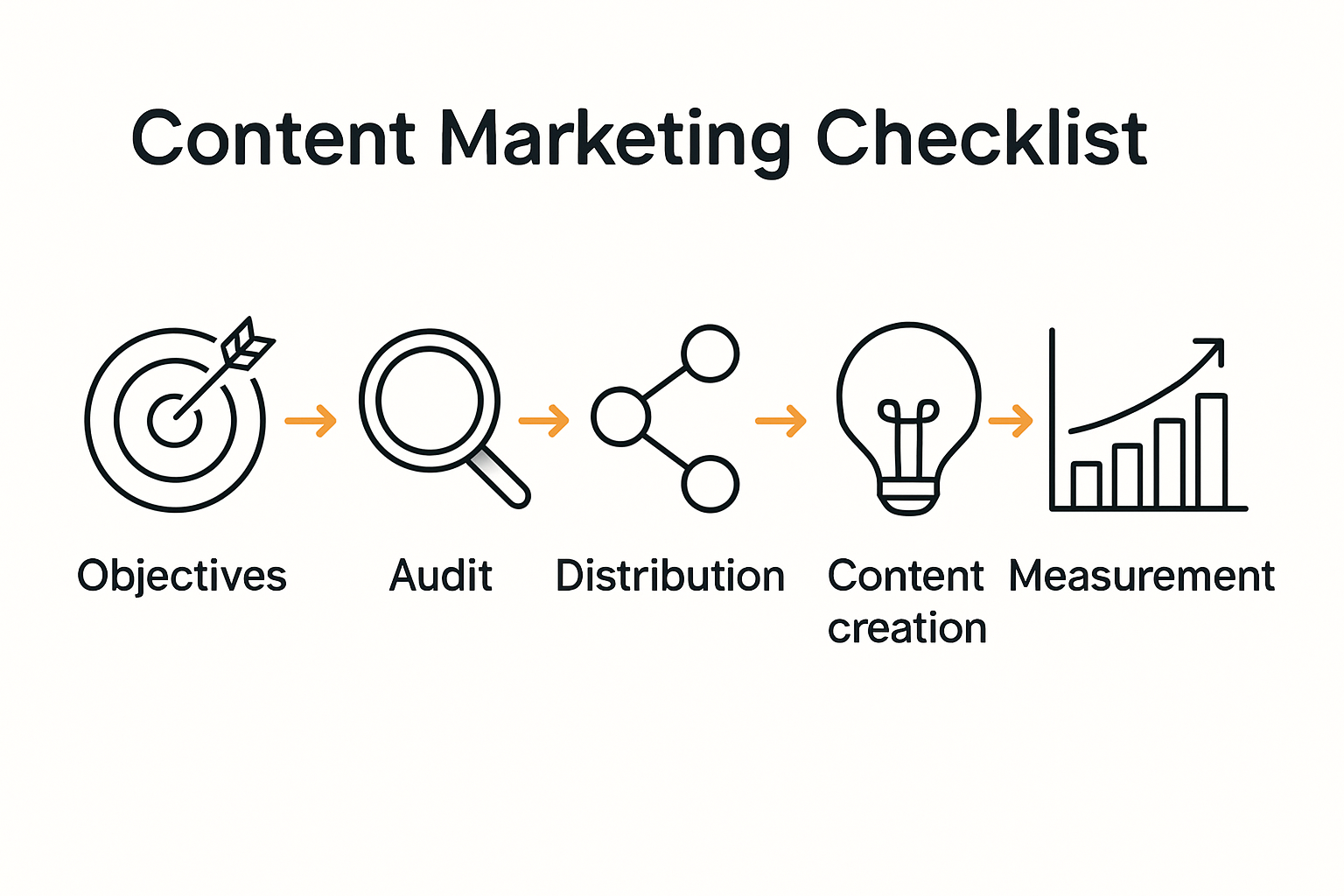
- Step 1: Define Clear Marketing Objectives And Target Audience
- Step 2: Audit Existing Content And Digital Assets
- Step 3: Develop An Integrated Content Distribution Plan
- Step 4: Create Compelling, Conversion-Focused Content
- Step 5: Measure Results And Optimise Your Strategy
Quick Summary
| Key Point | Explanation |
|---|---|
| 1. Define clear marketing objectives | Set specific, measurable goals tied to business outcomes to ensure focused marketing efforts. |
| 2. Perform a content audit | Assess current digital assets to identify strengths and areas for improvement to optimise content strategies. |
| 3. Develop a content distribution plan | Create a multichannel strategy that adapts content formats to maximise audience engagement and visibility. |
| 4. Create compelling content | Craft messaging that addresses audience pain points and drives immediate action through strong value propositions. |
| 5. Measure and optimise continuously | Implement a system for tracking performance to refine strategies and enhance effectiveness over time. |
Step 1: Define clear marketing objectives and target audience
Creating targeted marketing campaigns requires pinpointing precise objectives and understanding exactly who you want to reach. Your strategy will succeed or fail based on how well you map out these foundational elements.
Start by establishing specific, measurable marketing goals that align with your broader business outcomes. For instance, rather than saying “increase website traffic,” define a concrete objective like “boost organic search traffic by 25% within three months.” This approach transforms vague intentions into actionable targets that can be tracked and achieved.
Understanding your target audience goes beyond basic demographics. Dive deep into creating detailed customer personas that reveal not just age and location, but their motivations, challenges, and emotional triggers. Develop profiles that capture what keeps your potential customers up at night, what solutions they desperately seek, and how your product or service can genuinely solve their problems.
Pro tip: Your marketing objectives should always connect directly to revenue generation. Ask yourself for each goal “How will this specifically drive sales or business growth?”
With clear objectives and a nuanced audience understanding, you are now ready to design marketing strategies that speak directly to the right people at the right time.
Step 2: Audit existing content and digital assets
Conducting a thorough content audit is your strategic roadmap to understanding what digital assets you currently have and identifying opportunities for improvement. This critical step helps you optimise your marketing resources and ensure every piece of content works hard for your business.

Creating a comprehensive inventory of your digital content involves systematically documenting every webpage, blog post, video, social media asset, and marketing material. Start by gathering all your existing content into a centralised spreadsheet. For each asset, record key details like URL, content type, publication date, target audience, and current performance metrics.
Leverage advanced AI tools that can automate content analysis to streamline your audit process. These platforms can quickly assess each piece of content across multiple dimensions such as word count, SEO performance, relevance, and engagement rates. Look for content that underperforms or no longer aligns with your current marketing objectives.
Pro tip: During your audit, categorise content into three clear buckets keep, update, or remove. This helps you make swift, strategic decisions about your digital assets.
With a clear understanding of your existing content landscape, you are now prepared to develop a targeted strategy for content optimization and creation.
Step 3: Develop an integrated content distribution plan
Creating a powerful content distribution strategy transforms your marketing efforts from isolated tactics to a cohesive, multichannel approach that amplifies your message and reaches your target audience effectively. This step is about strategic planning that ensures your content gets maximum visibility and impact.
Successful content distribution begins with understanding the comprehensive scope of your marketing plan. Map out all potential channels where your audience engages content including social media platforms, email newsletters, industry blogs, podcast networks, and paid advertising channels. Each platform requires a nuanced approach consider the unique audience behaviours and content consumption patterns specific to that channel.
Design a content distribution matrix that details precise strategies for each platform. For organic channels like social media, develop a consistent posting schedule that maintains audience engagement. For paid channels, create targeted advertising campaigns that match specific audience segments with relevant content. Implement tracking mechanisms to measure performance across different distribution channels so you can continuously refine and optimise your approach.
Pro tip: Always adapt your content format to suit each distribution channel. A LinkedIn post needs different formatting compared to an Instagram story or an email newsletter.
With a robust distribution plan in place, you are now ready to execute a synchronised content strategy that reaches and resonates with your target audience across multiple touchpoints.
Step 4: Create compelling, conversion-focused content
Transforming your content from generic information to a powerful conversion tool requires strategic thinking and precise execution. Your goal is to craft messaging that not only captures attention but compels your audience to take immediate action.
Developing a distinctive value proposition becomes the cornerstone of creating compelling content. Understand what truly separates your offering from competitors by diving deep into your unique strengths. Focus on articulating specific benefits that directly address your target audience’s pain points articulate how your solution solves their problems more effectively than anyone else.
Structure your content with a clear psychological progression that guides readers from awareness to desire to action. Begin with a provocative headline that speaks directly to your audience’s challenges. Follow with storytelling that demonstrates real world impact use case studies customer testimonials and concrete examples that showcase tangible results. Integrate persuasive elements like social proof statistics and emotional triggers that validate your claims and create a sense of urgency.
Pro tip: Your content should always answer the critical question burning in your audience’s mind what is in it for me?
With compelling content that speaks directly to your audience’s needs and motivations, you are now prepared to design conversion pathways that transform interested readers into committed customers.
Step 5: Measure results and optimise your strategy
Successful marketing is a continuous cycle of measurement, analysis, and strategic refinement. Your ability to track performance and make data-driven decisions will determine the long-term effectiveness of your content marketing efforts.
Setting measurable objectives is critical for tracking your marketing performance with precision. Establish clear key performance indicators (KPIs) that directly align with your business goals. These might include conversion rates, website traffic, engagement metrics, lead generation numbers, or revenue attributable to specific content pieces. Use analytics tools to capture comprehensive data that reveals not just surface level metrics but deep insights into audience behaviour and content performance.
Develop a systematic approach to measuring marketing objectives across multiple channels by creating a centralised dashboard that aggregates data from social media platforms, email marketing systems, website analytics, and sales tracking software. Look for patterns and trends that indicate which content types, topics, and distribution channels are generating the most significant results. Pay special attention to metrics that demonstrate not just reach but actual impact on your business objectives.
Pro tip: Implement a quarterly review process where you critically examine your performance data and make strategic adjustments to your content approach.
With a robust measurement and optimization framework in place, you are now equipped to continuously refine your marketing strategy and drive increasingly effective results.
Unlock Your Business Growth with Proven Marketing Systems
The “Content Marketing Checklist for Business Owners” article highlights the challenge of turning clear marketing objectives and compelling content into tangible business growth. Many service-based business owners feel overwhelmed by the need for an integrated approach that delivers consistent leads and sales. If you are ready to move from planning to real results, you are not alone.
At Business Warriors, we specialise in guiding passionate entrepreneurs through exactly this journey. Our innovative Marketing Vortex method unites SEO, paid advertising, email marketing, social media and website development into one powerful strategy tailored to your unique goals. We focus deeply on measurable outcomes so every dollar you invest drives bookings and revenue.
Take the next step to de-risk your marketing investment and join a community of businesses growing with expert support. Explore insights from the Uncategorized Archives – Jarrod Harman and discover how proven strategies lead to sustained success.

Visit https://jarrodharman.com today to learn more about how you can implement the Marketing Vortex method and start converting your content marketing effort into real business wins.
Ready to transform your marketing? Access expert guidance, success stories and tailored solutions made for service-based businesses on Jarrod Harman’s main landing page. Your next level marketing strategy is just a click away.
Frequently Asked Questions
What are the key steps in a content marketing checklist for business owners?
The key steps include defining your marketing objectives and target audience, auditing existing content, developing a distribution plan, creating compelling content, and measuring results. Start by documenting your goals and understanding your customers to ensure every step aligns with your business needs.
How can I determine my target audience for effective content marketing?
To determine your target audience, create detailed customer personas that encompass their age, location, motivations, and challenges. Use surveys or interviews to gather insights and refine your audience profiles based on real data, which can help you tailor your content more effectively.
What metrics should I use to measure the success of my content marketing?
Key performance indicators (KPIs) to measure success include conversion rates, website traffic, engagement rates, and lead generation numbers. Set specific targets for each metric, such as increasing website traffic by 25% over three months, to evaluate your marketing effectiveness clearly.
How often should I review and optimise my content marketing strategy?
You should review your content marketing strategy quarterly. This regular assessment allows you to analyse performance data and make necessary adjustments based on trends, ensuring your strategy remains aligned with your business objectives.
What types of content should be included in my distribution plan?
Your distribution plan should include a mix of blog posts, videos, social media updates, newsletters, and any relevant paid advertising content. Tailor the format and messaging for each channel to match audience behaviour and preferences for optimal engagement.
How can I improve underperforming content based on my audit?
To improve underperforming content, categorise it as keep, update, or remove based on your content audit. Focus on updating content with low engagement by integrating more compelling calls to action, enriching the information provided, or optimising for better SEO results.