


TL;DR:
- Response marketing delivers immediate, measurable actions such as replies, clicks, or bookings by focusing on audience accuracy, message personalisation, and disciplined testing. Effective audience segmentation based on behaviors significantly influences response rates, with personalised openers and soft CTAs further improving engagement. Combining AI, SEO, and paid advertising amplifies outreach success, but success depends on precise audience targeting and ongoing testing.
Response marketing is defined as a direct, measurable approach that prompts customers to take an immediate, trackable action, whether that is replying to an email, clicking an ad, or booking a call. Unlike brand awareness campaigns, direct response advertising lives or dies by its numbers. The 2026 Cold Email Benchmark Report shows elite performers achieve reply rates exceeding 10% by keeping messages under 80 words and using verified contact data, against an industry average of just 3.43%. That gap exists because of three controllable variables: audience accuracy, message personalisation, and call-to-action design. Get those right, and your conversion marketing strategies compound over time.
How does audience selection influence response marketing success?
Audience selection drives 40% of campaign response variance. That figure dwarfs the contribution of creative, channel, or send time combined. It means you can write the best email in your industry and still get zero replies if it lands in the wrong inbox.
The distinction that matters most is behavioural-intent segmentation versus demographic targeting. Demographic targeting groups people by age, location, or job title. Behavioural-intent segmentation groups people by what they have actually done: visited a pricing page, downloaded a guide, attended a webinar, or changed roles in the past 90 days. Signal-based audiences consistently outperform demographic lists because intent signals indicate readiness to act, not just relevance to a category.
Tight Ideal Customer Profile (ICP) criteria matter just as much as the signal type. Removing prospects who fail strict ICP criteria lifts both conversion rates and sender reputation. A broad list of 5,000 loosely matched contacts will generate more bounces and spam complaints than a tight list of 800 verified, signal-qualified prospects. Bounce rates below 1% and spam complaint rates under 0.3% are the thresholds that protect primary inbox placement.
Key audience-selection practices that lift response rates:
- Build segments around trigger events: funding rounds, job changes, product launches, or seasonal buying cycles.
- Verify contact data before every send using tools like Hunter or NeverBounce to keep bounce rates in check.
- Remove anyone who has not engaged in 90 days from active sequences and move them to a re-engagement track.
- Score leads by ICP fit before they enter any outreach sequence, not after.
Pro Tip: Refine your segment before you touch your message. If your reply rate sits below 3%, the audience is almost always the problem, not the copy.
What role does message personalisation and CTA play in response rates?
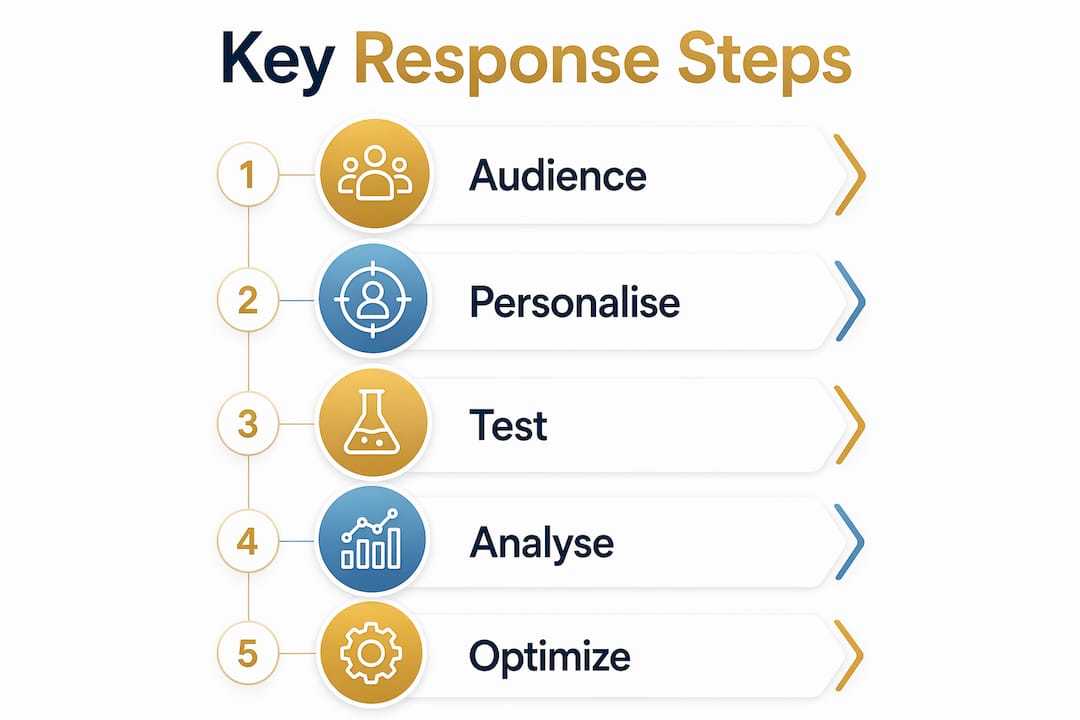
Opening line personalisation accounts for 25–30% of total response rate variance. That makes it the single most influential factor in cold prospect engagement, ahead of subject line, message length, and send time. A generic opener like “I hope this finds you well” signals immediately that the message is templated. A specific opener referencing a recent LinkedIn post, a new service launch, or a shared connection signals that the sender did their homework.

The top three outreach variables, which are opening line, CTA format, and message length, account for over 55% of response variance combined. That concentration tells you where to spend your testing budget. Nail those three before you experiment with anything else.
CTA design splits into two categories: soft asks and hard asks. A hard ask requests a commitment: “Book a 30-minute call this week.” A soft ask lowers the barrier: “Would it make sense to swap a few emails about this?” Soft asks consistently outperform hard asks in cold outreach because they reduce perceived risk. Reserve hard asks for warm leads who have already shown interest. For crafting effective CTAs that convert, the principle is simple: one ask per message, placed at the end, written as a question.
Additional factors that lift response rate optimisation:
- Keep messages under 150 words for cold prospects. Brevity signals respect for the reader’s time.
- Lead with a value proposition tied to a specific outcome the prospect cares about, not a feature list.
- Add one piece of social proof, such as a client result or a recognisable brand name, in the second sentence.
- Match the message tone to the platform. LinkedIn messages read differently from emails.
Pro Tip: Write your opening line last. Draft the full message, then craft an opener that references something specific and recent about the prospect. Trigger-event openings, referencing a funding round or a new hire, outperform generic openers by a wide margin.
Which testing practices yield reliable response marketing improvements?
Most marketers test the wrong things first. They change subject lines and button colours while leaving audience targeting and opening lines untouched. Testing in order of variable impact, starting with audience, then opening line, then CTA, produces the most reliable improvements and prevents wasted budget.
The recommended testing sequence for response campaigns:
- Audience segment. Test two distinct audience definitions against each other before touching any message element. Run each segment with identical copy for two full weeks.
- Opening line. Once the stronger audience is confirmed, test two opening line approaches: one trigger-event reference versus one pain-point lead.
- CTA format. Test a soft ask against a hard ask using the winning audience and opening line from the previous rounds.
- Message length. Test a version under 80 words against one under 150 words with all other elements held constant.
- Send time and day. Test Tuesday and Wednesday morning sends against Thursday afternoon sends. Day-of-week patterns affect open and reply rates more than most marketers expect.
The minimum viable sample size is 200 prospects per variant, run over a two-week cycle. Smaller samples produce statistically unreliable data. Simultaneous variable changes make it impossible to identify which element drove the result. Discipline in testing is what separates marketers who improve consistently from those who chase random wins.
External factors also contaminate results. Public holidays, industry events, and major news cycles all shift response behaviour. Control for these by noting them in your test log and avoiding major send windows around them.
Pro Tip: Keep a simple test log in a shared spreadsheet. Record the variable tested, the hypothesis, the sample size, the duration, and the result. After six months, patterns emerge that no single test would reveal on its own.
How can AI, SEO, and paid advertising amplify your response results?
AI tools now handle the most time-consuming part of personalised outreach: research and drafting. AI-powered personalisation creates trigger-event-based openings and customised CTAs at scale, producing measurable lifts in reply rates. A marketer who once spent 20 minutes researching each prospect can now review and approve AI-generated drafts in under two minutes, without sacrificing relevance.
SEO plays a different but equally important role in response-driven lead generation. Organic search brings prospects to your content at the moment they are actively researching a problem. A well-ranked article or landing page captures intent-driven traffic that is already warmer than any cold outreach list. Combining SEO lead generation with direct response sequences creates a two-channel funnel: SEO attracts, outreach converts. AI-assisted SEO, including generative engine optimisation (GEO) and getting brand mentions inside large language models like ChatGPT and Perplexity, adds a third layer by positioning your brand as the answer when prospects ask AI tools for recommendations.
Paid advertising through Google Ads and Meta accelerates the process. Google Ads targets prospects at the point of search intent. Meta advertising targets by behaviour, interest, and lookalike audiences built from your existing customer data. Both channels generate measurable response metrics that feed directly back into your audience refinement and testing cycles.
| Channel | Primary strength | Best use case in response marketing |
|---|---|---|
| AI personalisation | Speed and relevance at scale | Cold outreach opening lines and CTA drafting |
| SEO and GEO | Intent-driven organic traffic | Top-of-funnel content and brand authority |
| Google Ads | Search intent targeting | Bottom-of-funnel conversion campaigns |
| Meta advertising | Behavioural and lookalike targeting | Retargeting and warm audience nurturing |
| Email marketing | Direct, measurable engagement | Sequence-based lead nurturing and follow-up |
Social media marketing sits across all four channels. Organic social builds the trust and brand recognition that makes paid and outreach campaigns more effective. When a prospect receives a cold email and then sees your content on LinkedIn or Instagram, the second touchpoint lifts reply rates because familiarity reduces friction.
Key takeaways
Response marketing succeeds when audience accuracy, message personalisation, and disciplined testing work together, supported by AI, SEO, and paid advertising to amplify reach and measurability.
| Point | Details |
|---|---|
| Audience accuracy is primary | Audience selection drives 40% of response variance; fix targeting before touching copy. |
| Personalise the opening line | Opening line personalisation accounts for 25–30% of response rate variance. |
| Test one variable at a time | Follow a ranked sequence: audience, opening line, CTA, length, then send time. |
| Use AI to scale personalisation | AI-generated trigger-event openings lift reply rates without sacrificing relevance. |
| Combine SEO and paid channels | SEO attracts intent-driven prospects; Google Ads and Meta convert them faster. |
What I have learned running response campaigns for Australian businesses
The most common mistake I see from marketing professionals and business owners is spending weeks refining copy while the audience list sits unexamined. They will rewrite a subject line six times and never ask whether the 3,000 contacts on their list actually fit their ICP. When I audit underperforming campaigns, the audience is the problem at least seven times out of ten.
The second mistake is expecting quick fixes. Response rate optimisation is a compounding process. The businesses I work with through Business Warriors that see the strongest results are the ones that commit to a 90-day testing cycle, not a two-week sprint. They build a test log, they hold variables constant, and they let the data tell them what to change next. That discipline is unglamorous, but it is what separates a 3% reply rate from a 10% one.
AI and SEO are not replacements for tested marketing principles. They are accelerants. AI helps you personalise at scale. SEO and GEO put your brand in front of prospects before they even know they need you, including inside AI tools like ChatGPT when someone asks for a recommendation in your category. Paid advertising through Google Ads and Meta closes the loop by retargeting warm audiences with direct response offers. When you run all of these channels together, the whole system produces more than the sum of its parts. But none of it works if your audience is wrong.
— Business Warriors | Digital Marketing Agency
The Marketing Vortex method for response-driven growth
Jarrodharman’s Marketing Vortex method is built for exactly this kind of integrated, measurable marketing. It combines SEO, Google Ads, Meta advertising, email marketing, and social media into one connected system where each channel feeds the next.
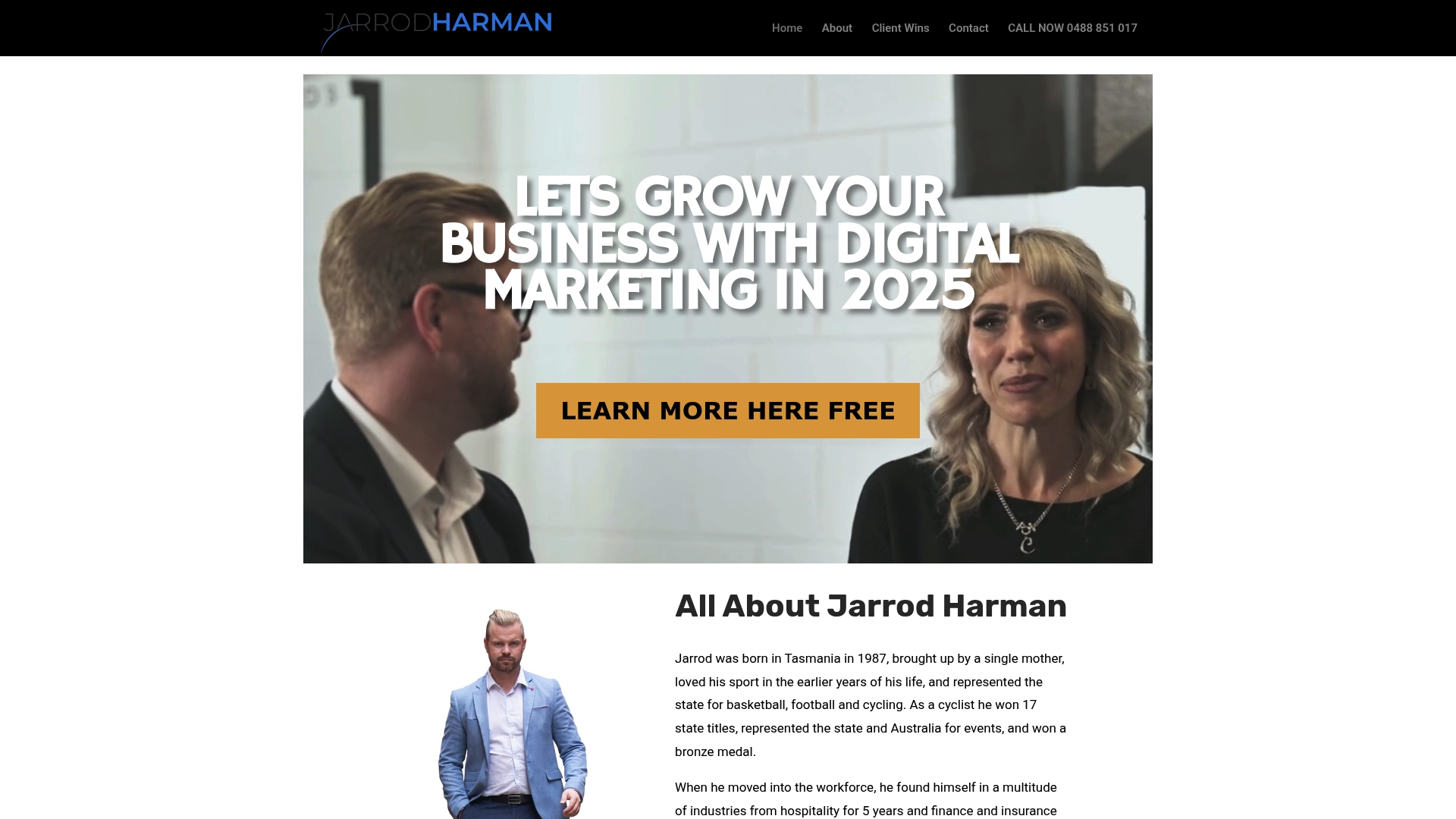
For service-based businesses in Australia looking to lift their lead conversion rates through direct response campaigns, the Marketing Vortex removes the guesswork from channel selection and audience targeting. Jarrodharman works with business owners and marketing managers who are ready to run campaigns that produce trackable results, not just impressions. If you want a system that connects audience accuracy, personalised messaging, and paid media into one measurable funnel, the Marketing Vortex is worth a close look.
FAQ
What is response marketing?
Response marketing is a direct marketing approach designed to prompt an immediate, measurable action from the recipient, such as a reply, a click, or a booking. It differs from brand advertising because every element is tested and tracked against a specific response metric.
How does audience selection affect response rates?
Audience selection drives approximately 40% of campaign response variance, making it the single largest controllable factor. Behavioural-intent segments consistently outperform broad demographic lists because they target prospects who are actively ready to act.
What is the average cold email reply rate?
The industry average cold email reply rate sits at 3.43%. Elite performers exceed 10% by using verified contact data, keeping messages under 80 words, and leading with personalised, trigger-event-based opening lines.
How many variables should I test at once in a response campaign?
Test one variable at a time, with a minimum of 200 prospects per variant over a two-week cycle. Testing multiple variables simultaneously makes it impossible to identify which change drove the result.
How does SEO support response marketing?
SEO attracts intent-driven prospects to your content at the moment they are researching a problem, producing warmer leads than cold outreach alone. Combining organic search traffic with direct response email sequences creates a two-channel funnel that lifts overall conversion rates.