28 May 2026
Client acquisition tips that actually grow your business
Discover effective client acquisition tips that will grow your business. Learn strategies for SEO, paid ads, and more to attract better clients!
TL;DR:
- A clear client acquisition process is essential for business growth, combining SEO, paid ads, referrals, and social media. Building a precise ideal client profile and implementing a multichannel system ensures better leads at lower costs with measurable results. Consistent tracking, targeted outreach, and strategic referrals turn prospects into loyal clients efficiently.
Growing a business without a clear client acquisition process is like driving without a map. You might eventually arrive somewhere, but you will waste enormous time and money getting there. The client acquisition tips in this article cut through the noise and give you a practical framework built around SEO strategy, AI-powered outreach, paid advertising, referral systems, and social media marketing. Whether you are a marketing manager at a growing clinic or a business owner scaling a service brand, these strategies are designed to bring in better clients, faster, and at a lower cost per acquisition.
Table of Contents
- Key takeaways
- 1. Start with a razor-sharp ideal client profile
- 2. Build SEO into your client acquisition engine
- 3. Use paid advertising to accelerate lead flow
- 4. Turn your referral network into a predictable system
- 5. Build a multi-touchpoint nurture campaign
- 6. Measure your true client acquisition cost
- 7. Use social media to build authority and attract clients
- My honest take on client acquisition
- Want faster results from your client acquisition efforts?
- FAQ
Key takeaways
| Point | Details |
|---|---|
| Build a precise ideal client profile | Targeting the wrong audience inflates your cost per acquisition and wastes ad spend. |
| Invest in SEO as a long-term engine | Organic search compounds over time and delivers qualified leads at a lower ongoing cost. |
| Use paid ads for speed, organic for scale | Google Ads and Meta campaigns accelerate results while SEO and referrals build sustainable pipelines. |
| Referral systems outperform cold outreach | Referral leads convert easier and carry a higher lifetime value than paid leads. |
| Track CAC at the channel level | Knowing which channel delivers the lowest acquisition cost tells you exactly where to put your next dollar. |
1. Start with a razor-sharp ideal client profile
Every effective client strategy starts before you write a single ad or publish a single blog post. It starts with knowing precisely who you are trying to reach. Trying to appeal to everyone is one of the most costly mistakes a business can make, and it shows up directly in your cost per acquisition.
A useful ideal client profile (ICP) goes well beyond age and location. It captures:
- The specific problem your client is trying to solve right now
- What has already failed them and why
- The language they use when they search for solutions online
- Their decision-making triggers and what makes them hesitate
When you know these things, your messaging becomes magnetic. A med spa owner in Sydney and a law firm partner in Melbourne have completely different pain points, even if they both need more clients. Your SEO content, your Google Ads copy, and your social media posts all become sharper when they speak to one person’s reality rather than a vague crowd.
Pro Tip: Use AI tools like Claude or ChatGPT to analyse customer reviews in your niche. Ask it to identify recurring complaints, desired outcomes, and the exact phrases people use. Feed that language directly into your ad copy and content.
2. Build SEO into your client acquisition engine
Search engine optimisation is not a nice-to-have. For service-based businesses, it is one of the most reliable ways to attract clients who are actively looking for what you offer. The key is treating SEO as a system, not a one-time project.
Start with keyword research aligned to your ICP. You want to find the phrases your ideal clients type when they are ready to buy, not just when they are browsing. For a beauty clinic, that might be “laser hair removal Perth” rather than “how does laser hair removal work.” These two audiences are at completely different stages, and your content needs to meet each of them where they are.
Here is what a well-structured SEO strategy for client acquisition looks like in practice:
| SEO layer | What it does | Example |
|---|---|---|
| On-page SEO | Targets specific buyer-intent keywords | Service pages optimised for location and service type |
| Technical SEO | Makes your site crawlable and fast | Core Web Vitals, mobile performance, schema markup |
| Local SEO | Appears in Google Maps and local packs | Google Business Profile optimisation, local citations |
| Content marketing | Builds authority and captures research-phase leads | Blog posts, case studies, FAQs |
| AI and GEO | Gets your brand mentioned in AI answers | Structured data, being cited as a source in LLM results |
That last row deserves attention. AI-driven tools are now a core part of how people discover businesses, and getting your brand cited in large language model outputs, also known as generative engine optimisation (GEO), is becoming a genuine acquisition channel. Publishing authoritative, well-structured content that other sites and AI models reference puts your business in front of prospects even before they open a browser.
Pro Tip: Optimise your content for AI answer engines by including concise, direct answers to common client questions within your pages. Use structured data markup so tools like Google’s AI Overview and ChatGPT can surface your content accurately.
A multichannel SEO approach that integrates technical, local, and content layers consistently outperforms businesses relying on a single tactic.
3. Use paid advertising to accelerate lead flow
Organic SEO builds a strong foundation, but it takes time. Paid advertising is how you generate leads this week while your organic strategy matures. The best practices for client acquisition through paid channels come down to three things: the right platform, the right message, and relentless measurement.
Here are the paid channels worth your attention in 2026:
- Google Ads (Search). Captures people who are actively searching for your service right now. High intent, higher cost per click, but frequently the best CAC for service businesses.
- Meta Ads (Facebook and Instagram). Exceptional for awareness and retargeting. Works especially well for visually driven services like beauty, wellness, and retail.
- LinkedIn Ads. Best suited for B2B acquisition where you are targeting marketing managers, directors, or business owners in specific industries.
- YouTube Ads. Underutilised by most service businesses. Short pre-roll ads that demonstrate your expertise or results can build trust at scale for a lower cost than search.
No matter which platform you use, your ad creative needs to speak directly to a pain point your ICP has right now. Vague offers get ignored. A clear, specific promise with a strong call to action converts. AI-powered ad tools can now test dozens of creative variations simultaneously, identifying winning combinations far faster than manual split testing.
Channel-level CAC tracking is non-negotiable. If you do not know which campaign is bringing in clients at a profitable cost, you are flying blind with your budget.

4. Turn your referral network into a predictable system
Most business owners get referrals occasionally but almost none have a system that generates them consistently. That distinction matters enormously. Referral leads convert more easily and carry a higher lifetime value than almost any paid acquisition channel, yet most businesses treat referral generation as an afterthought.
Building a referral machine involves three components:
- The ask. Ask for referrals immediately after a client expresses satisfaction, completes a milestone, or achieves a visible result. That is the moment of peak goodwill and the most natural time to make the request.
- The simplification. Make referring as easy as possible. A short message template, a direct booking link, or a referral code removes the friction that stops happy clients from following through.
- The COI network. Centres of influence are professionals who serve your ideal clients but do not compete with you. A salon owner’s COI might be a wedding planner or a fitness studio. Stay visible to these people through regular check-ins, social media engagement, and occasional value exchanges.
Pro Tip: Set up a simple automated follow-up sequence that triggers after a client milestone. A personalised message at day 14 post-service asking for feedback, and then a referral request at day 21, can double the volume of referrals you receive without any additional manual effort.
5. Build a multi-touchpoint nurture campaign
One of the most important client acquisition tips that most business owners ignore is this: most prospects are not ready to buy when they first encounter your brand. Prospects often require up to 29 touchpoints before they make a decision. That number surprises people, but it reflects the reality of how buying decisions actually happen.
A multi-channel nurture campaign keeps you visible and credible across that entire journey. Here is how to build one:
- Capture leads with a clear offer. A free consultation, a downloadable guide, or a short quiz gives prospects a reason to hand over their contact details.
- Follow up immediately with an email sequence. The first three emails should deliver genuine value: a useful tip, a case study, or an answer to a common question. Sell later.
- Retarget across social media. Website visitors who did not convert should see your content on Facebook, Instagram, and YouTube. This keeps your brand present without being pushy.
- Use behaviour-based triggers. If a prospect opens your email about a specific service, send them more content on that topic. Personalisation based on behaviour converts significantly better than broadcast messaging.
- Stay consistent over time. Most businesses give up after two or three follow-ups. Your competitors do the same, which means staying in contact for 60 to 90 days gives you a substantial advantage.
For more on building this kind of system, the guide on online lead nurturing breaks down the mechanics of each stage in practical detail.
6. Measure your true client acquisition cost
Here is something most businesses get wrong. Staff and advisor time can account for up to 71% of your actual client acquisition cost, yet almost no one includes it in their CAC calculation. If you are spending three hours per week on sales calls that convert at 20%, every one of those hours needs to be factored into your cost per new client.
Tracking CAC by channel reveals which marketing efforts are actually profitable and which are consuming resources without a return. A Google Ads campaign that costs $3,000 per month looks expensive until you compare it to the $8,000 you are spending in staff time on trade show attendance for similar results. The data makes the decision obvious. Without it, you are guessing.
The calculation is straightforward. Total spending on a channel (including your time at an hourly rate) divided by the number of clients acquired from that channel gives you channel-specific CAC. Review this number monthly. Shift budget toward channels where CAC is falling and conversion rates are improving.
7. Use social media to build authority and attract clients
Social media marketing is not just a brand awareness play. When used deliberately, it is one of the most effective ways to gain clients because it compresses the trust-building process. A prospect who has watched ten of your videos or read twenty of your posts already feels like they know you before they ever make contact.
The platforms worth prioritising depend on where your ideal clients spend time. For service-based businesses targeting consumers, Instagram and Facebook remain the strongest. For B2B acquisition, LinkedIn is where decision-makers and marketing managers are most reachable. TikTok is growing rapidly as a platform for service businesses willing to show personality and behind-the-scenes content.
Data-driven research shows that combining quantitative analytics with qualitative insight, such as comments, DMs, and poll responses, gives you the clearest picture of what content actually resonates. Post consistently, engage with every comment, and use your social content to funnel interested prospects toward a booking or enquiry.
My honest take on client acquisition
I’ve worked with enough business owners to see a clear pattern. The ones who struggle with acquisition almost always have the same problem. They are collecting tactics rather than building a system. They run a Google Ads campaign for a month, get distracted, try Instagram for a while, then pivot to cold email. Nothing compounds because nothing runs long enough to generate data.
Effective acquisition works as a repeatable engine, not a series of experiments. The businesses that grow predictably have mapped their entire client acquisition process from first contact through to onboarding, and they measure every stage. A structured onboarding process with clear milestones is not just a retention tool. It is the final step in acquisition, because a client who gets a fast, tangible result in the first 30 days becomes your best referral source.
My advice is to pick two or three channels, run them properly for at least 90 days, measure the channel-level CAC, and then decide what to scale. Combine AI tools with human judgement. Let the algorithms optimise delivery, but write your own messaging. Nobody wants to read content that sounds like it was produced by a machine that has never spoken to an actual client.
, Business Warriors | Digital Marketing Agency
Want faster results from your client acquisition efforts?
If you have read this far, you already understand that attracting the right clients consistently requires more than running a few ads or posting on social media occasionally. It requires a coordinated system where SEO, paid advertising, content, and referral channels all work together.
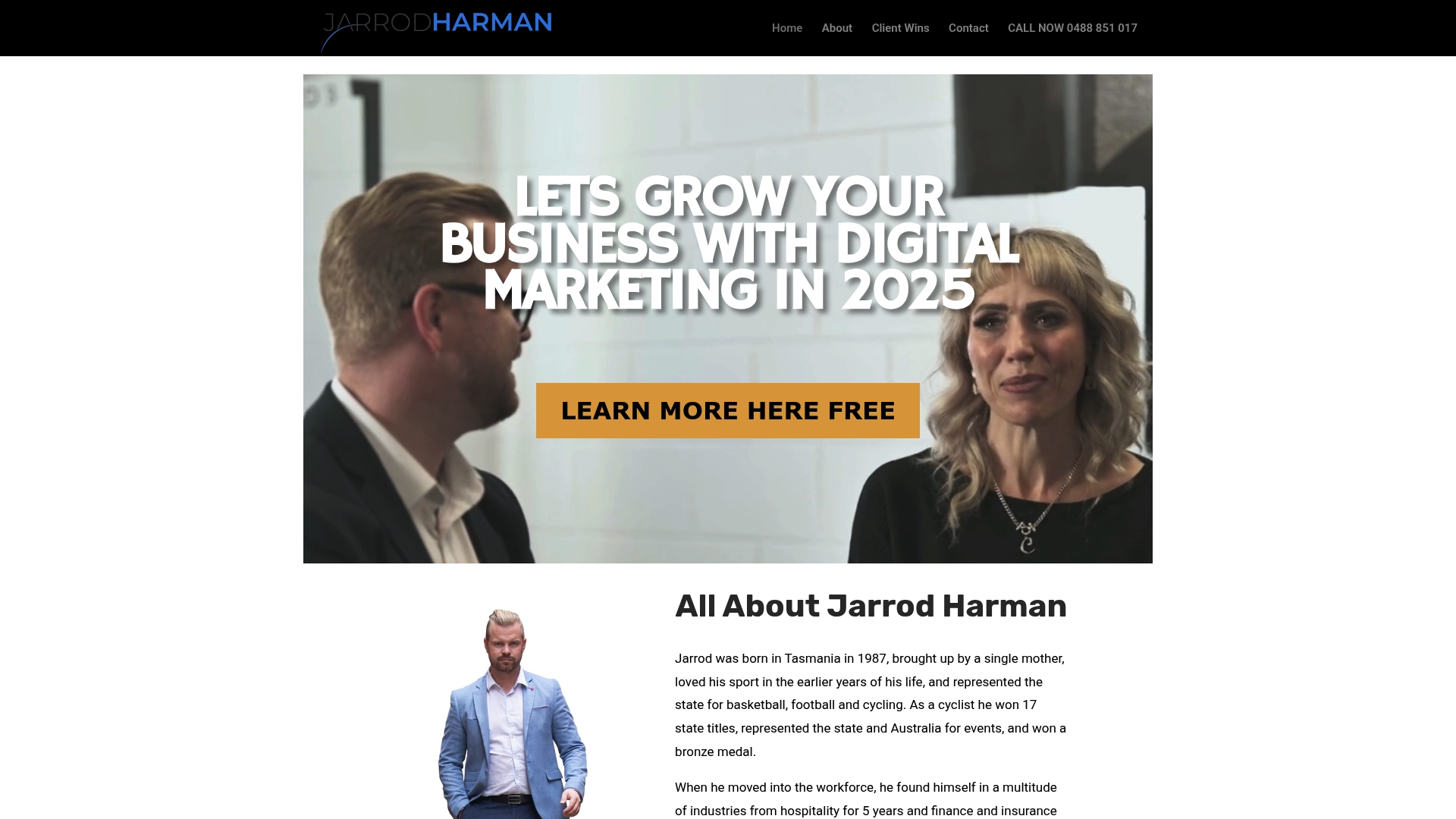
Jarrodharman specialises in exactly this. The Marketing Vortex Method is a proven omnichannel framework that integrates SEO, Google Ads, Meta advertising, email, and social media into one cohesive acquisition engine built specifically for service-based businesses. Whether you need an SEO consultant in Perth or a full-service digital marketing partner to manage your entire pipeline, the team at Business Warriors has the experience and the systems to deliver measurable results. You can also explore proven acquisition strategies tailored to Australian service businesses, or dive into top acquisition tactics designed to generate consistent bookings and long-term growth.
FAQ
What are the most effective client acquisition tips for service businesses?
The most effective tips include building a precise ideal client profile, investing in local SEO, running targeted Google and Meta ads, and creating a systematic referral process. Combining these into a single coordinated system produces far better results than running each tactic in isolation.
How many touchpoints does it take to acquire a new client?
Up to 29 touchpoints may be needed before a prospect converts, which is why multi-channel nurture campaigns across email, social media, and retargeting are so important for consistent acquisition.
How do I calculate my client acquisition cost accurately?
Divide your total spend on a channel, including staff time at an hourly rate, by the number of clients acquired from that channel. Staff time alone can account for up to 71% of your true CAC, so excluding it gives you a misleadingly low figure.
Why is SEO a strong part of the client acquisition process?
SEO attracts prospects who are already searching for your service, making them far easier to convert than cold audiences. Over time, a well-optimised site generates qualified leads at a lower cost than paid advertising, making it one of the best long-term ways to gain clients for service businesses.
When is the best time to ask a client for a referral?
Ask immediately after a client expresses satisfaction or achieves a clear result with your service. Peak satisfaction moments produce the highest referral conversion rates, so timing your request to follow a positive milestone is the single most effective thing you can do to grow your referral volume.