1 July 2026
How to improve your business online in 2026
Discover how to improve your business online in 2026 with essential tools, strategies, and AI solutions that drive growth and attract clients.
TL;DR:
- Building a connected system of SEO, advertising, social media, email, and AI tools is essential for online business growth. Small businesses should prioritize owning their website, building SEO, and validating offers organically before investing heavily in paid ads. Using AI and testing campaigns weekly help businesses scale effectively while ensuring they meet customer needs.
Improving your business online is defined as building a connected system of SEO, paid advertising, social media, email marketing, and AI tools that consistently attracts and converts new clients. For Australian small to medium business owners, this is no longer optional. Digital marketing drives growth across every service category, from beauty clinics and law firms to ecommerce stores and car dealerships. New brands should allocate 15–25% of revenue to marketing in year one to build real momentum. AI is now compressing weeks of creative and administrative work into hours, raising the bar for every business that wants to compete online.
What are the foundational digital marketing tools every small business must use?
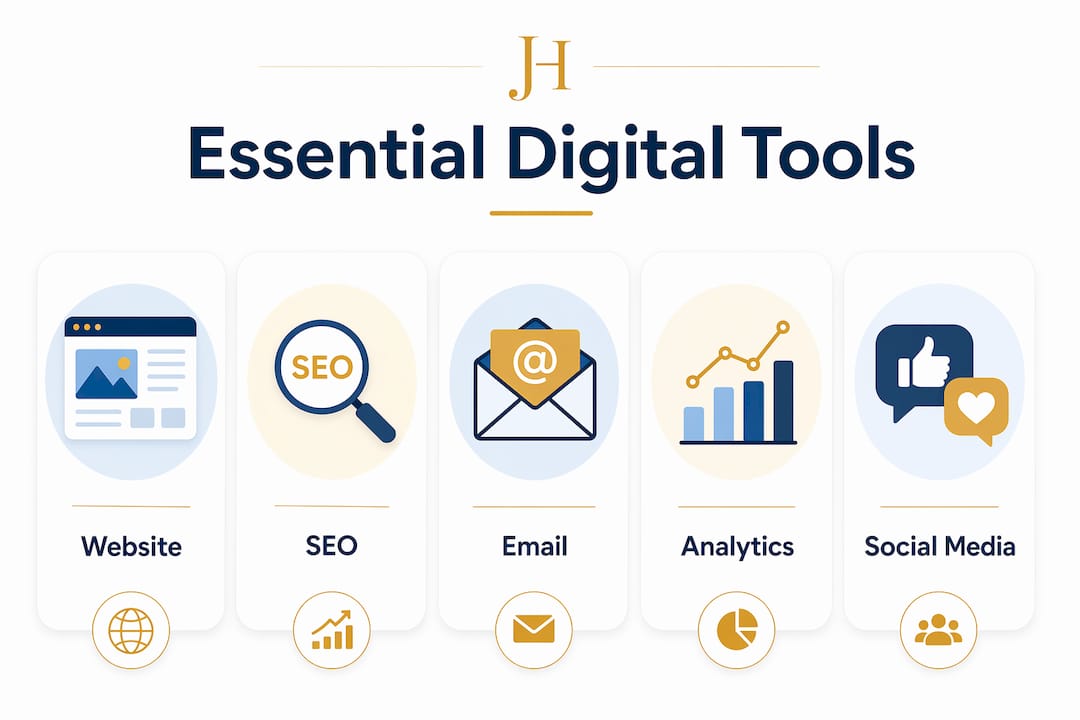
Owning your own website is the single most important step you can take to grow a business online. Your own website gives you full control over branding, customer data, and the user experience. Relying solely on third-party marketplaces is the equivalent of renting a stall in someone else’s shopping centre. When the platform changes its algorithm or fees, your business suffers. Your website is the one asset you own completely.

SEO is the foundation that makes your website visible. SEO content compounds over time, driving traffic for years with little ongoing cost once it is established. That is a fundamentally different return profile from paid advertising, which stops the moment you stop spending. A well-structured blog, clear service pages, and consistent keyword targeting are the starting points for any 2026 SEO strategy.
Email marketing is the most underused tool in most small business arsenals. Welcome email series generate approximately 10–15% of total revenue for product-based brands, with abandoned cart flows adding another 5–10%. Those numbers hold across service businesses too, where a well-timed follow-up sequence converts enquiries that would otherwise go cold. Set up your welcome flow and a re-engagement sequence before you spend a dollar on paid ads.
Pro Tip: Set up Google Search Console and Google Analytics 4 on your website before you launch any campaign. Without baseline data, you cannot measure what is working.
| Tool | Primary function | Best for |
|---|---|---|
| Your own website | Brand control and data ownership | All businesses |
| SEO content | Long-term organic traffic | Service and product businesses |
| Email marketing | Revenue from existing contacts | Ecommerce and service bookings |
| Google Ads | Immediate search visibility | Businesses with proven offers |
| Meta Ads | Audience targeting and retargeting | Visual and service brands |
How can AI and automation improve client acquisition for small businesses?
AI tools now allow business owners to compress weeks of work into hours, freeing up time for client acquisition and higher-level decisions. This is not a future trend. It is the current reality for any business that wants to compete without hiring a full marketing team. The businesses winning online in 2026 are using AI to produce content, manage customer conversations, and run campaign analysis at a speed that was impossible three years ago.
The practical applications are wide and immediately useful:
- Content creation: AI writing tools draft blog posts, email sequences, and ad copy in minutes. You edit and publish, rather than starting from scratch.
- Customer support: AI chat tools handle common enquiries 24 hours a day, qualifying leads before a human ever gets involved.
- Campaign management: AI-powered ad platforms adjust bids and audiences in real time based on performance data.
- SEO and GEO: AI tools now analyse keyword gaps, suggest internal linking structures, and help you get brand mentions inside large language models like ChatGPT and Perplexity. This is called Generative Engine Optimisation, or GEO, and it is the next frontier of search visibility.
- Social media scheduling: AI tools predict optimal posting times and suggest content formats based on engagement patterns.
The key to using AI well is to treat it as a first-draft engine, not a finished-product machine. Every output needs your voice, your brand context, and your judgement. Jarrodharman covers this in depth through resources on AI in marketing and client acquisition, showing how service businesses apply these tools without losing the human connection that builds trust.
Pro Tip: Pick one AI tool and master it before adding another. Most business owners get better results from using one tool deeply than from dabbling across five platforms.
Which social media and paid advertising strategies deliver the best ROI?
Social media is not just a brand awareness channel. It is a direct client acquisition tool when used with the right targeting and content strategy. Instagram and TikTok perform strongly for visual service businesses, including salons, clinics, and spas, because the format matches how clients make purchasing decisions. They see a result, they book. Facebook remains the most cost-effective platform for reaching the 35–50 age group, which represents the core buying demographic for many Australian service businesses.
The benefits of paid social media advertising compound when you combine organic content with paid promotion. Organic content builds trust and gives your paid campaigns warm audiences to retarget. Paid campaigns then accelerate reach beyond your existing followers. Running both together produces better results than either channel alone.
Google Ads captures demand that already exists. When someone searches “laser clinic Perth” or “family law firm Brisbane,” they are ready to act. Google Ads puts your business in front of that intent. Meta Ads create demand by showing your offer to people who match your ideal client profile but have not yet searched for you. Both channels serve different stages of the buying journey and work best when run together.
One rule applies before you spend heavily on paid advertising: validate organically first. Reaching $5,000–$10,000 in organic revenue confirms your offer and messaging work before you put paid budget behind them. Scaling ads before that point burns money on an unproven message.
| Advertising method | Best use case | Key metric to track |
|---|---|---|
| Google Search Ads | Capture high-intent searches | Cost per lead |
| Meta Ads (Facebook/Instagram) | Audience building and retargeting | Cost per booking |
| TikTok Ads | Reach younger demographics | Video completion rate |
| SEO content | Long-term organic traffic | Organic sessions and rankings |
| Email campaigns | Re-engage existing contacts | Revenue per email sent |
Common paid ad mistakes include targeting audiences that are too broad, running ads without a clear landing page, and stopping campaigns before the algorithm has enough data to optimise. Give any new campaign at least two weeks and a meaningful budget before drawing conclusions.
How do you validate and iterate your online marketing approach?
Pre-launch validation is the step most business owners skip, and it is the one that costs them the most. Pre-launch marketing generates 3–5 times more revenue in the first week compared to cold launches. Conducting at least 20 customer interviews before you build or spend confirms whether your offer solves a real problem at a price people will pay.
Once you are live, track three numbers above all others: conversion rate, repeat purchase or rebooking rate, and customer acquisition cost. Conversion rate tells you whether your website and offer are working. Repeat rate tells you whether your service delivers on its promise. Customer acquisition cost tells you whether your marketing spend is sustainable.
The minimum viable system approach applies here. Release early and iterate rather than waiting for a perfect website or a perfect campaign. Early revenue validates your business far more reliably than social media metrics or a polished homepage. A booking made through a simple page beats a beautiful website with no enquiries.
- Conduct customer interviews before spending on ads or building complex funnels.
- Launch a simple, clear offer page and drive traffic to it with a small test budget.
- Track conversion rate weekly and identify the single biggest drop-off point.
- Run one small test per week on your headline, offer, or call to action.
- Scale what works and cut what does not, based on revenue data, not opinions.
Consistent weekly testing is what separates growing businesses from stagnant ones. Effective marketing is iterative. Shipping small experiments every week compounds into significant growth over a quarter.
Key takeaways
The most effective way to improve your business online is to combine owned assets like your website and email list with SEO, AI tools, and paid advertising, then test and iterate every week based on real revenue data.
| Point | Details |
|---|---|
| Own your website | Your website gives you full control over data, branding, and the client experience. |
| Build SEO before scaling ads | SEO compounds over time and validates your offer before you spend on paid traffic. |
| Use AI to move faster | AI tools cut content and campaign work from weeks to hours, freeing you for client acquisition. |
| Validate before you scale | Reach organic revenue proof before committing serious budget to paid advertising. |
| Test weekly, not monthly | Small weekly experiments on messaging and offers produce compounding growth over time. |
What I have learned from watching businesses grow and stall online
The businesses I see stall online almost always share one trait. They invest in the visible parts, the website redesign, the new logo, the Instagram grid, and skip the unglamorous work of testing their offer with real customers before spending on ads.
The shift I find most significant right now is GEO, Generative Engine Optimisation. Getting your brand mentioned inside ChatGPT, Perplexity, and Google’s AI Overviews is becoming as important as ranking on page one of Google Search. Businesses that publish authoritative, well-structured content and earn mentions from credible sources are already appearing in AI-generated answers. That visibility is free, and it compounds exactly like SEO did in 2010.
My honest observation on paid advertising is this: most small business owners start paid ads too early. They have not yet confirmed that their offer converts organically, so they pay to amplify a message that does not work. The $5,000–$10,000 organic revenue benchmark exists for a reason. It is not a gatekeeping rule. It is proof that real people want what you are selling at the price you are charging.
The businesses I see grow fastest are the ones building owned communities, email lists, Facebook groups, and YouTube audiences, alongside their paid channels. When a platform changes its algorithm or ad costs spike, owned audiences insulate you from the shock. That is the long game, and it is worth playing from day one.
, Business Warriors | Digital Marketing Agency
Jarrodharman’s approach to growing your business online
Business Warriors, led by Jarrod Harman, works with Australian service businesses, ecommerce brands, and enterprises to build the kind of connected marketing systems described in this article.
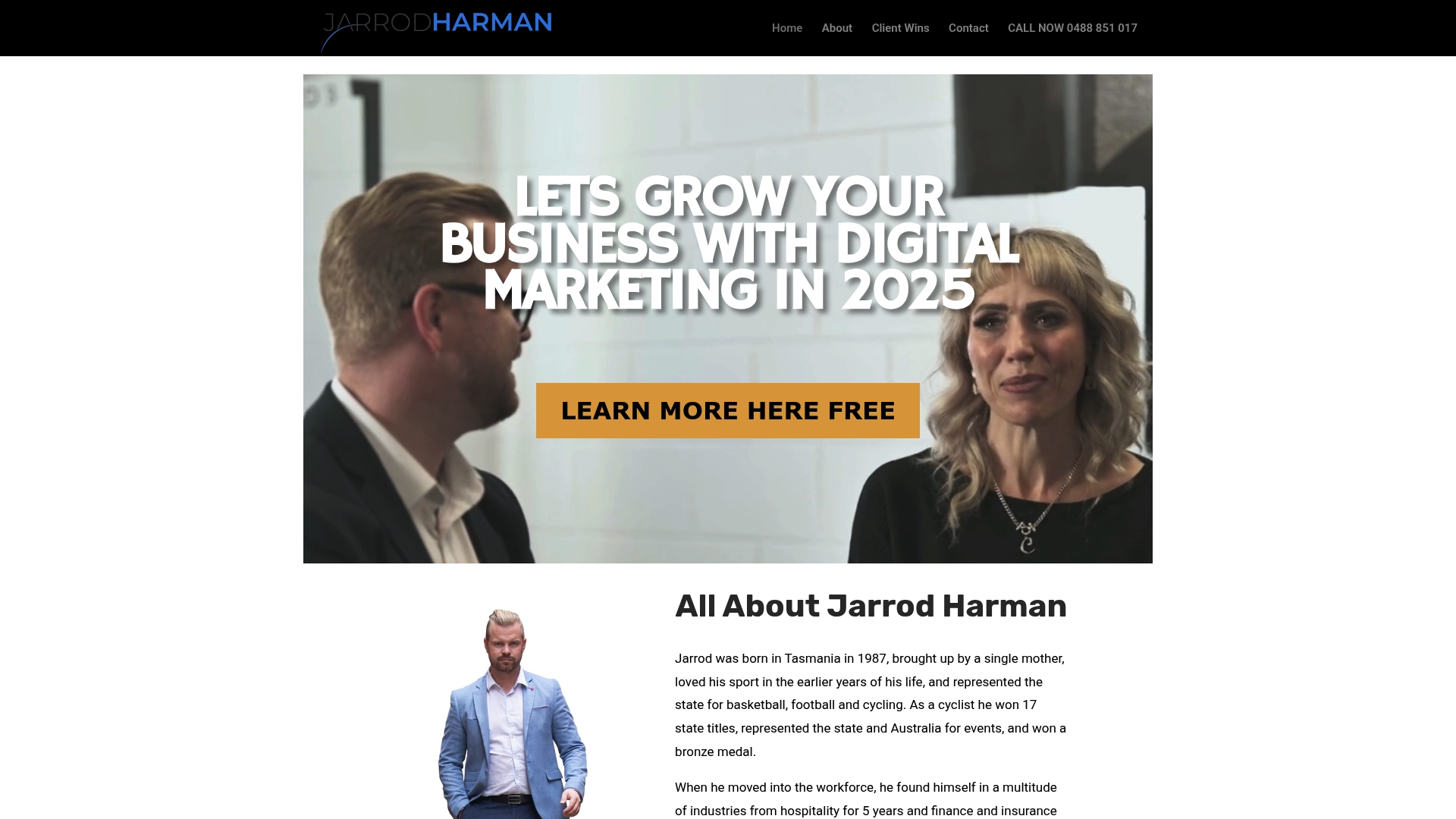
The Marketing Vortex method combines SEO, Google Ads, Meta advertising, email marketing, and social media into one integrated system that reduces risk and drives consistent bookings. It is the framework Business Warriors uses with clients across Australia and internationally. If you want to see how it applies to your business, Jarrodharman’s digital marketing strategy guide is a strong starting point. For businesses ready to move faster, the Marketing Vortex for consistent leads page outlines exactly how the system works in practice.
FAQ
What is the first step to improve your business online?
Build and own your own website before investing in any paid channel. Your website is the only digital asset you fully control, and it anchors every other marketing effort.
How much should a small business spend on digital marketing?
New brands should allocate 15–25% of total revenue to marketing in year one. This budget builds the momentum needed to establish visibility and test what works.
When should a business start running paid ads?
Start paid advertising after reaching $5,000–$10,000 in organic revenue. That benchmark confirms your offer and messaging convert before you put serious budget behind them.
What is GEO and why does it matter for small businesses?
GEO stands for Generative Engine Optimisation. It is the practice of getting your brand mentioned in AI tools like ChatGPT and Perplexity, which are now a primary way people find business recommendations.
How does email marketing help grow an online business?
Welcome email series generate approximately 10–15% of total revenue for product-based brands, with abandoned cart flows adding another 5–10%. For service businesses, automated follow-up sequences convert enquiries that would otherwise go cold.