25 June 2026
Micro influencer marketing: strategies that drive real ROI
Discover effective strategies for micro influencer marketing that deliver real ROI. Engage loyal audiences and boost your brand's performance now!
TL;DR:
- Micro influencer marketing partners brands with creators holding 10,000 to 100,000 followers who generate high engagement at lower costs.
- This channel is now a core performance tool, especially for conversions, as micro influencers outperform macro ones in engagement and cost efficiency.
- Effective campaigns focus on audience fit, authentic content, and scalable management, emphasizing long-term relationships and precise tracking.
Micro influencer marketing is defined as partnering with creators who hold between 10,000 and 100,000 followers to generate authentic engagement and measurable business outcomes at a fraction of the cost of traditional celebrity campaigns. These creators sit in a performance sweet spot. Their audiences are niche, loyal, and far more likely to act on a recommendation than followers of a mega influencer with millions of passive fans. Platforms like TikTok, Instagram, and tools like GRIN and SociaHive have made it straightforward to find, brief, and track these creators at scale. With 59% of marketers increasing micro influencer partnerships in 2026, this channel is no longer experimental. It is a core performance lever for brands that want real returns.
What separates micro influencer marketing from macro and nano tiers?
The influencer market runs on three tiers, and each serves a different purpose. Nano influencers hold 1,000–10,000 followers. Micro influencers hold 10,000–100,000. Macro influencers hold 100,000 and above. The differences go well beyond audience size.
| Tier | Follower range | Typical engagement | Cost per post | Best use case |
|---|---|---|---|---|
| Nano | 1,000–10,000 | Very high | Very low | Hyper-local, gifting trials |
| Micro | 10,000–100,000 | High | Moderate | Niche campaigns, conversions |
| Macro | 100,000+ | Lower | High | Brand awareness, reach |
Micro influencers deliver 2–5x higher engagement than macro influencers and cost 60–80% less per engagement. That gap is significant. It means a brand can run five micro influencer campaigns for the same budget as one macro campaign and generate more total engagement across the board.
Macro influencers are not useless. They work well for broad awareness plays, product launches with national reach, or campaigns where raw impression volume is the goal. But for service businesses, beauty brands, clinics, and ecommerce stores chasing conversions, micro influencers consistently outperform on cost efficiency.
Pro Tip: Follower count alone tells you nothing useful. A creator with 18,000 highly engaged followers in your exact niche will outperform a creator with 90,000 mixed followers every time. Focus on audience fit and conversion density, not the number on the profile.
How to structure and price micro influencer campaigns for optimal ROI
Campaign structure determines whether your budget produces results or disappears into content that nobody acts on. There are four main campaign models, each with distinct pricing and ROI profiles.
Product gifting sends free product in exchange for organic content. It carries the lowest cost and returns 5–10x ROI when the creator genuinely connects with the product. Sponsored posts involve a fixed fee for a defined deliverable, typically returning 3–6x ROI. Affiliate models pay creators a commission per sale, returning 4–8x ROI and aligning incentives directly with performance. Ambassador programmes build long-term relationships and return up to 12x ROI because the creator’s audience sees repeated, consistent endorsement rather than a one-off post.

Pricing benchmarks follow a straightforward formula. Micro influencers typically charge $10–$20 per 1,000 followers per post. A creator with 25,000 followers charges approximately $250 for a static post. Video content and reels command a premium above that rate.
| Campaign model | Typical cost | ROI range | Best for |
|---|---|---|---|
| Product gifting | Product cost only | 5–10x | Trial and UGC generation |
| Sponsored post | $250–$2,000 | 3–6x | Awareness and direct response |
| Affiliate | Commission only | 4–8x | Performance-driven brands |
| Ambassador | Retainer plus product | Up to 12x | Long-term brand building |
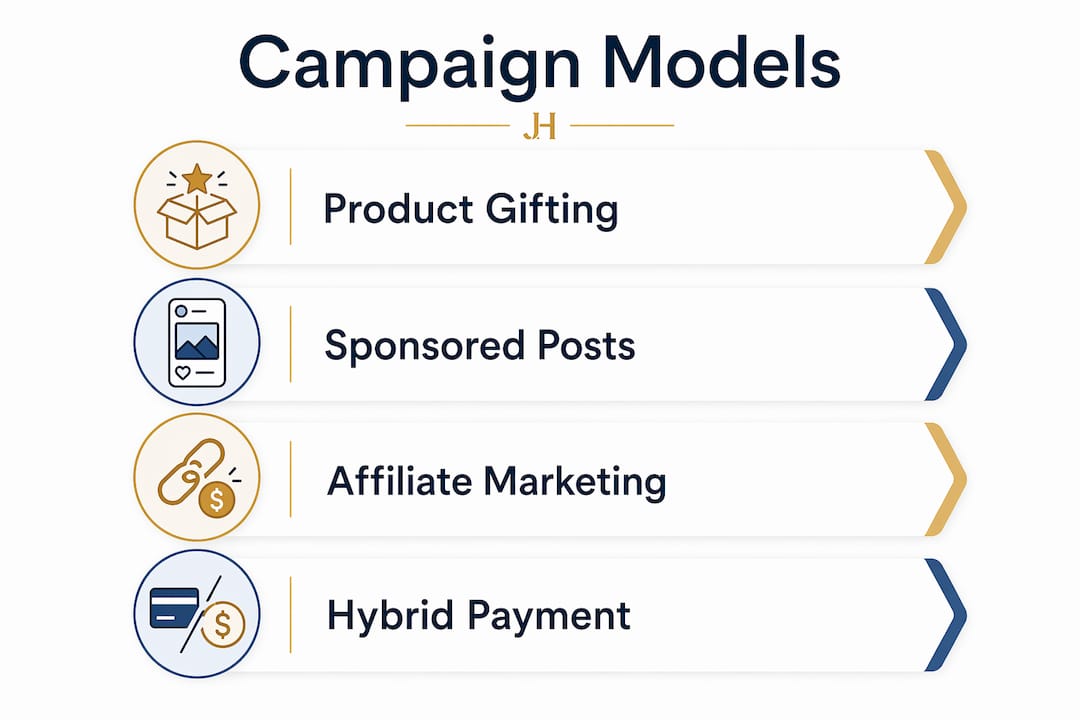
Hybrid pricing models combine a base fee with a performance bonus tied to sales or clicks. GRIN recommends hybrid payment structures because they align the creator’s incentives with your business goals and reduce the risk of paying for content that generates no commercial outcome.
Track every campaign with UTM parameters, affiliate links, and custom discount codes. Engagement and reach are vanity metrics unless you can connect them to traffic, conversions, and earned media value.
Pro Tip: Set a minimum conversion rate threshold before signing any creator. If their audience does not convert at 0.5% or above, the campaign economics do not work regardless of how good the content looks.
Which content types work best with micro influencers?
Content format drives performance as much as creator selection. The formats that consistently outperform on micro influencer campaigns are:
- Reels and short video on Instagram and TikTok, particularly tutorials, product demonstrations, and before-and-after content
- Static posts for product showcases, testimonials, and lifestyle imagery
- Stories for time-sensitive offers, discount codes, and link-in-bio traffic
- Long-form reviews on YouTube or blog platforms for considered purchases where buyers research before committing
Authenticity is the variable that separates high-performing content from wasted spend. Audiences follow micro influencers because they trust their opinions. Overly scripted or heavily branded content breaks that trust immediately. Brief creators on outcomes and key messages, then let them produce content in their own voice.
User-generated content (UGC) is one of the most underused assets in influencer marketing. UGC from micro influencers consistently outperforms polished brand creative in paid advertising tests. A creator’s authentic video of your product, run as a Meta ad under their handle, converts better than a studio-produced brand ad because it reads as a genuine recommendation rather than an advertisement.
Whitelisting takes this further. Whitelisting influencer content means running a creator’s post as a paid ad under their account, which lowers cost per click and improves conversion rates compared to standard brand ads. It combines the trust of organic content with the targeting precision of paid media. For Australian service businesses running Meta campaigns, this is one of the highest-leverage tactics available right now.
Repurpose creator content across every channel. A single micro influencer reel can become a Meta ad, an email marketing asset, a website testimonial, and an organic social post. That multiplies the return on every dollar spent on the creator relationship. For more on building a social media content system that integrates influencer content with paid and organic channels, the approach is well documented.
Pro Tip: Always secure usage rights in your creator brief before content goes live. Without them, you cannot legally run the content as a paid ad or repurpose it across your channels.
How to find, recruit, and manage micro influencers at scale
Scaling a micro influencer programme requires a pipeline, not a one-off search. Here is how to build one that runs consistently.
- Define your audience profile first. Audience demographic fit predicts campaign success far better than follower count. Map your buyer persona before you search for creators.
- Search by niche and location. Use platforms like GRIN or SociaHive to filter creators by category, audience demographics, engagement rate, and location. For Australian brands, geo-filtering is non-negotiable.
- Run weekly recruitment cycles. Successful programmes treat recruitment as an ongoing pipeline with weekly onboarding rather than a quarterly scramble. This keeps your creator pool fresh and your content volume consistent.
- Standardise your deliverables. Create a brief template that covers content format, key messages, posting schedule, usage rights, and tracking requirements. Consistency in briefing produces consistency in output.
- Use a tiered relationship model. Start new creators on gifting to test audience fit and content quality. Move top performers to paid collaborations. Offer long-term ambassador contracts to creators who consistently drive conversions.
- Deploy AI-powered management tools. AI management platforms now handle outreach, contract management, content approval, and performance reporting at scale. Tools like IMAI eliminate the administrative bottleneck that previously made running 20+ micro influencer relationships impractical for most marketing teams.
- Track ROI per creator. Assign each creator a unique UTM parameter, affiliate link, or discount code. This tells you exactly which creators drive traffic and sales, not just likes.
Building long-term ambassador relationships with your top five to ten creators produces compounding returns. Their audiences see repeated, authentic endorsement over months rather than a single sponsored post. That repetition builds genuine brand familiarity and trust. For a practical influencer campaign checklist tailored to the Australian market, the framework covers every step from creator selection to post-campaign reporting.
Key takeaways
Micro influencer marketing delivers superior ROI when brands prioritise audience fit, use tiered campaign structures, and treat creator content as a repurposable asset across paid and organic channels.
| Point | Details |
|---|---|
| Engagement outperforms reach | Micro influencers deliver 2–5x higher engagement than macro influencers at 60–80% lower cost per engagement. |
| Ambassador programmes return the most | Long-term ambassador models return up to 12x ROI, outperforming all other campaign structures. |
| UGC beats brand creative | Creator-produced content consistently outperforms studio-produced ads in paid media tests. |
| Audience fit beats follower count | Conversion density and demographic alignment predict success better than any follower metric. |
| Pipeline beats one-off campaigns | Weekly recruitment and tiered creator relationships produce consistent content volume and compounding returns. |
What I have learned running creator programmes for service businesses
The biggest mistake I see marketing professionals make is treating micro influencer campaigns as a content play rather than a sales channel. They measure likes and reach, celebrate a reel that gets 50,000 views, and never connect it to a single booking or sale. That is a waste of budget and a missed opportunity.
The brands that win with creator marketing build it like a performance channel from day one. They set conversion benchmarks before they brief a single creator. They whitelist the best-performing content and run it as Meta ads. They track every click with UTMs and every sale with affiliate codes. They know exactly which creator generated which revenue. That discipline is what separates a programme that scales from one that stalls after three months.
The other thing most articles do not say clearly enough: content velocity matters. One micro influencer post per month does not move the needle. Ten posts per week from a rotating pool of creators creates the kind of consistent presence that builds brand recognition and drives search behaviour. When your audience sees your brand mentioned by multiple trusted voices across TikTok and Instagram, they start searching for you by name. That search volume feeds your SEO. It creates brand signals that AI tools like ChatGPT and Perplexity pick up when generating recommendations. Creator marketing and SEO are not separate strategies. They reinforce each other when you run them with enough volume and consistency.
Hybrid payment models are the future of this channel. Base fee plus performance bonus aligns the creator’s incentives with your business outcomes and removes the risk of paying full rate for content that converts at zero. If a creator believes in your product, they will accept a performance component. If they will not, that tells you something important about how confident they are in their own audience’s response.
, Business Warriors | Digital Marketing Agency
How Jarrodharman can help you build a creator marketing system

Running a micro influencer programme alongside SEO, Google Ads, and Meta advertising requires a system, not a series of one-off decisions. Jarrodharman works with service businesses, ecommerce brands, and clinics across Australia to build integrated marketing systems where influencer content feeds paid campaigns, SEO signals, and email sequences simultaneously. The Marketing Vortex method connects every channel so that creator content does not sit in isolation. It drives traffic, builds brand search volume, and converts leads across multiple touchpoints. If you want a marketing system that compounds over time rather than resets with every campaign, contact Jarrodharman to discuss what that looks like for your business.
FAQ
What is micro influencer marketing?
Micro influencer marketing is a form of creator marketing that partners brands with social media accounts holding between 10,000 and 100,000 followers. These creators typically serve niche audiences and generate higher engagement rates than larger accounts.
How much do micro influencers charge per post?
Micro influencers typically charge $10–$20 per 1,000 followers per post. A creator with 25,000 followers charges approximately $250 for a static post, with video content priced higher.
What ROI can I expect from micro influencer campaigns?
ROI varies by campaign model. Product gifting returns 5–10x, sponsored posts return 3–6x, affiliate models return 4–8x, and long-term ambassador programmes return up to 12x ROI.
How do I find the right micro influencers for my brand?
Prioritise audience demographic fit over follower count. Use platforms like GRIN or SociaHive to filter creators by niche, location, and engagement rate, then verify that their audience matches your buyer persona before committing budget.
Can micro influencer content be used in paid ads?
Yes. Whitelisting allows brands to run a creator’s post as a paid ad under the creator’s handle, which lowers cost per click and improves conversion rates compared to standard brand creative. Always secure usage rights in the creator brief before content goes live.