


Trying to stand out in a crowded online space can feel daunting for Australian women running service-based businesses. The way you use digital marketing has a direct impact on attracting and retaining more clients. With a focus on authentic engagement and creating real value for both consumers and organisations, you will learn how connecting through the right channels and strategies leads to stronger relationships and higher sales. Whether you want clarity on outcomes or practical steps, understanding digital marketing’s core purpose is your path forward.
Table of Contents
- Defining Digital Marketing’s Core Purpose
- Major Types of Digital Marketing Channels
- How Omnichannel Strategies Drive Results
- Key Features of the Marketing Vortex Method
- Risks, Costs, and Pitfalls to Avoid
Key Takeaways
| Point | Details |
|---|---|
| Digital marketing fosters genuine connections | The core purpose is to create value for both consumers and organisations through authentic engagement and personalised experiences. |
| Multichannel integration is essential | Successful strategies leverage multiple digital marketing channels to maximise reach, engagement, and conversion potential. |
| Risks must be proactively managed | Businesses face various risks in digital marketing, requiring comprehensive strategies for data privacy, technological adaptation, and brand integrity. |
| Continuous adaptation is key | Employing flexible methodologies like the Marketing Vortex can help businesses dynamically adjust strategies based on real-time data and market changes. |
Defining Digital Marketing’s Core Purpose
Digital marketing represents a transformative approach to connecting businesses with their target audiences through digital channels, leveraging technology and strategic insights to create meaningful customer interactions. Cutting-edge technologies integrated with customer behaviour insights are fundamentally reshaping how organisations approach marketing, communication, and value delivery.
At its core, digital marketing serves several critical purposes for modern businesses:
- Authentic customer engagement
- Data-driven strategic planning
- Enhanced targeting and personalisation
- Measurable performance tracking
- Cost-effective marketing solutions
- Global reach and accessibility
The primary objective is not merely promotion, but creating genuine connections that provide value for both consumers and organisations. Digital transformation in marketing focuses on authentic engagement by understanding nuanced customer needs and delivering tailored experiences across multiple digital platforms.

Businesses now recognise digital marketing as a strategic imperative, not just an optional marketing channel. It enables companies to adapt quickly, understand consumer preferences in real-time, and create dynamic, responsive marketing strategies that evolve with technological advancements and changing market dynamics.
Pro tip: Invest in understanding your digital ecosystem and continuously refine your marketing approach based on data-driven insights and emerging technological trends.
Major Types of Digital Marketing Channels
Digital marketing encompasses a diverse array of strategic channels designed to connect businesses with their target audiences across multiple digital platforms. Five key digital marketing channels offer unique marketing advantages that enable organisations to reach, engage, and convert potential customers effectively.
The primary digital marketing channels include:
- Social Media Marketing (SMM)
- Content Marketing (CM)
- Email Marketing
- Search Engine Optimization (SEO)
- Paid Advertising
- Affiliate Marketing
- Mobile Marketing
Each channel serves distinct strategic purposes and offers specific advantages. Digital marketing channels differ significantly in approach, audience targeting, and measurable outcomes, requiring businesses to carefully select platforms aligned with their specific marketing objectives and target demographics.
Search Engine Optimization (SEO) and Pay-Per-Click (PPC) advertising are particularly powerful for capturing motivated buyers, while social media platforms excel at building brand awareness and fostering community engagement. Email marketing consistently demonstrates the highest return on investment, making it a critical channel for direct communication and customer relationship management.
Successful digital marketing strategies typically integrate multiple channels, creating a comprehensive approach that maximises reach, engagement, and conversion potential across different digital touchpoints.
Here’s a concise comparison of major digital marketing channels and their typical business impact:
| Channel | Typical Audience | Main Benefit | Business Impact |
|---|---|---|---|
| Social Media Marketing | Broad, engaged public | Fosters brand awareness | Builds loyal communities |
| Content Marketing | Interested consumers | Educates and informs | Positions as industry expert |
| Email Marketing | Existing contacts | Direct personal outreach | Drives repeat purchases |
| SEO | Motivated search users | Enhances discoverability | Delivers long-term leads |
| Paid Advertising | Targeted segments | Rapid visibility boost | Generates fast conversions |
| Affiliate Marketing | Relevant partners | Expands reach cost-effectively | Acquires new customer groups |
| Mobile Marketing | On-the-go users | Instant notifications | Boosts real-time engagement |
Pro tip: Develop an integrated multi-channel marketing strategy that leverages the unique strengths of each digital platform to create a cohesive and powerful marketing ecosystem.
How Omnichannel Strategies Drive Results
Omnichannel strategies represent a sophisticated approach to customer engagement that seamlessly integrates multiple digital and physical touchpoints. Integrating offline and online retail experiences creates fluid customer journeys that transform how businesses interact with their target audiences.
Key dimensions of successful omnichannel strategies include:
- Seamless channel connectivity
- Consistent brand messaging
- Personalised customer experiences
- Real-time data integration
- Adaptive technological infrastructure
- Unified customer interaction tracking
Consumer engagement relies on blending technological and usability factors to create a comprehensive and intuitive marketing ecosystem. This approach enables businesses to deliver personalised interactions across multiple platforms, ensuring customers receive consistent and relevant communication regardless of their chosen interaction channel.
Luxury and non-luxury brands alike are recognising the transformative potential of omnichannel strategies. By focusing on accessibility, personalisation, and smooth channel transitions, organisations can significantly enhance customer satisfaction, build stronger relationships, and ultimately drive competitive advantage in an increasingly digital marketplace.
Pro tip: Map your customer’s entire journey across all potential touchpoints, identifying and eliminating potential friction points to create a truly seamless omnichannel experience.
Key Features of the Marketing Vortex Method
Marketing Vortex represents an innovative strategic approach designed to transform how businesses develop and execute their marketing initiatives. This cyclical methodology provides a comprehensive framework for strategic marketing that adapts dynamically to changing market conditions and consumer behaviours.
Key components of the Marketing Vortex Method include:
- Continuous market research
- Dynamic market segmentation
- Targeted positioning strategies
- Iterative performance analysis
- Real-time strategy adjustment
- Consumer behaviour tracking
- Integrated feedback mechanisms
Unlike traditional linear marketing approaches, the Marketing Vortex Method embraces a circular and adaptive strategy. This approach ensures that marketing efforts are not static but continually evolve based on real-world performance data, consumer insights, and emerging market trends. Each marketing action generates valuable feedback, which is immediately integrated back into the strategic planning process.
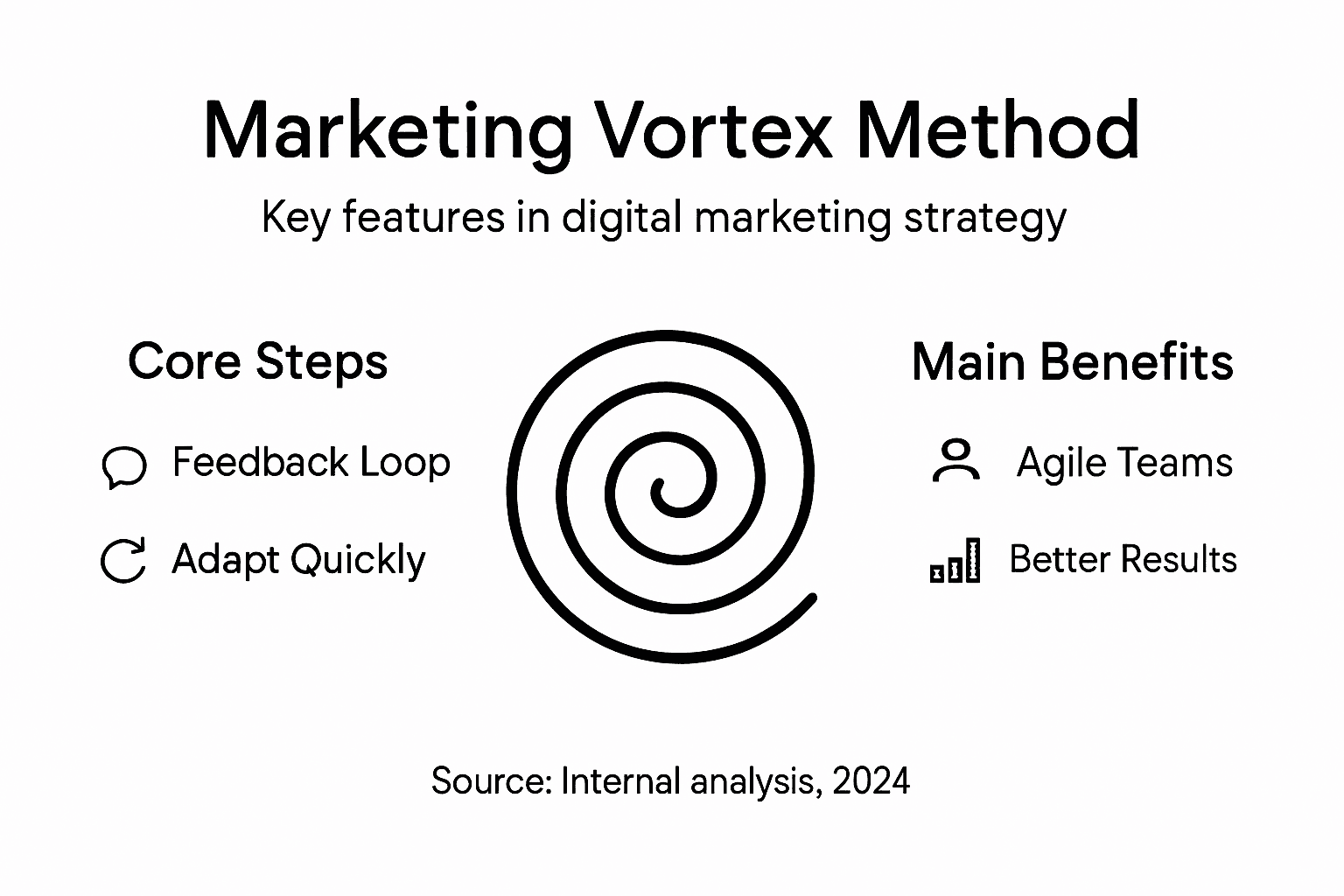
The methodology’s strength lies in its flexibility and responsiveness. By creating a closed-loop system where market research, strategy development, implementation, and analysis are interconnected, businesses can rapidly adjust their marketing approaches, minimise wastage, and maximise their return on marketing investment.
Pro tip: Implement regular data review cycles to ensure your marketing strategy remains agile and responsive to changing market dynamics.
Risks, Costs, and Pitfalls to Avoid
Digital marketing presents complex challenges that require strategic anticipation and proactive management. Multiple operational and strategic risks challenge modern marketing implementations, demanding comprehensive risk mitigation approaches for sustainable success.
Key risks and potential pitfalls include:
- Data privacy vulnerabilities
- Technological adaptation challenges
- Inconsistent brand messaging
- Resource allocation inefficiencies
- Channel integration complexities
- Misinformation exposure
- Cybersecurity threats
Digital marketing transformation involves significant technological and cultural investment risks that businesses must carefully navigate. The costs extend beyond monetary investments, encompassing human resources, technological infrastructure, ongoing training, and strategic realignment.
Successful risk management requires a holistic approach that integrates technological readiness, robust data protection measures, continuous staff education, and adaptive strategic frameworks. Organisations must develop flexible systems that can quickly respond to emerging digital challenges while maintaining consistent brand integrity and customer trust.
To better understand risk management in digital marketing, here’s a summary of common pitfalls and mitigation strategies:
| Risk/Pitfall | Business Consequence | Mitigation Approach |
|---|---|---|
| Data privacy issues | Loss of trust, legal penalties | Robust data security protocols |
| Technological gaps | Reduced campaign effectiveness | Ongoing infrastructure updates |
| Inconsistent messaging | Damaged brand reputation | Unified communication guidelines |
| Cybersecurity threats | Operational disruption | Regular security training |
Pro tip: Conduct regular digital marketing risk assessments and allocate dedicated resources for technology updates, staff training, and cybersecurity protocols to proactively mitigate potential vulnerabilities.
Unlock the Full Potential of Digital Marketing for Your Business Growth
If you are striving to build authentic customer engagement and leverage data-driven strategies as highlighted in the article “Digital Marketing’s Role in Modern Business Growth,” Business Warriors offers a proven pathway through the innovative Marketing Vortex method. This dynamic approach integrates SEO, social media marketing, email campaigns, and paid advertising into a seamless omnichannel system designed to drive consistent leads and boost sales for service-based businesses across Australia and beyond.

Discover how to overcome challenges like channel integration complexities and fluctuating market dynamics by partnering with a trusted marketing ally. Whether you need expert guidance on implementing personalised marketing strategies or want to maximise your online presence with cutting-edge tools, explore solutions tailored for businesses ready to scale. Take your next step with Business Warriors and start transforming your marketing into measurable results today. Learn more at the Uncategorized Archives – Jarrod Harman. Visit Jarrod Harman’s main site to connect with proven strategies and expert support.
Frequently Asked Questions
What is the core purpose of digital marketing in modern business?
Digital marketing primarily aims to create authentic customer engagement, enhance targeting and personalisation, facilitate data-driven strategic planning, and provide measurable performance tracking, ultimately building genuine connections that deliver value to both consumers and organisations.
How do different digital marketing channels impact business growth?
Different channels like social media marketing, content marketing, SEO, and email marketing cater to varying audiences and strategies. By employing multiple channels, businesses can maximise reach and engagement, driving conversions and effectively contributing to growth.
Why are omnichannel strategies important in digital marketing?
Omnichannel strategies enhance customer engagement by creating seamless experiences across multiple touchpoints. This approach ensures consistent brand messaging and personalised interactions, leading to increased customer satisfaction and loyalty, thereby driving business growth.
What are common risks associated with digital marketing, and how can they be mitigated?
Common risks include data privacy vulnerabilities, inconsistent brand messaging, and technological challenges. To mitigate these risks, businesses should implement robust data security protocols, maintain unified communication guidelines, and continuously update their technology infrastructure.
Recommended
- Role of Online Marketing for Australian Businesses – Jarrod Harman
- Why Invest in Digital Marketing: Complete Guide – Jarrod Harman
- What Is Digital Marketing? Complete Expert Overview – Jarrod Harman
- Understanding What is Online Marketing and Its Importance – Jarrod Harman
- Rôle des plateformes d’avis – Impact sur la réputation et les revenus
- Role of Accountancy for Growth – Impact on Business Success