


Over 80 percent of australian beauty and wellness businesses now invest in digital marketing, yet many still struggle to see consistent results. As the demands of a competitive market grow, mastering modern online strategies has never been more vital for service providers aiming to attract loyal clients. Discover how advanced techniques and australian-focused tools can turn your online presence into a reliable source of growth for your brand.
Table of Contents
- What Online Marketing Means Today
- Major Types of Online Marketing Channels
- The Marketing Vortex Method Explained
- How Online Marketing Drives Business Growth
- Risks, Mistakes and Compliance Issues
Key Takeaways
| Point | Details |
|---|---|
| Evolving Online Marketing Landscape | Modern online marketing merges traditional advertising with advanced digital strategies to create immersive customer experiences. This approach emphasises personalised, interactive engagement across multiple platforms. |
| Importance of Multichannel Strategies | Businesses need to adopt multichannel marketing strategies, integrating various digital platforms to ensure cohesive messaging and maximise engagement with target audiences. |
| Growing Role of AI and Analytics | Leveraging artificial intelligence and robust analytics is essential for understanding customer behaviour and enhancing targeting precision in marketing efforts. |
| Compliance and Risk Management | Companies must be aware of compliance risks related to data protection and advertising standards, necessitating robust frameworks to manage potential challenges in digital marketing. |
What Online Marketing Means Today
Online marketing has dramatically evolved from traditional advertising approaches into sophisticated digital strategies that create immersive customer experiences. Modern online marketing represents a comprehensive approach to connecting businesses with potential customers through digital channels, leveraging technologies that transform how brands communicate and engage. Digital technologies are reshaping marketing from simple product selling to creating integrated physical and digital experiences, a concept experts now describe as “phygital” engagement.
Today’s online marketing strategies encompass multiple interconnected digital platforms, including search engine optimisation, social media marketing, content marketing, email campaigns, and targeted advertising. Businesses now recognise that successful online marketing requires more than just broadcasting messages – it demands creating personalised, interactive experiences that resonate with specific audience segments. Search engine strategies like SEO have become critical, allowing businesses to improve visibility, attract targeted traffic, and build credibility through strategic content development and technical website optimisation.
The landscape of online marketing continues to evolve with emerging technologies like artificial intelligence and machine learning, which enable more precise targeting and personalisation. Modern Australian businesses are integrating advanced tools that analyse customer behaviour, predict preferences, and deliver hyper-targeted marketing messages across multiple digital touchpoints. Artificial intelligence is transforming how businesses understand and engage with potential customers, allowing for more nuanced and responsive marketing approaches that adapt in real time.
Expert Tip: Invest in robust analytics tools that provide deep insights into customer behaviour and allow you to continuously refine your digital marketing strategies based on real performance data.
Major Types of Online Marketing Channels
Online marketing channels represent a diverse ecosystem of digital platforms that enable businesses to reach and engage potential customers. Digital marketing channels can be strategically categorised into core, emerging, and specialized types, providing businesses with multiple avenues to connect and communicate with their target audiences. These channels range from traditional digital platforms to innovative emerging technologies that offer increasingly sophisticated engagement opportunities.
The core online marketing channels include search engine optimisation (SEO), pay-per-click advertising, social media marketing, email marketing, and content marketing. Each channel serves a unique purpose in the digital marketing landscape, allowing businesses to build brand awareness, generate leads, and drive conversions through targeted strategies. Search engine marketing helps businesses improve online visibility, while social media platforms enable direct interaction with potential customers. Email marketing continues to be a powerful tool for nurturing customer relationships and delivering personalised communication.
Here’s how major online marketing channels contribute to achieving different business objectives:
| Marketing Channel | Main Objective | Typical Business Impact |
|---|---|---|
| SEO | Increase visibility | Drives organic website traffic |
| Social Media Marketing | Build engagement | Enhances brand awareness |
| Email Marketing | Nurture relationships | Supports repeat purchases |
| Pay-Per-Click (PPC) Ads | Generate leads | Delivers fast, targeted conversions |
| Content Marketing | Educate audiences | Establishes industry authority |
Emerging and specialised digital marketing channels are transforming how businesses approach online engagement. These include innovative platforms like voice search marketing, augmented reality advertising, connected TV marketing, and influencer partnerships. Modern Australian businesses are increasingly exploring these advanced channels to create more immersive and interactive marketing experiences. Artificial intelligence and machine learning technologies are further enhancing these channels, enabling more precise targeting and personalisation of marketing messages across multiple digital touchpoints.
Pro Tip: Develop a multichannel marketing strategy that integrates multiple digital platforms, ensuring a cohesive and comprehensive approach to reaching your target audience.
The Marketing Vortex Method Explained
From traditional marketing funnel to a dynamic engagement approach, the Marketing Vortex Method represents a revolutionary strategy for modern Australian businesses seeking sustainable growth. Unlike traditional linear marketing models, this approach transforms customer acquisition into a cyclical, interconnected process that prioritises continuous engagement and adaptive communication. The method recognises that modern digital landscapes require more fluid, responsive marketing techniques that can quickly adjust to changing customer behaviours and technological developments.
The core principles of the Marketing Vortex Method centre on creating a holistic, integrated marketing ecosystem that moves beyond sequential stages of customer interaction. Instead of viewing marketing as a straight line from awareness to conversion, this method conceptualises marketing as a dynamic, energy-driven system where each interaction builds momentum and creates multiple potential pathways for customer engagement. Key components include leveraging multiple digital channels, using data-driven insights, and creating personalised experiences that encourage ongoing relationship building.
Implementing the Marketing Vortex Method involves strategic integration of various digital marketing channels and technologies. Businesses utilise advanced analytics, artificial intelligence, and machine learning to create adaptive marketing strategies that respond in real time to customer interactions. Multichannel marketing becomes a critical component, ensuring consistent messaging across search engines, social media platforms, email campaigns, and emerging digital touchpoints. This approach allows businesses to create a more responsive and intelligent marketing system that continuously learns and optimises its engagement strategies.
Pro Tip: Map out your customer journey across multiple digital touchpoints, identifying key interaction moments where personalised engagement can create deeper connections and drive sustainable growth.
How Online Marketing Drives Business Growth
Marketing plays a critical strategic role in generating sustainable business growth, transforming how Australian businesses attract, engage, and retain customers in the digital landscape. Online marketing has become an essential mechanism for companies to differentiate themselves, create meaningful connections, and drive measurable business outcomes. By leveraging digital channels, businesses can reach broader audiences, track performance with unprecedented precision, and develop targeted strategies that directly translate into increased revenue and market presence.

The core mechanisms of online marketing driving business growth include enhanced customer targeting, data-driven insights, and scalable engagement strategies. Search engine optimisation enables businesses to improve their digital visibility, attracting potential customers actively seeking their products or services. Social media marketing creates platforms for direct interaction, building brand trust and loyalty through consistent, personalised communication. Pay-per-click advertising allows for highly specific audience targeting, ensuring marketing budgets are invested with maximum efficiency and return on investment.
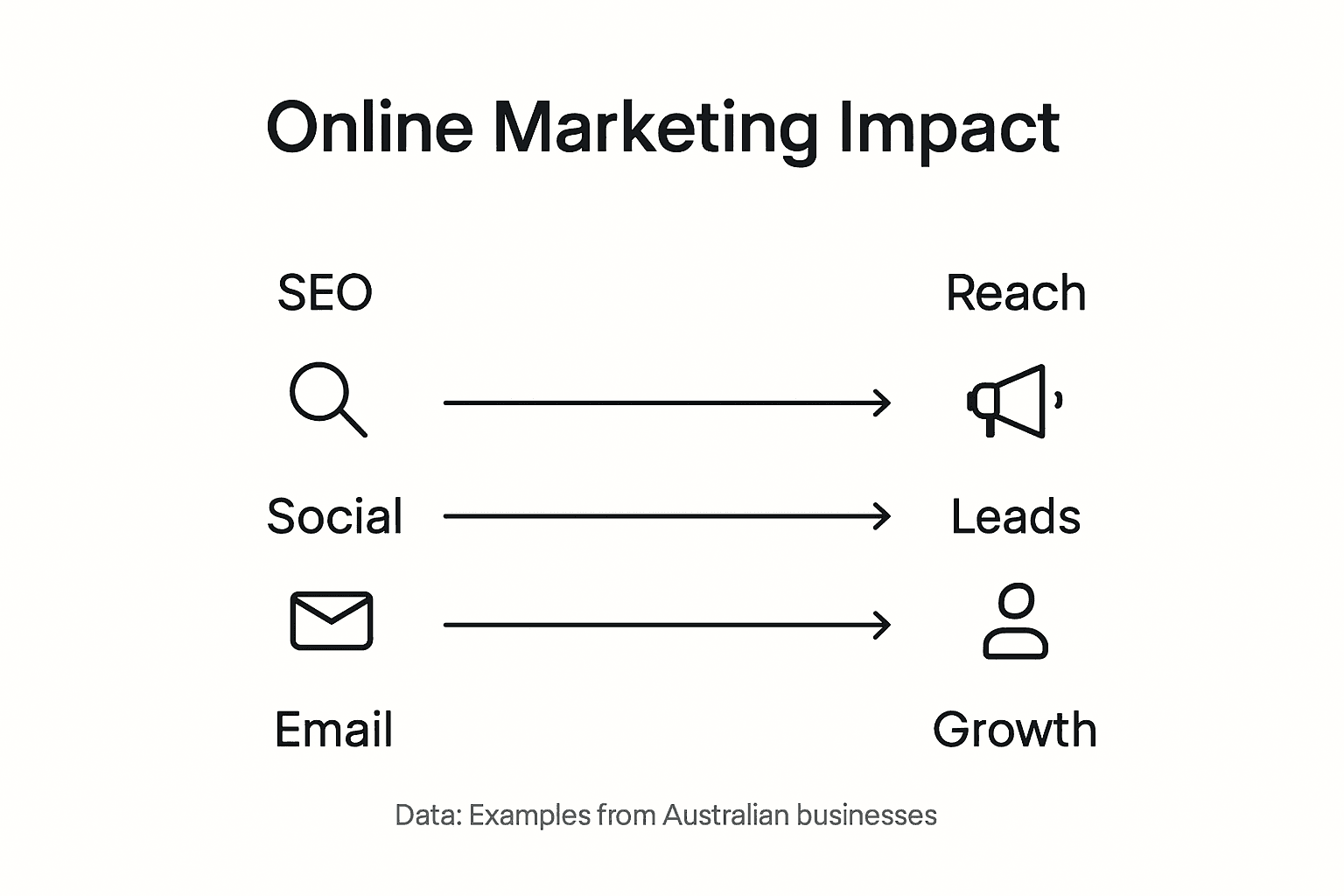
Advanced technologies like artificial intelligence and machine learning are revolutionising how online marketing contributes to business growth. These technologies enable sophisticated audience segmentation, predictive analytics, and automated marketing workflows that can adapt in real time to customer behaviours. Multichannel marketing strategies now allow businesses to create seamless, integrated experiences across multiple digital platforms, ensuring consistent messaging and maximising opportunities for customer conversion and retention.
Pro Tip: Develop a comprehensive digital marketing dashboard that tracks key performance indicators across all online channels, allowing you to quickly identify and amplify the most effective marketing strategies.
Risks, Mistakes and Compliance Issues
Digital marketing risk management requires a comprehensive framework for identifying, analyzing, and mitigating operational, legal, and strategic challenges. Australian businesses must navigate a complex landscape of potential risks, including data privacy regulations, advertising compliance, intellectual property concerns, and rapidly evolving digital platform policies. Understanding these risks is crucial for developing robust online marketing strategies that protect the business while maintaining effective customer engagement.
Key compliance risks in online marketing encompass several critical areas. Data protection represents a significant concern, with strict regulations like the Australian Privacy Principles governing how businesses collect, use, and store customer information. Advertising standards require transparent communication, prohibiting misleading claims and ensuring all marketing materials meet legal requirements. Social media marketing introduces additional complexities, including potential risks related to content ownership, copyright infringement, and managing user-generated content across various digital platforms.
Below is a summary of key risks in Australian online marketing and their primary consequences:
| Risk Category | Example Issue | Possible Consequence |
|---|---|---|
| Data Protection | Mishandling customer data | Regulatory fines or lawsuits |
| Advertising Compliance | Misleading promotional claims | Reputation damage |
| Cybersecurity | Data breach on platforms | Loss of customer trust |
| Intellectual Property | Unauthorised content use | Legal disputes or takedown |
| Algorithmic Changes | Search ranking disruption | Unexpected drop in web traffic |
Technological risks pose unique challenges for online marketing strategies. Cybersecurity vulnerabilities can compromise customer data and brand reputation, while algorithmic changes on digital platforms can suddenly disrupt marketing performance. Businesses must implement robust monitoring systems, maintain flexible marketing approaches, and develop contingency plans to mitigate potential disruptions. Emerging technologies like artificial intelligence and machine learning introduce additional complexity, requiring careful navigation of ethical considerations and potential unintended consequences in marketing automation and customer targeting.
Pro Tip: Conduct a quarterly comprehensive digital marketing risk assessment, reviewing compliance, data protection, and technological vulnerabilities to proactively identify and address potential challenges.
Unlock Sustainable Growth with the Marketing Vortex Method
If you are facing challenges in turning your online marketing efforts into consistent leads and sales, especially within Australia’s competitive digital landscape, the insights in this article highlight exactly why a smart, integrated approach is crucial. Many Australian business owners struggle with fragmented strategies that lack continuous engagement across digital platforms. By embracing proven concepts such as multichannel marketing and data-driven personalisation, you can transform these pain points into growth opportunities.
At Jarrod Harman’s website, discover how the unique Marketing Vortex Method seamlessly connects SEO, social media, email marketing and paid advertising into a cohesive system designed for real-world results.
Take the first step today and explore how Business Warriors, our Perth-based digital marketing agency, partners with Australian service-based businesses to decentralise marketing risk and deliver guaranteed bookings. Visit Jarrod Harman now to learn how you can build momentum with integrated digital marketing strategies crafted for your business needs. Don’t wait for competitors to capture your market share — act now and build your online presence that drives measurable growth.
Frequently Asked Questions
What is the impact of online marketing on Australian businesses?
Online marketing significantly enhances visibility, customer engagement, and brand loyalty for Australian businesses by leveraging digital channels to attract and retain customers.
How can businesses measure the effectiveness of their online marketing strategies?
Businesses can measure effectiveness through key performance indicators (KPIs) such as website traffic, conversion rates, social media engagement, and email open rates, using analytics tools for detailed insights.
What are the key online marketing channels businesses should focus on?
Key channels include search engine optimisation (SEO), social media marketing, content marketing, email marketing, and pay-per-click advertising, which help in building brand awareness and driving conversions.
How does artificial intelligence enhance online marketing efforts?
Artificial intelligence improves online marketing by enabling precise targeting, personalisation, and predictive analytics, allowing businesses to adapt their strategies in real time based on customer behaviour.
Recommended
- Understanding What is Online Marketing and Its Importance – Jarrod Harman
- How to Increase Online Visibility for Service Businesses – Jarrod Harman
- Why Social Media Marketing Matters for Business Growth – Jarrod Harman
- How to Grow Business Online with Proven Strategies – Jarrod Harman
- Boost Your Sales with Local SEO for Small Businesses – LSA SEO Agency