


Nearly 80 percent of Australian businesses admit their digital presence doesn’t fully reflect their brand’s value or potential. Staying visible and attractive online is a never-ending challenge in Australia’s fast-moving beauty and wellness market, especially for female business owners eager to stand out. This guide offers practical, results-driven steps for assessing and improving your digital footprint using strategies proven to capture new leads and drive consistent sales.
Table of Contents
- Step 1: Assess Current Digital Presence
- Step 2: Optimise Website For Search Engines
- Step 3: Leverage Social Media Platforms
- Step 4: Launch Targeted Paid Campaigns
- Step 5: Analyse Results And Refine Strategies
Quick Summary
| Key Point | Explanation |
|---|---|
| 1. Conduct a thorough online audit | Assess your digital presence to identify strengths and weaknesses across platforms. |
| 2. Optimise website for search engines | Implement SEO strategies to improve your site’s ranking and user experience. |
| 3. Engage effectively on social media | Create valuable content and actively respond to your audience for better engagement. |
| 4. Launch targeted paid advertising | Define your target audience and run focused campaigns to generate quality leads. |
| 5. Regularly analyse and adapt strategies | Continuously review marketing metrics to refine approaches based on performance data. |
Step 1: Assess current digital presence
Assessing your digital presence provides crucial insights into how customers perceive and interact with your online brand. This process helps you understand your current visibility and identify strategic opportunities for improvement.
Begin by conducting a comprehensive online audit across multiple digital platforms. Search methodically for your business name and associated keywords to understand your existing digital footprint. Start with search engine results examining the top pages that appear when someone searches your business name. Document your findings including website rankings, social media profiles, directory listings, and any mentions in online publications or review sites.
Next, analyse your social media channels systematically. Review your profile completeness, engagement metrics, follower count, and content quality across platforms like Facebook, Instagram, LinkedIn, and Google My Business. Check for consistency in branding, contact information, and messaging. Pay special attention to recent customer reviews and ratings which significantly impact online reputation.
Expert suggestion: Create a spreadsheet tracking your digital presence metrics to help visualise strengths and weaknesses in your online strategy.
Here’s a summary of key digital presence metrics to monitor during your online audit:
| Metric Category | What to Track | Business Value |
|---|---|---|
| Website Performance | Ranking, bounce rate, load speed | Improves discoverability and user experience |
| Social Media Presence | Follower count, engagement, reviews | Builds credibility and brand awareness |
| Directory Listings | Listing completeness, accuracy | Increases reach through third-party searches |
| Online Mentions | Review site ratings, media mentions | Enhances reputation and trust |
Step 2: Optimise website for search engines
Search engine optimisation transforms your website into a powerful digital marketing tool that attracts potential customers and improves your online visibility. By implementing strategic techniques, you can significantly enhance your website’s ranking and discoverability.
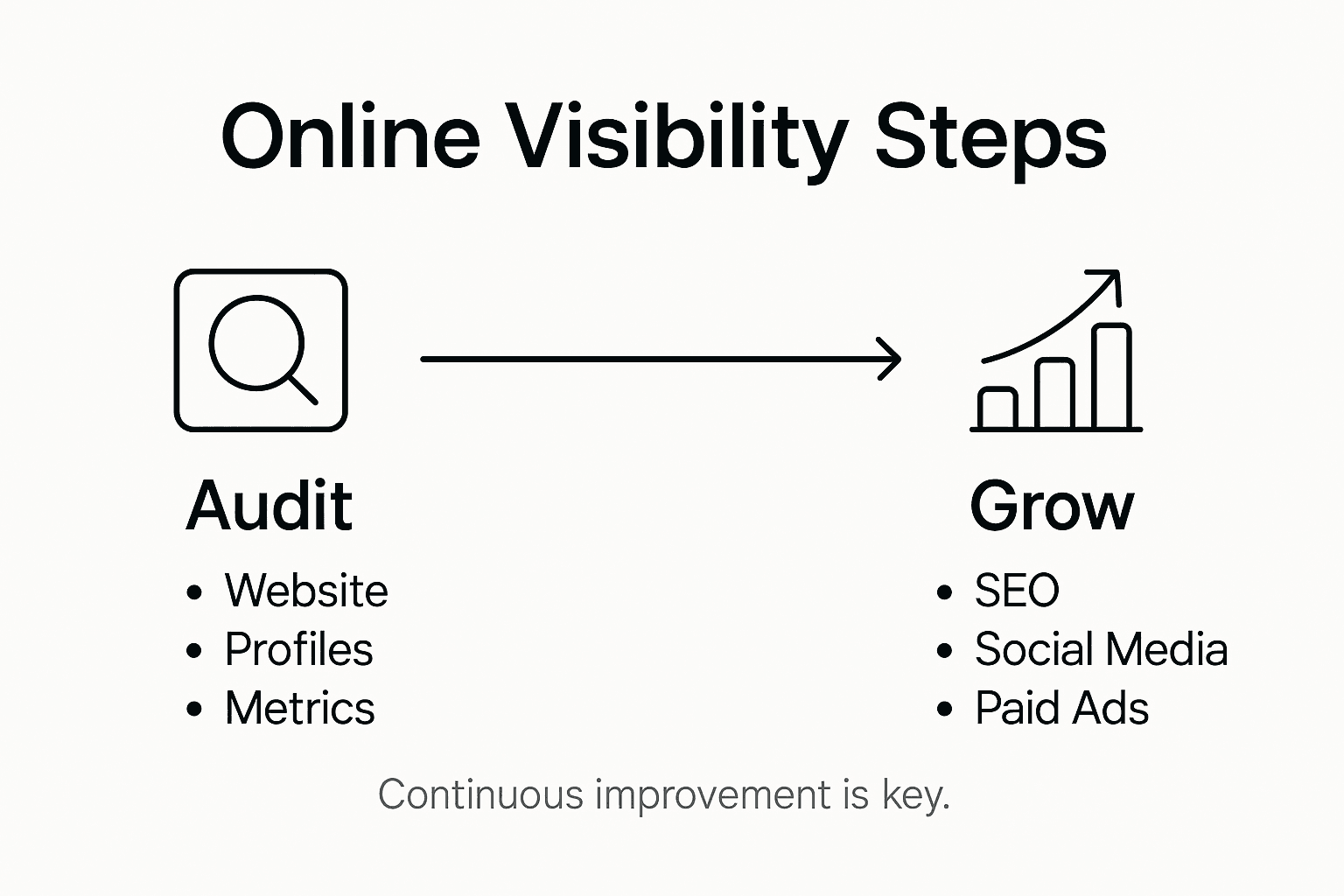
Technical search engine optimisation strategies require a multifaceted approach focusing on content quality, site structure, and user experience. Start by conducting comprehensive keyword research relevant to your service business. Identify terms potential customers use when searching for services like yours. Integrate these keywords naturally into your website content, page titles, meta descriptions, and headings. Ensure your website loads quickly, is mobile responsive, and provides clear navigation for visitors.
Prioritise creating high quality, original content that answers your target audience’s questions. Use descriptive alt text for images, implement schema markup to help search engines understand your content, and develop a logical internal linking structure. Regularly update your website with fresh, relevant content that demonstrates your expertise and keeps visitors engaged.
Professional advice: Invest time in understanding your target audience’s search behaviour and continuously refine your keyword strategy based on performance analytics.
Step 3: Leverage social media platforms
Social media platforms offer powerful opportunities to expand your online visibility and connect directly with potential customers. By developing a strategic approach, you can transform these digital channels into robust marketing tools that drive engagement and business growth.

Strategic social media marketing approaches require careful planning and consistent execution. Select platforms where your target audience is most active such as Facebook, Instagram, LinkedIn, or TikTok. Create professional profiles that showcase your brand identity, using high quality images and compelling descriptions. Develop a content calendar that provides value through educational posts, behind the scenes glimpses, client testimonials, and industry insights. Focus on creating content that solves problems or addresses specific customer needs rather than purely promotional material.
Engage authentically with your audience by responding promptly to comments, messages, and reviews. Use platform specific features like stories, reels, and live videos to increase visibility and demonstrate your expertise. Track your performance using built in analytics tools to understand what content resonates with your audience and refine your strategy accordingly.
Professional advice: Invest time in understanding each social media platform’s unique algorithm and tailor your content strategy to maximise organic reach and engagement.
Step 4: Launch targeted paid campaigns
Paid advertising provides a strategic approach to rapidly expand your online visibility and connect directly with potential customers who are most likely to need your services. By investing intelligently in targeted digital advertising, you can accelerate your business growth and generate high quality leads.
Strategic planning for paid media campaigns requires careful audience segmentation and precise targeting. Begin by defining your ideal customer profile including demographics, interests, and online behaviours. Select advertising platforms that align with your target audience such as Google Ads, Facebook Ads, or LinkedIn Advertising. Create compelling ad creatives that speak directly to your audience’s pain points and offer clear solutions. Set realistic budgets and start with smaller test campaigns to understand performance before scaling up your investment.
Monitor your campaign analytics closely and be prepared to make rapid adjustments. Track key performance indicators like click through rates, conversion rates, and cost per acquisition. Experiment with different ad formats, messaging, and visual designs to optimise your return on investment. Use retargeting strategies to re engage potential customers who have shown initial interest but not yet converted.
Professional advice: Always allocate 10 20 percent of your initial campaign budget for testing and learning to refine your targeting strategy effectively.
Step 5: Analyse results and refine strategies
Effective online visibility requires continuous monitoring and strategic adaptation. Understanding your digital performance allows you to make data driven decisions that consistently improve your marketing approach and business outcomes.
Advanced techniques for analysing online performance metrics involve a comprehensive approach to tracking key indicators across multiple digital channels. Set up robust analytics tools like Google Analytics and platform specific insights to measure website traffic, user engagement, conversion rates, and social media performance. Review these metrics monthly to identify trends, understand audience behaviour, and pinpoint areas requiring strategic adjustments. Pay close attention to metrics such as bounce rates, time on page, click through rates, and demographic information to gain deeper insights into your marketing effectiveness.
Develop a systematic process for interpreting your data and translating insights into actionable improvements. Compare your current performance against initial benchmarks and industry standards. Be prepared to experiment with different content strategies, adjust targeting parameters in your paid campaigns, and refine your messaging based on what the data reveals. Remember that digital marketing is an iterative process requiring consistent evaluation and nimble responses to changing market dynamics.
Professional advice: Create a quarterly review schedule where you comprehensively assess your digital marketing performance and align your strategies with emerging trends and audience preferences.
Compare the main digital marketing strategies for maximising online visibility:
| Strategy | Primary Focus | Typical Platform Examples |
|---|---|---|
| SEO (Search Engine Optimisation) | Website ranking, content | Google, Bing |
| Organic Social Media Marketing | Brand engagement, awareness | Facebook, Instagram, LinkedIn |
| Paid Digital Campaigns | Targeted reach, lead growth | Google Ads, Facebook Ads |
| Data Analytics & Assessment | Performance tracking | Google Analytics, built-in |
Take Control of Your Online Visibility with Proven Strategies
Struggling to boost your service business’s online presence Despite knowing the importance of SEO, social media, and paid campaigns finding the right formula can be overwhelming. This article highlighted key challenges like optimising your website for search engines and leveraging social media platforms to attract and engage more customers. You may also feel the frustration of inconsistent results when running digital ads or analysing your marketing data without clear direction.
At Business Warriors, we understand that service businesses need an integrated, results-driven approach to stand out online. Our unique Marketing Vortex Method blends SEO, Google Ads, Meta campaigns and social media management into a seamless system designed to scale your leads and sales predictably. With a strong focus on transparency and measurable outcomes, we help business owners like you overcome digital marketing complexity and deliver sustained growth. Explore more insights in the Uncategorized Archives – Jarrod Harman or visit our main website to see how we can empower your marketing.
Ready to unlock consistent online visibility and accelerate your service business growth Discover how the Marketing Vortex can transform your marketing efforts today Take action now and connect with our experts at https://jarrodharman.com to get started on crafting your customised digital marketing strategy.
Frequently Asked Questions
How can I assess my current online visibility?
To assess your current online visibility, start by conducting a comprehensive online audit. Search for your business name and associated keywords, documenting website rankings, social media profiles, and customer reviews to identify areas for improvement.
What techniques can I use to optimise my website for search engines?
To optimise your website for search engines, focus on integrating relevant keywords into high-quality content and ensuring fast load speeds. Regularly update your site with fresh content and maintain user-friendly navigation to enhance the overall user experience.
Which social media platforms should I focus on to increase visibility for my service business?
Identify the social media platforms where your target audience is most active, such as Facebook, Instagram, or LinkedIn. Create engaging and valuable content tailored to each platform that addresses your audience’s needs and encourages interaction.
How can I run effective paid advertising campaigns?
To run effective paid advertising campaigns, define your ideal customer profile and choose appropriate ad platforms like Google Ads or Facebook Ads. Start with a smaller budget for testing, monitor key performance indicators, and adjust your campaigns based on the results to improve your return on investment.
How often should I analyse my online visibility results?
You should analyse your online visibility results monthly to track progress and identify trends. Set a quarterly review schedule to comprehensively assess performance and adjust your strategies in alignment with audience preferences and market shifts.