


Over 90 percent of Australian businesses use email marketing to reach customers and grow their brands. This approach remains one of the most effective tools for direct digital communication, driving deeper customer relationships and measurable business results. Understanding how email marketing works—and why it matters—can empower Australian companies to build trust, increase sales, and adapt to evolving consumer expectations in a digital world.
Table of Contents
- Defining Email Marketing and Its Core Purpose
- Types of Email Campaigns and Key Differences
- How Email Marketing Integrates with Digital Channels
- Compliance, Privacy, and Legal Requirements in Australia
- Common Email Marketing Pitfalls to Avoid
Key Takeaways
| Point | Details |
|---|---|
| Effective Communication | Personalisation and segmentation are crucial for successful email marketing campaigns, enhancing engagement and conversion rates. |
| Diverse Campaign Types | Understanding the variety of email campaign types allows businesses to craft targeted communications, addressing specific customer needs and objectives. |
| Legal Compliance | Adhering to Australian legal requirements, including the Spam Act and Privacy Act, is essential for maintaining customer trust and avoiding penalties. |
| Common Pitfalls | Avoiding generic content, prioritising mobile responsiveness, and maintaining email list hygiene are key to improving campaign effectiveness. |
Defining Email Marketing and Its Core Purpose
Email marketing represents a powerful digital communication strategy designed to connect businesses directly with their target audience through personalised electronic messaging. At its core, email marketing is a sophisticated approach to digital communication strategies that allows organisations to nurture customer relationships, promote products or services, and drive meaningful engagement.
The fundamental purpose of email marketing extends far beyond simple promotional communication. Businesses utilise this strategy to achieve multiple objectives, including building brand awareness, generating leads, and maintaining ongoing connections with existing customers. Through carefully crafted email campaigns, organisations can segment their audience, personalise messaging, and deliver targeted content that resonates with specific customer groups.
Modern email marketing strategies incorporate advanced techniques like automation, personalisation, and data-driven segmentation. These approaches enable businesses to create highly targeted communication that speaks directly to individual customer preferences and behaviours. By leveraging sophisticated lead generation strategies, companies can transform email marketing from a basic communication tool into a powerful mechanism for driving customer acquisition, retention, and long-term business growth.
Key characteristics of effective email marketing include:
- Personalised content tailored to specific audience segments
- Strategic timing and frequency of communications
- Clear, compelling calls-to-action
- Mobile-responsive design
- Measurable performance metrics
Successful email marketing requires a nuanced understanding of audience needs, technological capabilities, and strategic communication principles. When executed thoughtfully, it becomes an indispensable tool for businesses seeking to build meaningful, lasting connections with their customer base.
Types of Email Campaigns and Key Differences
Email marketing encompasses a diverse range of campaign types, each designed to achieve specific business objectives and engage audiences in unique ways. Comprehensive marketing strategies require understanding the nuanced differences between various email campaign approaches, allowing businesses to craft targeted communications that resonate with their audience.
Traditionally, email marketing campaigns can be categorised into several key types. Promotional campaigns focus on driving sales and highlighting special offers, while lead nurturing campaigns aim to build relationships with potential customers by providing valuable, educational content. Industry update emails keep subscribers informed about sector trends and company developments, creating a sense of expertise and thought leadership.

The most effective email marketing strategies incorporate multiple campaign types to maintain engagement and drive desired outcomes. Transactional emails, such as order confirmations and shipping notifications, serve a critical functional purpose, while survey emails provide opportunities for direct customer feedback and insights. Companies can strategically leverage lead generation techniques to design email campaigns that not only communicate but also actively convert and retain customers.
Key email campaign types include:
- Promotional campaigns
- Lead nurturing emails
- Newsletter updates
- Transactional emails
- Industry/company news
- Customer feedback surveys
- Re-engagement campaigns
Successful email marketing requires a nuanced approach that balances informative content, strategic timing, and clear value proposition. By understanding the unique characteristics and purposes of different email campaign types, businesses can create more targeted, effective communication strategies that drive meaningful customer engagement and business growth.
How Email Marketing Integrates with Digital Channels
Email marketing represents a powerful intersection of digital communication strategies, seamlessly connecting multiple online marketing channels to create a cohesive and integrated approach. Comprehensive digital marketing strategies recognise email as a critical conduit for connecting various digital touchpoints, enabling businesses to create unified customer experiences across different platforms.
Multichannel integration is the cornerstone of modern digital marketing approaches. Email marketing can synchronise with social media platforms, allowing businesses to amplify content reach, retarget website visitors, and create consistent messaging across different digital ecosystems. For instance, social media advertising can drive email list subscriptions, while email campaigns can encourage social media engagement, creating a symbiotic relationship that enhances overall marketing effectiveness.
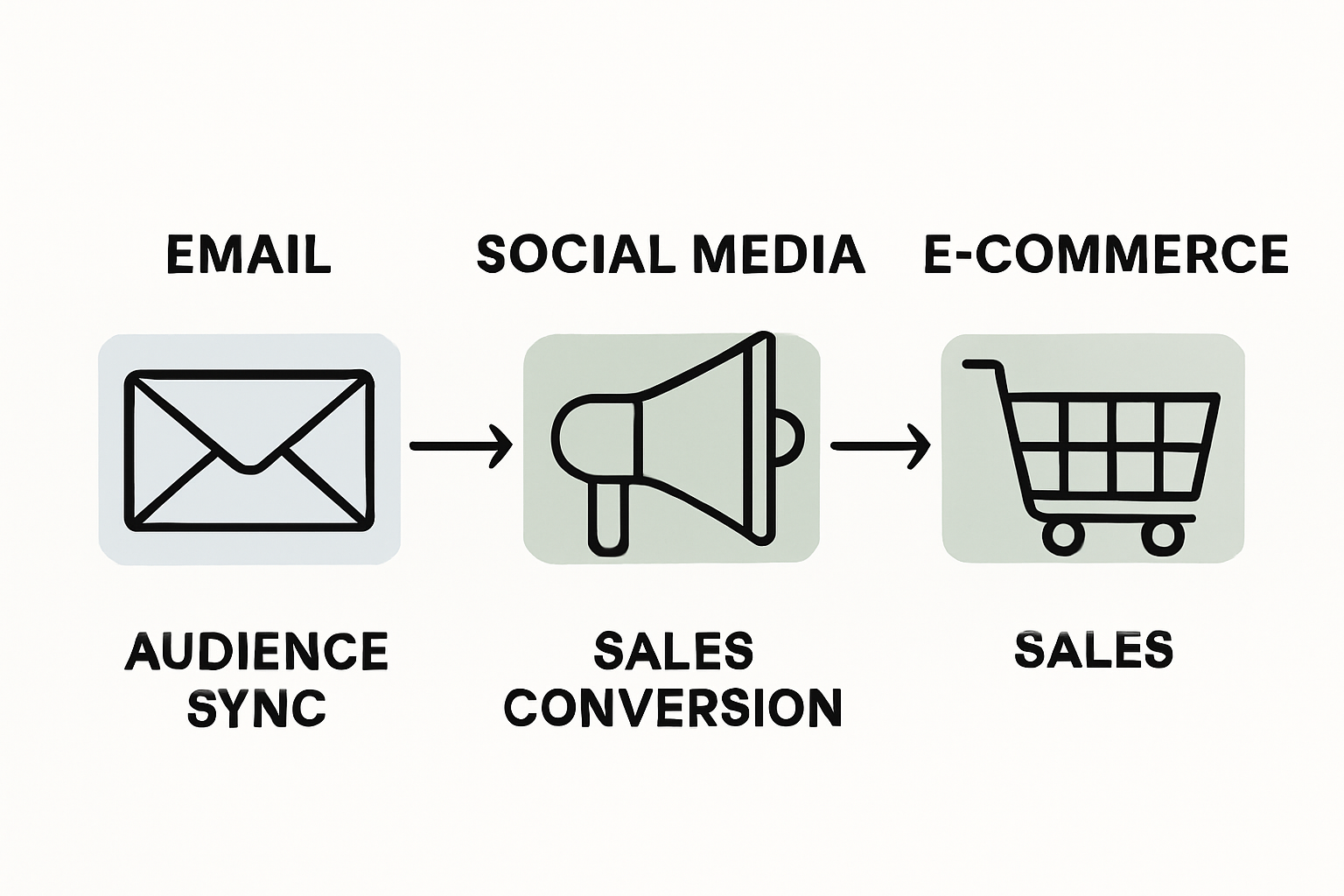
Digital channel integration extends beyond simple communication synchronisation. Advanced marketers leverage sophisticated tracking and analytics tools to create cross-channel customer journey mapping, using email interactions to inform social media targeting, pay-per-click advertising, and content personalisation strategies. Strategic digital marketing techniques enable businesses to track customer interactions across platforms, creating a holistic view of audience engagement and behaviour.
Key integration strategies include:
- Synchronising email lists with social media advertising platforms
- Using email engagement data to refine targeting
- Creating consistent messaging across digital channels
- Implementing cross-platform retargeting campaigns
- Tracking customer interactions across multiple digital touchpoints
Successful digital marketing requires a sophisticated, interconnected approach that views email not as an isolated channel, but as a critical component of a broader, integrated communication ecosystem. By understanding and implementing these advanced integration techniques, businesses can create more personalised, responsive, and effective marketing strategies that resonate across multiple digital platforms.
Compliance, Privacy, and Legal Requirements in Australia
Email marketing in Australia operates within a stringent regulatory framework designed to protect consumers and maintain ethical digital communication practices. Digital marketing strategies must meticulously navigate the complex legal landscape governed by the Australian Spam Act and Privacy Act, which establish clear guidelines for commercial electronic messaging.
Consent management represents a critical legal requirement for Australian businesses engaging in email marketing. The Spam Act 2003 mandates explicit consent from recipients before sending commercial electronic messages, with significant penalties for non-compliance. Businesses must implement robust consent mechanisms, including clear opt-in processes, unsubscribe options, and transparent communication about how subscriber data will be used. Organisations can face substantial financial penalties, with fines reaching up to AU$110,000 for serious breaches of electronic messaging regulations.
Privacy considerations extend beyond simple consent requirements. Businesses must adhere to the Australian Privacy Principles, which govern the collection, storage, and use of personal information. This includes implementing secure data management practices, providing clear privacy policies, and ensuring that email marketing databases are maintained with the highest standards of data protection. Advanced digital marketing compliance strategies incorporate sophisticated consent tracking, data management, and ongoing compliance monitoring.
Key legal compliance requirements include:
- Obtaining explicit consent before sending commercial emails
- Providing clear unsubscribe mechanisms in every message
- Maintaining accurate sender identification
- Protecting subscriber personal information
- Implementing secure data storage practices
- Regularly updating consent and privacy documentation
Successful email marketing in Australia demands a proactive approach to legal compliance. Businesses must view privacy and consent not as bureaucratic obstacles, but as essential components of building trust and maintaining positive relationships with their digital audience. By prioritising transparency, consent, and robust data protection practices, organisations can create effective email marketing strategies that respect both legal requirements and customer preferences.
Common Email Marketing Pitfalls to Avoid
Email marketing success hinges on strategic execution and avoiding common mistakes that can undermine campaign effectiveness. Content marketing best practices emphasise the importance of developing a nuanced approach that recognises the subtle complexities of digital communication strategies.
Targeting and personalisation represent critical areas where businesses frequently stumble. Sending generic, irrelevant content to broad audiences dramatically reduces engagement and conversion potential. Successful email marketers understand the necessity of lead nurturing techniques that segment audiences, craft personalised messaging, and deliver precisely timed communications that resonate with specific customer segments. Professional email strategies require sophisticated segmentation, allowing businesses to create highly targeted messages that speak directly to individual customer needs and preferences.
Technical execution presents another significant challenge for email marketing campaigns. Poorly designed emails with complex layouts, excessive images, or unresponsive design can instantly diminish credibility and reduce open rates. Businesses must prioritise clean, mobile-responsive designs that load quickly and present information clearly across multiple devices. Advanced marketers leverage sophisticated testing methodologies to optimise email performance, continuously refining subject lines, content structure, and visual presentation to maximise engagement.
Common email marketing pitfalls include:
- Sending non-personalised, generic content
- Neglecting audience segmentation
- Overlooking mobile responsiveness
- Using overly complex email designs
- Failing to implement proper tracking mechanisms
- Inconsistent sending frequencies
- Neglecting email list hygiene
- Ignoring unsubscribe requests
Successful email marketing requires a holistic approach that combines strategic thinking, technical excellence, and a deep understanding of customer preferences. By recognising and proactively addressing potential pitfalls, businesses can transform email from a simple communication tool into a powerful mechanism for building lasting customer relationships and driving meaningful business growth.
Unlock the Full Potential of Email Marketing with Proven Strategies
Struggling to convert your email list into consistent leads and sales? The article helped you understand how personalised email marketing and segmentation drive better engagement while avoiding common pitfalls and compliance issues. Now it is time to take these insights into action with expert guidance that transforms email marketing from a simple tool into a powerful growth engine.
At Business Warriors we specialise in scalable sales and marketing systems designed for service-based businesses looking to breakthrough to the next level. Our signature “Marketing Vortex” strategy integrates email marketing with SEO, Google Ads, social media and more to deliver measurable results and boost bookings. Discover how combining personalisation automation and data-driven campaigns can supercharge your online client acquisition.

Ready to accelerate your business growth with a proven omnichannel marketing approach Visit Jarrod Harman’s site to explore insights on digital communication strategies or connect directly through the main homepage to learn how our expert team can tailor smart email marketing solutions to your unique needs. Don’t wait to start maximising your leads and conversions today.
Frequently Asked Questions
What is email marketing?
Email marketing is a digital communication strategy that involves sending personalised messages to a targeted audience to build relationships, promote products, and drive engagement.
What are the key types of email campaigns?
Key types of email campaigns include promotional campaigns, lead nurturing emails, newsletters, transactional emails, industry updates, customer feedback surveys, and re-engagement campaigns.
How does email marketing integrate with other digital channels?
Email marketing integrates with other digital channels by synchronising with social media, refining targeting based on email engagement data, and creating consistent messaging across platforms to enhance customer interactions.
What are some common pitfalls in email marketing?
Common pitfalls in email marketing include sending generic content, neglecting audience segmentation, overlooking mobile responsiveness, using complex designs, and failing to maintain email list hygiene.
Recommended
- Role of Email Marketing in Growing Service Businesses – Jarrod Harman
- Understanding What is Online Marketing and Its Importance – Jarrod Harman
- What Is Digital Marketing? Complete Expert Overview – Jarrod Harman
- Why Use Digital Marketing: Complete Expert Guide – Jarrod Harman
- Understanding the Importance of Customer Communication – My WordPress
- Understanding Music Marketing Analytics Explained – Blog – Music24.com