


Most australian businesses find that carving out a distinct place in the market offers remarkable advantages. In fact, companies that embrace niche marketing can see up to 40 percent higher customer loyalty compared to those using broad strategies. As competition intensifies across Australia, the ability to specialize and truly connect with a select audience has never been more valuable. Discover how bold focus and expert knowledge set thriving brands apart from the crowd.
Table of Contents
- What Niche Marketing Means For Businesses
- Types Of Niche Markets Across Industries
- How Niche Marketing Drives Customer Loyalty
- Key Benefits And Drawbacks Of Niche Strategies
- Common Pitfalls In Niche Marketing Campaigns
Key Takeaways
| Point | Details |
|---|---|
| Niche Marketing Focus | Businesses should concentrate on well-defined market segments to create tailored offerings that resonate with specific consumer needs. |
| Customer Loyalty Development | By addressing unique requirements, companies foster emotional connections, turning casual buyers into loyal brand advocates. |
| Market Research Importance | Conducting thorough market research is crucial to identifying niche opportunities and staying adaptable to changing consumer preferences. |
| Risk Awareness | Businesses must recognise the risks associated with niche marketing, such as market volatility and over-reliance on a limited customer base. |
What Niche Marketing Means for Businesses
Niche marketing represents a strategic approach where businesses concentrate their efforts on a specific, well-defined market segment with unique characteristics and needs. By targeting a distinct market group, companies can develop highly specialised offerings that address precise customer requirements more effectively than broad-based marketing strategies.
The core advantage of niche marketing lies in its ability to create deep, meaningful connections with a targeted audience. When businesses understand and cater to the specific preferences, pain points, and desires of a particular market segment, they can differentiate themselves from competitors. This approach allows organisations to develop products or services with laser-focused precision, resulting in higher customer satisfaction and stronger brand loyalty.
Implementing a niche marketing strategy involves comprehensive market research and an intimate understanding of your target demographic. Businesses must invest time in analysing consumer behaviour, identifying unique market gaps, and crafting tailored solutions that speak directly to their chosen audience. Competitive positioning becomes significantly more powerful when a company can demonstrate exceptional expertise and specialisation within a specific market segment.
Pro Tip for Strategic Marketing: Conduct thorough market research and continuously refine your understanding of your niche audience’s evolving needs, ensuring your offerings remain precisely aligned with their expectations and preferences.
Here’s a comparison of how niche and broad marketing approaches impact business outcomes:
| Aspect | Niche Marketing | Broad Marketing |
|---|---|---|
| Audience Focus | Highly targeted, specific segment | Wide, general population |
| Product Customisation | Tailored to unique needs | Generic, mass appeal |
| Competitive Advantage | Deep expertise, strong differentiation | Brand awareness, scale effects |
| Risk Exposure | Higher due to small market shifts | Spread across multiple segments |
| Customer Loyalty | Strong, emotional brand attachment | Often transactional loyalty |
Types of Niche Markets Across Industries
Niche markets span numerous industries, representing highly specialised segments that cater to specific consumer needs and preferences. Across diverse business sectors, these targeted markets focus on unique product offerings that address particular customer requirements with exceptional precision. From technology and wellness to creative services and specialised consumer goods, niche markets demonstrate remarkable diversity and potential for innovation.

In the technology sector, niche markets often emerge around specific professional needs or lifestyle preferences. For instance, subscription-based services like on-demand fitness platforms and devices designed for creative professionals represent sophisticated market segments. These offerings go beyond generic solutions, providing tailored experiences that speak directly to the nuanced demands of particular user groups. Examples include advanced design software for graphic designers, specialised productivity tools for remote workers, and high-performance computing equipment for scientific researchers.
Niche markets extend beyond technology into traditional industries like food, fashion, and personal services. Artisanal food producers, sustainable fashion brands, and wellness services targeting specific demographics illustrate how businesses can carve out unique market positions. By understanding and addressing the precise needs of a well-defined audience, these businesses create compelling value propositions that differentiate them from mainstream competitors. Successful niche market strategies involve deep market research, intimate customer understanding, and a commitment to delivering exceptional, personalised solutions.
Pro Tip for Niche Market Exploration: Conduct comprehensive audience research and identify underserved market segments with clear, unmet needs to discover potential niche market opportunities that align with your expertise and passion.
This summary highlights industries with notable niche market examples:
| Industry | Typical Niche Segment | Example Offerings |
|---|---|---|
| Technology | Creative professionals | Advanced design software, specialised devices |
| Food | Health-conscious consumers | Artisanal foods, organic snacks |
| Fashion | Eco-friendly buyers | Sustainable apparel, ethical footwear |
| Personal Services | Targeted wellness seekers | Age-specific fitness, bespoke coaching |
How Niche Marketing Drives Customer Loyalty
Customer loyalty emerges as a powerful outcome of strategic niche marketing, where businesses create profound connections by addressing hyper-specific consumer needs. By providing unique and customized services to a particular market sector, companies can transform casual customers into devoted brand advocates. This targeted approach goes beyond traditional marketing by demonstrating an unprecedented level of understanding and commitment to a specific audience’s precise requirements.
Niche marketing generates deeper emotional engagement by showing customers that a business truly comprehends their unique challenges and aspirations. Through specialisation along market, customer, product, and marketing mix dimensions, organisations can craft experiences that feel personally curated. This personalisation creates a sense of belonging and recognition that mainstream, generalist approaches cannot replicate. Customers in niche markets often feel like they are part of an exclusive community rather than just another transaction, which significantly enhances their emotional connection to the brand.
The loyalty generated through niche marketing stems from the business’s ability to solve problems that larger, more generic competitors overlook. By developing intricate knowledge of a specific market segment, companies can create solutions with extraordinary precision. This might involve developing specialised product features, offering tailored customer support, or creating communication strategies that resonate deeply with the target audience’s specific language and values. The result is a relationship that transcends typical consumer-brand interactions, transforming customers into passionate supporters who are more likely to recommend the brand and remain committed long-term.
Pro Tip for Loyalty Building: Continuously engage with your niche audience through targeted communication, exclusive experiences, and responsive product development to maintain and deepen the unique connection that sets your brand apart.
Key Benefits and Drawbacks of Niche Strategies
Niche marketing strategies present a complex landscape of opportunities and challenges for businesses seeking targeted growth. Offering significant advantages such as higher profit margins and streamlined marketing efforts, these focused approaches enable organisations to carve out distinctive market positions. By concentrating resources on a specific segment, businesses can develop unparalleled expertise and create highly specialised solutions that larger, generalist competitors cannot easily replicate.
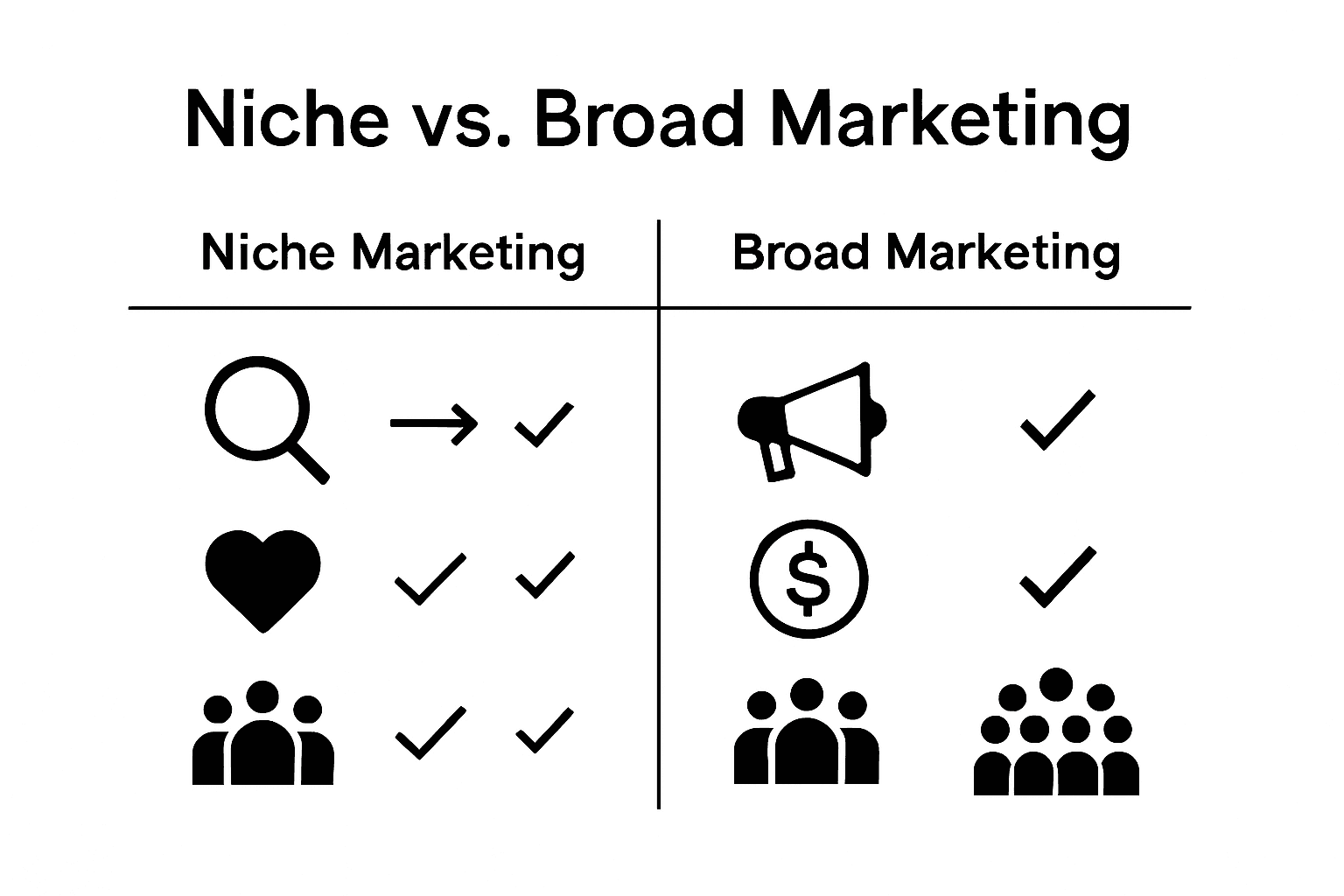
The benefits of niche strategies extend beyond financial considerations. Limited competition and the ability to charge premium prices create substantial competitive advantages for businesses that successfully identify and serve unique market segments. Companies can build deep customer relationships, foster exceptional brand loyalty, and establish themselves as authoritative experts within their chosen domain. This specialisation allows for more efficient marketing spend, more precise targeting, and the potential to become the go-to provider for specific customer needs.
However, niche marketing is not without significant risks. The same characteristics that create strength can also introduce vulnerability. A smaller customer base means less room for error, and businesses become more susceptible to market fluctuations or technological disruptions within their specific segment. Over-reliance on a single market can create precarious business conditions, particularly if consumer preferences shift or new competitors emerge with more innovative solutions. Successful niche strategies require continuous adaptation, deep market understanding, and the agility to evolve alongside changing customer expectations.
Pro Tip for Strategic Balance: Develop multiple revenue streams within your niche and maintain ongoing market research to anticipate potential shifts, ensuring your specialised approach remains resilient and adaptable.
Common Pitfalls in Niche Marketing Campaigns
Marketing precision demands vigilance, particularly when navigating the intricate landscape of niche strategies. Inadequate market research can lead to fundamental misidentifications of the target niche, creating significant strategic vulnerabilities for businesses. Entrepreneurs often fall into the trap of assuming market demand without conducting comprehensive validation, which can result in substantial resource waste and missed opportunities.
Underestimating competition and failing to sufficiently differentiate products within the niche represents another critical strategic error. Businesses must develop a nuanced understanding of their competitive landscape, recognising that niche markets can be surprisingly complex and dynamic. Success requires more than simply identifying an underserved segment; it demands creating genuinely unique value propositions that resonate deeply with the target audience’s specific needs and preferences.
The most dangerous pitfall emerges when businesses become rigidly attached to their initial market understanding, neglecting the critical importance of continuous adaptation. Consumer preferences evolve rapidly, technological innovations disrupt established patterns, and market dynamics can shift dramatically. Companies must maintain an agile approach, constantly reassessing their positioning, refining their offerings, and remaining attuned to emerging trends within their chosen niche. This requires robust market intelligence systems, ongoing customer feedback mechanisms, and a willingness to pivot when necessary.
Pro Tip for Niche Strategy Survival: Implement quarterly market research reviews and maintain a flexible strategic framework that allows for rapid response to changing market conditions, ensuring your niche positioning remains relevant and competitive.
Unlock the Power of Niche Marketing With Expert Guidance
The article highlights how focusing your marketing efforts on a specific niche can build stronger customer loyalty and create a compelling competitive edge. Yet, many businesses struggle with pinpointing their ideal niche, crafting tailored offers, and maintaining agility amid market shifts. If you are a service-based business owner aiming to excel but facing challenges in translating niche marketing concepts into tangible growth, this is where strategic marketing expertise becomes essential.
At Business Warriors, we understand the unique demands of niche marketing in sectors like beauty, wellness, and professional services. Our proven “Marketing Vortex” method integrates SEO, Google Ads, Meta advertising, email marketing, and more to deliver customised, measurable marketing results. We specialise in helping businesses like yours generate consistent leads and sales by deeply connecting with your target audience.
Ready to move beyond generic marketing and harness the full potential of your niche?

Explore how our tailored digital marketing systems can transform your specialised offerings into powerful client acquisition machines. Visit https://jarrodharman.com now and start scaling your business with the precision and confidence that niche marketing demands. For more insights into streamlined marketing strategies and success stories, discover the Business Warriors approach and join a community focussed on growth and innovation.
Frequently Asked Questions
What is niche marketing?
Niche marketing is a strategic approach where businesses focus on a specific, well-defined market segment with unique characteristics and needs, allowing for tailored offerings that effectively address those consumers’ requirements.
Why is niche marketing important for businesses?
Niche marketing is important because it helps businesses create deeper relationships with targeted audiences, leading to greater customer satisfaction, brand loyalty, and differentiation from competitors.
How can businesses identify their niche market?
To identify a niche market, businesses should conduct thorough market research, analyse consumer behaviour, and look for gaps in the existing market offerings to address specific needs and preferences of a well-defined audience.
What are the potential risks of niche marketing?
The risks of niche marketing include vulnerability to market fluctuations due to a smaller customer base, over-reliance on a single market segment, and challenges in adapting to changing consumer preferences and competition.
Recommended
- What Is Multichannel Marketing and Why It Matters – Jarrod Harman
- Understanding What is Online Marketing and Its Importance – Jarrod Harman
- Role of Storytelling in Marketing Success Today – Jarrod Harman
- The Essential Guide to Why Use Content Marketing – Jarrod Harman
- Complete Guide to User Intent in Content Strategy
- Local Service Marketing Explained: Winning More Local Jobs