


TL;DR:
- Effective social media event marketing combines attendee advocacy, platform-specific content, and coordinated campaigns to maximize attendance and registrations. Starting promotion at least 6–8 weeks in advance is crucial, with early promotion building momentum through targeted content across LinkedIn, Instagram, Facebook, and TikTok. A post-event content strategy within 24–48 hours and leveraging attendee sharing tools yield the highest ROI and foster future growth.
Effective social media event marketing is the combination of attendee advocacy, platform-tailored content, and coordinated omnichannel campaigns that together maximise attendance and registrations. Knowing how to promote an event on social media means going beyond a single Facebook post. It means building a structured campaign across LinkedIn, Instagram, TikTok, and Meta Ads, supported by tools like Attendir for attendee sharing and Brevo for email sequences. The organisers who fill seats consistently are the ones who treat promotion as a system, not a one-off announcement.
How to promote an event on social media: platforms and tools
The foundation of any strong event promotion campaign is choosing the right platforms and pairing them with the right tools. LinkedIn is the top choice for B2B events. Instagram and TikTok dominate consumer and lifestyle events. Facebook remains the strongest platform for community-based events and local audiences, particularly when you use Facebook Events to capture organic reach.
Here are the core platforms and tools worth building your campaign around:
- LinkedIn: Best for professional conferences, webinars, and B2B product launches. LinkedIn carousel posts generate 3–5 times the reach of text-only posts, making them the format of choice for speaker announcements and agenda reveals.
- Instagram: Reels and Stories drive discovery for consumer events. Use Instagram Stories countdowns and swipe-up links to push registrations.
- Facebook: Create a dedicated Facebook Event page for every event. It feeds the platform’s algorithm and gives attendees a central hub to share and invite others.
- TikTok: Short behind-the-scenes clips and speaker previews perform well for younger audiences and creative industries.
- Attendir: A purpose-built tool for attendee advocacy. It enables registered attendees to share personalised event links, turning your existing registrants into a referral engine.
- Brevo: Use Brevo to build a 5-email drip sequence for B2B events. Structured sequences convert 30–40% better than single sends, which means every additional touchpoint is working harder for you.
Paid ads on Meta and LinkedIn complement organic reach but cost significantly more per registration. Attendee advocacy through tools like Attendir delivers €2–5 ROI per registration compared to €25–50 per registration for paid LinkedIn ads. That gap is the reason smart event marketers build their organic base first and use paid ads to amplify it.
Pro Tip: Set up your Facebook Event page and Attendir sharing links before you publish a single post. Having the infrastructure live from day one means every early share drives traffic to a working registration page.
What does a strong event promotion timeline look like?
Timing is where most event campaigns fall apart. Starting promotion 6–8 weeks before the event, and ideally 90 days out for large conferences, gives your campaign enough runway to build narrative momentum. Launching two weeks out leaves no room for the awareness, consideration, and decision stages that drive registrations.
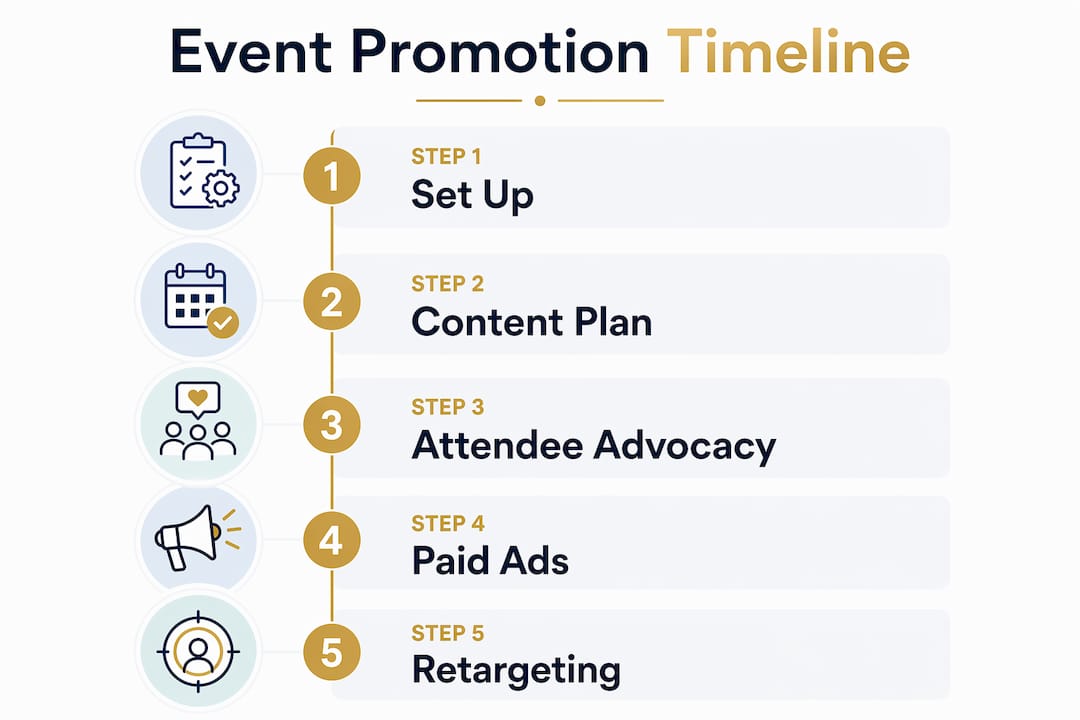
A structured content calendar follows five phases:
- Teaser phase (8–10 weeks out): Drop hints about the event theme, venue, or a headline speaker. Use Instagram Stories polls asking followers what topics they want covered. This builds anticipation without revealing everything at once.
- Reveal phase (6–8 weeks out): Announce the event officially. Publish your Facebook Event page, post the LinkedIn carousel with the full agenda, and send your first Brevo email to your list.
- Engagement phase (4–6 weeks out): Activate speakers and sponsors with share kits. Provide pre-written captions, branded graphics, and hashtag lists so they can post without friction. Each speaker’s network becomes part of your promotional reach.
- Urgency phase (2–3 weeks out): Highlight registration milestones (“200 seats filled, 50 remaining”), post countdown Stories on Instagram, and launch retargeting ads on Meta to recapture website visitors who did not convert.
- Post-event phase (24–48 hours after): Share highlight reels, thank-you posts, and attendee testimonials. This phase builds social proof for your next event.
Coordinating sales, marketing, PR, and social media simultaneously is what separates campaigns that build concentrated attention from those that generate scattered interest. Schedule your PR releases, email sends, and social posts to land on the same day during the reveal and urgency phases. The combined signal is far stronger than each channel working alone.
A well-structured social media campaign plan is the difference between a sold-out event and one that limps to 60% capacity.
Which content types drive the most event registrations?
Content format determines whether your posts get scrolled past or acted on. The highest-converting formats for event promotion share one trait: they make the audience feel involved before the event even starts.
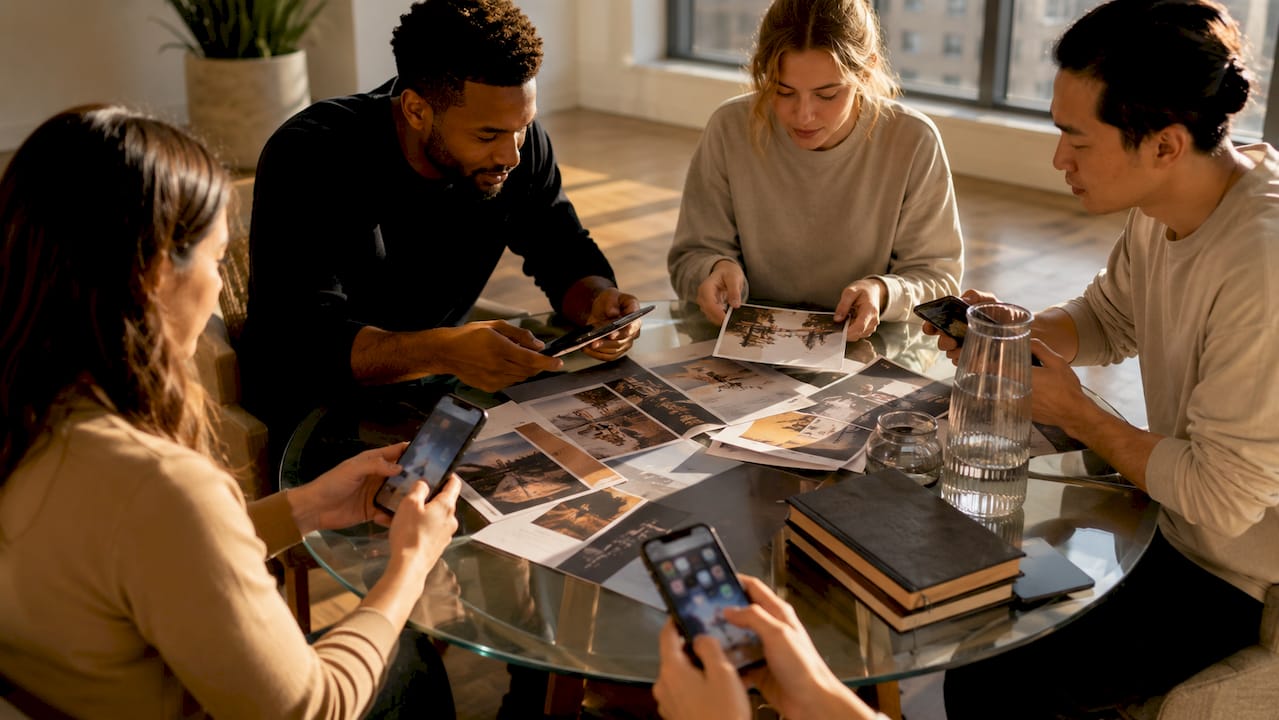
Attendee advocacy is the single most powerful tactic available. When registered attendees share their participation on social media, shares convert at 31.9% to registrations. Paid social ads convert at only 2–3%. The mechanism is simple: people trust recommendations from peers far more than they trust ads. Give your registrants a reason to share, whether that is a discount for referrals, a public shoutout, or a personalised sharing link through Attendir.
Interactive content keeps your audience engaged between announcements:
- Instagram and LinkedIn polls asking attendees to vote on session topics
- Live Q&A sessions with speakers in the weeks before the event
- Quizzes related to your event theme that drive profile visits and follows
- Live-streamed content with interactive features like polls and Q&A, which 22% of event attendees actively want. That figure signals a clear audience expectation, not a nice-to-have.
User-generated content (UGC) extends your reach without additional budget. Reposting attendee photos and testimonials acts as social proof and exposes your event to each attendee’s network. Create a branded hashtag from the start and actively encourage attendees to use it.
Hashtag strategy matters more than most organisers realise. Mixing popular and niche hashtags improves algorithmic discoverability on Instagram and TikTok. A post using only broad tags like #event or #conference gets buried. Pairing those with niche tags like #PerthBusinessConference or #MedSpaMarketing2026 puts your content in front of a more targeted, conversion-ready audience.
Pro Tip: Create a speaker share kit as a Google Drive folder containing five pre-written captions in different tones, three branded image sizes for Instagram, LinkedIn, and Facebook, and your event hashtag list. Speakers who receive a ready-to-post kit are four times more likely to actually share.
For more creative social media ideas that translate directly to event promotion, Jarrodharman has a dedicated resource worth bookmarking.
Paid ads vs organic promotion: what is the right balance?
Paid advertising and organic social promotion serve different roles in an event campaign. Organic content builds awareness and trust over time. Paid ads accelerate reach and recapture warm audiences who have already shown interest.
| Tactic | Cost Per Registration | Conversion Rate | Best Timing |
|---|---|---|---|
| Attendee advocacy (Attendir) | €2–5 | 31.9% | Throughout campaign |
| Organic social (LinkedIn, Instagram) | Near zero | Variable | 6–8 weeks out |
| Meta retargeting ads | Moderate | Higher than prospecting | Final 2–3 weeks |
| LinkedIn paid ads | €25–50 | 2–3% | Awareness phase |
The optimal budget split allocates 60–70% of paid spend to prospecting campaigns and 30–40% to retargeting. Retargeting in the final two to three weeks before the event targets people who visited your registration page but did not convert. These are your warmest prospects and they cost far less to convert than cold audiences.
Synchronising PR, email, and social into a single coordinated launch creates a concentrated wave of attention. Disjointed timing is one of the most common failure points in multi-channel campaigns. When your email goes out on Monday, your LinkedIn post on Thursday, and your PR piece the following week, you generate three small ripples instead of one large wave.
An omnichannel marketing approach that unifies your social, email, and paid channels is what separates campaigns that sell out from those that plateau at 70% capacity.
What post-event strategies build momentum for future events?
The post-event phase is the most underused asset in social media event marketing. Post-event content shared within 24–48 hours of the event, including highlight reels, photo galleries, and speaker quotes, generates the social proof that fills seats at your next event. Most organisers stop posting the moment the event ends. That is the exact moment when the most credible content becomes available.
Key post-event actions to prioritise:
- Highlight reels: A 60–90 second video of the best moments, posted to Instagram Reels, LinkedIn, and TikTok within 24 hours, captures the emotional peak of the event.
- Testimonial posts: Ask two or three attendees to record a 15-second video on their phone immediately after the event. Raw and genuine outperforms polished every time.
- Instagram Highlights: Save your event Stories to a permanent Highlight on your profile. Anyone visiting your page in the months ahead sees immediate social proof.
- Hashtag maintenance: Keep engaging with posts under your event hashtag for at least two weeks after the event. It signals to the algorithm that the conversation is still active.
- Follow-up email sequence: Send a post-event email via Brevo with the highlight reel, a thank-you note, and an early-bird offer for your next event. This is the fastest way to convert warm attendees into repeat registrants.
Growing your email list from each event creates a compounding asset. Every attendee who joins your list becomes a warmer prospect for the next campaign, reducing your paid ad spend over time.
Key takeaways
Effective event promotion on social media requires attendee advocacy, platform-specific content, coordinated timing, and a strong post-event strategy working together as one system.
| Point | Details |
|---|---|
| Start promotion early | Begin at least 6–8 weeks out to build narrative momentum and maximise registrations. |
| Prioritise attendee advocacy | Peer referrals via tools like Attendir convert at 31.9% versus 2–3% for paid ads. |
| Match content to platform | Use LinkedIn carousels for B2B reach, Instagram Reels for discovery, and Facebook Events for community. |
| Coordinate all channels together | Sync social, email, and PR launches to create one concentrated wave of attention. |
| Post within 24–48 hours | Rapid post-event content builds social proof that directly improves future event registrations. |
What i have learned running event campaigns across multiple channels
Most event organisers treat social media promotion as a series of announcements. That is the wrong mental model entirely. The campaigns that consistently sell out treat social media as a conversation that starts months before the event and continues long after it ends.
The single biggest shift I have seen in event marketing is the move toward attendee advocacy as a primary channel rather than an afterthought. When you give registered attendees the tools to share effortlessly, you are not just getting free promotion. You are getting trusted, peer-to-peer endorsement that no ad budget can replicate. The data backs this up clearly. A 31.9% share-to-registration conversion rate is not a marginal improvement over paid ads. It is a fundamentally different category of result.
The other thing I would push back on is the assumption that paid ads are the answer when organic reach feels slow. Paid ads are fast, but they are also expensive and they stop the moment your budget runs out. The organisers I see building real momentum are the ones investing in their organic presence, their email list, and their attendee community first. Paid retargeting then becomes a precision tool in the final weeks, not the entire strategy.
Live video is still underused. Twenty-two percent of attendees actively want live-streamed content with interactive features. That is not a niche preference. It is a mainstream expectation that most event campaigns are not meeting. A 20-minute live Q&A with your headline speaker, posted to LinkedIn and Instagram simultaneously, does more for registrations than five static graphics.
The post-event phase deserves the same budget and attention as the pre-event phase. The content you capture in the 48 hours after your event is the most credible marketing material you will ever produce. Use it.
— Business Warriors | Digital Marketing Agency
Take your event promotion further with Jarrodharman
Running a high-performing event promotion campaign across Meta, LinkedIn, Instagram, and email at the same time is a significant undertaking. Jarrodharman has built a body of work specifically around helping service-based businesses and event organisers turn social media activity into measurable registrations and revenue.
If you want a proven framework for turning your social channels into a consistent lead and registration engine, Jarrodharman’s digital marketing expertise covers everything from Meta Ads strategy to omnichannel campaign coordination. For businesses ready to go deeper, the Marketing Vortex method integrates SEO, paid advertising, social media, and email into one coordinated system designed to deliver results that compound over time.
FAQ
How far in advance should you start promoting an event on social media?
Start promotion at least 6–8 weeks before the event, and 90 days out for large conferences. Early promotion builds narrative momentum and gives your content time to gain organic reach before the urgency phase begins.
What is attendee advocacy and why does it matter?
Attendee advocacy is the practice of enabling registered attendees to share event information through personalised links or share kits. It converts at 31.9% per share, compared to 2–3% for paid social ads, making it the highest-ROI promotion tactic available.
How do you use facebook effectively for event promotion?
Create a dedicated Facebook Event page as soon as registration opens. The page feeds Facebook’s algorithm, gives attendees a hub to invite others, and allows you to post updates directly to confirmed guests throughout the campaign.
What is the best content format for instagram event promotion?
Instagram Reels and Stories are the top formats for effective Instagram promotion for events. Reels drive discovery through the algorithm, while Stories countdowns and swipe-up links push direct registrations in the final weeks before the event.
How should you split your budget between organic and paid promotion?
Allocate 60–70% of paid spend to prospecting campaigns and 30–40% to retargeting in the final 2–3 weeks. Build your organic base first through attendee advocacy and content, then use paid ads to amplify reach and recapture warm audiences.