8 June 2026
Essential B2B marketing tactics for service businesses in 2026
Discover essential B2B marketing tactics for 2026 that drive engagement, accelerate sales, and maximize pipeline. Boost your strategy today!
TL;DR:
- The most effective B2B marketing tactics for 2026 are account-based marketing, expert-led content, customer expansion, branded search, and LinkedIn dark social distribution. These strategies should be fully funded initially, measured by pipeline contribution, and sequenced to build a robust, repeatable growth system. AI and SEO improvements now require structured data and content tailored for both demand and lead generation to maximize visibility and engagement.
Essential B2B marketing tactics are the strategic methods proven to generate qualified pipeline, engage multiple stakeholders, and accelerate sales cycles in service-based businesses. The industry term for this discipline is B2B demand generation, and the best practitioners treat it as a ranked portfolio rather than a scattered list of activities. According to data from The Starr Conspiracy and DemandNexus, focused lead generation strategies contribute 18% to 34% of attributed pipeline within six months. That figure means one thing clearly: discipline in tactic selection pays more than breadth of execution. This article ranks the top B2B marketing strategies for 2026 by pipeline contribution, buying committee reach, and time-to-impact, so you can fund the right plays first.
1. The five essential B2B marketing tactics ranked for 2026
The top five B2B tactics for mid-market and enterprise service businesses in 2026 are account-based marketing (ABM), expert-led original research and content, customer marketing and expansion, branded and category search capture, and LinkedIn dark social distribution. These are ranked on three criteria: pipeline contribution, buying committee reach, and time-to-impact. Every other tactic is secondary until you have funded and mastered these five.
Here is how each one performs:
- Account-based marketing (ABM): The top-ranked tactic for mid-market and enterprise sellers. ABM requires joint account selection with sales, stakeholder mapping across the buying committee, weekly pipeline reviews, and personalised content per persona. ABM shows pipeline impact in as little as 90 to 120 days for targeted accounts. That speed is rare in B2B, where most tactics take six months or longer to register.
- Expert-led original research and content: Companies that publish original research grow 2.4 times faster than peers. The mechanism is straightforward. Buyers trust data they cannot find elsewhere, and proprietary research positions your brand as the category authority rather than just another vendor.
- Customer marketing and expansion: Your existing install base is the highest-converting audience you own. Expansion plays, referral programmes, and case study production within your current client list generate pipeline at a fraction of the cost of net-new acquisition.
- Branded and category search capture: Owning your brand terms on Google Ads and ranking organically for category keywords means you capture buyers who are already in-market. This is where SEO strategy and paid search work together most efficiently.
- LinkedIn dark social distribution: Named executives posting on LinkedIn, not just the company page, drives a pipeline impact score of 8 out of 10 and reaches stakeholders that traditional channels miss entirely. Dark social refers to content shared in private messages, group chats, and feeds that does not appear in standard analytics. It is real influence that most marketing teams are not measuring.
Pro Tip: Fund and master these five tactics before allocating budget to webinars, events, or display advertising. Underfunding a top tactic to run ten mediocre ones is the most common mistake in B2B marketing.
2. How AI and SEO advances shape effective B2B marketing tactics

Search engine optimisation in 2026 is no longer a single discipline. It splits into at least three distinct practices: traditional keyword-based SEO, answer engine optimisation (AEO) for platforms like Google’s AI Overviews and Perplexity, and generative engine optimisation (GEO) for large language models like ChatGPT and Claude. Each requires a different content structure, but all three reward the same underlying quality: genuine expertise expressed clearly.
AI-powered SEO and structured data improve visibility and buyer engagement in technical B2B categories. Structured data markup, particularly FAQ schema and HowTo schema, increases the probability that your content is cited by AI systems when buyers ask category questions. For service businesses, this matters because B2B buyers increasingly start their research in AI chat interfaces rather than search bars.
The practical workflow looks like this:
- Use AI tools such as Surfer SEO, Clearscope, or Semrush’s AI features to identify content gaps and optimise existing pages for semantic relevance.
- Write content that answers specific buyer questions at each stage of the funnel, not just top-of-funnel awareness pieces.
- Add FAQ schema to every pillar page and service page so AI systems can extract and cite your answers directly.
- Publish original data and named expert opinions. Large language models preferentially cite sources with named authors, specific statistics, and institutional credibility.
- Integrate Google Ads with your SEO programme so that high-intent keywords you cannot yet rank for organically are covered by paid search while your organic rankings build.
The distinction between demand generation SEO and lead generation SEO is worth understanding. Demand generation SEO targets buyers who do not yet know they have a problem. Lead generation SEO targets buyers who are actively comparing solutions. Both are necessary, but they require different content formats, different keyword strategies, and different calls to action.
Pro Tip: Getting your brand mentioned in AI tools like ChatGPT and Perplexity is now a measurable marketing goal. Publish original research, earn backlinks from authoritative sources, and structure your content with clear entity signals so LLMs associate your brand with your category.
3. Social media marketing and paid advertising in the B2B mix
LinkedIn is the primary paid and organic social channel for B2B service businesses, but most teams use it incorrectly. The company page alone rarely moves pipeline. The real leverage comes from named executives posting consistently, engaging in comments, and sharing proprietary insights that buyers save and forward privately. This is the dark social effect described in tactic five above.
For paid social, the most efficient use of budget is retargeting. Paid social retargeting has a time-to-impact of approximately 30 days and a pipeline impact score of 5 out of 10. That score is lower than ABM or expert content, which means retargeting works best as a finishing tactic rather than a primary acquisition channel. Use it to re-engage accounts that have visited your website, engaged with your LinkedIn content, or opened your emails.
Common mistakes in B2B paid advertising include:
- Sending paid traffic to the homepage instead of a dedicated landing page. Dedicated landing pages can double or triple conversion rates compared to homepages in B2B paid campaigns.
- Running awareness campaigns to cold audiences without a retargeting sequence to capture the interest generated.
- Measuring success by click-through rate or cost per click rather than cost per opportunity or pipeline contribution.
- Underinvesting in Google Ads for branded and high-intent category terms while spending heavily on broad social awareness.
Google Ads and Meta Ads serve different functions in the B2B funnel. Google Ads captures existing demand from buyers who are actively searching. Meta Ads and LinkedIn Ads create demand by reaching buyers before they are in-market. Both have a role, but the sequencing and budget allocation should reflect your pipeline stage and sales cycle length.
Pro Tip: Build a LinkedIn retargeting audience from your website visitors and email list, then serve them case study content and client results rather than product features. Buyers in the consideration stage respond to proof, not pitches.
4. How to measure and optimise B2B marketing tactics for sustained growth
Measurement is where most B2B marketing programmes fall apart. The metrics that are easiest to report, such as lead volume, website traffic, and social impressions, are rarely the metrics that predict revenue. The metrics that matter are pipeline contribution, cost per opportunity, and win rate by channel.
Here is a practical measurement framework for Australian B2B marketers:
- Define MQL and SQL with sales. An agreed definition of a marketing-qualified lead and a sales-qualified lead, documented and signed off by both teams, is the foundation of accurate attribution. Without it, marketing and sales alignment breaks down and pipeline data becomes unreliable.
- Use multi-touch attribution. First-touch and last-touch models both distort reality. A multi-touch model that credits every interaction across the buying journey gives a more accurate picture of which tactics are contributing to closed revenue.
- Track cost per opportunity, not cost per lead. BANT-verified appointments reduce customer acquisition costs by 60% compared to traditional pay-per-lead models. The reason is simple: lead volume without quality filters inflates acquisition costs and wastes sales capacity.
- Run weekly pipeline reviews with sales. A weekly 30-minute review of open opportunities, stalled deals, and new pipeline by source keeps marketing accountable to revenue rather than activity metrics.
- Adjust spend based on attribution data quarterly. If ABM is generating 40% of your pipeline from 15% of your budget, that is a signal to shift more budget toward ABM and reduce spend on lower-performing channels.
Avoid the trap of optimising for vanity metrics under pressure to show activity. Clicks, impressions, and follower counts are easy to produce and easy to report. Pipeline contribution is harder to measure but it is the only number that connects marketing investment to business growth. Shifting from volume-based lead generation to quality-verified appointments triples conversion rates and lowers acquisition costs significantly. That is the direction every B2B marketing programme should be moving.
Pro Tip: If your CRM does not have a “marketing source” field on every opportunity, fix that before you run another campaign. You cannot optimise what you cannot attribute.
Key takeaways
The most effective B2B marketing strategy in 2026 is a disciplined, sequenced portfolio of five core tactics, funded fully and measured by pipeline contribution rather than lead volume.
| Point | Details |
|---|---|
| Rank tactics by pipeline impact | ABM, expert-led content, and branded search deliver the highest pipeline contribution for service businesses. |
| Fund five tactics fully before expanding | Underfunding top tactics to run more channels is the primary cause of poor B2B marketing ROI. |
| AI and SEO are now inseparable | Structured data, FAQ schema, and LLM optimisation are required for modern B2B content visibility. |
| Paid social works best as a finishing tactic | Retargeting engaged accounts with proof-based content outperforms cold audience awareness campaigns. |
| Measure pipeline, not leads | Cost per opportunity and win rate by channel are the only metrics that connect marketing to revenue. |
Why sequencing your B2B tactics matters more than adding more of them
Most B2B marketing teams I work with are running 12 to 15 tactics simultaneously and funding none of them properly. The result is a programme that looks busy but generates thin pipeline. The fix is not a new tactic. It is sequencing.
Start with ABM and expert-led content. These two tactics together cover the full buying committee and build category authority at the same time. Once those are producing consistent pipeline, layer in customer expansion plays and branded search capture. LinkedIn dark social from your executives should run in parallel from day one because it costs almost nothing and compounds over time.
The businesses that grow fastest are not the ones running the most channels. They are the ones that have mastered a small number of high-impact plays and measured them rigorously. AI tools like Semrush, HubSpot’s AI features, and Google’s Performance Max campaigns can accelerate execution, but they do not replace the strategic discipline of choosing the right tactics first. If you are a marketing manager or director at a service business in Australia, the question is not “what else should we add?” It is “which of these five are we actually funding at the level they require?”
, Business Warriors | Digital Marketing Agency
How Jarrod Harman helps B2B service businesses build a marketing system that works
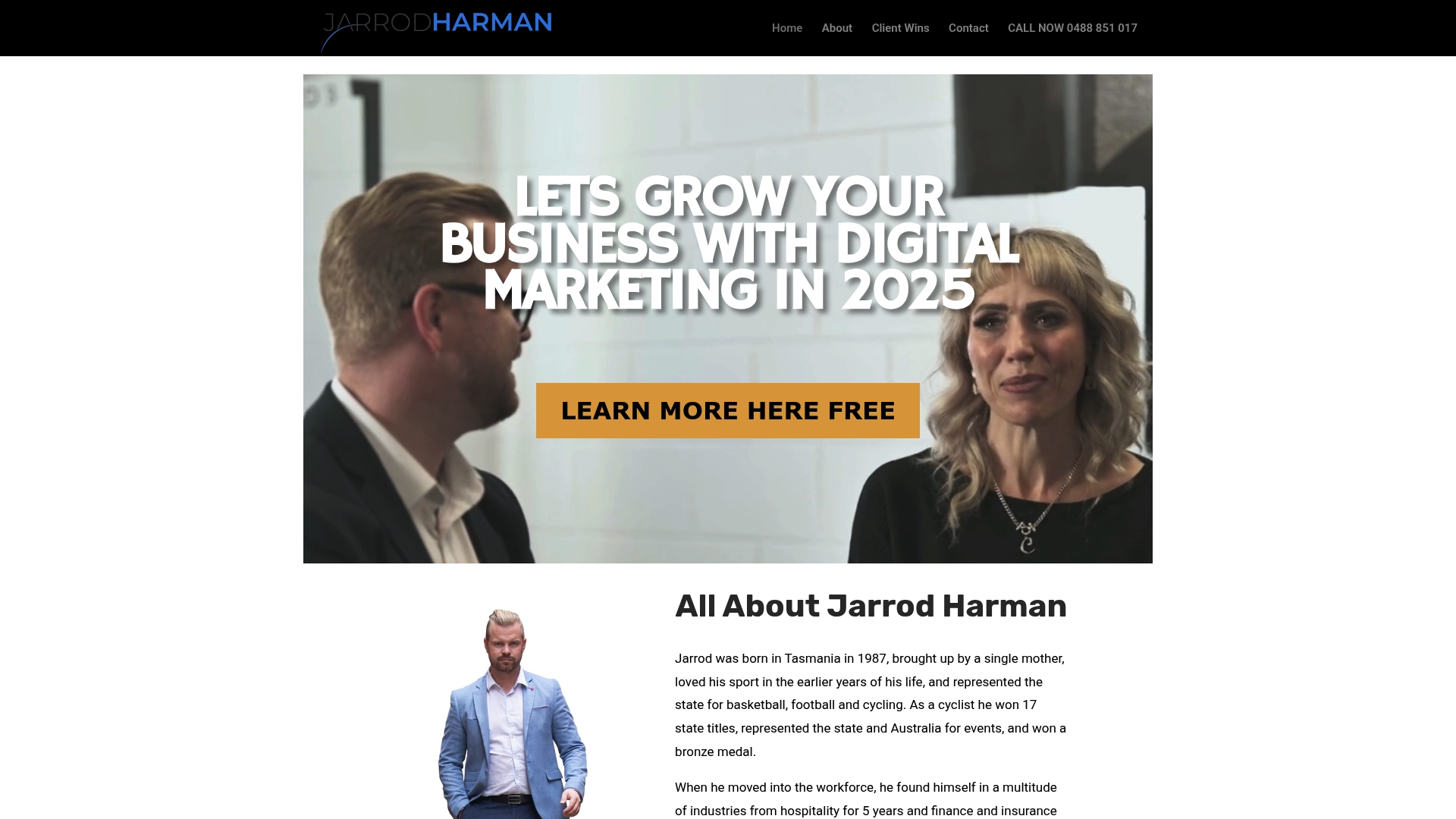
Jarrodharman works with service-based businesses across Australia to build marketing systems that generate consistent, qualified pipeline rather than random lead spikes. If you are a marketing professional or business owner who needs a clear plan for client acquisition, the proven client acquisition strategies outlined on Jarrodharman.com are built specifically for Australian service businesses. For a step-by-step approach to measurable growth, the digital marketing growth guide covers how to sequence your tactics, set up attribution, and scale what is working. Reach out directly to discuss a bespoke marketing plan for your business.
FAQ
What are the most effective B2B marketing tactics in 2026?
ABM, expert-led original research, customer expansion marketing, branded search capture, and LinkedIn dark social distribution rank highest in 2026 based on pipeline contribution, buying committee reach, and time-to-impact. Fund these five fully before investing in secondary channels.
How does AI SEO differ from traditional SEO for B2B businesses?
AI SEO, also called answer engine optimisation or generative engine optimisation, focuses on structuring content so that AI platforms like ChatGPT, Perplexity, and Google AI Overviews cite your brand in their responses. Traditional SEO targets keyword rankings in standard search results. Both are necessary for full B2B search visibility in 2026.
Why is LinkedIn dark social important for B2B lead generation?
LinkedIn dark social distribution by named executives drives a pipeline impact score of 8 out of 10 and reaches buying committee members that company page posts and paid ads miss. It works because buyers share and discuss content privately, in ways that standard analytics cannot track.
How should B2B marketers measure marketing performance?
Measure pipeline contribution, cost per opportunity, and win rate by channel rather than lead volume or click-through rate. Use multi-touch attribution and run weekly pipeline reviews with your sales team to keep measurement connected to revenue outcomes.
What is the fastest B2B tactic for generating pipeline?
Paid social retargeting has the shortest time-to-impact at approximately 30 days, but it works best as a finishing tactic for warm accounts rather than a primary acquisition channel. ABM delivers deeper pipeline impact within 90 to 120 days for targeted mid-market and enterprise accounts.