


Trying to convert curious browsers into paying clients often feels like guesswork for many Australian service providers. The real secret lies in understanding how a content marketing funnel guides potential customers from first encounter through to ongoing loyalty. Knowing which type of content works at each stage empowers you to structure your marketing for steady growth, helping you turn interest into dependable leads and repeat sales.
Table of Contents
- How The Content Marketing Funnel Works
- Core Stages And Customer Journey Steps
- Effective Content Types For Each Stage
- Measuring Success And Avoiding Pitfalls
Key Takeaways
| Point | Details |
|---|---|
| Understanding the Funnel Stages | Recognising the four key stages—Awareness, Consideration, Decision, and Loyalty—helps in tailoring content and strategies for different customer needs. |
| SEO’s Critical Role | Implementing SEO best practices across the funnel maximises content visibility, attracting qualified prospects without solely relying on paid ads. |
| Content Alignment | Ensuring content matches the customer’s mindset at each stage significantly enhances conversion rates, thereby driving sales and client loyalty. |
| Measuring and Adapting | Regularly tracking performance metrics at each stage of the funnel allows for data-driven adjustments to improve engagement and conversion outcomes. |
How The Content Marketing Funnel Works
A content marketing funnel guides potential customers through distinct stages, from their first encounter with your brand through to becoming loyal clients. Think of it as a strategic roadmap that moves people from awareness to action, with each stage requiring different content and messaging.
The funnel mirrors the customer journey through predictable phases. Your role is to place the right content in front of the right people at the right moment. This alignment between content and customer behaviour is what drives conversions.
The Four Core Stages
Most content marketing funnels operate across four essential stages. Understanding the customer journey stages helps you structure your content strategy effectively. Here’s how each works:
-
Awareness stage: Your audience discovers your brand through search results, social media, or referrals. They’re exploring options and don’t yet know much about you.
-
Consideration stage: Prospects recognise they have a problem and are researching solutions. Your content educates them about different approaches, including what you offer.
-
Decision stage: Potential clients are comparing specific options and ready to make a choice. Your content demonstrates why you’re the best fit.
-
Loyalty stage: After purchase, you nurture clients with ongoing value to encourage repeat business and referrals.
How SEO and Content Work Together
Search engine optimisation sits at the foundation of your content funnel. When you create optimised content for each stage, search engines rank it higher, attracting qualified prospects organically. This reduces your reliance on expensive paid advertising.
Keyword research reveals what your audience searches for at each funnel stage. A 35-50 year old business owner looking for a salon booking system might search “how to manage salon bookings” (awareness) versus “best salon booking software Australia” (decision). Your content needs to address both.
Long-tail keywords often indicate decision-stage intent, whilst broader terms indicate awareness-stage searches. Structuring your content around these phases means you capture prospects throughout their entire journey.
The Role of AI in Content Strategy
Artificial intelligence tools are reshaping how you plan and create content at scale. AI-powered platforms can analyse search data, identify content gaps, and even generate first drafts that you refine. This accelerates your content production without sacrificing quality.
Large language models help you personalise content at scale. Rather than creating one generic email, you can generate variations that speak directly to awareness-stage prospects versus decision-stage prospects. This personalisation drives higher engagement rates.
AI also helps with content repurposing. A single blog post becomes a social media series, an email sequence, and a video script. This multiplies your content’s reach without tripling your workload.
Paid Advertising Accelerates Your Funnel
Google Ads and Meta advertising amplify organic content efforts. Rather than waiting for search rankings, you can immediately direct budget towards high-converting content pieces. Paid social ads target specific audience segments at precise funnel stages.
Retargeting campaigns show ads to people who’ve visited your website but haven’t converted. This keeps your brand visible during the consideration and decision stages, when prospects are most likely to choose.
Most successful Australian service businesses combine organic reach with paid campaigns. The organic channel builds long-term authority whilst paid advertising generates immediate leads. Together, they create consistent client flow.
Building Your Content Marketing Strategy
Start by mapping your actual customer journey. How do your clients first learn about you? What questions do they ask before booking? Your content follows this path.
Next, conduct content audits to identify gaps. Do you have awareness-stage content? Decision-stage comparisons? Email nurture sequences? These gaps represent missed opportunities.
Finally, establish measurement systems. Track which content drives conversions, which keywords bring the most qualified prospects, and which paid channels deliver the best ROI. Data guides your next moves.
Your funnel only works when content matches the customer’s mindset at each stage. Misalignment kills conversions.
Pro tip: Start with your decision-stage content first—the comparisons and case studies that seal deals. Once that converts, build awareness and consideration content to feed prospects into your proven closing system.
Core Stages And Customer Journey Steps
Your customers don’t move from stranger to paying client in one leap. They follow a predictable path with distinct decision points. Understanding these stages helps you serve them at exactly the right moment with exactly the right message.
Every journey starts somewhere and ends with loyalty. The stages between determine whether prospects become clients or drift to your competitors. Mapping this path transforms marketing from guesswork into strategy.
The Six Essential Journey Stages
Whilst most funnels describe four stages, the customer journey actually breaks down into six distinct phases. The awareness, interest, and consideration phases represent the research period before anyone commits.

Here’s how each stage unfolds:
Here’s a quick reference guide comparing the four core funnel stages to the expanded six-stage customer journey model:
| Funnel Stage (4) | Customer Journey Stage (6) | Main Audience Mindset | Typical Content Needed |
|---|---|---|---|
| Awareness | Awareness | Identifying a challenge | Educational articles, explainer videos |
| Consideration | Interest / Consideration | Researching solutions | Case studies, comparisons |
| Decision | Intent / Purchase | Ready to commit | Demonstrations, client testimonials |
| Loyalty | Loyalty | Post-purchase engagement | Newsletters, rewards programs |
-
Awareness: Someone recognises they have a problem. They search online, ask friends, or see your social media post. They don’t yet know solutions exist.
-
Interest: Now they know solutions are possible. They’re gathering information about different approaches and providers, but haven’t narrowed down options.
-
Consideration: Serious prospects evaluate your specific offering against competitors. They read reviews, compare pricing, and request consultations.
-
Intent: The prospect is nearly ready. They’re checking your availability, asking final questions, and mentally committing to a decision.
-
Purchase: The actual booking or sale happens. This is the conversion moment your entire funnel targets.
-
Loyalty: After purchase, you build the relationship. Happy clients return, refer friends, and become your best marketers.
How Each Stage Demands Different Content
A prospect in the awareness stage needs educational content about their problem. Blog posts, social media tips, and YouTube videos work well here. They’re not ready for sales pitches yet.
Consideration-stage prospects need comparison content. Case studies, pricing pages, client testimonials, and detailed service descriptions convince them you’re the right choice. This is where your SEO efforts pay off—decision-stage keywords have high conversion intent.
Intent-stage prospects need friction removal. Simple booking systems, clear call-to-action buttons, and responsive customer service convert browsers into clients. A single complicated checkout process kills conversions.
Post-purchase, loyalty content keeps clients engaged. Email newsletters, exclusive tips, loyalty rewards, and follow-up check-ins build relationships that lead to repeat bookings and referrals.
The Role of Paid Advertising Across Stages
Google Ads and Meta advertising shine at different stages. Google Ads captures people actively searching for solutions (consideration and intent stages). Meta ads build awareness through visual storytelling and targeting specific demographics.
Retargeting campaigns connect the dots. Someone reads your blog post but doesn’t book? Retargeting ads remind them you exist. Someone abandons their booking form? A targeted ad brings them back.
Most Australian service businesses combine organic and paid strategies. Organic content builds authority over months. Paid advertising accelerates results immediately, filling your pipeline whilst you build longer-term SEO rankings.
Mapping Your Specific Customer Journey
Your journey isn’t identical to every other business. A 45-year-old salon owner’s clients follow different patterns than an ecommerce store’s customers.
Start by interviewing actual clients. How did they find you? What made them hesitate? What pushed them to book? This real data trumps assumptions every time.
Once you understand your journey, align your content and advertising spend accordingly. If most clients discover you through Google search, invest heavily in SEO and Google Ads. If Instagram drives awareness, build that channel first.
Customers don’t care about your funnel stages. They care about solving their problem. Stage mapping helps you solve it at the right moment.
Pro tip: Identify your highest-value stage—the point where awareness converts to intent. Double your investment there. Often, this is decision-stage content like comparison guides or case studies that compress the decision timeline.
Effective Content Types For Each Stage
Not all content performs equally across your funnel. What works brilliantly at awareness falls flat during decision-making. Matching content type to customer mindset is where conversion happens.
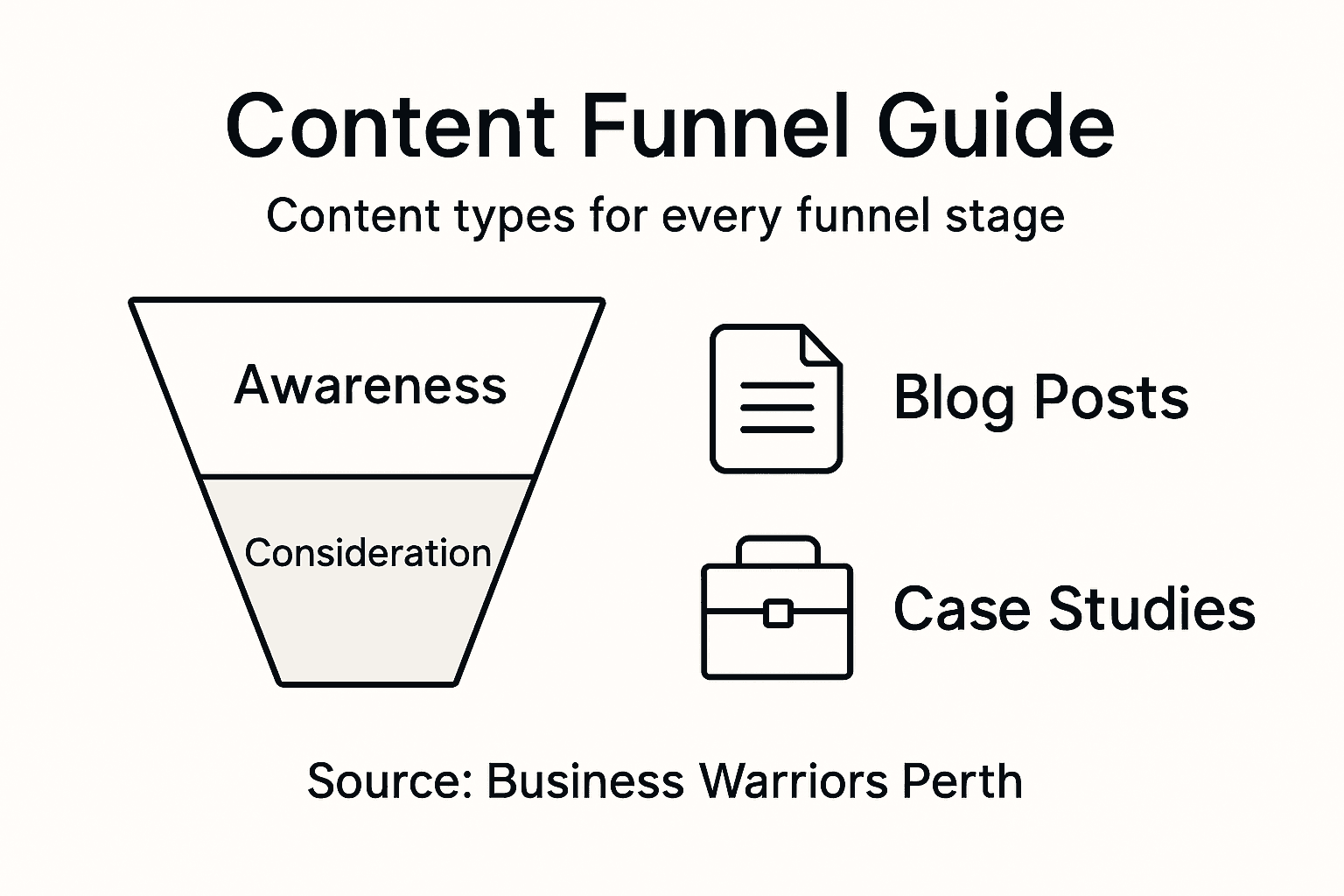
Think of it this way: someone discovering their problem needs education, not a sales pitch. Someone comparing solutions needs proof, not promises. Stage-aligned content removes friction and accelerates movement through your funnel.
Awareness Stage Content
At this stage, prospects don’t know you exist. They’re searching for information about their problem, not solutions yet. Your content should educate and build trust without selling.
Blog posts addressing common problems dominate here. “How to manage salon bookings without chaos” captures someone searching for solutions to their booking headaches. These posts rank well in search engines when optimised correctly.
YouTube explainer videos work exceptionally well. A five-minute video showing “common beauty business mistakes” positions you as knowledgeable whilst building familiarity. Video content also helps with Google rankings and AI recommendation algorithms.
Social media tips and infographics spread awareness quickly. A carousel post on Instagram showing “five signs you need professional marketing” reaches your target audience organically and through paid promotion.
Consideration Stage Content
Prospects here know solutions exist. They’re researching different approaches and comparing providers. Your content needs to demonstrate expertise and differentiate you from competitors.
Case studies showcase real results. “How we increased salon bookings by 167% in four months” speaks directly to what prospects want: proven outcomes. Include specific numbers, timelines, and measurable results.
Comparison guides help prospects evaluate options. “Service-based business marketing: SEO vs Google Ads vs social media” positions you as an honest advisor, not a pushy salesperson. This builds trust significantly.
How-to videos and checklists support decision-making. A detailed guide showing “steps to implement content marketing for your beauty business” demonstrates your process and capability.
Content addressing specific buying stage needs helps prospects evaluate their options thoroughly before committing.
Decision Stage Content
These prospects are ready to commit. They need final reassurance and friction removal to cross the finish line.
Testimonials and client reviews seal deals. Video testimonials from satisfied clients carry tremendous weight. Written reviews on Google and your website provide social proof.
Product demonstrations remove uncertainty. If you offer services, a walkthrough video showing exactly what clients experience reduces hesitation.
Pricing pages must be crystal clear. Hidden pricing frustrates prospects. Transparent, straightforward pricing builds confidence and converts ready buyers.
FAQs addressing final objections round out decision stage content. Questions about refund policies, cancellation terms, and implementation timelines get answered here.
Post-Purchase Loyalty Content
Conversion isn’t the end. Retention drives long-term profitability and referrals.
Email newsletters keep clients engaged with valuable tips relevant to their situation. A salon owner receives content about managing seasonal demand, not generic marketing advice.
Exclusive member content rewards loyalty. Early access to new services, special discounts, or private community groups strengthen relationships.
Follow-up sequences ensure satisfaction. Check-in emails asking “how’s it going?” and offering support build genuine relationships beyond transactions.
Integrating With Paid Advertising
Google Ads and Meta advertising amplify each content type. Decision-stage content converts better with retargeting ads. Awareness content reaches broader audiences through lookalike targeting.
Use this table to match content types to advertising strategies for each funnel stage:
| Funnel Stage | Best Content Types | Effective Paid Channel | Primary Goal |
|---|---|---|---|
| Awareness | Blog posts, infographics | Meta Ads | Build brand recognition |
| Consideration | Comparison guides, how-tos | Google Search Ads | Drive qualified research |
| Decision | Testimonials, demos | Retargeting Ads | Capture ready buyers |
| Loyalty | Email sequences, exclusives | Email Marketing | Encourage repeat business |
AI-powered ad platforms automatically optimise which content reaches which audience segment. This personalisation increases conversion rates substantially compared to generic campaigns.
The best content strategy matches information to intention. Wrong content at the right stage kills conversion rates.
Pro tip: Audit your existing content against these stages. Most businesses have awareness and decision content but lack consideration-stage resources. That gap costs conversions. Start building comparison guides and case studies first—they convert faster than new awareness content.
Measuring Success And Avoiding Pitfalls
You can’t improve what you don’t measure. Many Australian service business owners run content marketing campaigns without tracking results, then wonder why they’re not generating leads. Measurement transforms guesswork into strategy.
Success looks different at each funnel stage. Awareness content shouldn’t be judged by sales revenue. Decision-stage content shouldn’t be judged by reach. Mismatched metrics hide what’s actually working.
Track Metrics By Funnel Stage
Key performance indicators aligned to funnel stages reveal whether your content is performing. Here’s what matters at each level:
Awareness stage metrics:
- Impressions and reach across social media
- Website traffic from organic search
- Video views and watch time
- Shares and comments on educational content
These numbers show whether your message reaches prospects. High impressions with low engagement suggests content isn’t resonating. Low impressions means your SEO or paid advertising needs work.
Consideration stage metrics:
- Time spent on page
- Click-through rates on internal links
- Email open rates and click rates
- Pages per session
These indicate whether prospects find your content valuable enough to explore deeper. A two-minute average page time beats a 30-second bounce.
Conversion metrics:
- Lead form submissions
- Booking confirmations
- Sales revenue
- Cost per acquisition
These are your true business outcomes. Revenue matters most, but cost per acquisition reveals whether your content marketing is efficient or wasteful.
Avoid These Common Pitfalls
Measurement mistakes cost conversions. Watch for these traps:
Measuring activity instead of outcomes. You published 12 blog posts this month—that’s activity. But did they generate leads? Only outcomes matter. Traffic without conversions is vanity metrics.
Ignoring stage alignment. Judging awareness content by conversion rates guarantees disappointment. A blog post’s job is awareness, not sales. Judge it by traffic, shares, and engagement instead.
Flying blind on paid advertising. Google Ads and Meta campaigns drain budgets fast without proper tracking. Set up conversion tracking before launching campaigns. Know which ads drive actual bookings, not just clicks.
Neglecting audience segmentation. Different prospects convert at different rates. A 35-year-old salon owner from Perth converts differently than a 45-year-old from Sydney. Segment your data to spot opportunities.
Skipping A/B testing. Two versions of an email headline, different ad copy, or landing page variations reveal what works. Test relentlessly. Small improvements compound into significant conversion gains.
Setting Up Proper Measurement
Google Analytics tracks organic traffic and user behaviour. Meta Ads Manager and Google Ads Manager show paid campaign performance. Email platforms report open rates and clicks.
But these tools don’t talk to each other automatically. You need a system connecting the dots. Many service business owners miss sales because they can’t see which content or ad drove the booking.
Aligning performance metrics with strategic objectives means defining what success actually looks like for your business. Not generic benchmarks—your numbers.
Monthly Measurement Routine
Review your funnel monthly, asking these questions:
- Which awareness content drove the most qualified traffic?
- Which consideration content had highest engagement?
- What conversion rate did decision-stage content achieve?
- Which paid campaigns delivered lowest cost per booking?
- Where are prospects dropping out?
Answers reveal where to double down and where to pivot. Content underperforming after three months should be updated or replaced. Ads losing money should be paused immediately.
Metrics without action are just spreadsheets. Data reveals problems; decisions fix them.
Pro tip: Set up automated reports showing your three core metrics—traffic, leads, and revenue—delivered to your inbox monthly. This forces you to review results regularly. Most businesses measure sporadically, missing patterns that show up over time.
Elevate Your Content Marketing Funnel With Proven Strategies
Struggling to turn leads into loyal clients despite well-crafted content at every funnel stage? The challenge often lies in aligning your messaging perfectly with your customers’ mindset as they move from awareness to purchase and loyalty. If you recognise pitfalls like misaligned content, low conversion rates, or inefficient paid advertising, you are not alone. The key is a strategic, omnichannel approach that integrates SEO, paid campaigns, personalised messaging, and data-driven optimisation — exactly what the Marketing Vortex Method specialises in.
Discover how Business Warriors in Perth can equip your service-based business with scalable sales and marketing systems tailored specifically for your niche. Harness expert SEO, Google Ads, Meta advertising, email marketing, and targeted content strategies designed to capture and convert prospects at every funnel stage. Get measurable results with transparent reporting and ongoing management that turns content marketing theory into client acquisition reality. Visit Jarrod Harman’s website to explore success stories and find out how to implement winning strategies for your business today. Don’t wait for leads to trickle in — take control of your funnel and start driving consistent growth now by connecting with seasoned specialists who understand your journey.
Frequently Asked Questions
What is a content marketing funnel?
A content marketing funnel is a strategic framework that guides potential customers through various stages, from initial awareness of your brand to becoming loyal clients. It aligns content with the customer’s journey to drive conversions.
What types of content should I create for each stage of the marketing funnel?
For the awareness stage, create educational blog posts and videos. In the consideration stage, use case studies and comparison guides. For the decision stage, include testimonials and pricing information. Post-purchase, nurture loyalty with follow-up emails and exclusive content.
How does SEO contribute to the effectiveness of a content marketing funnel?
SEO helps to optimize content for each stage of the funnel, ensuring it ranks higher in search engine results. This increases organic traffic and attracts qualified leads, reducing reliance on paid advertising.
How can AI tools enhance my content marketing strategy?
AI tools can analyze search data, identify content gaps, and even generate drafts for your content. They help in personalizing content for different audience segments and repurposing existing content for multi-channel use.
Recommended
- How to Create Sales Funnel for Consistent Lead Generation – Jarrod Harman
- How to Optimise Sales Funnels for More Online Leads – Jarrod Harman
- Lead Generation Content Marketing That Fuels Growth – Jarrod Harman
- How to Nurture Leads Online for Effective Conversions – Jarrod Harman
- Fotografia dla działów marketingu krok po kroku: skuteczna marka – Coolheads – Fotografia biznesowa