

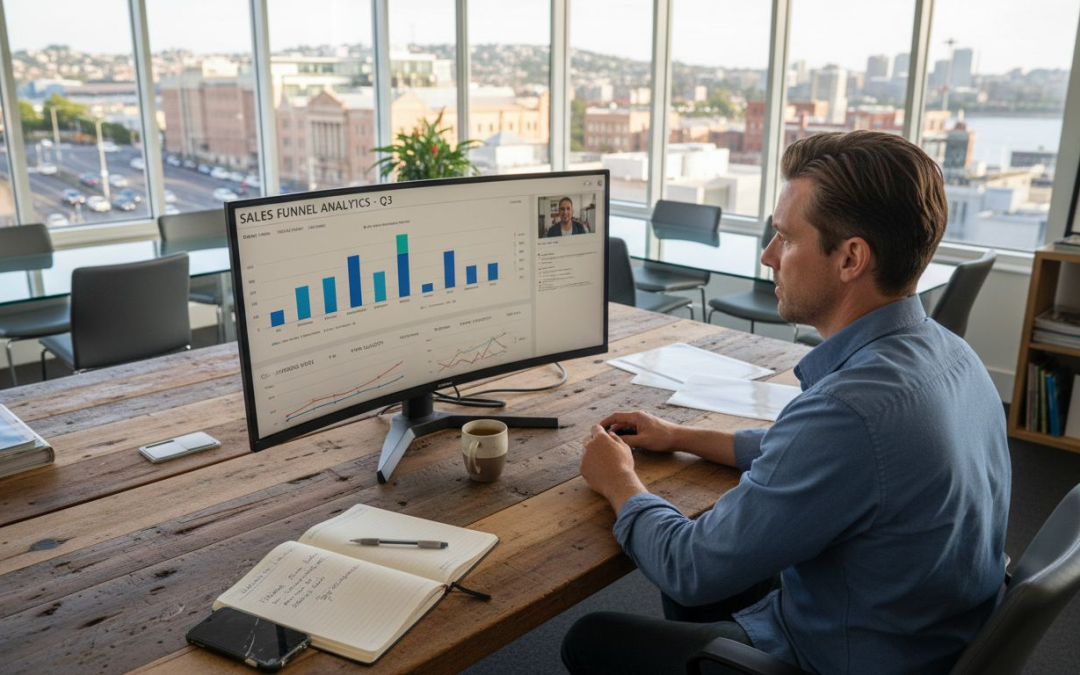
Over 60 percent of Australian beauty and wellness businesses lose potential leads due to overlooked sales funnel gaps. For many female business owners, this means missing out on real growth in a market that is more competitive than ever. Optimizing your funnel with a clear, strategic approach is the key to turning online interest into valuable new clients and building lasting relationships within the Australian market.
Table of Contents
- Step 1: Audit Your Existing Sales Funnel Performance
- Step 2: Clarify Your Ideal Client And Mapping Their Journey
- Step 3: Refine Your Funnel Messaging For Conversions
- Step 4: Integrate Omnichannel Marketing Strategies
- Step 5: Test And Measure Funnel Results For Improvements
Quick Summary
| Key Point | Explanation |
|---|---|
| 1. Audit your sales funnel effectively | Assess each stage with metrics like conversion rates and engagement to identify weaknesses. |
| 2. Map your ideal client’s journey | Develop a detailed client persona to understand motivations and decision-making processes. |
| 3. Refine messaging for better conversions | Tailor communications to align with client needs at each funnel stage to enhance engagement. |
| 4. Implement omnichannel marketing strategies | Create a unified experience across all marketing channels, adapting to customer preferences. |
| 5. Continuously test and measure | Regularly analyse funnel performance and make incremental adjustments to improve results. |
Step 1: Audit your existing sales funnel performance
Auditing your sales funnel performance is a strategic process that allows you to identify strengths, weaknesses, and opportunities for improvement in your customer acquisition pathway. Effective funnel audits help businesses understand how potential customers move through different stages and where they might drop off.
Start by gathering comprehensive performance data across each funnel stage. This involves tracking key metrics like conversion rates, time spent in each stage, and customer engagement levels. Analyzing entrepreneurial contribution requires transparent measurement and specific optimization techniques, which means looking beyond surface level numbers to understand deeper customer journey dynamics. Use analytics tools to map out your current funnel, tracking how visitors transition from initial awareness through consideration and ultimately to purchase.
Pay special attention to conversion rates between funnel stages. Where are potential customers losing interest? Which touchpoints have the highest drop off rates? Implement tracking pixels, Google Analytics, and customer feedback mechanisms to gain granular insights. By understanding these transition points, you can develop targeted strategies to reduce friction and improve overall funnel effectiveness.
Hot tip: Create a visual funnel map that colour codes each stage’s performance, making it easy to quickly identify bottlenecks and opportunities for optimization.
Here’s a quick reference for metrics to monitor at each sales funnel stage:
| Funnel Stage | Key Metric | Business Impact |
|---|---|---|
| Awareness | Visitor traffic | Reveals brand reach and potential leads |
| Consideration | Engagement rate | Shows customer interest levels |
| Decision | Conversion rate | Indicates sales effectiveness |
| Retention | Repeat purchase frequency | Highlights customer loyalty |
Step 2: Clarify your ideal client and mapping their journey
Understanding and mapping your ideal client’s journey is a critical step in creating an effective sales funnel. This process involves deep research and strategic insights to develop a comprehensive understanding of your target audience’s motivations, challenges, and decision making processes.
Customer journey research helps businesses identify key touchpoints and experiences that drive purchasing decisions, allowing you to craft a more targeted and resonant marketing approach. Begin by developing a detailed client persona that goes beyond basic demographics. Consider their professional challenges, personal aspirations, pain points, and emotional triggers. Conduct interviews, surveys, and analyse existing customer data to build a nuanced profile that reveals not just who they are, but how they think and make decisions.
Map out each stage of their journey from initial awareness through to final purchase. Create a visual representation that tracks their emotional and rational progression, identifying potential friction points and opportunities for engagement. Look for patterns in how they consume information, which platforms they use, and what types of content resonate most strongly. This granular understanding allows you to design funnel stages that speak directly to their specific needs and motivations.
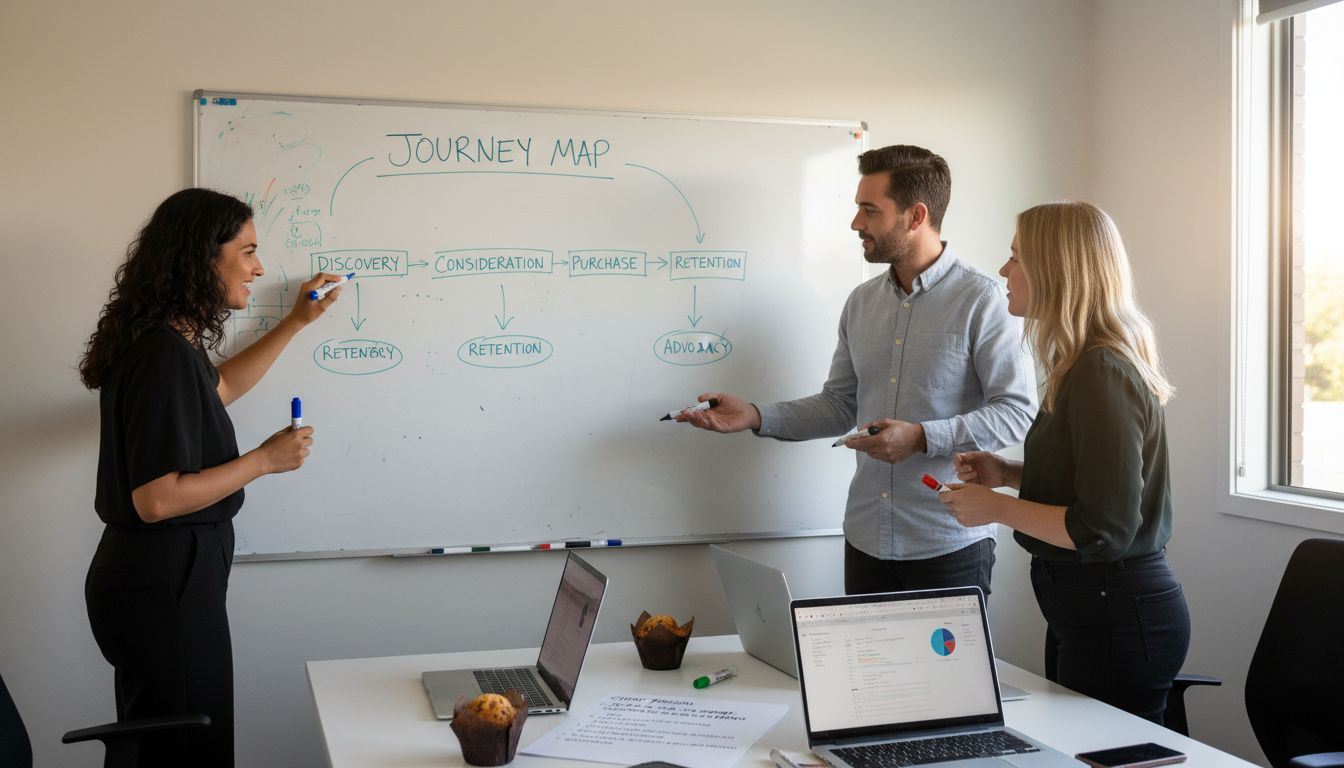
Hot tip: Create a living document of your ideal client persona that you continuously update with new insights, ensuring your marketing strategy remains dynamic and responsive.
Step 3: Refine your funnel messaging for conversions
Refined messaging is the critical bridge that transforms potential leads into committed customers. Your goal is to craft communications that speak directly to your ideal client’s unique needs and motivations at each stage of their buying journey.
Conversion funnel analysis provides a strategic framework for mapping how customers move from awareness to final purchase, allowing you to pinpoint exactly where messaging can be optimised. Start by segmenting your messaging approach across different funnel stages. At the awareness stage, focus on educational content that addresses your audience’s fundamental challenges. During the consideration phase, introduce more detailed insights and demonstrate your unique value proposition. For the decision stage, craft compelling calls to action that eliminate potential objections and make taking the next step feel natural and low risk.
Each communication touchpoint should feel like a personalised conversation that anticipates and answers your potential client’s unspoken questions. Analyse your existing content and identify areas where you can inject more empathy, specificity, and direct problem solving language. Use customer testimonials, case studies, and real world examples to build credibility and trust. Remember that effective funnel messaging is not about aggressive selling but about creating a clear pathway that helps your ideal client recognise how your solution solves their specific problem.
Hot tip: Develop a messaging matrix that maps out the emotional and rational triggers for each funnel stage, ensuring your communication remains consistently targeted and relevant.
Step 4: Integrate omnichannel marketing strategies
Omnichannel marketing transforms how businesses connect with potential clients by creating a seamless experience across multiple platforms and touchpoints. This approach goes beyond traditional multichannel marketing by ensuring consistent, personalised interactions that adapt to your customer’s preferences and behaviours.
Omnichannel marketing integrates all company channels around the customer for a unified and personalised buying experience, requiring sophisticated technological integration and strategic synchronisation. Begin by mapping out all your existing marketing channels such as social media platforms, email marketing, website, physical locations, and digital advertising. Analyse how customers currently move between these channels and identify potential friction points or gaps in communication. Your goal is to create a fluid journey that feels intuitive and responsive to your client’s needs.
Implement technology and systems that allow real time data sharing and personalisation across channels. This might involve customer relationship management platforms, integrated analytics tools, and automated marketing systems that track customer interactions holistically. Focus on creating consistent messaging and branding while allowing enough flexibility to tailor experiences to individual customer segments. Track key performance indicators across all channels to understand how your integrated approach impacts lead generation and conversion rates.
The table below compares multichannel and omnichannel marketing approaches:
| Approach | Customer Experience | Data Integration | Strategic Benefit |
|---|---|---|---|
| Multichannel | Fragmented, platform-based | Limited | Basic market reach |
| Omnichannel | Seamless, unified journey | Real-time, centralised | Higher personalisation, retention |
Hot tip: Create a centralised customer data platform that consolidates interactions across all channels, enabling you to develop highly targeted and personalised marketing strategies.
Step 5: Test and measure funnel results for improvements
Testing and measuring your sales funnel performance is crucial for understanding how effectively you are converting potential leads into committed customers. This step involves systematic analysis and strategic refinement of your marketing processes to maximise conversion potential.
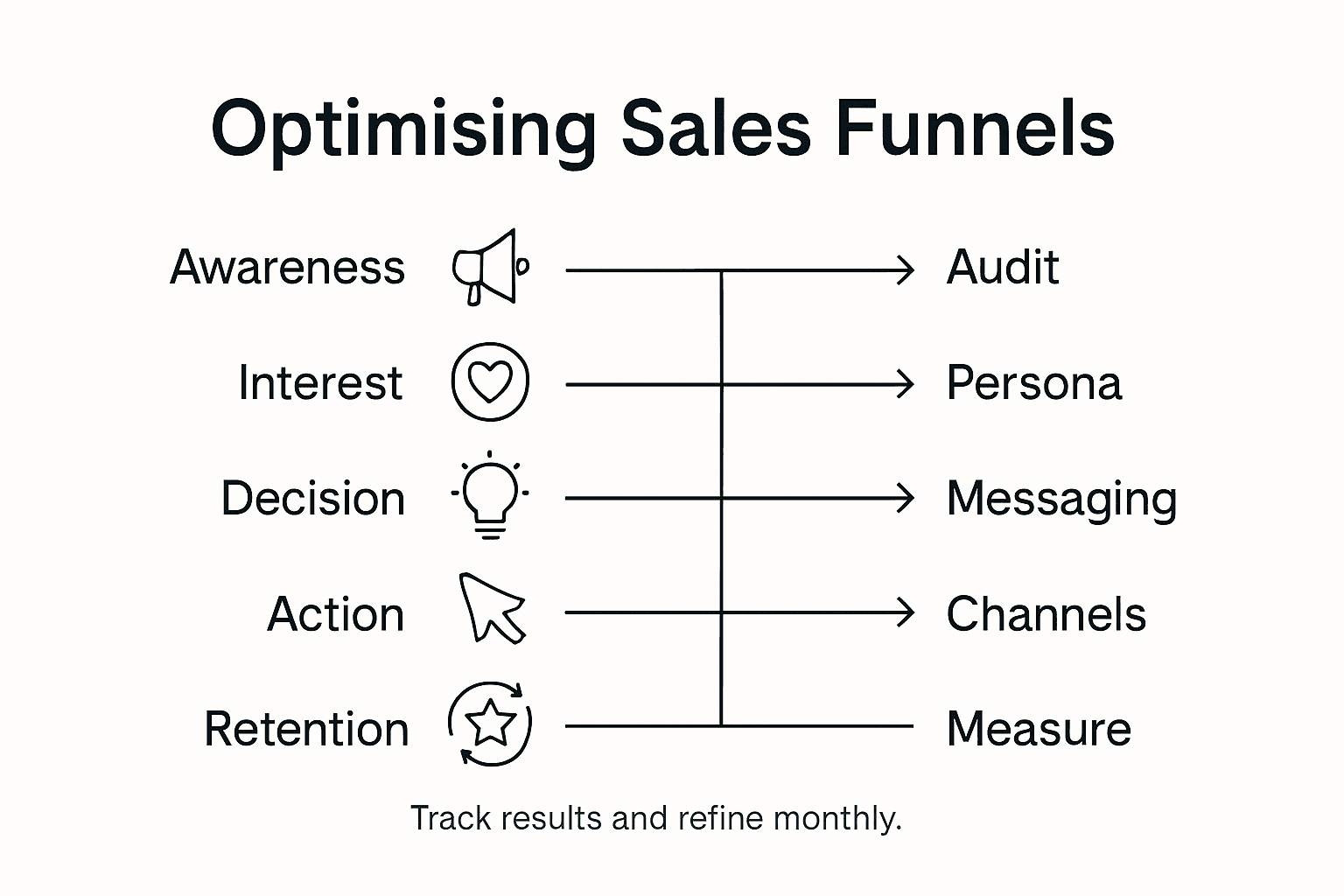
Forecasting and analysis methods provide a robust framework for managing sales funnel performance through continuous measurement and testing, allowing businesses to identify precise areas for strategic improvement. Implement a comprehensive measurement strategy that tracks key performance indicators across each funnel stage. This includes monitoring metrics such as visitor to lead conversion rates, lead to customer conversion percentages, average transaction value, and customer acquisition costs. Utilise advanced analytics tools that can provide granular insights into user behaviour and interaction points within your funnel.
Develop a systematic approach to testing different funnel elements. This might involve conducting A B split tests on landing pages, email subject lines, call to action buttons, or overall messaging approaches. Pay close attention to how small changes impact conversion rates. Regularly review your funnel performance data and be prepared to make incremental adjustments. Remember that funnel optimization is an ongoing process of continuous learning and refinement.
Hot tip: Create a standardised monthly funnel performance review document that tracks your key metrics, allowing you to visualise progress and identify trends over time.
Ready to Transform Your Sales Funnel Into a Lead-Generating Machine
Optimising sales funnels for more online leads means addressing common challenges like pinpointing where prospective customers drop off at each stage and refining your messaging to match their journey. This article highlights crucial steps such as auditing funnel performance, mapping client journeys, and deploying omnichannel marketing — all of which are essential for driving real results. If you are frustrated by inconsistent lead flow or unsure how to engage your ideal clients through personalised, multi-channel strategies then this is where expert guidance can make all the difference.
At Business Warriors, our proven Marketing Vortex Method combines SEO, Google Ads, Meta advertising, email marketing, and social media into one seamless system designed to convert more visitors into paying customers. Explore how our tailored approach supports service-based businesses like salons, clinics, and ecommerce brands in boosting consistent leads and sales. Don’t leave your sales funnel’s success to chance. Discover practical solutions today by visiting Uncategorized Archives – Jarrod Harman and start your journey towards measurable growth with Jarrod Harman.
Frequently Asked Questions
How can I audit my existing sales funnel performance?
To audit your sales funnel performance, start by gathering data on key metrics such as conversion rates and customer engagement levels at each stage of the funnel. Use this data to identify strengths and weaknesses, then develop targeted strategies to improve these areas.
What metrics should I track to optimise my sales funnel?
Monitor metrics at each stage of your sales funnel, including visitor traffic, engagement rate, conversion rate, and repeat purchase frequency. Focus on these metrics to pinpoint where potential customers are dropping off and make adjustments to enhance overall funnel effectiveness.
How do I create a client persona for my sales funnel?
To create a client persona, conduct thorough research into your target audience’s motivations, challenges, and behaviours. Develop a detailed profile that highlights their pain points and decision-making processes, which will help you tailor your marketing strategies effectively.
What messaging should I use at different funnel stages?
Your messaging should vary by funnel stage; use educational content during the awareness stage, detailed insights during consideration, and compelling calls to action in the decision stage. Tailor your communications to directly address your ideal client’s needs and foster a sense of trust.
How can I implement an omnichannel marketing strategy?
Begin by mapping out all your current marketing channels and analysing how customers interact with them. Ensure that your messaging is consistent across platforms while using technology to personalise interactions based on customer behaviour to create a seamless experience.
How often should I test my sales funnel for improvements?
Regularly test elements of your sales funnel, ideally on a monthly basis, to observe the impact of changes on conversion rates. Use A/B testing for specific components like landing pages or email subject lines and make data-driven adjustments to continuously improve performance.
Recommended
- How to Create Sales Funnel for Consistent Lead Generation – Jarrod Harman
- 10 Effective Lead Generation Strategies for Businesses – Jarrod Harman
- How to Build Marketing Funnels for Consistent Sales Growth – Jarrod Harman
- Proven Ways to Increase Online Sales for Businesses – Jarrod Harman
- How to Create Sales Funnels That Convert Customers – Go Online Now