


Struggling to keep your business message clear when clients move between Facebook ads, email updates, and in-person visits? For Australian service providers, juggling all these channels can leave your brand feeling scattered and dilute your efforts to attract steady, quality leads. Exploring cross channel marketing gives you the tools to weave every touchpoint together for memorable customer journeys that fuel reliable sales growth and stronger recognition in every interaction.
Table of Contents
- Cross Channel Marketing Explained Clearly
- Types And Key Differences From Alternatives
- How Cross Channel Marketing Actually Works
- Real-World Applications For Service Businesses
- Risks, Costs, And Common Mistakes To Avoid
Key Takeaways
| Point | Details |
|---|---|
| Cross Channel Marketing Benefits | It enables seamless, integrated communication across multiple platforms, providing a consistent brand experience. |
| Personalisation is Essential | Effective strategies rely on advanced data analytics to deliver tailored content that meets individual customer needs. |
| Integration is Key | Businesses must focus on synchronising channels to enhance customer engagement and ensure coherent messaging. |
| Risks and Compliance | Companies should proactively manage data integration challenges and comply with privacy regulations to maintain brand trust. |
Cross channel marketing explained clearly
Cross channel marketing transforms how businesses engage customers by creating seamless, integrated communication strategies across multiple platforms. Integrated marketing communication approaches enable organisations to deliver consistent brand messages through digital, physical, and social channels.
This sophisticated strategy moves beyond traditional single-channel marketing by understanding customer interactions holistically. Marketers develop strategies that track and respond to customer behaviour across websites, social media, email, mobile apps, physical stores, and advertising platforms. The goal is creating a unified experience where each touchpoint reinforces the brand’s core messaging and values.
Successful cross channel marketing requires advanced technological integration, data analytics, and strategic planning. Businesses must invest in systems that track customer interactions, preferences, and journeys across different platforms. This allows personalised, contextually relevant communication that feels natural and tailored to individual customer needs.
Expert Tip: Implement robust customer relationship management (CRM) software to effectively track and analyse cross channel interactions, enabling more precise targeting and personalisation strategies.
Types and key differences from alternatives
Cross channel marketing presents several distinct types that organisations can leverage for comprehensive customer engagement. Marketing approaches vary significantly across digital, physical, and integrated communication strategies, each with unique characteristics and implementation methods.
The primary types of cross channel marketing include digital integration, omnichannel experience, multichannel synchronisation, and hybrid communication strategies. Digital integration focuses on seamlessly connecting online platforms like websites, social media, email, and mobile applications. Omnichannel experiences create a unified customer journey where interactions flow smoothly between digital and physical touchpoints, ensuring consistent messaging and personalised interactions.
Key differences emerge when comparing cross channel marketing with alternative approaches like single-channel, multichannel, and traditional marketing strategies. While single-channel marketing restricts communication to one platform, and multichannel marketing simply presents multiple disconnected channels, cross channel marketing actively synchronises interactions. This approach tracks customer behaviour across platforms, creating intelligent, responsive communication ecosystems that adapt to individual customer preferences and journeys.
Here’s a summary of how cross channel marketing compares to other marketing approaches:
| Approach | Number of Channels Used | Integration Level | Key Advantage |
|---|---|---|---|
| Single-channel | One | None | Simple and focused |
| Multichannel | Multiple | Low (no synchronisation) | Broad audience reach |
| Cross channel | Multiple | Medium (channels connected) | Consistent messaging, adaptive journey |
| Omnichannel | Multiple | High (fully unified journey) | Seamless experience across all touchpoints |
Expert Tip: Map your customer’s journey across different platforms and identify potential integration points to develop a more cohesive cross channel marketing strategy.
How cross channel marketing actually works
Cross channel marketing operates through a sophisticated mechanism of integrated data collection, analysis, and strategic communication. Marketing communication strategies enable businesses to track customer interactions across multiple platforms, creating a comprehensive understanding of individual customer journeys and preferences.

The core operational framework involves several critical components: data integration, customer segmentation, personalised messaging, and real-time tracking. Advanced technological platforms aggregate data from websites, social media, email interactions, mobile applications, and physical store touchpoints. These systems use machine learning algorithms to analyse customer behaviour, identifying patterns, preferences, and potential engagement opportunities across different channels.
Implementation requires a structured approach that synchronises communication strategies. Marketing teams develop interconnected campaigns that maintain consistent brand messaging while adapting content to specific platform characteristics. For instance, a customer might receive a personalised email follow-up after browsing products on a website, with targeted social media advertisements reinforcing the initial interaction. This approach ensures a seamless, intelligent communication ecosystem that responds dynamically to individual customer interactions and preferences.
Expert Tip: Invest in robust customer relationship management (CRM) software that supports cross channel data integration and provides real-time analytics for precise marketing personalisation.
Real-world applications for service businesses
Service businesses across various industries are discovering powerful opportunities through cross channel marketing strategies that create seamless customer experiences. Marketing integration techniques enable businesses to develop sophisticated communication approaches that connect digital and physical customer interactions.
Practical applications span multiple service sectors, including healthcare clinics, beauty salons, professional consulting, and financial services. For example, a medical spa might implement a strategy where online booking platforms integrate with SMS appointment reminders, targeted social media advertising, and personalised email follow-ups. These interconnected touchpoints create a cohesive customer journey that enhances engagement, builds trust, and increases the likelihood of repeat business and referrals.
Successful implementation requires strategic technological infrastructure and data management. Service businesses must invest in customer relationship management (CRM) systems that can track and analyse interactions across multiple channels. This approach allows for precise customer segmentation, personalised messaging, and the ability to deliver contextually relevant communications that resonate with individual customer needs and preferences. By understanding and anticipating customer requirements, businesses can create more meaningful interactions that drive long-term loyalty and sustainable growth.
Expert Tip: Develop a comprehensive customer data strategy that maps all potential interaction points and creates a unified view of customer engagement across different platforms and touchpoints.
Risks, costs, and common mistakes to avoid
Cross channel marketing presents complex challenges that businesses must carefully navigate to avoid potentially costly strategic missteps. Marketing compliance risks can significantly impact an organisation’s reputation and financial stability, making thorough understanding and proactive management essential.
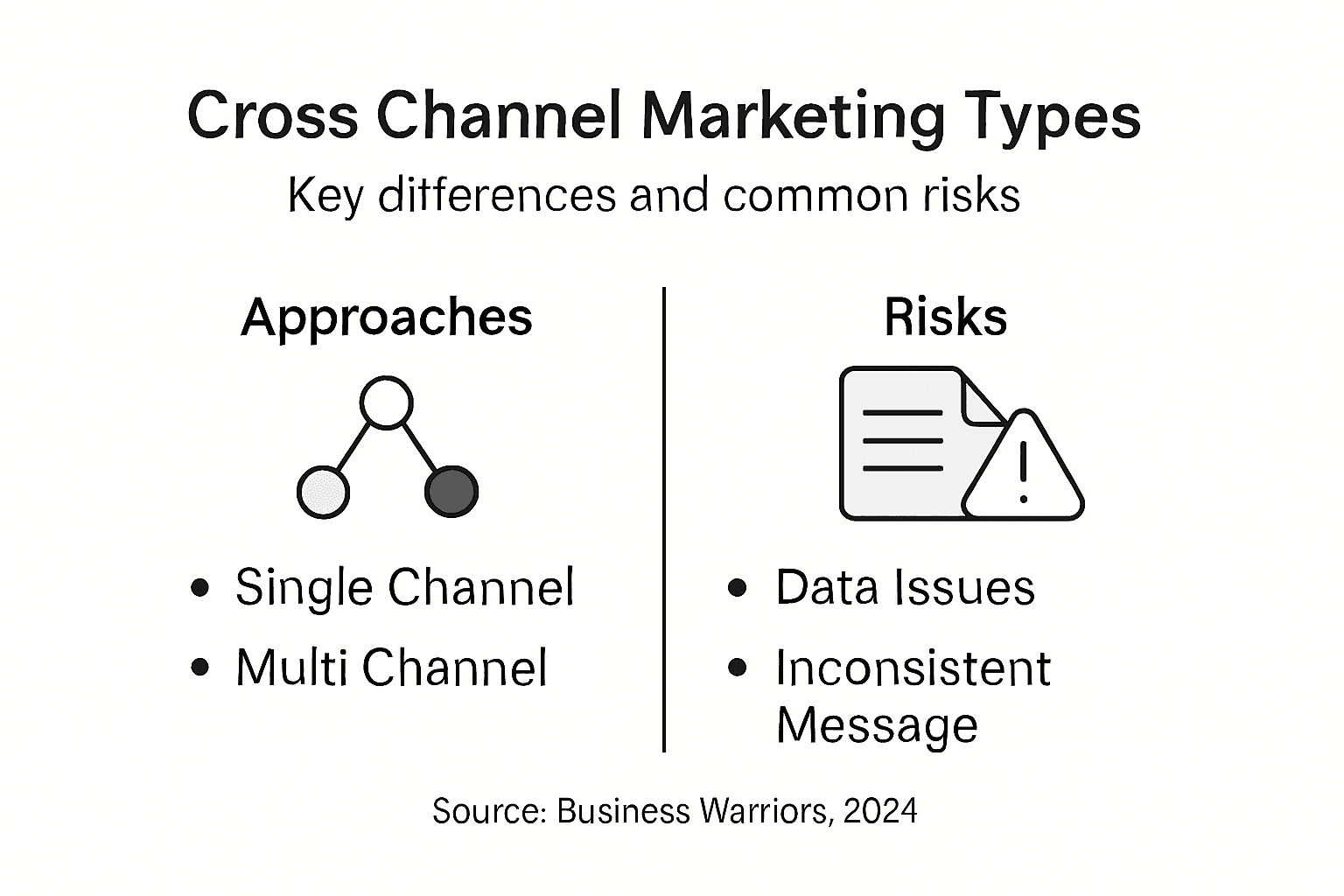
Key risks include data integration challenges, inconsistent messaging, and potential privacy compliance violations. Businesses often struggle with technological infrastructure limitations that prevent seamless data synchronisation across platforms. Common mistakes involve creating disconnected communication strategies where different channels send conflicting messages, confusing potential customers and undermining brand credibility. Additionally, improper data handling can lead to significant legal and regulatory risks, especially when managing customer information across multiple digital and physical touchpoints.
Financial considerations are substantial, with implementation costs ranging from technological investments to ongoing training and system maintenance. Small to medium enterprises might find these expenses challenging, requiring strategic budget allocation and careful vendor selection. Successful cross channel marketing demands continuous investment in advanced customer relationship management systems, sophisticated analytics tools, and skilled personnel capable of interpreting complex multi-platform data streams. Businesses must also factor in potential compliance costs, including legal consultations and ongoing regulatory adherence mechanisms.
Below is an overview of typical risks, costs, and mistakes in cross channel marketing:
| Category | Example Risk or Cost | Business Impact |
|---|---|---|
| Data | Poor system integration | Gaps in customer journeys |
| Messaging | Conflicting information across channels | Damaged brand trust |
| Compliance | Privacy law violations | Legal penalties and fines |
| Financial | High set-up and maintenance costs | Strained marketing budget |
Expert Tip: Conduct a comprehensive audit of your existing marketing technologies and data management processes before implementing cross channel strategies to identify potential integration challenges and compliance risks.
Unlock Seamless Growth with Expert Cross Channel Marketing Support
Cross channel marketing demands more than just a presence on multiple platforms. It requires sophisticated integration, consistent messaging, and real-time customer journey tracking to truly boost sales and build lasting trust. If you find yourself challenged by data integration hurdles, inconsistent brand communication, or the complexity of managing personalised interactions across channels, you are not alone. The concept of creating a unified customer journey outlined in the article highlights a key pain point for many businesses striving to convert online leads into loyal customers.
At Business Warriors, we specialise in the very challenges this article discusses. Our proven “Marketing Vortex” method combines SEO, Google Ads, Meta advertising, email marketing, social media and web development into an integrated omnichannel strategy. We understand the importance of delivering consistent, personalised communication every step of the customer journey to drive sales growth. Whether you run a med spa, legal practice, or ecommerce brand, our scalable systems and expert team in Perth can help you avoid costly mistakes and unlock measurable marketing results.
Discover how to resolve the complexities of cross channel marketing by partnering with a team that puts your customer experience and long term growth first. Learn more about our approach and specialised solutions by exploring our Uncategorized Archives – Jarrod Harman and visiting Business Warriors at Jarrod Harman.

Ready to transform your marketing into a seamless sales machine that drives consistent leads and bookings? Connect with us today at jarrodharman.com and take the first step towards mastering cross channel marketing for your business.
Frequently Asked Questions
What is cross channel marketing?
Cross channel marketing is a strategy that integrates communication across multiple platforms – digital, physical, and social – to create a consistent brand experience for customers.
How does cross channel marketing improve customer engagement?
By creating a seamless, unified journey across channels, cross channel marketing enhances customer engagement through personalised messaging and contextually relevant interactions that meet individual needs.
What are the key differences between cross channel and omnichannel marketing?
Cross channel marketing synchronises multiple platforms without full integration like omnichannel, which offers a completely unified customer experience across all touchpoints, ensuring seamless transitions between channels.
What are some common risks associated with cross channel marketing?
Common risks include data integration challenges, inconsistent messaging across channels, and potential privacy compliance violations that can harm brand credibility and lead to legal issues.