9 July 2026
Digital marketing analyst: the 2026 role and skills guide
Explore the evolving role of the digital marketing analyst in 2026. Discover essential skills and tools that drive business growth.
TL;DR:
- A digital marketing analyst interprets data from multiple channels to improve campaign performance and drive growth.
- Their role now includes attribution modeling, cohort analysis, and conversion optimization, making them strategic partners.
A digital marketing analyst is a professional who interprets data from digital channels to improve campaign performance and drive measurable business growth. The role has moved well beyond pulling reports from Google Analytics. Attribution modelling, cohort analysis, and conversion rate optimisation now sit at the core of what strong analysts deliver. Businesses that understand this role gain a genuine competitive edge. This guide breaks down the skills, tools, and strategic impact every marketing professional and business owner needs to know in 2026.
What skills and tools define a successful digital marketing analyst?
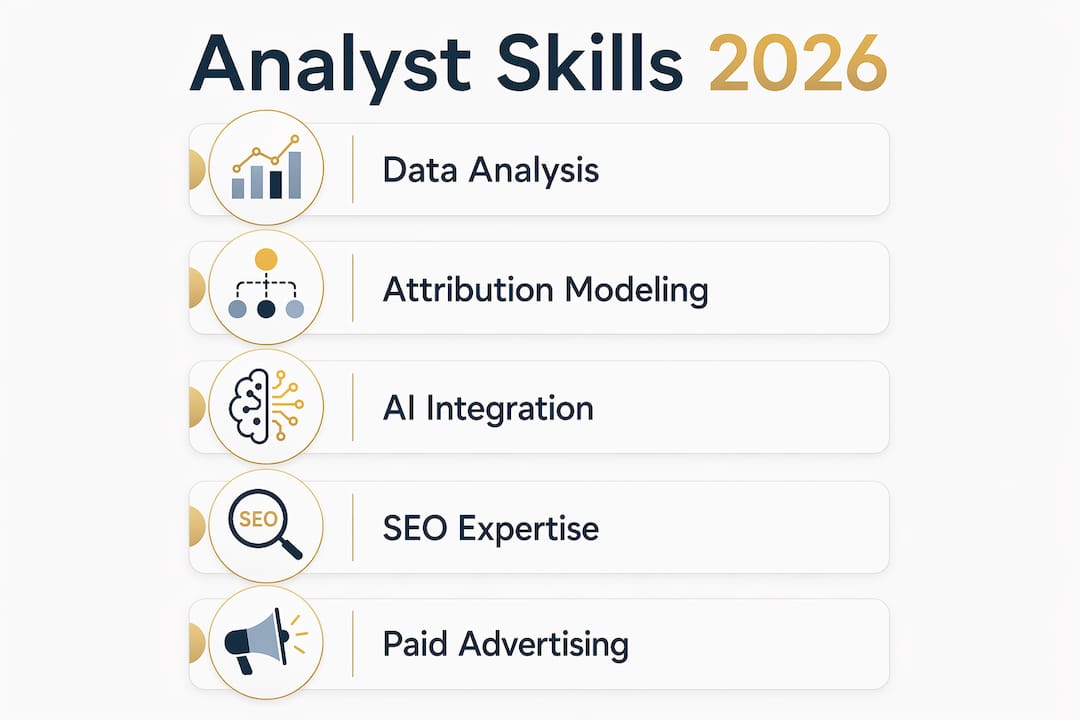
Employers screen for a specific technical stack. Proficiency in Google Analytics 4, Google Ads, Meta Ads, and data visualisation tools is the baseline requirement for most roles in 2026. SQL sits just behind these, used to query raw data sets that platform dashboards cannot surface on their own.

The experience bracket most employers target is 2–5 years. That said, hiring managers increasingly accept candidates without formal degrees when candidates demonstrate tool mastery and real project experience. A portfolio showing live campaign analysis carries more weight than a certificate alone.
SEO understanding is now expected, not optional. Analysts who can read organic search data alongside paid media results give businesses a complete picture of channel performance. AI tools are entering this workflow too, helping analysts process larger data sets faster and surface patterns that manual review would miss.
Key technical skills for the role include:
- Google Analytics 4 for traffic, behaviour, and conversion tracking
- Google Ads and Meta Ads dashboards for paid media performance
- SQL for querying databases and building custom reports
- Data visualisation tools such as Looker Studio or Tableau for presenting findings
- Google Tag Manager for managing tracking and event configuration
- SEO tools for organic search analysis alongside paid channel data
Pro Tip: Build your portfolio around real business problems, not tutorial datasets. Analysts who show they improved a cost per acquisition or identified a leaking funnel stage stand out immediately to hiring managers.
Salaries reflect the technical demand. Entry-level analysts average $58,709 annually, with the overall range sitting between $51,000 and $92,000 depending on experience and market. That range signals strong career progression for those who build depth quickly.
How do digital marketing analysts drive ROI and influence strategy?
The analyst’s primary job is to turn channel data into decisions. The role has evolved from basic reporting to include advanced attribution modelling, conversion rate optimisation, and funnel analysis focused directly on ROI. That shift means analysts now sit in strategy conversations, not just in reporting queues.
Multi-channel measurement is where this influence shows up most clearly. An analyst tracking a service business across Google Ads, Meta Ads, email, and organic search can identify which channel drives the highest quality leads, not just the most clicks. That distinction changes where budget goes.
Top analysts prioritise conversion velocity and Customer Lifetime Value over vanity metrics like impressions or page views. Focusing on these metrics shifts budget allocation toward channels and audiences that generate long-term revenue. Understanding why analytics drives better ROI is the foundation of every sound media investment decision.
The table below shows the key metrics analysts use to assess ROI across common digital channels.
| Channel | Primary metric | Secondary metric | Strategic question answered |
|---|---|---|---|
| Google Ads | Cost per conversion | Quality Score | Is paid search generating profitable leads? |
| Meta Ads | Return on ad spend | Cost per lead | Which audience segments convert at the best rate? |
| SEO | Organic conversion rate | Keyword ranking movement | Is organic traffic generating revenue, not just visits? |
| Email marketing | Revenue per email sent | List churn rate | Is the list growing in value or decaying? |
| Social media | Engagement to lead rate | Follower growth rate | Is social content moving prospects toward purchase? |
Cohort analysis adds another layer. By grouping customers by acquisition date or channel, analysts can track how different segments behave over time. A cohort acquired through Google Ads in march may retain at a higher rate than one acquired through a Meta campaign in june. That insight directly informs the next media plan.
What differentiates a digital marketing analyst from a digital marketing specialist?
The distinction is one of accountability and focus. Analysts interpret data and produce insight, while specialists own campaign execution and are accountable for channel results. Confusing these roles creates gaps in both strategy and execution.
A digital marketing specialist runs the Google Ads account, writes the ad copy, and manages the bid strategy. The analyst reviews the performance data, identifies patterns across campaigns, and recommends structural changes. Both roles are necessary. Neither replaces the other.
The difference also shows up in career progression. Analysts tend to move toward roles like marketing data analyst, performance marketing analyst, or head of analytics. Specialists often progress toward channel leadership or digital marketing management. Understanding which path fits your strengths early saves years of misaligned effort.
Role clarity matters for business owners too. When one person is expected to run campaigns and analyse results simultaneously, both tasks suffer. The analyst needs clean data and time to think. The specialist needs clear KPIs and execution authority.
Key distinctions at a glance:
- Analyst: interprets data, identifies trends, recommends strategy changes
- Specialist: executes campaigns, manages platforms, owns channel performance
- Overlap: both need platform literacy and an understanding of business goals
- Risk of confusion: blurred accountability leads to poor data hygiene and reactive decision-making
Pro Tip: If you run a service business and cannot afford both roles, hire the analyst first. Clean data and clear insight will tell you exactly where to spend your execution budget.
What challenges do digital marketing analysts face and how can they overcome them?
Poor data infrastructure is the most common obstacle analysts face. Fragmented tracking impairs optimisation because decisions built on incomplete data lead to misallocated budgets and missed opportunities. A business running Google Ads without proper conversion tracking is flying blind regardless of how talented the analyst is.
Google Tag Manager solves much of this when implemented correctly. It centralises event tracking across a website, reducing the risk of missed conversions and inconsistent data. Analysts who understand Tag Manager can audit and fix tracking gaps without relying on a developer for every change.
Vanity metrics are the second major trap. Impressions, follower counts, and raw traffic numbers feel meaningful but rarely connect to revenue. Clean, standardised data infrastructure combined with a focus on conversion-oriented metrics is what separates analysts who influence decisions from those who produce reports nobody acts on.
Practical steps to improve data quality include:
- Audit all conversion events in Google Analytics 4 and confirm they fire correctly before any campaign goes live.
- Standardise UTM parameters across every paid channel so source and medium data is consistent.
- Build a single reporting dashboard that pulls from all channels, removing the need to reconcile separate platform reports manually.
- Review data governance quarterly, especially after website updates that can break existing tags.
How do analysts integrate AI, SEO, and paid advertising insights?
AI and machine learning now support the analyst’s workflow at every stage. AI tools enhance campaign performance prediction and optimisation, reducing the time analysts spend on pattern recognition and freeing them to focus on strategic interpretation. Google’s Performance Max campaigns, for example, use machine learning to allocate budget across channels automatically. The analyst’s job becomes auditing those decisions and feeding the algorithm better signals.
SEO analytics has grown into a core analyst responsibility. Organic search data from tools like Google Search Console reveals which queries drive qualified traffic, where rankings are slipping, and which pages convert visitors into leads. Analysts who combine this data with paid search results can identify keyword gaps and avoid bidding on terms that organic search already wins cheaply.
AI-driven SEO, sometimes called GEO (Generative Engine Optimisation), is an emerging priority. Getting a brand mentioned in AI-generated answers from tools like ChatGPT, Perplexity, and Google’s AI Overviews requires the same fundamentals as traditional SEO: authoritative content, strong backlinks, and clear entity signals. Analysts who track brand mentions across large language models are already ahead of most competitors.
Paid social and Google Ads analysis rounds out the picture. Analysts as growth architects merge data from paid, organic, and social channels to build a complete view of customer acquisition cost and lifetime value. A business running Meta Ads for a beauty clinic, Google Ads for search intent, and an email nurture sequence needs an analyst who can read all three together, not in isolation. That integrated view is where the real digital marketing strategy gains its power.
Key takeaways
A digital marketing analyst drives business growth by combining clean data infrastructure, advanced attribution methods, and cross-channel insight to turn marketing spend into measurable revenue.
| Point | Details |
|---|---|
| Role has expanded significantly | Analysts now lead attribution modelling, cohort analysis, and conversion rate work, not just reporting. |
| Technical stack is non-negotiable | Google Analytics 4, Google Ads, Meta Ads, SQL, and data visualisation tools are baseline requirements. |
| Analyst differs from specialist | Analysts interpret data and recommend strategy; specialists execute campaigns and own channel results. |
| Data quality determines insight quality | Fragmented tracking and vanity metrics undermine every analysis; clean infrastructure is the foundation. |
| AI and SEO are now core analyst skills | Integrating AI tools, GEO, and organic search data alongside paid media gives businesses a complete growth picture. |
The analyst role is more strategic than most businesses realise
Most business owners I speak with think of a digital marketing analyst as the person who checks the numbers after a campaign ends. That framing undersells the role by a wide margin. The best analysts I have worked with shape campaigns before they launch. They define the measurement framework, set the conversion events, and establish what “success” actually means before a single dollar is spent.
The shift toward AI in marketing has made this even more pronounced. When platforms like Google and Meta automate bidding and placement, the analyst becomes the human check on machine decisions. They ask whether the algorithm is optimising for the right outcome, not just the easiest one to measure. That is a genuinely strategic function, not a reporting task.
My honest observation after years in this space is that businesses underinvest in analytics and then wonder why their ad spend feels unpredictable. The step-by-step path to measurable growth always starts with knowing what you are measuring and why. An analyst who understands attribution, data governance, and cross-channel behaviour is not a cost centre. They are the reason your marketing budget compounds over time instead of leaking.
, Business Warriors | Digital Marketing Agency
How Jarrodharman helps you build analytics-driven growth
Jarrodharman works with service businesses, e-commerce brands, and enterprises across Australia that want their marketing spend to produce clear, measurable results. The Marketing Vortex method integrates SEO, Google Ads, Meta advertising, email, and social media into one connected system where every channel feeds the others and every result is tracked.

If your business is running paid ads without a clear attribution model, or your reporting shows traffic but not revenue, that is a data infrastructure problem with a practical fix. Jarrodharman’s team builds the tracking, reporting, and strategy layer that turns your marketing activity into a growth engine you can actually read. Explore Jarrod’s approach to digital growth and see how the right analytics foundation changes what is possible for your business.
FAQ
What does a digital marketing analyst do?
A digital marketing analyst interprets data from channels like Google Ads, Meta Ads, SEO, and email to identify what is working and recommend changes that improve campaign performance and ROI.
What qualifications do you need to become a digital analyst?
Employers primarily require 2–5 years of experience and proficiency in tools like Google Analytics 4 and data visualisation platforms. Hiring managers increasingly accept candidates without degrees if they demonstrate real project experience.
How does a marketing data analyst differ from a digital marketing specialist?
An analyst focuses on data interpretation and strategic recommendations, while a specialist owns campaign execution and channel results. The two roles are complementary, not interchangeable.
What metrics do performance marketing analysts prioritise?
Top analysts focus on conversion velocity, Customer Lifetime Value, and cost per acquisition rather than vanity metrics like impressions or follower counts, because these metrics connect directly to revenue.
How is AI changing the digital marketing analyst role?
AI tools now support campaign performance prediction and pattern recognition, freeing analysts to focus on strategic interpretation. Emerging skills like GEO (Generative Engine Optimisation) are becoming part of the analyst’s core responsibilities.