


More than 85 percent of Australian businesses in beauty, wellness, and service industries report increased sales from well-planned social media influencer campaigns. For female entrepreneurs, staying ahead means understanding exactly how these powerful partnerships drive genuine customer engagement. This guide breaks down practical influencer strategies and compliance essentials tailored for Australian brands to help you build lasting success through expert digital collaborations.
Table of Contents
- Defining Social Media Influencer Marketing
- Types Of Influencers And Campaign Models
- How Influencer Partnerships Work
- Legal Compliance And Advertising Rules
- Risks, Mistakes, And How To Avoid Them
- Crafting Solid Influencer Agreements
Key Takeaways
| Point | Details |
|---|---|
| Influencer Marketing Definition | Brands collaborate with online personalities to promote products, creating authentic connections that impact consumer behaviour. |
| Types of Influencers | Different tiers, such as Mega, Macro, Micro, and Nano influencers, offer varying degrees of reach and engagement for campaigns. |
| Partnership Process | Successful influencer partnerships involve clear communication, defined deliverables, and mutual respect to achieve desired outcomes. |
| Legal Compliance | Australian regulations require transparent disclosure of sponsored content to ensure consumer protection and advertising integrity. |
Defining social media influencer marketing
Social media influencer marketing represents a strategic digital approach where brands partner with online personalities who have substantial follower bases to promote products and services. These marketing activities leverage individuals with significant social media presence to impact consumer attitudes and purchasing decisions through authentic, engaging content.
At its core, influencer marketing transcends traditional advertising by establishing genuine connections between brands and audiences. Influencers function as intermediaries who translate brand messages into relatable narratives, utilising their established trust and parasocial relationships with followers. Partnerships aim to enhance brand awareness and strategically engage targeted consumer segments across diverse digital platforms.
The landscape of influencer marketing encompasses multiple tiers of content creators, ranging from macro-influencers with hundreds of thousands of followers to micro-influencers with niche, highly engaged audiences. Each tier offers unique advantages for brands seeking targeted communication strategies. Successful influencer marketing requires careful alignment between the influencer’s personal brand, audience demographics, and the product or service being promoted.
Expert Tip: When selecting influencers, prioritise alignment of values and authentic engagement over raw follower numbers to ensure meaningful brand connections.
Types of influencers and campaign models
Influencer marketing encompasses diverse categories, ranging from Mega and Macro to Micro and Nano influencers, each offering unique strategic advantages for Australian brands. Mega influencers boast massive follower counts typically exceeding 1 million, delivering extensive brand visibility but often at higher costs. Macro influencers, with follower bases between 100,000 to 1 million, provide a balanced approach of broad reach and targeted engagement.
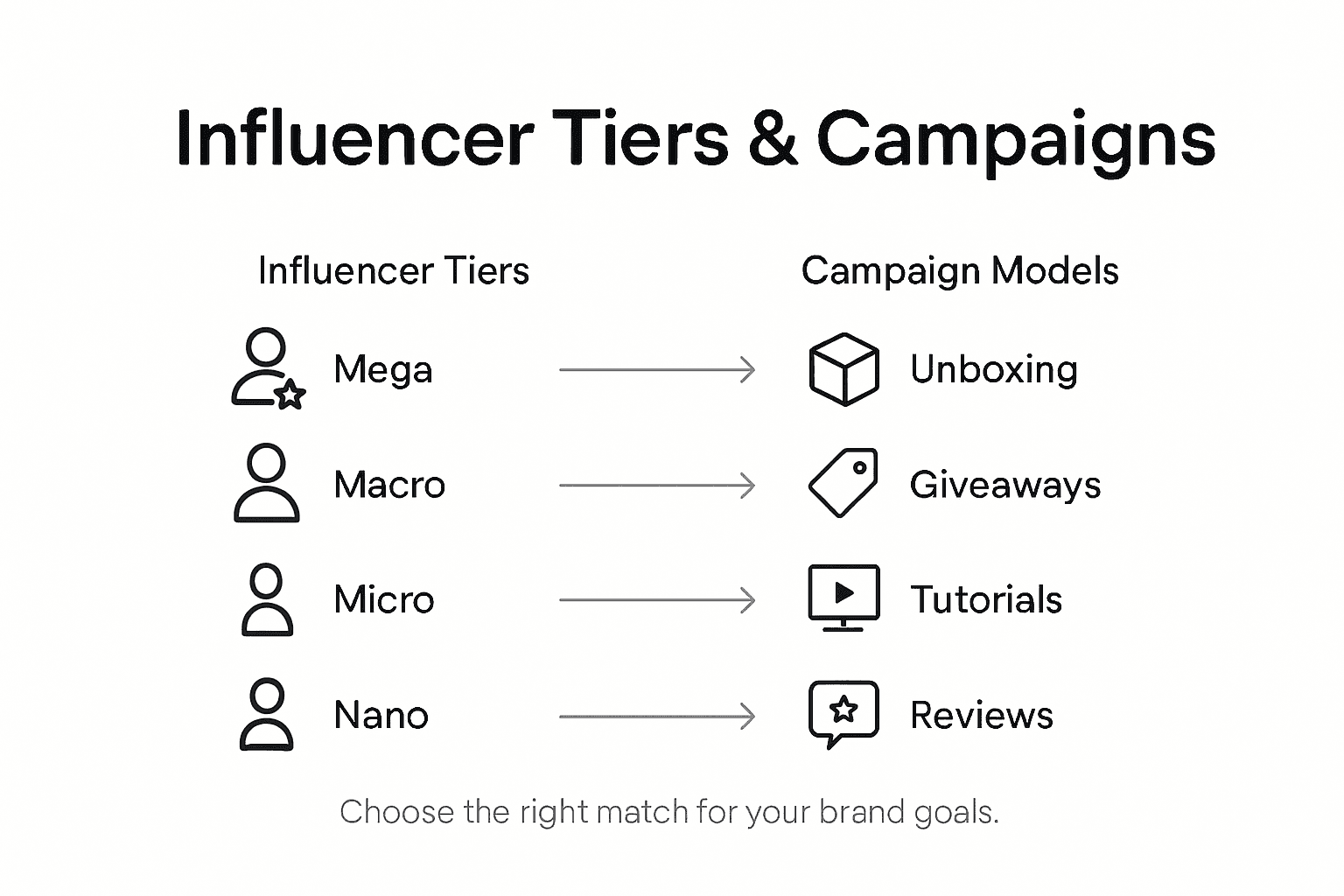
Micro and Nano influencers represent increasingly important segments in contemporary digital marketing strategies. Micro-influencers, with 10,000 to 100,000 followers, specialise in niche markets and demonstrate significantly higher engagement rates. Nano influencers, typically having 1,000 to 10,000 followers, excel in hyperlocal markets and offer exceptional authenticity and community trust. Campaign models vary based on influencer characteristics, targeting specific consumer segments through strategic matching.
Here’s a summary of influencer types and their main benefits for brands:
| Influencer Type | Follower Range | Key Benefit |
|---|---|---|
| Mega | Over 1 million | Massive reach, national influence |
| Macro | 100,000–1 million | Strong balance of reach and engagement |
| Micro | 10,000–100,000 | High engagement in niche markets |
| Nano | 1,000–10,000 | Authenticity, hyperlocal targeting |
Additional influencer categories include specialist content creators like Blog influencers, Vlogging influencers, and Gaming influencers. Blog influencers generate SEO-rich content, Vlogging influencers create dynamic video narratives, while Gaming influencers tap into tech-savvy communities. Each category demands tailored approaches considering platform dynamics, audience demographics, and specific brand objectives.
Expert Tip: Prioritise influencer alignment with your brand values and audience over follower count, focusing on genuine engagement and authentic content creation.
How influencer partnerships work
Influencer partnerships represent a strategic collaboration between brands and digital content creators designed to leverage authentic audience connections. These marketing partnerships leverage unique strategies for brand promotion through carefully negotiated content creation, performance metrics, and mutual value exchange. Typically, partnerships begin with comprehensive research to identify influencers whose audience demographics, content style, and personal brand align closely with the company’s marketing objectives.
The partnership process involves multiple critical stages, including initial outreach, negotiation of collaboration terms, content planning, and performance tracking. Brands usually establish clear deliverables such as specific content types (Instagram posts, YouTube videos, TikTok reels), required messaging points, brand hashtag usage, and engagement expectations. Compensation models vary widely, ranging from flat-rate payments to performance-based commissions, product exchanges, affiliate marketing arrangements, and long-term brand ambassadorship contracts.

Successful influencer partnerships demand transparency, clear communication, and mutual respect. Brands must provide comprehensive briefs outlining campaign goals, key messaging, brand guidelines, and creative freedom parameters. Influencers, in turn, bring their unique storytelling abilities, audience trust, and platform-specific content creation expertise. The most effective partnerships create symbiotic relationships where both parties benefit – the brand gains authentic reach and credibility, while the influencer receives financial compensation and potential career opportunities.
Expert Tip: Develop detailed partnership agreements that balance brand requirements with influencer creative autonomy to ensure genuine, engaging content that resonates with target audiences.
Legal compliance and advertising rules
Influencer marketing in Australia operates under strict regulatory frameworks designed to protect consumers and maintain advertising transparency. Australian Consumer Law mandates comprehensive disclosure requirements for sponsored content and marketing partnerships, compelling both brands and influencers to adhere to rigorous legal standards that prevent misleading commercial communications.
The Australian Competition and Consumer Commission (ACCC) enforces specific guidelines that require explicit disclosure of commercial relationships. Influencers must use clear labelling mechanisms such as #ad, #sponsored, or equivalent transparent indicators that immediately signal the commercial nature of the content. These disclosure requirements extend across all digital platforms, including Instagram, YouTube, TikTok, and personal blogs, ensuring audiences can readily distinguish between organic content and paid promotional material.
Legal compliance encompasses multiple dimensions beyond simple disclosure. Brands and influencers must collectively ensure that promotional content remains truthful, substantiated, and free from potentially misleading claims. Platforms provide integrated tools to assist with compliance, complementing self-regulatory codes established by industry bodies like the Australian Association of National Advertisers (AANA). Formal partnership agreements should comprehensively outline expectations, content ownership, payment terms, and mutual legal responsibilities to mitigate potential regulatory risks.
Expert Tip: Consult a legal professional specialising in digital marketing to develop robust partnership agreements that comprehensively address disclosure and compliance requirements.
Risks, mistakes, and how to avoid them
Systematic analysis of influencer marketing reveals multiple critical risks that Australian brands must proactively manage. The most significant threats include fake follower networks, inadequate sponsorship disclosures, poor influencer selection, and potential brand reputation damage. Brands must develop sophisticated screening processes to verify an influencer’s authentic engagement, audience demographics, and content alignment before initiating partnerships.
Australian marketers frequently encounter strategic mistakes that can undermine campaign effectiveness. Common pitfalls include prioritising follower count over genuine audience engagement, sending vague campaign briefs, and misaligning target audience segments. Effective remediation strategies involve focusing on authentic engagement metrics, developing comprehensive campaign instructions, and strategically matching influencer profiles with specific audience characteristics.
Risk mitigation requires a multifaceted approach encompassing thorough influencer vetting, clear contractual frameworks, and ongoing performance monitoring. Brands should implement rigorous background checks, establish detailed content guidelines, and maintain flexible collaboration models that allow creative expression while protecting brand integrity. Developing long-term relationships with proven influencers can significantly reduce potential marketing risks and enhance campaign predictability.
Expert Tip: Conduct comprehensive influencer audits, including detailed content history reviews and audience engagement analysis, before finalising any marketing partnerships.
Crafting solid influencer agreements
Social media influencer contracts serve as comprehensive legal frameworks that meticulously define the collaborative relationship between brands and content creators. These agreements establish precise parameters around content creation, deliverables, compensation structures, and intellectual property rights, ensuring both parties understand their specific responsibilities and expectations throughout the marketing partnership.
A robust influencer agreement must incorporate multiple critical components to provide comprehensive protection and clarity. Key elements should include detailed scope of work, specific content deliverables, precise timelines, payment terms, usage rights, exclusivity clauses, performance metrics, and compliance requirements. Effective contracts streamline communication, mitigate potential risks, and establish clear boundaries for content creation and brand representation, ultimately protecting the interests of both the brand and the influencer.
Australian brands must pay particular attention to local regulatory requirements when drafting influencer agreements. The documentation should explicitly address mandatory disclosure practices, outline content approval processes, specify usage rights for created materials, and include provisions for potential contract termination. Comprehensive agreements also need to account for potential performance variations, establishing clear key performance indicators and mechanisms for measuring campaign effectiveness.
Use this quick reference for critical elements in an Australian influencer contract:
| Contract Element | Purpose | Business Impact |
|---|---|---|
| Scope of Work | Defines deliverables and roles | Minimises disputes and confusion |
| Payment Terms | Outlines compensation details | Ensures timely, fair payments |
| Disclosure Requirements | Details legal compliance steps | Reduces risk of regulatory fines |
| Termination Clauses | Specifies exit conditions | Protects both brand and influencer |
| Performance Metrics | Sets benchmarks for success | Aids campaign evaluation |
Expert Tip: Engage a legal professional specialising in digital marketing to review and refine your influencer contract, ensuring comprehensive coverage of all potential scenarios and compliance requirements.
Unlock the True Power of Social Media Influencer Marketing for Your Australian Business
Are you struggling to find authentic influencer partnerships that truly connect with your target audience and drive measurable growth This article highlights the critical challenges Australian brands face such as aligning influencer values, vetting genuine engagement, and navigating strict legal compliance. At Business Warriors, we understand that success in social media influencer marketing requires more than surface-level metrics. It demands a strategic, integrated approach that balances creative storytelling with transparent, results-driven systems.
Our innovative Marketing Vortex method merges influencer collaborations with proven digital advertising, SEO, and social media strategies to give your business a resilient marketing framework. By partnering with us you get expert guidance on crafting solid influencer agreements, avoiding common pitfalls, and leveraging authentic content that builds trust and boosts conversions. Whether you are a salon, clinic, retail business, or service provider ready to scale, we tailor our strategy to match your unique goals and budget.
Discover how to confidently navigate the complex influencer marketing landscape and scale your sales with precision. Explore practical insights and exclusive strategies by visiting our Uncategorized Archives – Jarrod Harman or learn more about our holistic solutions at https://jarrodharman.com.

Are you ready to turn influencer marketing challenges into growth opportunities Connect with Business Warriors today and get started on a proven path to consistent leads and sustained success.
Frequently Asked Questions
What is social media influencer marketing?
Social media influencer marketing is a strategy where brands collaborate with online personalities who have large followings to promote products and services. It focuses on creating authentic connections between brands and audiences through relatable content.
What types of influencers exist, and how can they benefit my brand?
Influencers are categorized into Mega, Macro, Micro, and Nano influencers, each with varying follower counts and engagement levels. Mega influencers offer massive reach, while Micro and Nano influencers provide higher engagement and authenticity, making them valuable for targeted marketing efforts.
How do influencer partnerships typically work?
Influencer partnerships involve selecting an influencer that aligns with your brand, negotiating collaboration terms, and planning content creation. Clear deliverables, performance metrics, and compensation models are established to ensure both parties benefit from the relationship.
What legal compliance do I need to consider for influencer marketing?
Influencer marketing must adhere to strict guidelines requiring clear disclosure of sponsorship relationships. Influencers should use tags like #ad or #sponsored to disclose paid content, and brands should ensure that promotional messages are truthful and compliant with local regulations.
Recommended
- Influencer Marketing Strategies: Complete Guide – Jarrod Harman
- Influencer Marketing Advantages: Complete Guide – Jarrod Harman
- 10 Creative Social Media Marketing Ideas to Boost Engagement – Jarrod Harman
- Role of Online Marketing for Australian Businesses – Jarrod Harman
- Discover the Best Guest Posting Opportunities to Boost SEO – LSA SEO Agency