


Scrolling through your feed, it is easy to feel lost in a sea of competing brands, yet over 80 percent of Australian consumers admit that social media ads influence where they spend their money. For female business owners running clinics, spas, or retail outlets, the challenge is getting noticed and turning online interest into real bookings or purchases. This quick guide unpacks what makes social media advertising powerful for the australian service sector, offering actionable tips that help grow your business without overwhelming your daily operations.
Table of Contents
- What Is Social Media Advertising?
- Major Platforms and Ad Types Explained
- How Targeting and Reach Drive Success
- Proven Benefits for Service-Based Businesses
- Key Risks, Costs, and Common Pitfalls
- Alternatives to Social Media Ads Compared
Key Takeaways
| Point | Details |
|---|---|
| Power of Targeting | Social media advertising allows precise audience targeting based on demographics, interests, and behaviours, maximising marketing efficiency. |
| Engagement Opportunities | Engaging visual content on platforms enhances direct interaction with potential customers, fostering brand connections. |
| Cost-Effectiveness | Compared to traditional advertising, social media offers lower entry costs and the ability for small businesses to compete effectively. |
| Risks and Management | Businesses must navigate financial and reputational risks by ensuring ethical practices and implementing proper performance tracking. |
What Is Social Media Advertising?
Social media advertising represents a powerful digital marketing strategy that allows businesses to reach targeted audiences directly through social networking platforms. Strategic digital marketing techniques enable companies to connect with potential customers using sophisticated targeting methods across platforms like Facebook, Instagram, LinkedIn, and Twitter.
At its core, social media advertising involves creating paid content designed to reach specific demographic groups based on detailed user data. Platforms provide robust targeting capabilities that let advertisers select audiences by age, location, interests, behaviours, and other precise characteristics. This means a beauty salon in Perth can show ads exclusively to women aged 35-50 within a 10-kilometre radius who have shown interest in wellness services.
The effectiveness of social media advertising stems from its unique ability to combine precise targeting with engaging visual and interactive content. Network advertising strategies utilise complex algorithms that analyse user data to deliver advertisements with remarkable precision. Businesses can track performance metrics in real-time, allowing for rapid adjustments to improve campaign effectiveness and return on investment.
Pro tip: Start with a small daily budget of $10-20 to test different audience targeting options before scaling up your social media advertising investment.
Major Platforms and Ad Types Explained
Digital advertising strategies have transformed the marketing landscape, with major social media platforms offering diverse advertising options for Australian businesses. Facebook, Instagram, LinkedIn, Twitter, and TikTok provide unique opportunities to reach targeted audiences through sophisticated ad formats and targeting mechanisms.
Each platform offers distinct ad types tailored to different marketing objectives. Facebook and Instagram, owned by Meta, provide photo, video, carousel, and story advertisements that allow businesses to showcase products and services creatively. LinkedIn specialises in professional targeting, enabling B2B companies to reach decision-makers through sponsored content and text ads. Twitter offers promoted tweets and trend advertising, while TikTok has become increasingly popular with its immersive video ad formats designed to capture younger demographic groups.
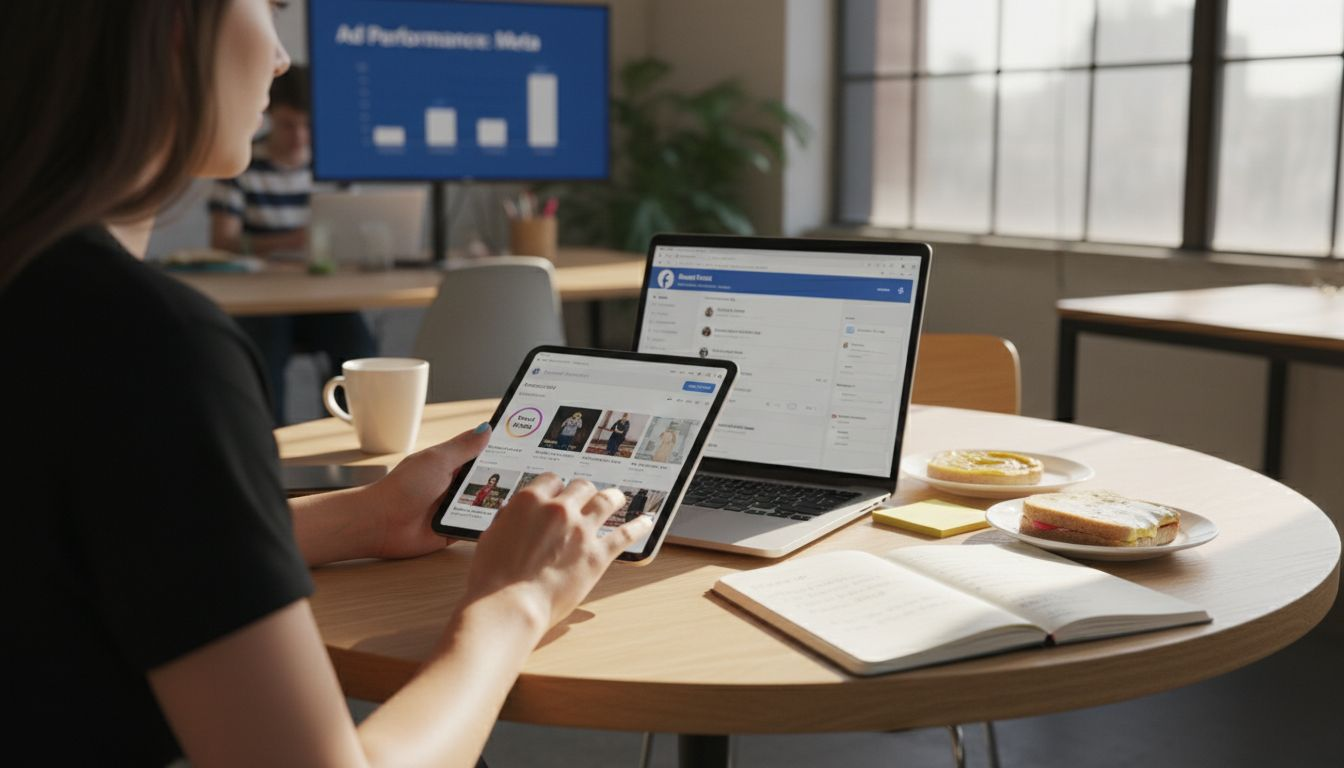
The targeting capabilities of these platforms are remarkably precise. Advertisers can segment audiences based on demographics, interests, behaviours, location, and even specific interactions with previous content. For service-based businesses in Australia, this means the ability to reach exact customer profiles – such as targeting women aged 35-50 interested in wellness services within a specific geographic region. Social network advertising has evolved to provide granular control over who sees your advertisements, maximising marketing efficiency and reducing wasted ad spend.
Pro tip: Experiment with different ad formats on each platform and allocate smaller test budgets to determine which audience and ad type delivers the most cost-effective results for your specific business.
Here’s a comparison of major social media platforms and their advertising strengths relevant for Australian service-based businesses:
| Platform | Ad Format Examples | Targeting Strengths | Best For |
|---|---|---|---|
| Photo, Video, Carousel | Detailed demographics, interests | Broad audience, brand visibility | |
| Stories, Reels, Photos | Interest and behaviour-based | Visual brands, young adults | |
| Sponsored content, Text | Professional job, company targeting | B2B services, professionals | |
| Promoted Tweets, Trends | Real-time interest and keyword | Timely updates, events | |
| TikTok | Short-form Video Ads | Younger demographics, interests | Engaging creative content |
How Targeting and Reach Drive Success
Consumer trust mechanisms are fundamental to successful social media advertising, transforming how Australian businesses connect with potential customers. Modern digital marketing relies on sophisticated targeting strategies that go beyond traditional broad-based approaches, enabling companies to reach precisely defined audience segments with remarkable accuracy.
The power of social media advertising lies in its ability to segment audiences with unprecedented detail. Businesses can now target customers based on complex criteria including age, location, interests, purchasing behaviours, income levels, and even specific online interactions. For a beauty clinic in Melbourne, this might mean displaying ads exclusively to women aged 35-50 who have shown interest in wellness services, demonstrating the remarkable precision of contemporary digital marketing techniques.
Reach and targeting work synergistically to maximize marketing effectiveness. Large-scale social media campaigns demonstrate the potential to influence consumer behaviours at a remarkably low cost per engagement. By crafting messages that resonate with specific audience segments, businesses can achieve higher conversion rates, build brand awareness, and generate more qualified leads without wasting resources on irrelevant viewers.
Pro tip: Create multiple ad variations targeting different audience segments and use A/B testing to identify which demographic responds most effectively to your specific marketing message.
Proven Benefits for Service-Based Businesses
Social media brand benefits transform how service-based businesses connect with potential clients in the digital landscape. For clinics, salons, wellness centres, and professional service providers across Australia, social media advertising offers an unprecedented opportunity to showcase expertise, build trust, and directly engage with target audiences.
Service businesses gain significant advantages through strategic social media marketing. By humanising their brand and creating authentic connections, companies can demonstrate their unique value proposition directly to potential clients. A physiotherapy clinic, for example, can share rehabilitation success stories, expert health tips, and behind-the-scenes glimpses that build credibility and trust. Direct customer communication channels eliminate traditional marketing intermediaries, allowing businesses to create more personalised and meaningful interactions with their audience.
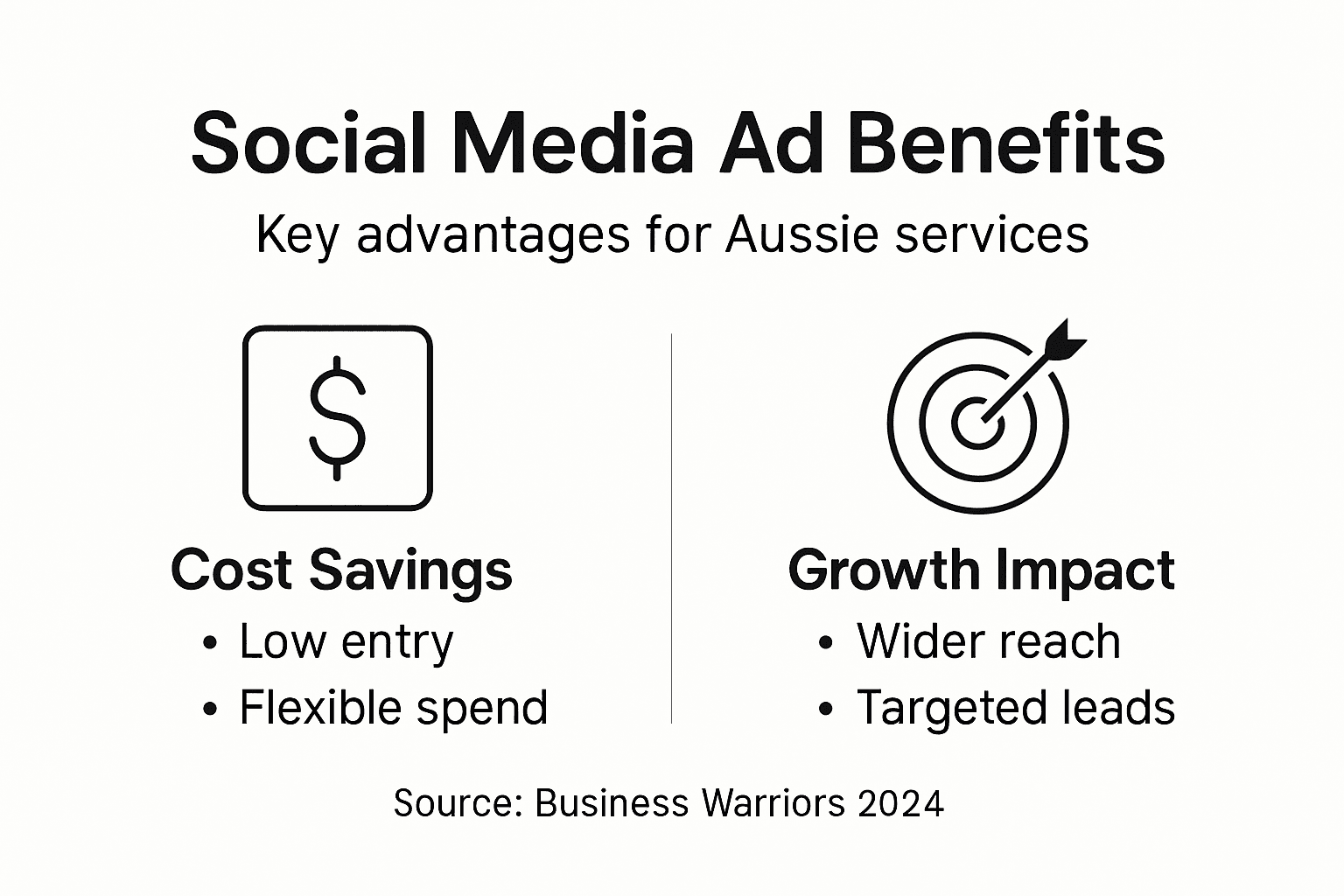
The cost-effectiveness of social media advertising makes it particularly attractive for service-based businesses with limited marketing budgets. Unlike traditional advertising methods, these platforms allow precise targeting, enabling businesses to reach exactly the right audience without wasting resources. Small to medium enterprises can now compete with larger competitors by crafting compelling content and leveraging sophisticated targeting options that connect them directly with potential clients who are most likely to need their services.
Pro tip: Create a content calendar that balances professional insights, client testimonials, and engaging behind-the-scenes content to maintain consistent audience interest and build genuine connections.
Key Risks, Costs, and Common Pitfalls
Consumer trust mechanisms reveal critical risks in social media advertising that Australian businesses must carefully navigate. While digital marketing offers immense opportunities, entrepreneurs need to understand potential pitfalls that could undermine their advertising investments and brand reputation.
Financial risks represent a significant concern for service-based businesses. Inefficient ad targeting can rapidly drain marketing budgets without delivering meaningful results. Common mistakes include broad audience selection, inadequate performance tracking, and failing to adjust strategies based on real-time data. Businesses might spend hundreds of dollars monthly on advertisements that generate minimal engagement or conversions, essentially throwing money into a digital void.
Psychological advertising risks extend beyond financial considerations. Unethical or manipulative advertising can damage brand perception and potentially lead to negative consumer reactions. Transparency becomes crucial strategy businesses must prioritise to maintain audience trust. This involves creating authentic content, avoiding misleading claims, and ensuring advertisements provide genuine value to potential customers rather than employing aggressive or exploitative marketing tactics.
Pro tip: Allocate 10-15% of your initial advertising budget for testing and learning, and always implement conversion tracking to measure precise return on investment.
The table below summarises key risks and benefits of social media advertising for Australian service businesses:
| Aspect | Potential Benefits | Key Risks and Pitfalls |
|---|---|---|
| Cost | Lower entry compared to traditional | Budget wastage from poor targeting |
| Engagement | Direct audience interaction | Negative feedback is highly visible |
| Targeting | High precision demographic filters | Privacy concerns, over-segmentation |
| Brand Building | Builds trust and authority | Reputation risk from missteps |
Alternatives to Social Media Ads Compared
Alternative internet advertising formats provide businesses with diverse marketing channels beyond traditional social media advertising. While platforms like Google Ads, email marketing, and display advertising offer unique opportunities, each comes with distinct advantages and limitations that Australian businesses must carefully evaluate.
Traditional digital advertising methods include search engine marketing, banner ads, sponsored content, and influencer collaborations. Search engine advertising through Google Ads allows businesses to target users based on specific search queries, offering high intent-based targeting. Email marketing provides direct communication with existing customers, enabling personalised messaging and potentially lower acquisition costs compared to social media platforms. However, these alternatives often lack the sophisticated targeting and engagement metrics that make social media advertising so powerful.
Alternative social media platforms present niche opportunities for specialised marketing approaches. Platforms like LinkedIn for professional networking, YouTube for video content, and industry-specific forums can offer targeted reach for businesses with specific audience demographics. Each alternative platform requires a nuanced understanding of its unique user base, content consumption patterns, and engagement mechanisms to maximise marketing effectiveness.
Pro tip: Diversify your digital marketing strategy by testing multiple advertising channels and allocating smaller budgets to experiment with different platforms before committing significant resources.
Unlock Real Social Media Advertising Results with Expert Guidance
If your Australian business is struggling to convert social media ad spend into consistent leads and sales, you are not alone. This article reveals how precise targeting and engaging content drive success but also highlights the risks of inefficient campaigns draining your marketing budget. Service-based businesses especially benefit from tailored, data-driven strategies that cut through noise and connect directly with prime customer profiles.
At Business Warriors, we understand these challenges. Our unique “Marketing Vortex” method integrates social media advertising with SEO, Google Ads, email marketing and more to build scalable sales systems for service businesses. Backed by proven results and a strong focus on transparency and client retention, we help businesses like salons, wellness centres and professional services maximise ROI while avoiding common pitfalls. Discover how to leverage your daily marketing budget smarter and grow confidently.
Explore practical insights on social media marketing in the Uncategorized Archives – Jarrod Harman and learn from expert case studies at Jarrod Harman.
Ready to transform your social media advertising into a powerful lead machine with a strategic partner by your side Get started today by visiting Jarrod Harman for personalised strategies that deliver measurable business growth.
Frequently Asked Questions
What is social media advertising?
Social media advertising is a digital marketing strategy that enables businesses to reach targeted audiences through paid content on social networking platforms. It offers the ability to connect with potential customers using advanced targeting methods.
How do targeting and reach impact the success of social media advertising?
Targeting and reach work together to enhance advertising effectiveness. By accurately segmenting audiences based on demographics, interests, and behaviours, businesses can achieve higher conversion rates and improve return on investment.
What are the major social media platforms for advertising?
The major platforms for social media advertising include Facebook, Instagram, LinkedIn, Twitter, and TikTok. Each platform offers unique ad types and targeting capabilities tailored to different marketing objectives and audience segments.
What are some common pitfalls of social media advertising?
Common pitfalls include inefficient ad targeting, inadequate performance tracking, and failing to adjust strategies based on real-time data. It’s essential for businesses to ensure transparency and avoid manipulative advertising tactics to maintain audience trust.