


Many Australian beauty and wellness businesses wonder why their social media efforts sometimes fall flat when attracting new partnerships or high-value clients. In B2B marketing, platforms like LinkedIn, Instagram, and Facebook serve unique roles well beyond just direct sales. Understanding the core purposes of B2B social media, like relationship-building and establishing trust, puts your salon, clinic, or spa in the best position to stand out and convert more online interest into tangible leads.
Table of Contents
- Defining Social Media’s Purpose In B2B
- Choosing Effective B2B Social Platforms
- Building Trust Through Content And Community
- Measuring ROI And Social Lead Generation
- Avoiding Common Social Media Pitfalls
Key Takeaways
| Point | Details |
|---|---|
| B2B Social Media Focus | In B2B, social media prioritises relationship-building and trust over immediate sales. |
| Platform Strategy | Select social media platforms where your potential clients engage to maximise marketing ROI. |
| Content for Trust | Consistent, valuable content enhances credibility and fosters long-term client relationships. |
| Measure Performance | Track key metrics, such as lead quality and engagement rates, to assess your social media ROI. |
Defining Social Media’s Purpose in B2B
Social media serves a fundamentally different role in B2B contexts than in B2C marketing. Rather than driving immediate impulse purchases, B2B social media focuses on relationship-building, trust establishment, and long-term client acquisition through strategic visibility and engagement.
For beauty and wellness businesses across Australia, understanding this distinction is crucial. Your salon, spa, or clinic competes in a market where decision-makers research online before committing to services or partnerships. Social media becomes your credibility platform.
Core Purposes of B2B Social Media
Digital transformation through social media platforms reveals that B2B firms rely on social channels for distinct objectives. These include:
- Building industry authority – Positioning your business as a knowledgeable leader in beauty and wellness services
- Generating qualified leads – Attracting decision-makers actively seeking your service offerings
- Nurturing client relationships – Maintaining ongoing communication with existing and prospective clients
- Gathering market insights – Understanding client needs, preferences, and pain points directly from your audience
- Supporting SEO and brand visibility – Strengthening your online presence across search engines and social networks
Unlike traditional advertising, B2B social media operates as a two-way conversation channel. Your followers aren’t just passive viewers; they’re potential referral sources, review advocates, and long-term business partners.
Why Social Media Matters for Your Specific Industry
Beauty and wellness businesses face particular challenges in lead generation. Your clients make decisions based on trust, visual appeal, and personal recommendations. Social media addresses all three simultaneously.
Consider how social media frameworks align communication strategies with business objectives. Your salon’s Instagram aesthetic, your clinic’s educational posts, and your spa’s client testimonials collectively tell a story about who you are and why clients should choose you.

Google’s ranking algorithms increasingly favour social signals and brand mentions across platforms. When your beauty brand appears consistently across multiple social channels, both algorithms and potential clients recognise your credibility.
Integration with Your Overall Marketing Strategy
B2B social media doesn’t operate in isolation. It works alongside Google Ads, SEO rankings, email marketing, and your website. Think of social media as one component of an integrated system—like the Marketing Vortex approach—where each channel reinforces the others.
When someone searches for “best med spa in Perth” on Google, they expect to find you. When they discover your business through a Google Ads campaign, they’ll likely verify your credibility by checking your social profiles. When they see consistent, professional content across LinkedIn, Instagram, and Facebook, they move closer to booking.
Your B2B social media strategy succeeds when it converts profile visitors into qualified leads and long-term clients through consistent, professional engagement.
Pro tip: Audit your current social presence from a potential client’s perspective—what story does your profile tell about your business authority and service quality? Identify gaps where competitors are outpacing you in visibility and engagement.
Choosing Effective B2B Social Platforms
Not all social media platforms serve the same purpose in B2B client acquisition. Your beauty, wellness, or service business needs to focus efforts where your potential clients actually spend time and where the platform’s features support lead generation.
Choosing the right platforms prevents wasted marketing budget and maximises your return on investment. For Australian business owners with limited time and resources, platform selection is strategic, not arbitrary.
Platform Selection Based on Your Goals
Relationship-oriented themes guide social media strategy in B2B settings, showing how different platforms fulfil distinct roles. Rather than spreading yourself thin across every channel, identify which platforms align with your specific objectives:
- LinkedIn – Professional networking, thought leadership, B2B partnerships, and industry credibility
- Instagram – Visual storytelling, before-and-after transformations, lifestyle content, and brand personality
- Facebook – Community building, local audience targeting, customer reviews, and customer service
- TikTok – Reaching younger decision-makers, trending educational content, and authentic brand voice
- YouTube – Tutorial content, testimonials, consultation explanations, and long-form educational material
Your med spa client researches treatments on Instagram and YouTube. Your salon’s corporate partnership prospect researches your business credibility on LinkedIn. Your clinic’s local patients find you through Facebook reviews. Each platform serves a different part of the client journey.
Below is a comparison of major B2B social platforms and their unique advantages for beauty and wellness businesses:
| Platform | Primary Strength | Typical Audience | Best Content Type |
|---|---|---|---|
| Industry networking | Business decision-makers | Thought leadership posts | |
| Visual appeal | Prospective clients, partners | Before-and-after images | |
| Local engagement | Community members | Reviews & service updates | |
| TikTok | Trend-driven outreach | Younger managers, creatives | Short tutorials, stories |
| YouTube | In-depth education | Curious prospects, researchers | Video explainers |
LinkedIn: The B2B Priority Platform
Professional networking platforms excel at lead generation for B2B companies, with LinkedIn standing as the most effective channel for business-to-business client acquisition. The platform’s algorithm favours business-focused content and connects you directly with decision-makers.
For beauty and wellness businesses, LinkedIn isn’t just for corporate meetings. Clinic directors seeking treatment partnerships, salon owners exploring product suppliers, and franchise owners evaluating marketing services all search LinkedIn. Your professional presence there signals credibility and stability.
Visual Platforms for Beauty and Wellness
Beauty and wellness industries live or die by visual representation. Instagram and TikTok allow you to showcase transformations, share client testimonials, and demonstrate your expertise through before-and-after imagery and short-form video content.
Google’s SEO algorithm increasingly favours brands with social presence and user-generated content. When prospective clients see your salon featured across Instagram, TikTok, and YouTube, search engine rankings improve alongside brand trust.
Local Presence Through Facebook
Facebook remains essential for local Australian businesses. The platform’s geo-targeting capabilities, business directory features, and review system make it invaluable for capturing local search intent and managing your online reputation.
Many beauty and wellness clients still use Facebook as their primary social network. Ignoring it means missing established local audiences and valuable review opportunities.
Your platform strategy succeeds when you concentrate resources on channels where your ideal clients actively engage and where platform features support your specific business objectives.
Pro tip: Audit where your current clients came from—which platforms led to bookings? Double down on those channels with consistent, optimised content whilst testing underperforming platforms with small content investments before deciding to exit.
Building Trust Through Content and Community
Trust isn’t built through sales pitches. It’s built through consistent, valuable content that demonstrates your expertise and shows you genuinely care about solving client problems. For B2B client acquisition, trust is the currency that converts prospects into long-term partners.
Consistent, informative, and interactive content creates stronger relational bonds essential for B2B trust-building. Your beauty, wellness, or service business competes not just on price or location, but on credibility and reliability demonstrated across social channels.
Content as Your Trust-Building Tool
Think of your social media content as a bridge between your business and prospective clients. Each post, video, or story is an opportunity to prove you understand their challenges and have solutions.
Effective B2B content on social media addresses specific client pain points:
- Educational posts – Explaining treatment options, skincare science, or service benefits
- Behind-the-scenes content – Showing your team, processes, and clinic environment
- Client testimonials – Featuring real results and satisfied client stories
- Problem-solution content – Addressing common questions or concerns your prospects face
- Industry insights – Sharing trends, research, or professional development in your field
When your med spa consistently posts about treatment outcomes, your clinic’s educational content about procedures, or your salon’s styling tips, prospects begin recognising you as a credible authority. Google’s algorithm and potential clients both reward this consistency.
Building Community Around Your Brand
Social media communities nurture trust and credibility across marketing channels, supporting both client acquisition and retention. Community doesn’t happen by accident—it’s built through genuine engagement and responsive communication.
Responding to comments, answering questions, and acknowledging client feedback signals that you value your audience. When prospects see active, friendly conversations on your social profiles, they perceive your business as accessible and client-focused.
Integrating Content with Your Broader Strategy
Your social media content works alongside Google Ads, SEO rankings, and email marketing. A prospect might discover your clinic through a Google search, verify your credibility through your social media presence, and then receive a retargeting email after visiting your website.
This integrated approach—where each channel reinforces the others—significantly improves conversion rates. Your content library becomes material for multiple platforms: a blog post becomes LinkedIn articles, Instagram carousels, and YouTube scripts.
Trust-building content succeeds when it consistently demonstrates your expertise, addresses client concerns, and creates opportunities for genuine community engagement across platforms.
Pro tip: Map out your content calendar around common client questions and pain points specific to your industry. Create content that answers these directly, then repurpose that content across multiple platforms to maximise reach and reinforce your authority.
Measuring ROI and Social Lead Generation
You can’t improve what you don’t measure. Many Australian beauty and wellness business owners invest in social media without tracking actual results—leads generated, conversion rates, or revenue attributed to specific platforms. This disconnect between effort and outcome wastes marketing budget.
Key performance indicators and measurement approaches quantify social media ROI accurately across B2B environments. Establishing clear metrics from the start transforms social media from a guessing game into a strategic, data-driven channel.
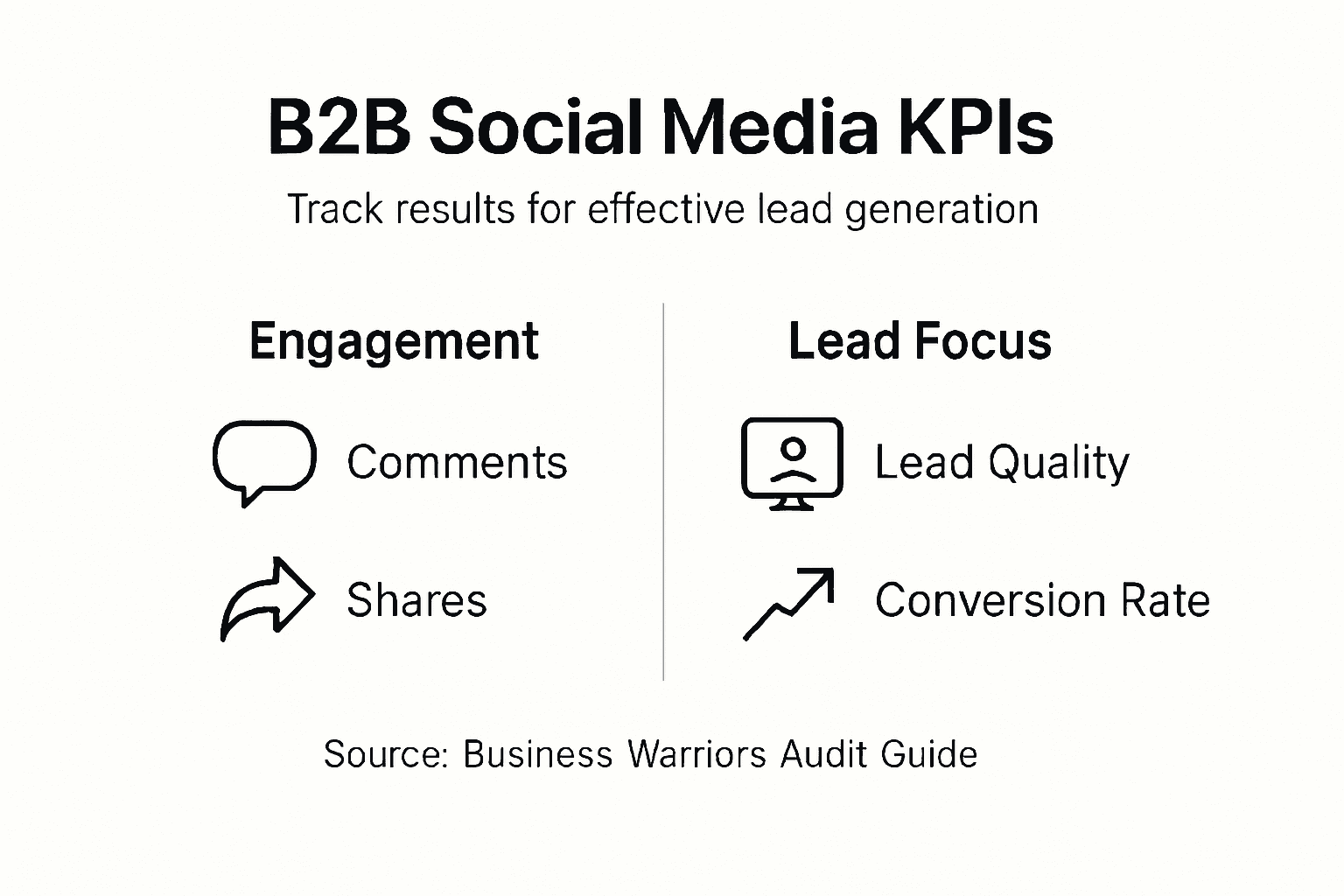
Essential Metrics for B2B Social Lead Generation
Tracking the right metrics reveals which social platforms and content types actually drive qualified leads. Start with these foundational measurements:
- Lead volume – Number of leads generated from each social platform monthly
- Lead quality – Percentage of leads that convert to paying clients
- Cost per lead – Total social media investment divided by leads generated
- Engagement rate – Comments, shares, and meaningful interactions on your content
- Click-through rate – Percentage of followers clicking links to your website or booking page
- Conversion rate – Percentage of social visitors who complete a desired action
For a med spa running Facebook Ads, you might discover that Instagram generates higher-quality leads despite lower volume. A salon might find TikTok reaches younger salon managers seeking wholesale partnerships. These insights only emerge through systematic tracking.
Setting Up Your Tracking System
B2B social media effectiveness depends on measuring messages that impact customer engagement and drive conversions. Most platforms provide basic analytics, but you’ll need additional tools for complete visibility.
Use platform-native analytics alongside Google Analytics and dedicated lead tracking tools. Implement unique landing pages or discount codes for each social platform, allowing you to attribute specific conversions back to their source.
Calculating Your Actual ROI
ROI calculation requires knowing your total investment and total revenue generated. If you spend $2,000 monthly on social media advertising and generate $15,000 in revenue from those leads, your ROI is 650 percent.
However, don’t ignore organic social contributions. A client might follow your Instagram for three months before booking—social media played a role, even without paid advertising.
Connecting Social Data to Business Outcomes
The ultimate metric is client lifetime value. A $50 booking matters less than understanding which clients return repeatedly and refer others. Track not just initial conversions, but repeat bookings and referrals originating from each social channel.
Google Ads and Facebook’s attribution models show how different touchpoints contribute to final conversions. Your Google search campaign might capture the final click, but social media built the initial awareness and trust.
ROI measurement succeeds when you track complete customer journeys from initial social discovery through repeat bookings and referrals.
Pro tip: Assign a unique tracking parameter or landing page to each social platform, then review your analytics monthly to identify which channels deliver the lowest cost per qualified lead—this reveals where to increase investment.
Avoiding Common Social Media Pitfalls
Most Australian beauty and wellness businesses start strong on social media, then abandon accounts or post inconsistently. Others invest heavily without clear strategy, wasting budget on platforms where their clients don’t engage. Common challenges in implementing social media include lack of clear strategy, poor content quality, and ineffective engagement.
Understanding these pitfalls before they derail your efforts saves time, money, and frustration. The good news: these mistakes are preventable with proper planning and awareness.
The Strategy Vacuum
Many businesses jump onto social media without defining why. You need clear objectives before posting your first photo. Are you generating leads? Building brand awareness? Driving bookings? Supporting customer service?
Without clarity, your content becomes scattered and your team confused about what success looks like. Each post should serve your defined business goals, not just fill your feed.
Posting Inconsistently or Too Infrequently
Consistency matters more than perfection. Posting sporadically trains your audience to ignore your profile. Algorithms on Instagram, Facebook, and LinkedIn favour accounts that post regularly, rewarding consistent creators with better reach.
A realistic posting schedule you maintain beats an ambitious one you abandon. For most beauty and wellness businesses, three to five quality posts weekly across platforms is sustainable and effective.
Ignoring Your Actual Audience
Misalignment between social strategy and business goals undermines effectiveness. Many businesses post content they think is interesting rather than content their prospects actually want.
Avoid these common mistakes:
- Posting only promotional content instead of educational or entertaining material
- Ignoring comments and messages from potential clients
- Using hashtags incorrectly or ignoring trending topics in your industry
- Creating content for Instagram when your B2B clients actually use LinkedIn
- Neglecting to respond to negative reviews or complaints
Poor Content Quality or Mismatched Branding
Blurry photos, inconsistent branding, and unprofessional captions damage credibility. A $50 investment in a smartphone tripod and basic editing software dramatically improves perceived quality and professional presence.
Your social profiles must reflect your brand standards consistently. Mismatched fonts, colours, or messaging confuse prospects and undermine trust.
Spreading Resources Too Thin
Managing five platforms poorly beats managing one platform excellently. Focus on platforms where your clients actually engage, then expand once you’ve mastered the fundamentals.
For most beauty and wellness businesses in Australia, Instagram and Facebook drive better results than managing LinkedIn, TikTok, Pinterest, and YouTube simultaneously as a solo operator.
Here’s a concise summary of key pitfalls to avoid for effective B2B social media management:
| Pitfall | Impact on Business | Recommended Fix |
|---|---|---|
| No clear strategy | Wasted resources | Set measurable objectives |
| Inconsistent posting | Reduced visibility | Maintain regular schedule |
| Mismatched branding | Loss of credibility | Use consistent materials |
| Overextending platforms | Poor engagement | Focus where clients engage |
| Ignoring feedback | Missed opportunities | Respond to comments promptly |
Avoiding pitfalls succeeds when you develop a clear strategy aligned with business goals, post consistently on platforms your clients use, and respond actively to audience engagement.
Pro tip: Audit your current social presence monthly, asking: which platforms generated actual client bookings? Which posts performed best? Double down on what works and eliminate underperforming platforms to concentrate resources where they generate measurable ROI.
Unlock Your B2B Social Media Potential with Proven Strategies
If your beauty, wellness, or service-based business struggles to convert social media presence into qualified leads and long-term clients you are not alone. As the article highlights, building trust and nurturing relationships across the right platforms is critical — but doing it consistently and analytically can feel overwhelming. Key pain points like unclear platform focus low engagement and weak content alignment are solved through integrated marketing systems that amplify your authority and maximise ROI.
At Business Warriors we specialise in helping Australian service businesses scale through our unique Marketing Vortex approach. This proven strategy combines SEO Google Ads social media management and email marketing into a seamless ecosystem designed to generate consistent leads and grow your client base. By focusing on platforms like LinkedIn Instagram and Facebook where your ideal clients engage and by measuring real ROI we turn social media from a guessing game into a powerful growth engine.
Ready to transform your social media from random posts into client generating authority?
Take the first step towards measurable growth today.
Explore how Jarrod Harman and Business Warriors can tailor winning strategies for your business at https://jarrodharman.com. Discover proven methods in online client acquisition that align digital marketing with your business goals. Connect with a community of action-oriented entrepreneurs through Jarrod’s social channels and unlock the full potential of social media for your B2B client acquisition.
Frequently Asked Questions
What is the primary purpose of social media in B2B client acquisition?
Social media in B2B contexts focuses on relationship-building, establishing trust, and acquiring long-term clients through strategic visibility and engagement.
How does social media help beauty and wellness businesses establish authority?
By sharing educational content, client testimonials, and industry insights, beauty and wellness businesses can position themselves as knowledgeable leaders in their field, thus building credibility.
What metrics should be tracked to measure the success of a B2B social media strategy?
Key metrics to track include lead volume, lead quality, cost per lead, engagement rate, click-through rate, and conversion rate, all of which help assess the effectiveness of social media efforts in generating qualified leads.
Which social media platforms are most effective for B2B client acquisition in the beauty and wellness industry?
LinkedIn, Instagram, Facebook, TikTok, and YouTube serve distinct purposes; for instance, LinkedIn is great for professional networking, while Instagram excels in visual storytelling and showcasing transformations.