


Running a service business means you’re brilliant at what you do, but keeping up with social media to attract clients and drive sales can feel overwhelming. You know social media matters, yet juggling posts, engagement, and strategy while serving clients leaves little time for consistent, effective online presence. Understanding the essential tasks of a social media manager transforms this challenge into opportunity. This guide walks you through the core responsibilities and practical steps to master social media management, helping you build genuine connections with your ideal clients and convert followers into loyal customers who book your services.
Table of Contents
- Understanding The Role Of A Social Media Manager
- Preparing Your Strategy And Content Plan
- Executing Daily Social Media Manager Tasks For Engagement
- Measuring Success And Optimising Your Approach
- How Professional Social Media Management Can Accelerate Your Business Growth
- FAQ
Key takeaways
| Point | Details |
|---|---|
| Strategic planning drives results | Developing a clear content strategy aligned with brand goals increases engagement and client acquisition by targeting the right audience on the right platforms. |
| Consistency builds trust | Posting 3-5 times weekly with a content calendar maintains audience interest and generates 30% more leads through reliable presence. |
| Engagement converts followers | Responding within 24 hours to comments and messages builds community trust and turns interactions into bookings. |
| Data guides improvement | Tracking metrics like reach, engagement rate, and link clicks reveals what content works, allowing continuous optimisation for better sales outcomes. |
| Professional support accelerates growth | Expert social media management tailored to service businesses delivers measurable results while you focus on serving clients. |
Understanding the role of a social media manager
A social media manager does far more than post pretty pictures. This role demands strategic thinking, creative execution, and constant adaptation to platform changes and audience behaviour. For women-led service businesses in Australia, particularly those targeting clients aged 35-50, a social media manager becomes the bridge between your expertise and the people who need it most.
The role begins with strategy development including brand goals, platform selection, audience research, and content calendar creation. This strategic foundation ensures every post serves a purpose, whether building awareness, nurturing relationships, or driving bookings. Without this framework, social media becomes random activity rather than purposeful marketing.
Core responsibilities include:
- Creating and curating content that resonates with your target audience’s values and pain points
- Managing multiple platform presences with tailored approaches for each channel
- Engaging authentically with followers through comments, messages, and community building
- Monitoring brand mentions and industry conversations to stay relevant
- Analysing performance data to refine strategy and improve results
- Staying current with platform algorithm changes and emerging trends
For service businesses, the social media manager role requires deep understanding of client psychology. Your ideal clients aren’t just scrolling for entertainment. They’re researching solutions, comparing options, and looking for businesses they can trust. Effective social media growth strategies speak directly to these decision-making moments.
Brand value alignment matters enormously. When your social media presence reflects your authentic business values and speaks to what your clients care about, engagement naturally increases. This isn’t about following generic templates. It’s about showcasing what makes your service business unique and why clients should choose you over competitors.
The advantages of social media for small businesses become tangible when strategy meets execution. Research shows that businesses using social media marketing see significant improvements in brand awareness, customer relationships, and revenue growth. The key lies in treating social media as a core business function, not an afterthought.
Preparing your strategy and content plan
Effective social media management starts with thorough preparation. Before posting a single piece of content, you need clarity on who you’re speaking to, what you’re saying, and why it matters to them. This groundwork separates successful campaigns from wasted effort.
Begin by researching your target audience deeply. What challenges keep them awake at night? What solutions have they already tried? Where do they spend time online? For women aged 35-50 seeking service providers, understanding their specific needs and aspirations allows you to craft messages that feel personally relevant rather than generic marketing noise.
Competitor research reveals gaps and opportunities. Analyse what similar businesses post, which content generates engagement, and where conversations happen. This isn’t about copying. It’s about identifying what resonates with your shared audience and finding your unique angle.
Defining your brand voice ensures consistency across all content. Are you warm and conversational? Professional and authoritative? Playful and creative? Your voice should reflect your business personality whilst appealing to your ideal clients. For service businesses, authenticity matters more than perfection. Clients want to work with real people they trust.

A consistent content calendar posting 3-5 times weekly maintains momentum without overwhelming your audience. This schedule provides regular touchpoints that keep your business top of mind when clients need your services. Map content themes to business goals: educational posts build authority, behind-the-scenes content humanises your brand, client success stories provide social proof, and promotional posts drive bookings.
Pro Tip: Schedule content in batches during focused work sessions rather than scrambling daily. This approach maintains consistency even during busy client periods and allows strategic planning rather than reactive posting.
Content planning should balance promotional and value-driven posts. The 80/20 rule works well: 80% educational, entertaining, or community-building content, 20% direct promotional messages. This ratio builds trust before asking for the sale. Tailored content addressing specific pain points your services solve naturally leads followers toward booking without feeling pushy.
Tools like content calendars, scheduling platforms, and template libraries streamline execution. However, flexibility remains crucial. Leave room to respond to trending topics, client questions, or timely opportunities. Planning a social media campaign requires structure with space for spontaneity.
Executing daily social media manager tasks for engagement
Daily execution transforms strategy into results. Consistent, authentic activity builds the relationships that convert followers into paying clients. For service businesses, this ongoing engagement demonstrates reliability and expertise whilst making your brand approachable.
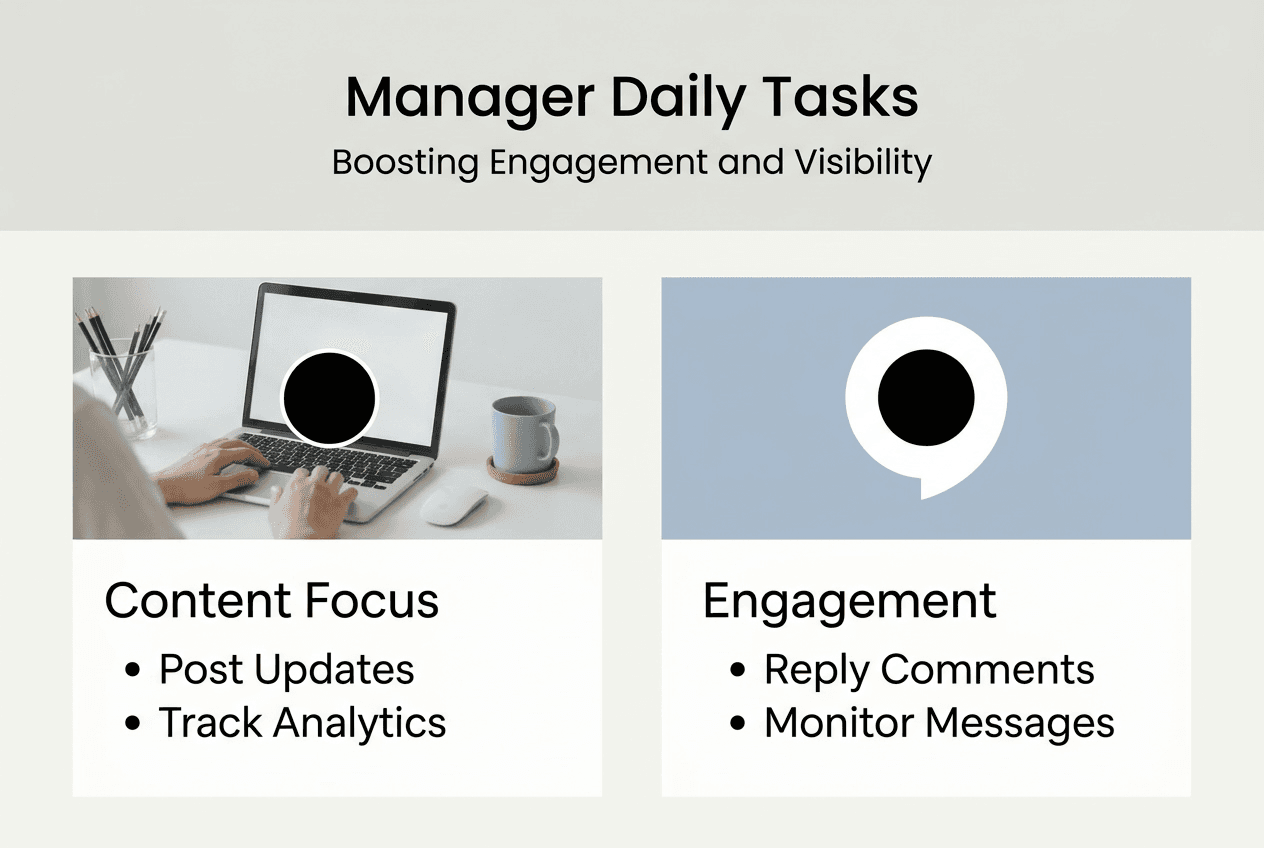
Your daily routine should include:
- Monitor all platforms first thing each morning to catch overnight comments, messages, and mentions requiring response
- Respond promptly and authentically to every comment and direct message, treating each interaction as a conversation rather than a transaction
- Engage proactively by commenting on relevant posts from clients, industry peers, and target audience members
- Post scheduled content at optimal times when your audience is most active
- Share real-time updates, behind-the-scenes moments, or timely insights that keep your presence dynamic
- Track daily performance to identify what’s working and adjust quickly
Community management separates mediocre from exceptional social media presence. Monitoring comments and responding to enquiries builds trust, with 79% of consumers expecting responses within 24 hours. This expectation creates opportunity. Businesses that respond quickly and helpfully stand out dramatically from competitors who ignore their audiences.
“79% of consumers expect a response within 24 hours on social media, making timely engagement a competitive advantage for service businesses seeking to convert followers into clients.”
Authentic engagement means more than generic replies. Reference specific details from comments, ask follow-up questions, and provide genuinely helpful information. When someone asks about your services, offer value first before pitching. This approach builds relationships that naturally lead to bookings.
Balance promotional content with genuine interaction. Yes, you need to showcase your services and encourage bookings. However, constantly selling pushes people away. Share educational content that helps your audience solve problems, celebrate client wins, participate in industry conversations, and show the human side of your business. Social media strategy tips to boost sales emphasise relationship building as the foundation for revenue growth.
Pro Tip: Set specific times for social media engagement rather than constantly checking platforms. This focused approach maintains consistency without becoming a distraction from client work.
Content creation forms the visible core of daily tasks. Whether photos, videos, stories, or text posts, quality matters more than quantity. Your content should educate, inspire, or entertain whilst subtly positioning your services as the solution. User-generated content, client testimonials, and case studies provide powerful social proof that influences buying decisions.
Measuring success and optimising your approach
Data transforms guesswork into informed strategy. Tracking performance through metrics like likes, shares, reach, impressions, and link clicks reveals what resonates with your audience and what falls flat. This insight allows continuous improvement rather than repeating ineffective tactics.
Key metrics to monitor include:
- Reach: How many unique people see your content
- Engagement rate: Percentage of audience interacting with posts through likes, comments, shares, or saves
- Click-through rate: How many people click links to your website or booking page
- Follower growth: Rate of new followers over time
- Conversion rate: Percentage of social media traffic that books services or takes desired actions
- Best performing content types: Which formats and topics generate strongest response
| Metric | What It Measures | Business Impact |
|---|---|---|
| Reach | Audience size exposed to content | Brand awareness and market penetration |
| Engagement Rate | Active interaction level | Content relevance and audience connection |
| Click-Through Rate | Traffic driven to website | Lead generation potential |
| Conversion Rate | Followers becoming clients | Direct revenue impact |
| Response Time | Speed of community management | Customer service quality perception |
Analyse patterns in your top-performing content. Do educational posts generate more engagement than promotional ones? Do videos outperform static images? Which posting times yield strongest response? This analysis guides future content creation, allowing you to double down on what works whilst phasing out ineffective approaches.
Optimisation tips for continuous growth:
- Test different content formats to discover what your specific audience prefers
- Experiment with posting times and frequencies to find your optimal schedule
- A/B test headlines, images, and calls-to-action to improve click-through rates
- Refine targeting based on which audience segments engage and convert most
- Update strategy quarterly based on accumulated performance data
- Stay current with platform algorithm changes that affect content visibility
Don’t chase vanity metrics. Thousands of followers mean nothing if they don’t engage or convert. Focus on metrics tied directly to business goals: qualified leads, consultation bookings, and client acquisition. Boosting your social media presence succeeds when it drives measurable business outcomes, not just bigger numbers.
Regular reporting keeps strategy aligned with results. Monthly reviews of key metrics, top-performing content, and conversion data inform adjustments. This disciplined approach ensures your social media efforts consistently contribute to business growth rather than becoming busy work disconnected from revenue.
How professional social media management can accelerate your business growth
Mastering social media manager tasks delivers results, but the time investment can overwhelm busy service business owners. You excel at serving clients, not necessarily at navigating algorithm changes, creating daily content, and analysing performance data. Professional social media management bridges this gap.
Expert management brings specialised knowledge, proven systems, and dedicated focus to your social media presence. Rather than squeezing posts between client appointments, you gain a strategic partner who understands digital marketing ideas to grow your business and executes them consistently. This expertise particularly benefits service businesses targeting specific demographics like women aged 35-50, where nuanced understanding of audience psychology drives results.
Professional services handle everything from strategy development through daily execution and performance optimisation. The best social media growth service providers tailor approaches to your specific business, audience, and goals rather than applying generic templates. This customisation ensures your social media presence authentically represents your brand whilst effectively attracting ideal clients.
Results-focused management delivers measurable outcomes: increased engagement, growing follower bases of qualified prospects, consistent lead generation, and ultimately more bookings. These social media strategy tips to boost sales become reality when executed by experienced professionals who understand both platform mechanics and business strategy.
Pro Tip: Even with professional management, stay involved in content approval and strategic direction to ensure your social media presence remains authentically yours whilst benefiting from expert execution.
FAQ
What tasks does a social media manager handle daily?
A social media manager’s daily tasks include posting scheduled content, monitoring all platforms for comments and messages, responding promptly to audience interactions, and engaging proactively with relevant accounts. They also track performance metrics, adjust strategies based on real-time data, and identify trending opportunities. These consistent activities build community, demonstrate reliability, and keep your brand visible to potential clients throughout their decision-making journey.
How often should content be posted for best results?
Aim to post 3-5 times per week for optimal engagement without overwhelming your audience. This frequency maintains consistent presence whilst allowing time to create quality content. Posting schedules should align with when your specific audience is most active online. Consistency matters more than volume. Regular posting builds audience expectations and habit, making your business a familiar, trusted presence that comes to mind when services are needed.
How can a social media manager help attract more clients?
A skilled social media manager attracts the right audience through targeted content addressing specific pain points your services solve. They build trust through consistent engagement, authentic communication, and valuable information that positions your business as the expert solution. By understanding your ideal client’s psychology and decision-making process, they create content that moves followers through awareness, consideration, and booking stages. Strategic calls-to-action, social proof, and timely responses convert engaged followers into paying clients.
What should I look for when hiring a social media manager?
Look for adaptability, strategic thinking, and demonstrated understanding of your target audience demographics and psychology. Social media evolves constantly, requiring managers who stay current with platform changes and emerging trends. Check for proven experience delivering measurable business outcomes, not just follower growth. Strong communication skills, creativity, and alignment with your brand values ensure authentic representation. Ask for case studies showing how they’ve helped similar service businesses increase client acquisition and revenue through social media.
How long does it take to see results from social media management?
Initial engagement improvements typically appear within 4-6 weeks of consistent, strategic posting and community management. However, meaningful business results like increased bookings and revenue generally require 3-6 months of sustained effort. Social media builds relationships and trust over time rather than delivering instant sales. Early wins include growing follower counts, increased post engagement, and more website traffic. These indicators eventually translate into consultation requests and client bookings as your presence establishes credibility and stays top-of-mind when services are needed.