


TL;DR:
- Lead generation agencies manage multi-channel outreach to deliver sales-ready prospects to sales teams. They use structured qualification methods like BANT to ensure leads have high conversion potential. Combining outbound and inbound strategies creates sustained growth and improves pipeline quality.
A lead generation agency is a specialised firm that manages the complete process of finding, qualifying, and delivering sales-ready prospects directly to your sales team. These agencies handle multi-channel outreach across cold email, LinkedIn, Google Ads, SEO, and Meta advertising, tracking performance metrics like cost per lead and sales qualified lead (SQL) volume. Understanding what lead generation actually involves separates businesses that fill their pipeline consistently from those that rely on referrals and hope. This guide covers how these agencies operate, what makes them effective, and how to choose one that fits your growth goals.
What is a lead generation agency and what services do they offer?

A lead generation agency manages the entire prospect-to-qualified-lead journey using multi-channel outreach tactics and inbound strategies, then delivers meeting-ready leads to your sales team. The industry term for this function is “demand capture,” and it sits at the top of your sales funnel. Most agencies combine outbound methods like cold email and LinkedIn with inbound channels like SEO, content marketing, and paid advertising.
The operational workflow typically follows this sequence:
- Infrastructure setup: Agencies configure dedicated sending domains with SPF, DKIM, and DMARC records, then run mailbox warm-up sequences. Skipping these steps causes permanent deliverability and sender reputation damage.
- List building and validation: Agencies build prospect lists based on your ideal customer profile (ICP), then validate contact data before outreach. A bounce rate above 2% on email sends can permanently damage sender reputation, making validation non-negotiable.
- Messaging and outreach: Copywriters craft sequences tailored to each segment, sent at 30–50 emails daily per mailbox for optimal deliverability.
- Reply handling and meeting booking: Agencies qualify interested replies, filter out uninterested prospects, and book confirmed meetings directly onto your calendar.
- CRM integration and reporting: Performance data feeds into your CRM, with weekly or monthly reporting on open rates, reply rates, and booked meetings.
- SEO and AI search visibility: Top agencies also build content that ranks in Google and earns brand mentions in AI tools like ChatGPT and Perplexity, which is now called Generative Engine Optimisation (GEO).
Pro Tip: Always insist that sending domains are registered in your business name, not the agency’s. If you part ways with the agency, you keep the domain history and avoid starting from zero.
How do lead generation agencies qualify leads?
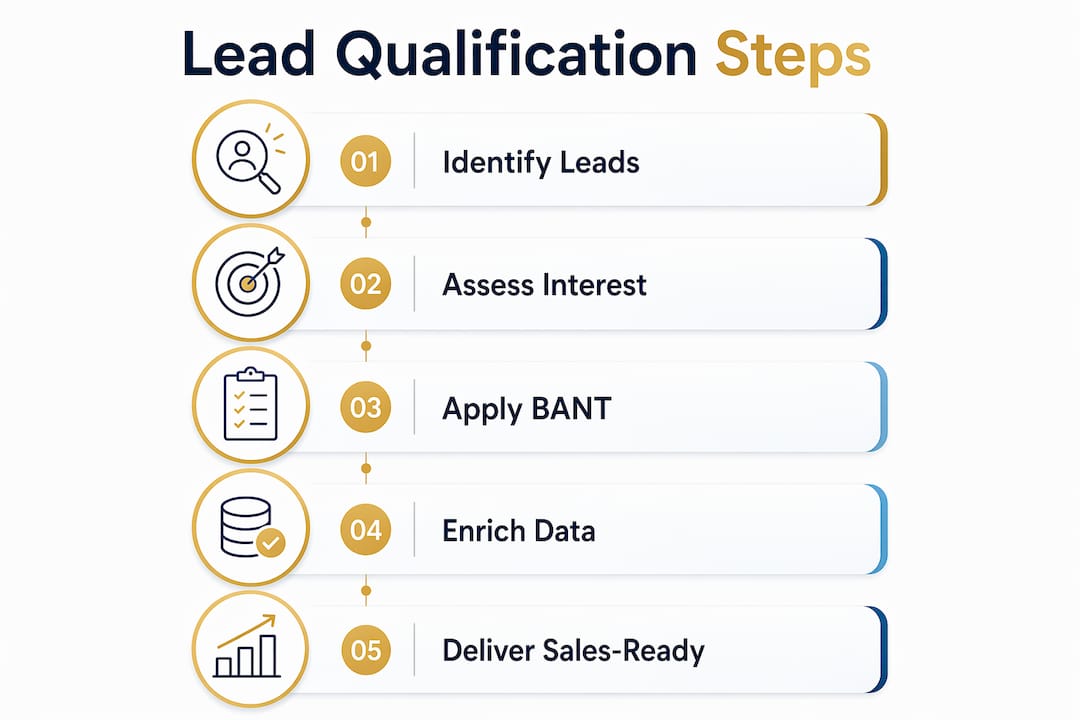
Lead qualification is where most agencies either earn their fee or waste your budget. The gold standard method is BANT qualification, which stands for Budget, Authority, Need, and Timeline. BANT-qualified appointments produce conversion rates three times higher and reduce cost per customer by 60% compared to unqualified lead lists.
The distinction between lead types matters enormously for your sales team’s time.
| Lead type | Definition | Conversion likelihood |
|---|---|---|
| Raw lead | Contact details only, no intent confirmed | Very low |
| Marketing qualified lead (MQL) | Has engaged with content or ads | Moderate |
| Sales qualified lead (SQL) | Meets BANT criteria, ready for sales conversation | High |
Approximately 80% of unqualified leads fail to convert into sales. That figure explains why volume-focused agencies consistently disappoint clients who measure results in revenue rather than spreadsheet rows.
Effective agencies also practise continuous lead enrichment. Rather than buying a static list once, they monitor intent signals like recent hiring, funding rounds, and technology-stack changes to identify prospects actively in a buying cycle. This is a live process, not a one-time task.
Pro Tip: When evaluating agencies, ask specifically how they handle replies. An agency that simply forwards interested responses to you without qualifying them is adding noise, not value. The best agencies book the meeting and hand you a confirmed appointment.
How does a lead generation agency fit into your broader marketing strategy?
Lead generation is outbound-focused, while demand generation is inbound-oriented. Top organisations use hybrid approaches that combine both, capturing immediate pipeline through outbound while building long-term brand authority through SEO, social media, and content. Outbound solves short-term cash flow needs. Inbound builds the brand equity that makes outbound easier over time.
Knowing when to outsource lead generation versus building internal capability comes down to a few clear signals:
- Your internal sales team spends more than 30% of their time prospecting instead of closing. That is a direct cost you can quantify.
- Your outbound email open rates fall below 20%, signalling deliverability or messaging problems that require specialist attention.
- You need pipeline results within 60–90 days, faster than an in-house hire and training cycle allows.
- You want to test a new market or ICP without committing to a full-time headcount.
The technology layer matters here too. A well-run agency synchronises outbound leads with your inbound channels through CRM integration, so a prospect who clicks your Google Ad and later receives a cold email gets a consistent experience. Lead generation works as a connected system of magnets, landing pages, scoring, nurturing, and measurement. Agencies that treat these as separate tactics rather than one integrated engine produce inconsistent results.
SEO and AI search visibility also feed directly into this system. When your business ranks in Google and earns citations in AI tools like ChatGPT, Perplexity, and Claude, inbound leads arrive pre-warmed. Combining that with outbound outreach from a lead generation agency creates a compounding effect on your pipeline. You can read more about inbound lead generation strategy to understand how both sides of this equation work together.
What are the benefits and challenges of using a lead generation agency?
The benefits of lead generation services are concrete and measurable when you choose the right partner.
- Time savings: Your sales team focuses on closing, not prospecting. This alone improves close rates because salespeople perform better when they spend their energy on qualified conversations.
- Specialist expertise: Agencies bring copywriters, data analysts, and technical specialists that most businesses cannot justify hiring full-time.
- Faster pipeline: An experienced agency can launch a campaign within two to three weeks, far faster than recruiting and onboarding an internal SDR (Sales Development Representative).
- Paid advertising integration: Strong agencies run Google Ads and Meta campaigns alongside outbound, so you capture both active searchers and cold prospects simultaneously.
- SEO and GEO: The best agencies build content that ranks in search engines and earns brand mentions in large language models, creating a long-term lead source that compounds over time.
The challenges are equally real and worth naming directly. Domain control is the most common pitfall. Agencies that register sending domains in their own accounts leave clients with nothing if the relationship ends. Defining what a qualified lead actually means is another frequent failure point. Without a documented ICP and qualification criteria agreed upfront, agencies and clients argue over lead quality for months.
Lead generation is a continuous pipeline engine, not a one-off list purchase. Agencies that sell you a static database and disappear are not running lead generation. They are selling data. The distinction matters because a database decays at roughly 20–30% per year as people change roles and companies.
Pro Tip: Before signing any agency contract, document your lead qualification definition in writing. Specify the job title, company size, industry, budget range, and timeline that constitutes a qualified lead. This single document prevents the majority of agency disputes.
Key takeaways
A lead generation agency delivers qualified, meeting-ready prospects to your sales team through multi-channel outreach, rigorous BANT qualification, and continuous pipeline management.
| Point | Details |
|---|---|
| BANT qualification drives ROI | BANT-qualified leads convert at three times the rate of unqualified contacts, cutting cost per customer by 60%. |
| Domain ownership protects your investment | Always register sending domains in your business name to retain deliverability history if you change agencies. |
| Hybrid outbound and inbound wins | Combining agency-led outbound with SEO and AI search visibility creates a compounding pipeline effect. |
| Documented ICP prevents disputes | A written lead qualification definition agreed before campaign launch eliminates the most common agency conflicts. |
| Outsource when prospecting exceeds 30% | If your sales team spends more than 30% of their time on prospecting, an agency delivers faster and cheaper results. |
What I have learned from working with lead generation agencies
The biggest mistake I see business owners make is treating a lead generation agency like a vending machine. You put money in, leads come out. That is not how it works, and agencies that sell it that way are setting you up for disappointment.
The agencies that actually move the needle are the ones obsessed with your sales process, not just their own metrics. They want to know what happens after the meeting is booked. They ask about your close rate, your average deal size, and your sales cycle length. That information shapes how they qualify leads and which prospects they prioritise. When an agency asks those questions in the first conversation, that is a strong signal they understand the full picture.
AI is changing this space faster than most people realise. The agencies worth working with in 2026 are building GEO strategies alongside traditional outbound. Getting your brand mentioned in ChatGPT, Perplexity, and Claude responses is now a legitimate lead source. Prospects who find you through an AI recommendation arrive with a level of trust that cold outreach cannot replicate. The agencies ignoring this are already falling behind.
Paid advertising, particularly Google Ads and Meta, works best when it runs in parallel with outbound. A prospect who sees your Google Ad, then receives a personalised cold email three days later, converts at a meaningfully higher rate than either channel alone. The agencies that coordinate these channels rather than running them in silos produce the results that justify their fees. If you want to understand how lead generation campaigns fit into a full-funnel approach, that is where I would start.
— Business Warriors | Digital Marketing Agency
How Jarrodharman supports your lead generation goals
Building a pipeline that fills itself requires more than one tactic. Jarrodharman combines SEO, Google Ads, Meta advertising, email marketing, and the Marketing Vortex Method into one integrated system designed for service-based businesses serious about growth.
Whether you are trying to understand how to generate leads digitally or you are ready to hand your prospecting over to a specialist team, Jarrodharman has the frameworks and the track record to back it up. Business Warriors works with businesses across Australia and globally, delivering measurable results with full transparency. Visit Jarrod Harman’s marketing hub to see client wins, explore the Marketing Vortex Method, and find out what a properly integrated lead generation strategy looks like in practice.
FAQ
What is a lead generation agency in simple terms?
A lead generation agency finds, qualifies, and delivers sales-ready prospects to your business through outbound outreach, paid advertising, SEO, and content. They handle the prospecting process so your sales team focuses on closing.
What does a lead gen agency actually do day to day?
Day to day, a lead gen agency builds and validates prospect lists, sends outreach sequences, manages replies, books meetings onto your calendar, and reports on campaign performance. The best agencies also manage domain infrastructure and CRM integration.
How do I know if I need a lead generation agency?
If your sales team spends more than 30% of their time on prospecting, or your outbound email open rates fall below 20%, outsourcing to a lead generation agency is faster and more cost-effective than rebuilding in-house.
What is the difference between lead generation and demand generation?
Lead generation is outbound-focused and targets specific prospects directly. Demand generation is inbound-oriented and builds brand awareness so prospects come to you. Top organisations use both together for short-term pipeline and long-term growth.
How do lead generation agencies qualify leads?
Most reputable agencies use BANT qualification, assessing Budget, Authority, Need, and Timeline before booking a meeting. This method produces conversion rates three times higher than unqualified lead lists and significantly reduces cost per customer.