


The most effective digital marketing strategies for engaging the digital generation come down to three non-negotiable commitments: show up consistently on the channels where your audience already lives, make SEO and AI the backbone of your visibility, and measure everything that matters rather than everything that’s easy to count. For Australian businesses in 2026, that means building a focused channel strategy around Google Search, Meta platforms, and email, then layering in AI-driven optimisation to stay ahead of how digital consumers actually discover brands today.
Understanding digital marketing strategies for engaging the digital generation is not about chasing every new platform. The brands winning right now have committed to fewer channels and built predictable, participatory content presence on each one. Here is what that looks like in practice:
- SEO and AI SEO (GEO): Rank in Google Search and get your brand mentioned inside AI-generated answers from ChatGPT, Perplexity, and Google’s AI Overviews.
- Google Ads: Capture high-intent search traffic with paid campaigns that complement your organic rankings.
- Meta Advertising (Facebook and Instagram): Reach segmented audiences with paid social that drives bookings, leads, and brand recall.
- Content marketing: Short-form video, interactive posts, and educational series that prompt saves, shares, and comments rather than passive scrolling.
- Email marketing: Owned-channel communication that nurtures leads and converts subscribers into repeat clients.
- Analytics and measurement: Engagement rate, dwell time, conversion rate, and return visits tracked weekly, not monthly.
Pro Tip: Before you add a new channel, audit where your existing clients actually found you. Most Australian service businesses discover that the majority of their leads trace back to two or three sources. Double down there before spreading thin.
Table of Contents
- How does the digital generation actually consume and engage with content?
- How SEO and AI are reshaping digital visibility for Australian businesses
- Social media marketing and paid advertising that actually engages digital audiences
- How do you measure digital marketing success and keep audiences coming back?
- How the marketing vortex method integrates every channel for measurable growth
- Email marketing personalisation that converts subscribers into loyal clients
- Jarrodharman’s approach to digital marketing for Australian service businesses
- Key takeaways
How does the digital generation actually consume and engage with content?
The digital generation does not watch, read, or scroll the way previous cohorts did. They move fast, filter hard, and reward brands that feel real. Understanding this is the foundation of every tactic that follows.
Passive scrolling is the default state, and it is a trap for marketers who mistake impressions for engagement. Platforms penalise passive consumption by throttling reach for content that generates only views, while rewarding saves, shares, comments, and replies. That algorithmic reality means your content strategy needs to be built around prompting a response, not just delivering a message.
| Behavioural trait | What it looks like | Engagement indicator |
|---|---|---|
| Short attention window | Swipes past content almost instantly if the hook is weak | Hook-to-watch-time ratio on Reels and TikTok |
| Platform-native consumption | Prefers content that feels native, not repurposed from another format | Save rate and share rate |
| Authenticity bias | Trusts peer recommendations and UGC over polished brand ads | Comment sentiment and UGC volume |
| Mobile-first behaviour | Browses, researches, and purchases primarily on smartphone | Mobile conversion rate vs desktop |
| Community participation | Engages in brand communities on Discord, Facebook Groups, or Reddit | Return visit rate and reply depth |
| Interactive content preference | Responds to polls, quizzes, live Q&As, and interactive infographics | Poll participation and live viewer retention |
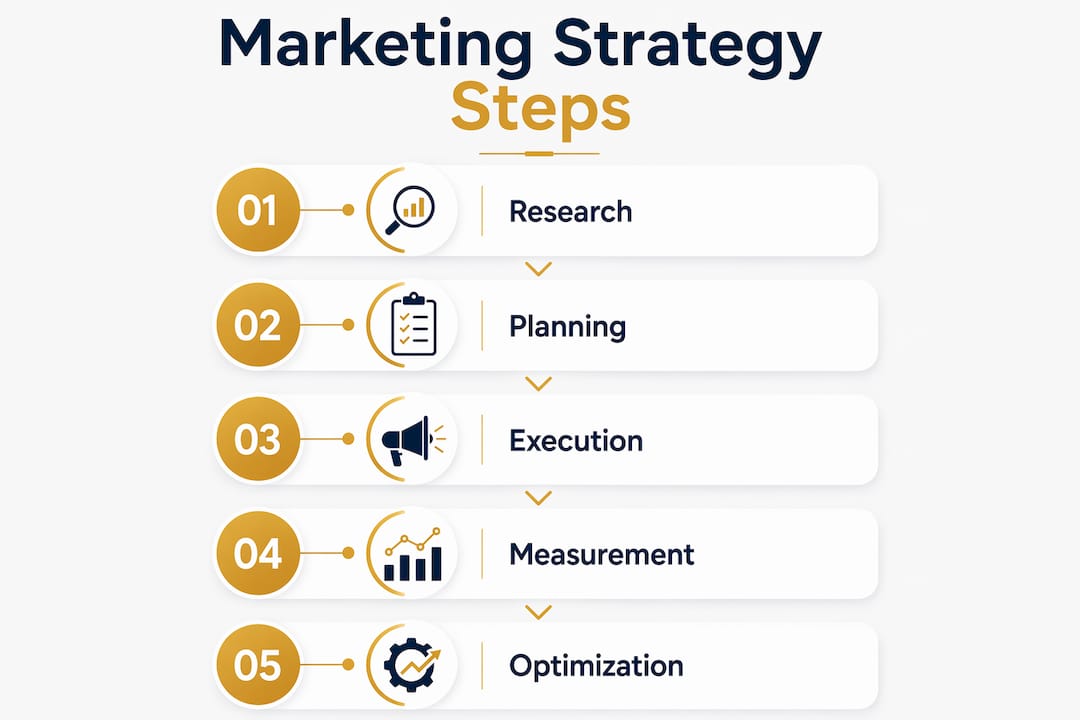
The shift from broadcast to participation is the single biggest structural change in digital marketing over the past five years. Brands that build two-way participation through live Q&As, interactive infographics, and polls consistently outperform those still pushing one-directional content. For Australian service businesses, this means your Instagram Stories polls, your Facebook Group discussions, and your YouTube comment replies are not optional extras. They are the mechanism by which algorithms decide whether your content gets distributed at all.
Short-form video dominates consumption time across every age bracket in the digital generation, but the format that converts best is the 30–60 second educational series with a clear problem-solution structure and a question-based call to action. That format builds habitual interaction because viewers return for the next instalment, comment with their own experience, and share when the problem resonates.
Authenticity and trust signals matter more than production value. A clinic owner filming a 45-second explainer on their phone, speaking directly to camera, will outperform a polished brand video with no personality behind it. User-generated content, real client outcomes, and behind-the-scenes footage all carry more credibility with digital consumers than stock imagery or scripted testimonials.
How SEO and AI are reshaping digital visibility for Australian businesses
SEO is no longer just about ranking on page one of Google. In 2026, it encompasses three distinct visibility layers: traditional organic search, AI-generated answer surfaces (Google AI Overviews, ChatGPT, Perplexity), and local/geo-targeted discovery. Australian businesses that treat these as separate problems are leaving significant traffic on the table.
Traditional SEO fundamentals still matter. Keyword research anchored in search intent, technically sound on-site structure, fast mobile load times, and authoritative backlinks remain the baseline. Tools like Google Search Console, Ahrefs, and Semrush give you the data to identify where you rank, where you are losing clicks, and which content gaps your competitors have not filled. For Australian service businesses, local SEO through Google Business Profile is often the highest-return activity available, particularly for clinics, salons, and professional services.
AI SEO and Generative Engine Optimisation (GEO) is where the real competitive gap is opening up. When someone asks ChatGPT “best digital marketing agency in Perth” or Perplexity “how do I get more bookings for my med spa in Sydney,” the answers those tools generate pull from indexed web content, brand mentions across authoritative sites, and structured data. Getting your brand cited in those AI-generated answers requires a different approach to content than traditional SEO.
Here are the tactics that drive AI citation and GEO visibility:
- Build topical authority: Publish a cluster of deeply researched articles around your core service area. AI models favour sources that cover a topic comprehensively, not just superficially.
- Earn brand mentions on authoritative sites: Guest articles, media coverage, podcast appearances, and industry directory listings all contribute to the brand signal that AI tools use to assess credibility.
- Use structured data markup: Schema.org markup for your business, services, FAQs, and reviews helps AI crawlers understand and cite your content accurately.
- Optimise for conversational queries: Voice search and AI chat queries are phrased as questions. Write content that directly answers “how,” “what,” and “which” questions your audience actually asks.
- Maintain consistent NAP data: Name, address, and phone number consistency across Google Business Profile, your website, and third-party directories is foundational for local AI discovery.
- Publish original data and insights: AI models preferentially cite sources that contain original research, statistics, or proprietary frameworks. A case study with real numbers gets cited; a generic “tips” article rarely does.
Statistic callout: AI continues to reshape consumer discovery through voice search, conversational queries, and multimodal exploration, meaning brands that align their content with AI-driven discovery patterns are positioned to capture audiences that traditional SEO alone cannot reach.
Predictive analytics and AI-driven content personalisation are also changing how Australian businesses approach on-site experience. Tools like Google Analytics 4’s predictive audiences, combined with CRM data, allow you to serve different content to a first-time visitor versus a returning prospect. That kind of personalisation at every touchpoint increases engagement measurably, because visitors see content relevant to their industry, behaviour, and stage in the buying journey rather than a generic homepage.
Pro Tip: Target AI citation by writing a dedicated FAQ section on every service page, using the exact question phrasing your clients use when they speak to you. AI models pull heavily from FAQ-structured content because it mirrors the conversational format of the queries they receive.
Social media marketing and paid advertising that actually engages digital audiences
Paid advertising and organic social are not competing strategies. They are two gears in the same machine, and the businesses that treat them separately consistently underperform those that run them in tandem.

Google Ads captures demand that already exists. When someone in Brisbane searches “laser hair removal near me” or “business accountant Perth,” they have a specific intent and are ready to act. Google Search campaigns targeting high-intent keywords, combined with Google Display retargeting for people who visited your site but did not convert, give you coverage across the full consideration window. For Australian service businesses, Performance Max campaigns have become a practical option for those with limited time to manage multiple campaign types, though they require clean conversion tracking to perform well.
Meta Advertising (Facebook and Instagram) creates demand by putting your offer in front of people who match your ideal client profile before they have gone looking. The targeting capabilities, particularly Custom Audiences built from your existing client list and Lookalike Audiences built from your best customers, make Meta the most cost-effective channel for Australian service businesses trying to reach new audiences in a specific geography. Reels-format ads consistently outperform static image ads for engagement and cost-per-click across most service categories.
Organic social media is where consistent brand presence compounds over time. The mistake most businesses make is treating it as a broadcast channel, posting promotional content and expecting engagement. The digital generation responds to content that invites participation.
- Employee advocacy: Encourage your team to share behind-the-scenes content. A staff member’s genuine post about their work day reaches audiences your brand page cannot touch.
- Influencer partnerships: Micro-influencers (5,000–50,000 followers) in your local market typically deliver higher engagement rates than macro-influencers, and their audiences trust their recommendations more.
- Interactive formats: Instagram Stories polls, “this or that” questions, and “ask me anything” sessions generate the saves and replies that algorithms reward.
- Storytelling over selling: A before-and-after client story, a challenge your business overcame, or a day-in-the-life video builds the emotional connection that drives word-of-mouth referrals.
- Community spaces: Dedicated brand communities on Facebook Groups or Discord give your most engaged followers a place to interact with each other, not just with you. That peer engagement is far stickier than any broadcast post.
Budget allocation for paid advertising depends on your funnel stage. A business building awareness in a new market should weight spend toward Meta reach campaigns and Google Display. A business with proven offers and existing traffic should weight toward Google Search and Meta conversion campaigns. The key discipline is reviewing cost-per-lead by campaign weekly, not monthly, and reallocating budget toward what is working before the month is over.
Pro Tip: Use Meta’s Advantage+ audience targeting for top-of-funnel awareness campaigns, but always layer in a manual Custom Audience exclusion list of existing clients. Spending money to reach people who already booked with you is one of the most common and costly paid social mistakes in Australian service marketing.
On privacy and legal compliance: Australian businesses running paid advertising must comply with the Australian Privacy Act 1988 and the Spam Act 2003. Collecting email addresses through lead generation ads requires explicit consent and a clear privacy policy. Meta’s data use policies also require that any Custom Audience built from client data is uploaded in compliance with Australian privacy law. This is not optional, and the OAIC (Office of the Australian Information Commissioner) has become increasingly active in enforcement.
How do you measure digital marketing success and keep audiences coming back?
Measurement is where most Australian businesses either get it right or waste months of effort. The problem is not a lack of data. Google Analytics 4, Meta Business Suite, and Google Search Console collectively generate more data than any team can act on. The discipline is knowing which metrics actually predict growth.
The metrics that matter are the ones that indicate active engagement, not passive exposure. Comment depth, shares, saves, and return visits tell you whether your content is creating genuine connection. Impressions and reach tell you how many people scrolled past it.
| Metric | What it measures | Tracking tool |
|---|---|---|
| Engagement rate | Active interactions (comments, saves, shares) as a percentage of reach | Meta Business Suite, native platform analytics |
| Dwell time / time on page | How long visitors spend with your content before leaving | Google Analytics 4 |
| Conversion rate | Percentage of visitors who complete a desired action (booking, enquiry, purchase) | Google Analytics 4, Google Ads |
| Return visit rate | Percentage of visitors who come back within 30 days | Google Analytics 4 |
| Email open and click rate | Subscriber engagement with email communications | Klaviyo, Mailchimp, ActiveCampaign |
| Cost per lead (CPL) | Advertising spend divided by leads generated | Google Ads, Meta Ads Manager |
| Keyword ranking movement | Position changes for target search terms over time | Google Search Console, Ahrefs, Semrush |
A/B testing is the fastest way to improve performance without increasing spend. Test one variable at a time: the headline on a landing page, the subject line of an email, the first three seconds of a video ad. Run each test long enough to reach statistical significance before drawing conclusions, which typically means at least two weeks and a few hundred data points per variant.
Continuous engagement requires a content calendar that mixes formats deliberately. A week that includes one educational video, one interactive Story, one email to your list, and one Google Ads optimisation session covers the full spectrum of touchpoints without burning out your team. The goal is unified customer data and lifecycle orchestration across channels, so that a prospect who clicks a Google Ad, visits your website, and then sees your Instagram Reel experiences a coherent brand story rather than disconnected fragments.
Personalised messaging is the lever that turns one-time visitors into repeat clients. Segment your email list by behaviour: people who have enquired but not booked, people who booked once but not returned, and active clients all need different messages. Sending the same newsletter to all three groups is the equivalent of giving the same sales pitch to a cold lead and a loyal customer.
How the marketing vortex method integrates every channel for measurable growth
The Marketing Vortex is Jarrodharman’s proprietary framework for Australian service businesses, and it solves the problem that kills most digital marketing efforts: channel fragmentation. Most businesses run SEO over here, Google Ads over there, social media somewhere else, and email as an afterthought. Each channel operates in isolation, which means the data from one never informs the others, and the client experience is inconsistent at every touchpoint.
The vortex model treats SEO, Google Ads, Meta Advertising, email marketing, social media, and web development as a single integrated system. The logic is straightforward: SEO builds the organic foundation and earns AI citations that reduce long-term paid media dependency. Google Ads captures high-intent traffic while SEO rankings build. Meta Advertising fills the top of the funnel with new audiences. Email nurtures those audiences into bookings. Social media maintains the relationship and generates the social proof that makes every other channel more effective. Web development ensures the destination, your website and landing pages, converts the traffic all those channels send.
What makes this approach different from simply “doing all the channels” is the orchestration layer. Every campaign is built around a shared measurement framework, so you can see which channel is contributing to bookings and which is burning budget. Jarrodharman offers clients booking guarantees and SEO ranking guarantees because the system is built on measurable outcomes, not activity metrics.
Statistic callout: Brands that integrate omnichannel messaging and leverage customer behaviour data consistently outperform fragmented tactics, making channel orchestration the single most valuable structural decision an Australian service business can make.
Pro Tip: The vortex works best when you start with the channel closest to purchase intent, usually Google Search Ads and local SEO, and use the revenue from those early wins to fund the longer-term brand-building work on Meta and organic social. Trying to run all channels at full intensity from day one spreads budget too thin to see results on any of them.
For Australian service businesses specifically, the vortex approach addresses a common growth ceiling: businesses that are excellent at their craft but have no system for generating consistent leads. A salon that relies on word-of-mouth, a clinic that depends on a single GP referral network, or a law firm that has never run a Google Ad campaign all share the same vulnerability. One disruption to their primary lead source and revenue drops immediately. The Marketing Vortex method decentralises that risk by building multiple lead sources that reinforce each other, so no single channel failure can collapse the pipeline.
Email marketing personalisation that converts subscribers into loyal clients
Email remains the highest-return channel in digital marketing, and the reason is ownership. Your email list cannot be throttled by an algorithm update, a platform policy change, or an ad account suspension. Every subscriber on that list opted in to hear from you, which means the baseline trust level is already higher than any cold ad impression.
The gap between a list that converts and one that quietly ignores you comes down to personalisation. Generic broadcast emails, the same newsletter sent to every subscriber regardless of where they are in the buying journey, consistently underperform segmented campaigns. The mechanics are not complicated, but they require deliberate setup.
Segment your list by behaviour, not just by demographic. A subscriber who downloaded your pricing guide but never booked needs a different sequence than someone who booked once six months ago. The first needs social proof and a low-friction next step. The second needs a re-engagement offer and a reminder of the outcome they got last time. Behavioural triggers, set up in tools like Klaviyo, ActiveCampaign, or Mailchimp, automate this segmentation so the right message goes to the right person without manual intervention every time.
Subject lines are the single highest-leverage variable in email performance. A subject line that speaks to a specific problem (“Still struggling to get consistent bookings?”) outperforms a generic one (“Our latest news”) because it signals relevance before the email is even opened. Test two subject lines on every send, using a 20% split to determine the winner before sending to the full list.
Predictive personalisation, available in tools like Klaviyo’s AI features, goes further by recommending the next best action for each subscriber based on their past behaviour. A client who booked a facial three times is likely to respond to a message about a new skin treatment. A subscriber who has only ever read your educational content but never purchased needs a different nudge entirely. That level of personalisation, delivered at scale through automation, is what separates businesses with 20% email open rates from those stuck at 8%.
One practical structure that works consistently for Australian service businesses: a welcome sequence of three to five emails that delivers value before asking for anything, followed by a weekly or fortnightly newsletter that mixes educational content with a single clear offer, and a re-engagement sequence triggered when a subscriber has not opened in 90 days. That structure covers the full subscriber lifecycle without requiring a new campaign every week.
Jarrodharman’s approach to digital marketing for Australian service businesses
Most Australian service businesses do not have a marketing problem. They have a system problem. The leads are out there, the audience is active, and the platforms are capable. What is missing is an integrated approach that connects every channel to a single measurable outcome: more bookings, more enquiries, more revenue.
Jarrodharman, through Business Warriors, builds that system for service-based businesses across Australia. The Marketing Vortex strategy combines SEO (including AI SEO and GEO for large language model visibility), Google Ads, Meta Advertising, email marketing, social media management, and web development into one orchestrated programme. Clients receive booking guarantees and SEO ranking guarantees because the approach is built on measurable outcomes, not activity reports. Whether you are a clinic owner in Perth, a salon group in Sydney, or a professional services firm looking to scale nationally, the system is designed to generate consistent leads without depending on any single channel. To see how this applies to your business, explore the step-by-step growth framework or get in touch with Jarrod directly to discuss what a vortex strategy looks like for your specific market.
Key takeaways
Effective digital marketing for the digital generation requires integrated channel orchestration, AI-driven SEO, and behavioural personalisation working together, not as isolated tactics.
| Point | Details |
|---|---|
| Focus channels, not spread them | Commit to the two or three channels where your audience is active and build consistent, predictable presence there. |
| AI SEO and GEO are non-negotiable | Getting brand mentions in ChatGPT, Perplexity, and Google AI Overviews requires topical authority, structured data, and original content. |
| Active engagement beats passive reach | Saves, shares, comments, and return visits are the metrics that drive algorithmic distribution and genuine audience growth. |
| Email personalisation drives conversion | Behavioural segmentation and triggered sequences consistently outperform broadcast newsletters across every service category. |
| Jarrodharman’s Marketing Vortex | Business Warriors integrates SEO, Google Ads, Meta Ads, email, and social into one system with booking and ranking guarantees for Australian service businesses. |