


Choosing the right content marketing format is often the difference between a flurry of new bookings and getting lost in the digital crowd. With Australian customers demanding fresh, authentic experiences, how you present your message shapes trust and influences every click. In this guide, discover how mastering the strategic selection of content formats helps female service business owners attract engaged leads, build authority, and drive consistent sales in a rapidly changing digital space.
Table of Contents
- Content Marketing Formats Defined For 2026
- Choosing The Right Format For Your Audience
- Top Content Marketing Formats And When To Use Them
- Integrating Formats For Omnichannel Success
- Mistakes To Avoid With Content Formats
Key Takeaways
| Point | Details |
|---|---|
| Format Selection Is Crucial | The choice of content format influences audience engagement and conversion rates significantly. Understanding the psychological impact of each format helps in aligning them with business goals. |
| Omnichannel Integration Is Essential | Successful marketing requires a consistent message across multiple platforms. Each format should complement others to create a seamless customer journey and maximize reach. |
| Know Your Audience | Identifying your audience’s preferences in content consumption is fundamental. Use data-driven insights from social listening and analytics to tailor your format choices. |
| Focus on Quality Over Quantity | Producing high-quality content yields better engagement and conversions than creating a large volume of mediocre content. Prioritise depth and efficacy in your messaging. |
Content Marketing Formats Defined For 2026
Content marketing formats are simply the ways you present information to your audience. Think of them as containers: video, text, images, audio, infographics, podcasts. Each format delivers your message differently, and each triggers different responses in your audience’s mind.
The way you package content matters enormously. A blog post reaches different people than a TikTok video. An email newsletter builds relationships differently than a paid Google Ad. Your job is understanding which format works best for your specific goals and audience.
Why Format Selection Drives Sales
Choosing the right format isn’t just about preference. The psychological and emotional impacts of content formats directly influence whether someone books a service, makes a purchase, or ignores your message entirely.
Different formats have different jobs:
- Video builds trust fastest; people see your face and hear your voice
- Text articles establish authority and rank in search engines for SEO visibility
- Images stop the scroll; they catch attention before words do
- Audio builds intimacy; podcasts feel like conversations
- Infographics simplify complex ideas; they’re shareable and memorable
- Email nurtures existing leads; it’s your owned channel
- Social media posts create community and foster engagement
As a service business owner, you’re competing for attention. The right format cuts through noise. The wrong format gets ignored.
The 2026 Content Format Landscape
Content formats evolve constantly. AI tools now generate content faster than ever. Search algorithms favour certain formats. User behaviour shifts with new platforms.
Your audience in 2026 expects different things than they did in 2023. They scroll faster. They demand video. They trust peer reviews and user-generated content more than polished ads. They want authenticity over perfection.
The platforms themselves shape which formats win. TikTok rewards short video. LinkedIn rewards industry insights and professional articles. Google rewards long-form SEO content. Meta rewards carousel ads and Reels. YouTube rewards watch time and engagement.
How AI and SEO Strategy Intersect With Format Selection
AI is changing everything about content creation and distribution. AI tools can now generate article outlines, script videos, and optimise copy for search engines. But here’s what matters: AI works best when paired with smart SEO strategy that aligns format to search intent.
When your target audience searches Google, they’re looking for specific information in specific formats. Someone searching “how to prepare for a massage” wants a guide (text). Someone searching your business name wants your website and reviews. Someone searching “best beauty treatments in Perth” might want video testimonials or before-and-after galleries.
Effective SEO strategy means understanding:
- What search terms your ideal clients use
- What format Google ranks for those terms
- What format your competitors are missing
- Building content in formats that match search intent
Your content format choices directly impact your Google rankings, which drives consistent lead flow.
Formats That Sell Fastest Right Now
If you need sales fast, certain formats outperform others. Video testimonials and case studies convert extremely well because they show real results. Google Ads with compelling copy drive qualified traffic immediately. Email sequences nurture interested leads into customers.
Social media paid advertising through Facebook and Instagram works because you can target precisely (age, location, interests) and test different formats instantly.
The formats you choose must align with three things: where your customers are, how they prefer to consume information, and your business goals.
Pro tip: Pick one primary format that matches your strengths, master it completely, then layer in secondary formats. A salon owner might start with video on Instagram and TikTok, add written blogs for SEO, then use paid Google Ads to capture high-intent searches. This layered approach maximises reach without overwhelming you.
Choosing The Right Format For Your Audience
Your audience is not one person. It’s dozens of different people with different preferences, schedules, and ways of consuming information. One client might watch YouTube videos on her lunch break. Another prefers reading detailed blog posts at night. A third only checks Instagram on her phone.

Choosing the right format means understanding who actually needs your services and how they prefer to receive information. This isn’t guessing. It’s research.
Know Your Audience First
Understanding audience demographics, motivations, and preferences is the foundation of format selection. You can’t pick the right format without knowing who you’re talking to.
Start by gathering real data about your audience:
- Social listening: Monitor what your audience comments on, shares, and engages with
- Direct surveys: Ask your existing clients how they prefer to learn about services
- Website analytics: See which content gets the most views and time spent
- Customer interviews: Have conversations; ask what problems they face
- Platform behaviour: Watch where your audience spends time (TikTok, LinkedIn, Facebook)
This data reveals patterns. Maybe your ideal clients are busy professionals who want quick answers. Maybe they’re researching extensively before choosing. Maybe they trust peer reviews above everything else.
Format Matching Based On Audience Type
Different audiences need different formats. An analytical audience (accountants, lawyers, engineers) wants depth. They’ll read white papers and detailed guides. A time-constrained audience (busy parents, shift workers) wants quick answers. They need infographics, short videos, quick tips.
Consider these audience segments:
- Analytical decision-makers: Long-form blog posts, detailed guides, case studies with data
- Visual learners: Videos, infographics, before-and-after galleries, carousel posts
- Social proof seekers: Testimonials, reviews, user-generated content, case studies
- Time-constrained busy people: Short videos, bullet-point emails, quick tips, social posts
- Relationship builders: Email newsletters, podcasts, webinars, live content
Your Australian female clients aged 35-50 often juggle multiple responsibilities. Many prefer video for trust-building. Many also appreciate detailed information that shows you understand their specific concerns.
Platform Shapes Format Choice
Your audience doesn’t just choose format; the platform they’re on chooses it for them. LinkedIn users expect professional articles and industry insights. TikTok users expect short, entertaining video. Email subscribers expect personalised, conversational messages.
The platform your audience uses determines what format actually works there. What succeeds on TikTok fails on LinkedIn.
When planning content, match format to platform:
- Google Search: Long-form articles (1500+ words) for SEO rankings
- Email: Conversational messages with clear calls-to-action
- Instagram/Facebook: Carousel ads, Reels, visually striking posts
- LinkedIn: Articles, thought leadership, professional case studies
- TikTok/YouTube Shorts: 15-60 second videos, entertaining or educational
- YouTube: 5-15 minute videos, tutorials, testimonials
You don’t need to be everywhere. Pick 2-3 platforms where your ideal clients actually spend time, then use the formats those platforms reward.
Pro tip: Ask your best clients directly: “Where do you spend most of your social media time?” and “How do you prefer to receive information about services?” Their answers eliminate guesswork and guide your format strategy immediately.
Top Content Marketing Formats And When To Use Them
Not all formats work for every goal. A short TikTok video won’t establish you as an authority. A 3,000-word blog post won’t capture someone’s attention during their morning scroll. You need to match format to what you’re trying to achieve and where your audience is in their buying journey.
There are fourteen key content marketing types worth considering for 2026, each with specific strengths and ideal use cases. Understanding when to use each one separates consistent lead generators from businesses that waste time and budget.
Blog Content and Long-Form Articles
Blog posts are your SEO powerhouses. They rank in Google for the search terms your ideal clients use. A 1,500+ word article about “how to prepare for a facial” or “common skin concerns at 45” attracts someone actively searching for solutions.
Use blogs when you want to:
- Rank for specific search terms (SEO strategy)
- Establish authority and credibility
- Provide detailed information people need
- Build trust over weeks and months
- Create content that compounds in value over time
Blog content works slowly but builds predictable lead flow. Write one comprehensive guide, and it generates leads for years.
Video and Short-Form Video
Video content builds trust fastest. People see your face, hear your voice, and feel your personality. A 60-second Instagram Reel showing a beauty treatment result converts better than a paragraph describing it.
Use video for:
- Building emotional connection and trust
- Showing results (before-and-afters)
- Demonstrating your expertise (quick tips, tutorials)
- Capturing attention in social feeds
- Creating shareable, engaging content
Short-form video (15-60 seconds) works on TikTok, Instagram Reels, and YouTube Shorts. Longer videos (5-15 minutes) work on YouTube and work best for testimonials, case studies, and tutorials.
Email Marketing
Email is your owned channel. You own the relationship; no algorithm controls whether someone sees your message. An email sequence nurturing a lead costs almost nothing and converts consistently.
Use email to:
- Nurture leads from first contact through booking
- Build relationships with existing clients
- Promote services to warm audiences
- Share tips, offers, and announcements
- Drive traffic to blog content or landing pages
Email converts because it’s personal, direct, and reaches people at the right moment.
Case Studies and Testimonials
Case studies provide social proof. They show real results for real people. A written case study describing how you helped a client with specific problems builds credibility better than any claim you could make.
Testimonials are video recordings of satisfied clients. They’re incredibly powerful for conversion because prospects trust peers more than your marketing claims.
Use case studies and testimonials when you need to overcome objections and build confidence in your services.
Social Media Posts and Carousel Ads
Social posts keep you visible and build community. A carousel post on Instagram explaining “five reasons your skin texture changes at 45” provides value while subtly positioning your services as the solution.
Paid social advertising (Facebook and Instagram ads, Google Ads) targets specific audiences and drives qualified traffic immediately. You can test different formats, audiences, and messages quickly.
The best format is the one your ideal client actually sees. Consistency across multiple formats multiplies your reach.
Use social content to:
To clarify how different content formats align with business goals, see the table below:
| Content Format | Best Audience Fit | Main Business Outcome |
|---|---|---|
| Blog Articles | Research-focused readers | SEO and authority building |
| Short-form Video | Busy, visual learners | Rapid trust and engagement |
| Email Sequences | Warm leads, relationship builders | Lead nurturing and conversion |
| Webinars/Live | Detail-oriented, question-driven clients | Education and direct interaction |
| Infographics | Visual learners, time-poor audiences | Simple concept delivery |
| Social Posts | Broad, community-focused | Ongoing visibility and engagement |
| Case Studies | Analytical decision-makers | Objection handling, credibility |
- Build brand awareness
- Share bite-sized tips and education
- Engage directly with your audience
- Run paid campaigns to reach new prospects
- Drive traffic to your website or booking page
Webinars and Live Content
Webinars allow real-time connection. You educate, answer questions, and build relationships simultaneously. A 45-minute live webinar about “anti-ageing skincare routines” attracts ideal clients and positions you as an expert.
Live content creates urgency and exclusivity. People attend because it’s happening now, not because they can watch anytime.
Infographics and Visual Content
Infographics simplify complex ideas into shareable visuals. A graphic showing “skin changes by decade” is more engaging than paragraphs explaining the same information.
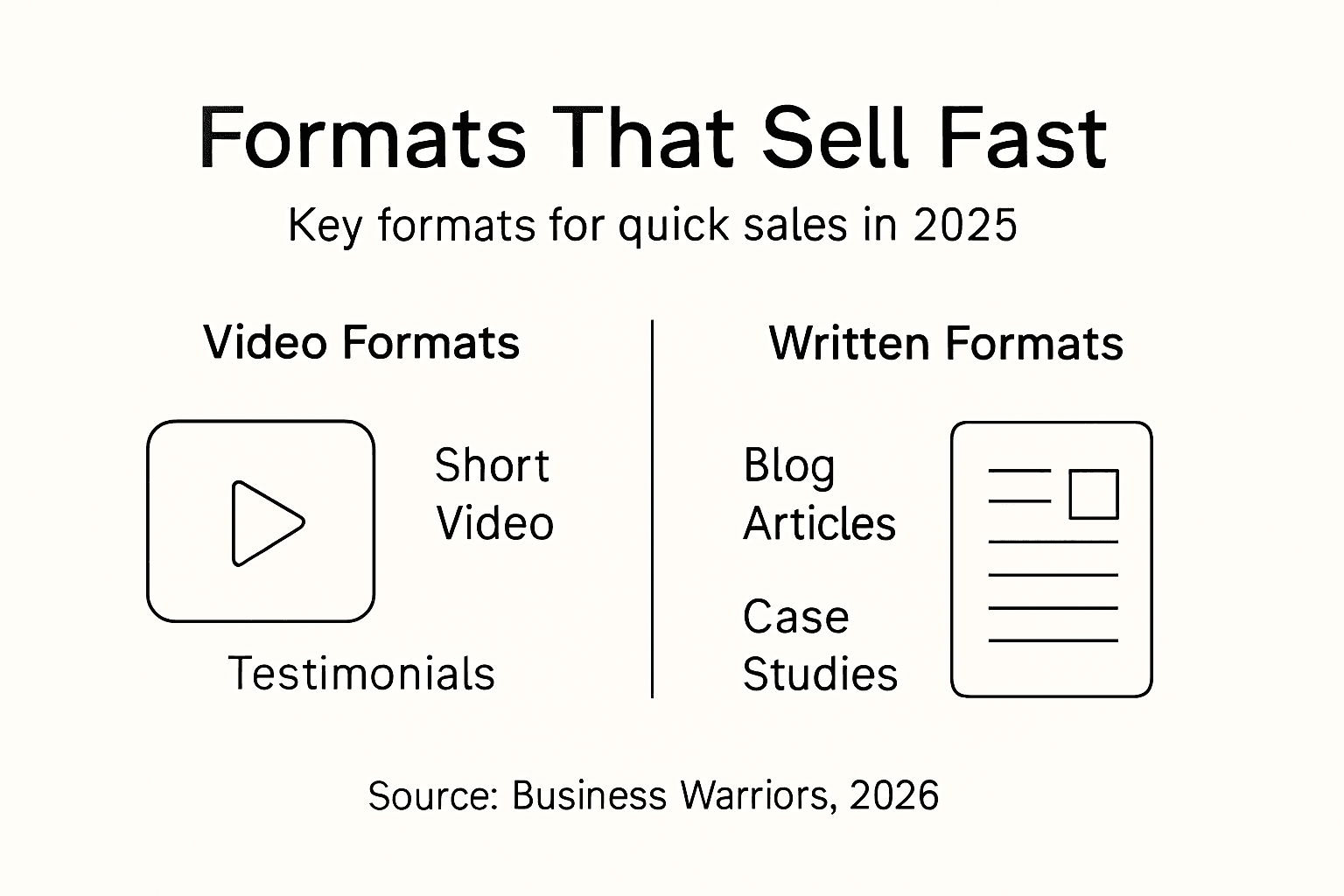
They work for education, comparison, and making information memorable.
Pro tip: Start with one primary format that matches your strengths (video if you’re comfortable on camera; blogs if you love writing), then add one secondary format each quarter. This layered approach builds momentum without overwhelming you.
Integrating Formats For Omnichannel Success
Using one content format is like opening a business with one door. You’ll reach some people, but most will walk past and never know you exist. Omnichannel integration means meeting your audience everywhere they spend time, with consistent messaging across all platforms.
Omnichannel marketing isn’t just posting the same content on multiple platforms. It’s building a unified customer experience across email, social, website, and offline touchpoints. Each format supports the others. Email warms leads. Social builds awareness. Blogs rank in Google. Video builds trust. Together, they create a system that captures leads from every possible source.
Why Omnichannel Works Better Than Single-Channel
A woman searching for skincare treatments might find you through Google (blog content). She watches your Instagram Reels and feels a connection. She receives your email newsletter. She sees your Google Ad while browsing. By the time she’s ready to book, she’s experienced your brand across five different touchpoints. That consistency builds trust.
Omnichannel integration means:
- Consistent messaging: Same brand voice, same value proposition everywhere
- Complementary formats: Each channel plays a different role in the customer journey
- Data-driven alignment: Understanding what works on each platform and optimising accordingly
- Seamless transitions: Someone can find you via Google, follow on Instagram, sign up for email, then book through your website
- Higher conversion rates: Multiple touchpoints dramatically increase the likelihood someone becomes a client
Businesses using omnichannel strategies see significantly better results because they’re visible everywhere their ideal clients are.
The Three-Channel Foundation
You don’t need to be everywhere. Start with three channels and master them completely.
Channel 1: SEO and Blog Content (Google, organic search). This is your long-term lead generation engine. A blog ranking for “anti-ageing facials in Perth” attracts people actively searching for your services. This channel costs nothing to distribute once content is published.
Channel 2: Social Media and Paid Ads (Instagram, Facebook, TikTok, Google Ads). This is your visibility and attention channel. Paid advertising reaches new audiences immediately. Organic social builds community and keeps you top-of-mind. Short-form video and carousel ads work well here.
Channel 3: Email Marketing (owned channel). This is your conversion engine. Email nurtures leads, builds relationships, and converts interested prospects into clients. An email sequence costs almost nothing and converts at 20-40% depending on your list quality.
How Formats Work Together
Each format has a specific job in your omnichannel system:
- Blogs attract (SEO traffic)
- Videos and social build trust (emotional connection)
- Emails convert (relationships and offers)
- Case studies overcome objections (social proof)
- Testimonials build credibility (peer validation)
- Paid ads accelerate discovery (reach new audiences)
Someone might discover you via Google Ad (paid social), watch your video (video format), read your blog (content format), follow you on Instagram (social format), then receive your email nurture sequence (email format) before booking. That journey uses five formats, but they’re all working toward the same goal.
Omnichannel success means each format strengthens the others. A blog post gets promoted via email. Email subscribers discover your Instagram. Instagram followers click through to your website. Every channel feeds the others.
Creating Your Omnichannel Plan
Start simple. Pick three formats and three channels. Master them before adding more.
- Choose your primary strength (video, writing, or community building)
- Create content in that format first (video creators start with Reels and YouTube; writers start with blogs)
- Distribute to your three chosen channels (where your ideal clients actually spend time)
- Nurture via email (capture emails and build relationships)
- Add one secondary format each quarter (layer in testimonials, case studies, infographics)
This layered approach prevents overwhelm whilst building a system that attracts leads from multiple sources simultaneously.
Pro tip: Map your three channels to your three-stage customer journey: awareness (social and blogs), consideration (email and case studies), and decision (testimonials and direct communication). Then assign specific formats to each stage, creating a predictable path from discovery to booking.
Mistakes To Avoid With Content Formats
Content marketing fails silently. You publish posts, create videos, run ads, and nothing happens. Most business owners blame the format. The real problem is usually deeper: strategy mistakes that tank results regardless of format.
Understanding what not to do is as important as knowing what to do. These mistakes waste time, budget, and momentum.
Mistake 1: Writing For Algorithms Instead Of People
You write blog posts stuffed with keywords. You create YouTube videos optimised for watch time but not for actual value. You chase vanity metrics like view counts and shares instead of measuring bookings and sales.
Algorithms are just gatekeepers. People make the buying decisions. Common content marketing mistakes include writing mainly for search algorithms rather than building human trust, which erodes your ROI significantly.
A 10,000-view video that generates zero bookings is a failure, even if the algorithm loves it. A 500-view video that converts three clients into customers is a success.
Focus on:
- Solving real problems your audience faces
- Building emotional connection and trust
- Demonstrating results and outcomes
- Measuring what matters (bookings, leads, revenue)
Write for people first. Optimise for algorithms second.
Mistake 2: Creating Content Without Strategic Alignment
You publish random blog posts, post videos whenever you feel like it, and run ads without a clear goal. No strategy. Just output.
Content without strategy is like driving without direction. You’re moving, but you don’t know where you’re going. Ignoring user search intent and publishing content without clear strategic alignment represents some of the most damaging mistakes in 2026.
Every piece of content must serve a purpose in your omnichannel system. Ask yourself: Does this blog post rank for keywords my ideal clients search? Does this video build trust with people ready to book? Does this email nurture leads toward a decision?
Without strategic alignment, you’re creating content that doesn’t contribute to sales.
Mistake 3: Repurposing Content Thoughtlessly
You write a blog post, share the exact same text on social media, and call it “repurposing.” A 2,000-word article doesn’t work as-is on Instagram. A long-form YouTube video doesn’t translate directly to TikTok.
Repurposing means adapting, not copying. A blog post becomes multiple social posts, a video script, an email series, and infographics. Each format has different needs.
Thoughtless repurposing wastes your content’s potential. Intelligent repurposing multiplies your reach.
Mistake 4: Over-Relying On AI Without Strategy
AI tools generate content fast. But fast doesn’t mean good. Many business owners use AI to create bulk content, then wonder why nothing converts.
AI works best as a tool within a human strategy, not as a replacement for strategy. AI can outline your blog, draft copy, and optimise headlines. But AI can’t understand your specific audience, your unique value proposition, or why someone should choose you over competitors.
Use AI to accelerate execution. Don’t use AI to replace thinking.
Mistake 5: Ignoring Content Refresh And Updates
You publish a blog post in 2024 and never touch it again. Competitors publish newer, more comprehensive guides. Google ranks theirs higher. Your old content decays.
Content has a lifecycle. Blog posts need refreshing. Video testimonials age. Email sequences need testing. Ignoring updates means your content gradually loses relevance and ranking power.
The most successful content strategies treat content as living, breathing assets that improve over time, not as one-and-done publications.
Set a quarterly review schedule. Update top performers. Remove underperformers. Add new data. Refresh examples.
Mistake 6: Focusing On Quantity Over Quality
You publish five mediocre blog posts instead of one outstanding one. You post daily social content that adds no value. Quantity makes you look busy, not successful.
One piece of exceptional content beats ten pieces of mediocre content. Exceptional content gets shared, ranks better, converts more, and lasts longer.
Below is a comparison of common content marketing mistakes and their long-term impact:
| Mistake | Why It Fails | Lasting Consequence |
|---|---|---|
| Writing for algorithms, not people | Ignores real client needs | Poor conversion, low engagement |
| No strategic alignment | Random content, lacks clear goal | Wasted effort, inconsistent results |
| Thoughtless repurposing | Content mismatch per platform | Missed potential, diluted message |
| Over-relying on AI | Lacks personal relevance | Generic content, low loyalty |
| Ignoring updates | Content loses relevance | Declining rankings, lost trust |
| Prioritising quantity over quality | Too much, not enough depth | Weak brand, poor sharing potential |
Pro tip: Audit your current content this week. Identify your top three performers by bookings or leads generated, not by views. Then ask: What made these work? Double down on those principles and eliminate content that isn’t contributing to your actual business goals.
Unlock Fast Sales With The Right Content Marketing Format
Are you struggling to convert your marketing efforts into real sales? The article highlights a common challenge for many businesses: choosing content formats that truly connect and drive results fast. Without the right strategy, your videos, blogs, or social posts can get lost in the noise — leaving you frustrated and wondering why leads are not converting.
At Business Warriors, we understand that mastering the perfect content format is only one piece of the puzzle. That is why our proven Marketing Vortex approach combines SEO, Google Ads, social media, and email marketing into a powerful omnichannel system that attracts, engages, and converts your ideal clients consistently. Whether you want to build rapid trust with videos or dominate Google search with authority blogs, our tailored strategies ensure every content piece supports your business goals.
Ready to stop guessing and start scaling your sales with content formats that work? Visit https://jarrodharman.com now to discover how our expert consulting and digital marketing services can transform your online client acquisition—because your business deserves more than just visibility, it deserves results.
Frequently Asked Questions
What are the most effective content marketing formats for driving sales?
Content marketing formats that drive sales effectively include video testimonials, case studies, email marketing, and compelling Google Ads. Each format addresses different stages of the customer journey and can maximize conversion rates when used strategically.
How can I choose the right content format for my audience?
Choosing the right content format involves understanding your audience’s preferences, behaviors, and needs. Conduct research through social listening, surveys, and website analytics to gather insights on how your ideal clients prefer to consume information.
Why is content format selection important for SEO?
The selection of content format is crucial for SEO because different formats rank differently in search engines, affecting visibility. For instance, long-form articles perform well for specific search terms, while videos and images can capture attention and enhance viewer engagement,
What common mistakes should I avoid when using different content formats?
Common mistakes include focusing too much on quantity over quality, creating content without a strategic alignment, and repurposing without adapting for each platform. It’s essential to ensure that each format serves a clear purpose in your overall marketing strategy.