


TL;DR:
- Email marketing remains a highly effective channel for service business owners because it offers owned, reliable communication that outperforms social media and paid ads. Building a quality opt-in list, segmenting your audience, and consistently nurturing leads through automated sequences foster trust and lead to steady bookings. Compliance with legal standards and regular, value-driven content are essential for sustaining engagement and maximizing your email marketing success.
If you’ve ever dismissed email marketing as outdated or too complicated to set up, you’re not alone. But here’s what the numbers tell a different story: email marketing remains one of the highest-returning channels available to service business owners today. Understanding email marketing, what it is, how it works, and why it outperforms most alternatives, is the single most practical step you can take towards building a client pipeline that doesn’t depend on social media algorithms, ad spend spikes, or word-of-mouth alone. This guide is written specifically for you: a female service business owner who is ready to use email as a consistent revenue tool.
Table of Contents
- What is email marketing and why it works
- The key steps and process of effective email marketing
- Compliance and ethical email marketing essentials
- Strategies tailored for female service business owners
- How email marketing fits with SEO, AI, and social media strategies
- Why many female service owners underutilise email marketing and how to change that
- Explore the Marketing Vortex Method to amplify your email marketing
- Frequently asked questions
Key Takeaways
| Point | Details |
|---|---|
| Email marketing basics | It involves sending targeted messages to opted-in subscribers to build relationships and sales. |
| Step-by-step process | Build your list, segment, create campaigns, send via ESP, track metrics, and iterate weekly. |
| Legal compliance | Include your physical address and clear opt-outs to comply with CAN-SPAM and GDPR rules. |
| Content strategy | Use mostly valuable content and maintain consistent bi-weekly sends to nurture your audience. |
| Integrated marketing | Email complements SEO, AI, social media, and ads by owning your audience and driving conversions. |
What is email marketing and why it works
Email marketing, by the clearest email marketing definition, is the practice of sending targeted commercial messages to a list of people who have explicitly opted in to hear from you. That opt-in detail matters enormously. Unlike a boosted post that disappears from feeds or a Google ad that stops the moment your budget runs out, your email list is an audience you own outright.
The role of email marketing in a service business goes well beyond sending the occasional promotion. It is a direct communication line to people who already raised their hand and said, “Yes, I want to hear from you.” That is a remarkably powerful starting position for any sales conversation.
“Email marketing provides reliable, algorithmic-free reach, owning your audience and delivering consistent sales results.” — Constant Contact
Here is why email marketing consistently outperforms algorithm-dependent channels:
- You own the list. Instagram can change its algorithm tomorrow. Your email list stays yours regardless.
- Repeated contact costs nothing extra. Once someone is on your list, you can email them weekly without paying for each send the way you would with paid ads.
- Direct inbox delivery. Emails land in the inbox of a person who chose to receive them, not in a crowded feed competing with cat videos and political posts.
- Versatile formats. You can send newsletters, welcome sequences, promotional offers, appointment reminders, and transactional confirmations. Each serves a different purpose in your client relationship.
For a salon owner, a med spa director, or a consultant building a practice, this kind of owned, reliable communication channel is the foundation of consistent bookings and repeat business.
The key steps and process of effective email marketing
With a clear understanding of email marketing, let’s walk through the steps to do it effectively.
Learning how does email marketing work in practice comes down to five repeatable steps. Get these right from the start and the rest becomes much more manageable.
- Build a quality opt-in list. Use website sign-up forms, lead magnets (a free guide, a checklist, a discount), or in-person sign-up at your premises. A well-designed opt-in page typically takes one to two weeks to set up properly.
- Segment your audience. Not every subscriber wants the same message. Group them by interest, purchase behaviour, or where they are in the client journey. A new enquiry needs a different email to a loyal returning client.
- Use an Email Service Provider (ESP). An ESP is a platform that manages your subscriber list, lets you design emails, automates sequences, and tracks performance. Selecting the right one for your business size and budget is a one-time decision that pays off quickly.
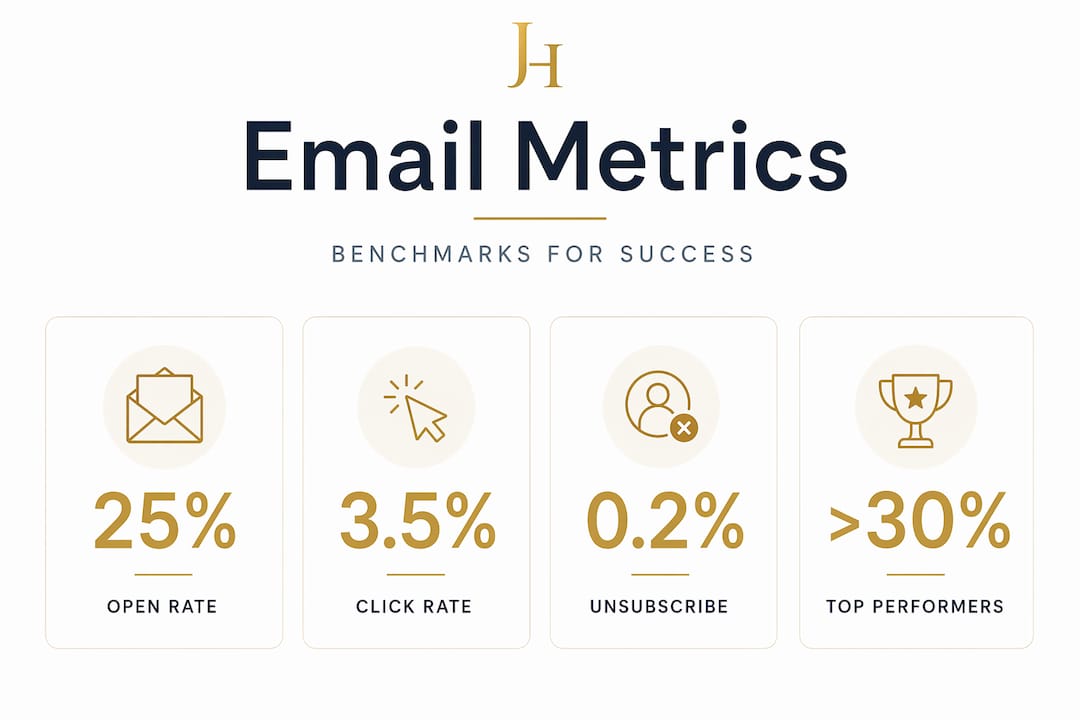
- Track your key metrics. Healthy benchmarks to aim for are an open rate between 21 and 25 percent and a click-through rate of around 2 to 3 percent. These numbers tell you whether your subject lines and content are landing.
- Iterate weekly based on data. Review what performed well, test a different subject line next time, and keep refining. Email marketing best practices in 2026 centre on this continuous improvement loop.
The marketing automation examples most relevant for service businesses include welcome sequences that fire immediately when someone subscribes, re-engagement campaigns for clients who haven’t booked in three months, and post-appointment follow-up emails that encourage reviews or repeat bookings.
Pro Tip: Before you write a single email, map out a simple three-email welcome sequence. Email one: warm greeting and what to expect. Email two: your most useful piece of advice or a case study. Email three: a soft invitation to book or enquire. This sequence alone converts far better than a cold, one-off promotional blast.
Here is a quick overview of key performance benchmarks to help you measure your campaigns:
| Metric | Industry average | Strong performance |
|---|---|---|
| Open rate | 21% to 25% | 30% and above |
| Click-through rate | 2% to 3% | 5% and above |
| Unsubscribe rate | Below 0.5% | Below 0.2% |
| Conversion rate | 1% to 3% | 5% and above |
Compliance and ethical email marketing essentials
Before sending emails, you need to ensure your campaigns respect legal requirements and build trust.

Australian service business owners sending to international clients, or using US-based ESPs, must understand both CAN-SPAM (United States) and GDPR (European Union) requirements. Ignoring these is not just a legal risk, it actively damages the trust you’re working to build.
The core requirements every commercial email must meet:
- Physical postal address. Every commercial email must include a valid physical postal address, whether that is your business address or a registered PO Box.
- Clear opt-out mechanism. Every email needs an easy, visible unsubscribe link. Once someone opts out, you must process that request within 10 business days or face fines up to $51,744 per violation under CAN-SPAM.
- Honest subject lines. Never use misleading subject lines or sender names. Beyond being unethical, it destroys deliverability over time.
- GDPR requires explicit consent. If you serve European clients, pre-ticked opt-in boxes are invalid. Consent must be active and freely given.
- You remain responsible. Even if you outsource email management to an agency, the legal obligation stays with your business.
Under Australia’s own Spam Act 2003, the rules align closely with these international standards. Consent, identification, and an unsubscribe option are non-negotiable for any commercial email sent from an Australian business.
The practical upside here is that doing compliance properly builds subscriber trust. People stay on clean, respectful lists longer, which directly improves your open rates and reduces spam complaints.
Strategies tailored for female service business owners
Now that you know the rules, here are strategies tailored for your service business and your audience.
Email marketing for beginners in the service space often starts with the wrong goal. The aim is not to sell in every email. The aim is to become the person your subscribers look forward to hearing from. When that trust is established, the sales follow naturally.
Small service businesses are advised to balance 80 percent helpful content with 20 percent promotional offers and to begin with bi-weekly newsletters to build loyalty without fatiguing their audience. Applied practically, this looks like:
- Send every Tuesday morning in your subscribers’ local time. Consistency creates habit. Your readers start to anticipate your emails rather than ignore them.
- Lead with value. Share a client success story, a practical tip from your service area, or answer a question you received that week. Make it genuinely useful.
- Keep promotional content to one clear call to action per email. A single “Book now” or “Claim your spot” is far more effective than three competing offers.
- Set up a welcome automation. New subscribers are most engaged in the first 48 hours. A welcome sequence captures that enthusiasm before it fades.
- Avoid the broadcast blast habit. Sending emails sporadically, only when you have something to sell, trains your audience to tune you out.
Pro Tip: Use your subject line as a mini-promise. “3 things that make post-treatment skin care actually stick” will outperform “Our newsletter, Issue 14” every single time. The first tells the reader exactly what they’ll get. The second tells them nothing.
Understanding how to nurture leads consistently through your email list is what separates service businesses with steady bookings from those chasing new clients constantly. Combined with good lead nurturing practices, email becomes the engine that keeps your pipeline full.
How email marketing fits with SEO, AI, and social media strategies
To finish, let’s see how email marketing works alongside other digital marketing tools you may already use.
The importance of email marketing becomes even clearer when you see how it connects the dots between every other channel in your marketing mix. No single channel works in isolation. Here is how each one plays its role:
| Channel | Primary role | How it connects to email |
|---|---|---|
| SEO | Drives organic traffic to your site | Visitors join your list via opt-in forms |
| Social media | Builds awareness and engagement | Followers become email subscribers |
| Paid advertising | Introduces new audiences quickly | New leads enter your email nurture sequence |
| AI tools | Personalises content and optimises timing | Improves subject lines, send times, and segmentation |
| Email marketing | Nurtures and converts leads directly | Ties all other channels together |
Email marketing outperforms algorithm-dependent channels by delivering predictable, direct reach. It complements SEO, AI tools, social media, and paid ads to create a consistent lead flow that is not at the mercy of any one platform.
Think of it this way: SEO gets someone to your website, a well-placed opt-in form turns them into a subscriber, and your email sequence turns that subscriber into a paying client. Social media keeps your brand visible between emails, and paid ads refill the top of the funnel when you want faster growth. Your digital marketing strategy only reaches its potential when email sits at the centre of it.
Why many female service owners underutilise email marketing and how to change that
Here is something rarely said plainly: the biggest obstacle to email marketing is not technical difficulty. It is inconsistency born from overwhelm.
Many female service business owners set up an email list with great intentions, send two or three campaigns, get busy, and then go quiet for three months before sending a promotional blast that lands to crickets. The audience has forgotten who you are. The unsubscribe rate spikes. Confidence drops. The cycle repeats.
Consistent email cadence and value-rich content build subscriber habits and open rates over time, far more effectively than infrequent, high-pressure sales emails. The subscribers who open your emails week after week are the ones most likely to book, refer, and buy again. You build that habit by showing up regularly, not by showing up perfectly.
The fix is simpler than most people expect. Commit to two emails per month. Write them at the same time each fortnight. Use a template so you’re not starting from scratch. Spend the first paragraph on something helpful and genuine, and the last paragraph on one clear offer or action. That’s it.
Automation does the heavy lifting after that. A well-built welcome sequence, a re-engagement campaign for inactive subscribers, and a post-booking follow-up series can all run without you touching them. This is not about removing the human element. It is about protecting your time while maintaining genuine connection with your audience.
The service business owners we see thriving with email are not the ones who sent the most emails or had the cleverest design. They are the ones who nurtured leads for growth through reliable, helpful communication and showed up consistently over months, not just when they needed bookings.
Explore the Marketing Vortex Method to amplify your email marketing
If you’re ready to use email marketing as a core part of a system that actually produces consistent leads, the Marketing Vortex Method was built for exactly this. Developed by Jarrod Harman and the Business Warriors team in Perth, it integrates email with SEO, social media, and paid advertising into one connected approach, so no channel operates in isolation and every touchpoint moves prospects closer to booking.
Rather than piecing together tactics from different places and hoping they connect, the Marketing Vortex gives your email marketing a defined role within a complete system. Automated sequences nurture new leads, re-engage past clients, and convert enquiries without manual follow-up every time. If you want consistent leads through a structured approach, or you’re ready to explore proven lead generation strategies built for service businesses, Business Warriors is the place to start.
Frequently asked questions
What exactly is email marketing?
Email marketing is the practice of sending commercial messages to a list of subscribers who opted in to hear from you, with the goal of building relationships and driving sales.
How often should service businesses send marketing emails?
Starting with bi-weekly emails focused mostly on helpful content, then adjusting based on engagement data, builds trust without exhausting your audience.
Do I need prior consent to email customers under CAN-SPAM?
CAN-SPAM does not require prior opt-in since it is an opt-out law, but building a fully opted-in list improves deliverability, reduces spam complaints, and strengthens trust.
How does email marketing work with social media and paid ads?
Social media and paid ads attract new audiences, SEO brings organic traffic, and email marketing converts leads through direct, reliable inbox contact that no algorithm can block or throttle.
Recommended
- How to Generate Leads Online for Free: Step-by-Step Guide – Jarrod Harman
- How to Generate More Leads from Your Website Easily – Jarrod Harman
- How to Generate Leads in Digital Marketing: Proven Strategies – Jarrod Harman
- Lead generation strategies: Social media marketing executive insights – Jarrod Harman