


TL;DR:
- A content and marketing manager is a strategic leader responsible for developing multi-channel content that drives brand visibility and business growth. They must integrate SEO, AI optimisation, social media, and team leadership to connect content efforts directly to revenue and pipeline results. Mastery of frameworks like AEO and LLMO, along with unified metrics reporting, is essential for demonstrating content ROI in 2026.
A content and marketing manager is defined as the strategic leader responsible for planning, producing, and distributing multi-channel content that drives brand visibility, audience engagement, and measurable business pipeline growth. The role sits at the intersection of creative direction and data-driven performance, combining SEO strategy, social media management, paid advertising, and team leadership into one function. Modern practitioners rely on tools like Canva, Adobe Premiere, and AI optimisation frameworks including AEO (Answer Engine Optimisation) and LLMO (Large Language Model Optimisation) to stay ahead. This guide covers the skills, strategies, and systems that separate high-performing content managers from those stuck in a cycle of content production with no clear business impact.
What does a content and marketing manager actually do?
A content and marketing manager orchestrates full-funnel content strategies that span SEO, social media, paid advertising, email marketing, and brand storytelling. The role is not a content coordinator position with a senior title. It requires genuine ownership of how content connects to revenue, pipeline, and audience growth across every digital channel.

The most effective practitioners in this role treat content as a business asset, not a publishing schedule. They align every piece of content to a specific stage of the sales funnel, a defined audience segment, or a measurable KPI. That alignment is what separates a content strategy expert from a content producer.
In medium to large enterprises, this role also carries significant leadership responsibility. A senior content marketing manager typically oversees writers, designers, social media coordinators, SEO content specialists, and external agencies simultaneously. The ability to direct creative output while reporting on commercial outcomes is the defining skill of the position.
What skills and experience does the role require?
Mid-to-senior content and marketing manager roles require at least 3 years of communications or marketing experience, plus 2 or more years managing social media with proficiency in Canva and Adobe Premiere. These are not soft benchmarks. They reflect the technical and strategic depth the role demands in 2026.
The core competencies you need to demonstrate include:
- SEO and AI optimisation knowledge: Proficiency in both traditional SEO and newer AEO/LLMO frameworks is now a baseline expectation, not a differentiator.
- Design and video editing: Canva for rapid content production and Adobe Premiere for video are the two most commonly cited tools in current job listings.
- Social media platform expertise: Platform-specific knowledge across TikTok, LinkedIn, Instagram, and YouTube is required, not optional.
- Analytical capability: You must be able to read performance data, build reports, and translate metrics into business language for senior stakeholders.
- Team leadership: Managing writers, designers, and a social media coordinator while maintaining editorial quality requires clear systems and consistent feedback loops.
Pro Tip: Build a personal content audit once per quarter. Review your own published content against pipeline data to identify which formats and topics actually generate leads. Most content managers skip this step and repeat what feels productive rather than what performs.
The digital content marketing manager role in 2026 also demands a working understanding of Google Ads, Meta advertising, and how paid and organic content strategies interact. Paid amplification of organic content is now standard practice in enterprise marketing teams.
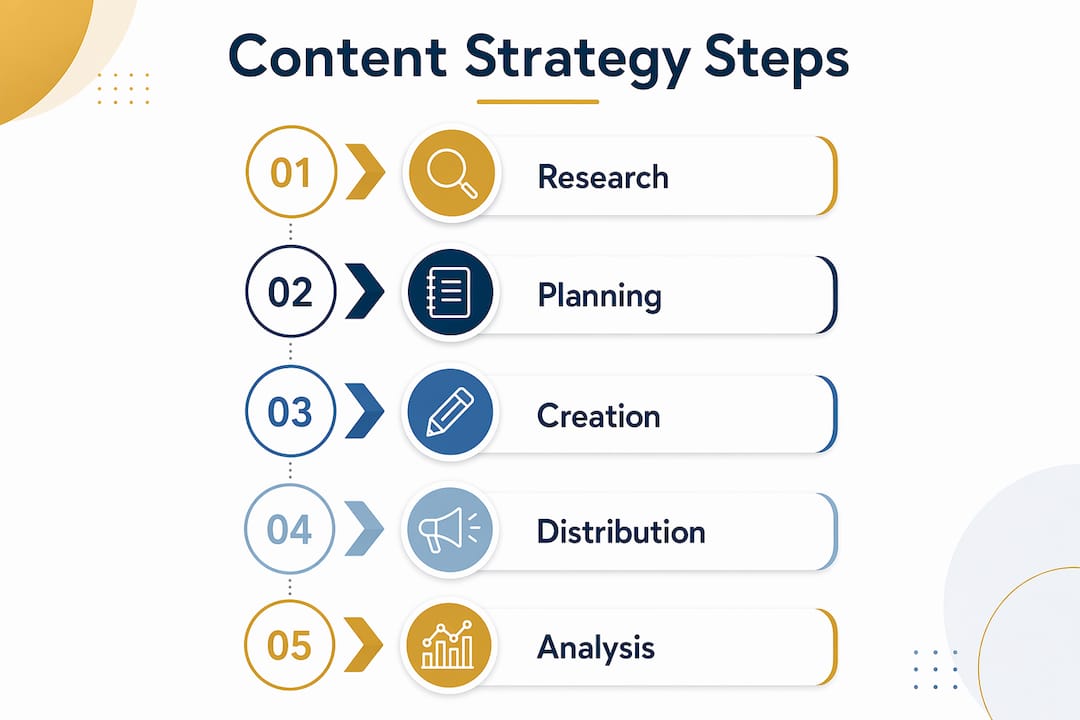
How do content managers drive results beyond vanity metrics?
Content marketing contributes around 48% of marketing-sourced pipeline in high-performing B2B organisations. That figure reframes the entire conversation about content ROI. It means content is not a brand awareness function sitting beside demand generation. It is demand generation.
The shift from pageview reporting to pipeline reporting requires a specific approach. Here is a practical framework for making that transition:
- Map content to funnel stages. Every piece of content should be labelled as top-of-funnel (awareness), mid-funnel (consideration), or bottom-of-funnel (decision). This mapping determines which KPIs apply.
- Connect content to CRM data. Integrate your CMS with your CRM so you can track which content assets a lead consumed before converting. HubSpot and Salesforce both support this natively.
- Report on influenced pipeline, not just traffic. Influenced pipeline measures how many deals touched a content asset at any point in the buyer journey. This is the metric that earns budget.
- Set content-specific revenue targets. Assign a pipeline contribution target to each content programme, then report against it monthly.
- Align with sales on content gaps. Sales teams know exactly which objections slow deals. Content that addresses those objections directly shortens sales cycles.
Reporting total engagement requires synthesising organic social, earned media, and demand generation metrics into a single coherent narrative. Presenting three separate reports to leadership is the fastest way to have your content budget cut. One unified story, tied to revenue, is what keeps content teams funded.
How do AEO and LLMO transform content discoverability?
AEO (Answer Engine Optimisation) and LLMO (Large Language Model Optimisation) are the two frameworks that define modern content optimisation beyond traditional SEO. AEO structures content so that search engines and AI assistants like Google’s AI Overviews, Perplexity, and ChatGPT can extract and cite it directly. LLMO goes further, optimising content so that large language models reference your brand in their responses.
The practical difference between legacy SEO and AEO/LLMO comes down to structure and intent:
| Approach | Primary Goal | Key Technique |
|---|---|---|
| Traditional SEO | Rank on page one of Google | Keyword density, backlinks, technical optimisation |
| AEO | Appear in AI-generated answers | Question-based headings, direct definitions, structured data |
| LLMO | Get cited by large language models | Named entity density, authoritative sourcing, factual precision |
To structure content for AI parsing, apply these practices:
- Open every major section with a direct definition or claim. AI systems extract the first clear answer they find.
- Use question-based H2 headings. Research shows 78.4% of AI-cited content originates from question headings.
- Include named entities throughout. Tools, brands, frameworks, and statistics all increase citation probability.
- Add structured data markup (Schema.org FAQ and HowTo schemas) to signal content type to search engines.
- Keep paragraphs to 3–5 sentences. Dense walls of text are harder for AI systems to parse and cite.
Pro Tip: Run your published articles through an AI tool like Perplexity or ChatGPT and ask a question your article should answer. If your content is not cited, your structure needs work. This test takes two minutes and reveals gaps that keyword tools miss.
The role of AI in content strategy is no longer theoretical. Brands that optimise for AI citation now are building discoverability advantages that will compound over the next three to five years.
What are best practices for social media and paid advertising?
Social media management is a core function of the content and marketing manager role, not a task delegated entirely to a social media coordinator. Platform-specific expertise across TikTok, LinkedIn, Instagram, and YouTube is a direct requirement in 2026 job listings. Each platform demands a different content format, posting cadence, and audience approach.
Effective social media strategy in enterprise marketing teams follows these principles:
- Platform prioritisation by audience: LinkedIn drives B2B pipeline. TikTok and Instagram drive brand awareness and top-of-funnel reach. YouTube supports long-form educational content that ranks in both Google and YouTube search.
- Organic and paid integration: Organic content tests what resonates. Paid amplification scales what works. Running paid spend on content that has not been validated organically wastes budget.
- Scheduling tools: Platforms like Buffer, Sprout Social, and Meta Business Suite allow content managers to plan weeks of content in advance and maintain consistency without daily manual posting.
- Video-first content: Short-form video consistently outperforms static content on reach metrics across every major platform. A content manager who cannot brief or produce basic video content is operating at a disadvantage.
- Social proof integration: Case studies, client testimonials, and results-based content perform significantly better than promotional messaging. Audiences respond to evidence, not claims.
Paid advertising on Google Ads and Meta requires a working knowledge of campaign structure, audience targeting, and conversion tracking. A digital marketing manager who understands how paid and organic content interact can allocate budget far more efficiently than one who treats them as separate channels. The role of AI in marketing strategies is also reshaping how paid campaigns are optimised, with AI-driven bidding and audience segmentation now standard in Google Ads and Meta.
How should content managers lead teams and agencies?
Embedding content team members into sales, product, and demand generation teams early in the content cycle is the single most effective leadership practice available to a content and marketing manager. When content sits in isolation, it produces deliverables. When it sits inside the business, it produces results.
Effective team leadership in this role follows a clear sequence:
- Set shared KPIs before the content calendar is built. Align with sales on pipeline targets, with product on launch timelines, and with demand generation on lead volume goals before a single brief is written.
- Build an internal editorial system. A documented workflow covering briefing, production, review, approval, and distribution removes bottlenecks and protects quality at scale. A content marketing workflow is not optional for teams producing more than ten pieces per month.
- Manage agencies with clear briefs and defined outputs. Vague briefs produce vague content. Every agency engagement should include a documented brief, a defined output format, and a measurable success criterion.
- Articulate metrics coherently across stakeholders. Strong articulation across channels is the difference between a content team that gets budget and one that gets cut. Translate organic engagement, earned media, and demand generation data into one unified business narrative.
Treating content teams as fulfillment functions is the most common leadership failure in enterprise marketing. When content managers position their teams as strategic partners rather than order-takers, the quality of output and the coherence of brand messaging both improve significantly. Expert Daniele Messi describes this as balancing technical communication with business growth narrative, managing both internal teams and external agencies to generate results-focused content that serves the whole organisation.
Key takeaways
A content and marketing manager drives measurable business pipeline by integrating SEO, AI optimisation, social media, and team leadership into a single, coherent content strategy.
| Point | Details |
|---|---|
| Pipeline focus over vanity metrics | Content contributes around 48% of marketing-sourced pipeline; report on influenced revenue, not pageviews. |
| AEO and LLMO are now baseline skills | Structure content with question headings, named entities, and direct definitions to earn AI citations. |
| Social media requires platform expertise | Prioritise TikTok, LinkedIn, Instagram, and YouTube with integrated organic and paid strategies. |
| Embed content teams early | Align with sales, product, and demand generation before building the content calendar. |
| Unified metrics reporting is non-negotiable | Synthesise organic, earned, and paid data into one business narrative to protect budget and demonstrate value. |
The role has outgrown its job description
At Business Warriors, we have worked with enough enterprise marketing teams to say this plainly: the content and marketing manager role is one of the most underestimated positions in a business. Most organisations still hire for it like it is a senior copywriter role with a few extra responsibilities. It is not.
The managers who consistently deliver results are the ones who treat their content function like a revenue team. They sit in sales meetings. They read pipeline reports. They know which deals stalled because the right content did not exist at the right moment. That level of integration is rare, and it is exactly what separates a content strategy expert from a content producer with a manager title.
The shift toward AEO and LLMO is the most significant change in content strategy since Google’s Panda algorithm update. Brands that structure their content for AI citation now are building a discoverability moat. Those still optimising purely for traditional keyword rankings are already behind. We have seen this play out with clients across Australia, and the gap between AI-visible brands and those invisible to AI is widening every quarter.
The other thing worth saying: humanising your brand through storytelling is not a soft skill. Pearl Chen at Shutterstock has built brand narratives that address buyer concerns about sustainability and social impact, and the commercial results speak for themselves. Emotional connection is a pipeline driver. Treat it as one.
— Business Warriors | Digital Marketing Agency
Ready to build a content strategy that drives real growth?
If you are a content and marketing manager looking to connect your content output to measurable business results, Jarrodharman has the frameworks and expertise to help. From digital marketing strategy to advanced SEO, paid advertising, and social media systems, the resources at Jarrodharman are built for marketing leaders who need more than generic advice.
Jarrodharman’s digital content marketing manager guide covers the 2026 role in full, including AEO/LLMO frameworks, team leadership systems, and pipeline reporting models. Whether you are building a content function from scratch or scaling an existing team, the strategies at Jarrodharman are grounded in real results across Australian and global markets.
FAQ
What is a content and marketing manager?
A content and marketing manager is the strategic leader responsible for planning and executing multi-channel content strategies that drive brand visibility, audience engagement, and business pipeline growth. The role combines SEO, social media, paid advertising, and team leadership into one function.
What experience is required for a senior content marketing manager?
Senior roles typically require at least 3 years of communications or marketing experience and 2 or more years managing social media, with proficiency in tools like Canva and Adobe Premiere.
What is AEO and why does it matter for content managers?
AEO (Answer Engine Optimisation) structures content so AI systems like Google’s AI Overviews, Perplexity, and ChatGPT can extract and cite it directly. Content managers who apply AEO frameworks increase their brand’s discoverability in AI-generated search results.
How do content managers measure ROI beyond traffic?
The most effective metric is influenced pipeline, which tracks how many deals touched a content asset during the buyer journey. Integrating your CMS with a CRM like HubSpot or Salesforce makes this measurement possible.
How does social media fit into a content manager’s strategy?
Social media is a core channel for both organic reach and paid amplification. Platforms like LinkedIn, TikTok, Instagram, and YouTube each serve different funnel stages, and the best content managers integrate organic and paid strategies to maximise reach and conversion.