


Most service business owners think social communities are just casual Facebook groups where people chat. That’s a costly mistake. Social communities are strategic assets that drive client acquisition, retention, and revenue growth when built correctly. Unlike traditional marketing that pushes messages at prospects, communities create belonging and peer support that naturally converts members into loyal clients. This article explains exactly what social communities are in business marketing, how they work mechanically, real service industry examples with data, and the critical nuances you need to avoid common pitfalls while building communities that genuinely grow your business.
Table of Contents
- Key takeaways
- What is a social community in business marketing
- Key mechanics of building effective social communities
- Service business success stories with social communities
- Important nuances and best practices for social communities
- Grow your service business with expert digital marketing support
- What is social community: FAQs
Key Takeaways
| Point | Details |
|---|---|
| Strategic social communities | They are strategic assets that drive client acquisition, retention and revenue growth when built with belonging, peer support and trust. |
| Choose the right platforms | Match where your ideal clients already spend time and how they interact rather than chasing popularity. |
| Value first always | Provide educational content, peer problem solving and genuine expertise to build authority and trust that makes promotional content more effective when shared sparingly. |
| Encourage member engagement | Prioritise member conversations over brand broadcasting to build social proof and natural conversions. |
What is a social community in business marketing
A social community in business marketing is a structured online group where members connect around shared interests, challenges, or goals related to your service offering. These aren’t random social gatherings. They’re strategic spaces designed to foster belonging, facilitate peer support, and build relationships that naturally lead to client acquisition and retention.
The psychology is straightforward. When people feel part of a community that genuinely helps them, they trust the business behind it. That trust accelerates buying decisions far more effectively than traditional advertising. Service businesses benefit particularly because trust is the foundation of every service transaction. Nobody books a consultation with a stranger they don’t trust.
Communities influence client behaviour through several mechanisms:
- Member-to-member interactions create social proof as existing clients share experiences and results
- Peer problem-solving positions your expertise naturally without aggressive selling
- Consistent engagement keeps your business top-of-mind throughout the buying journey
- Shared identity around the community strengthens emotional connections to your brand
The critical distinction is interaction type. Effective communities prioritise member conversations over brand broadcasting. When you post promotional content constantly, engagement dies. When members help each other solve problems whilst you facilitate and occasionally contribute expertise, the community thrives and conversions follow naturally.
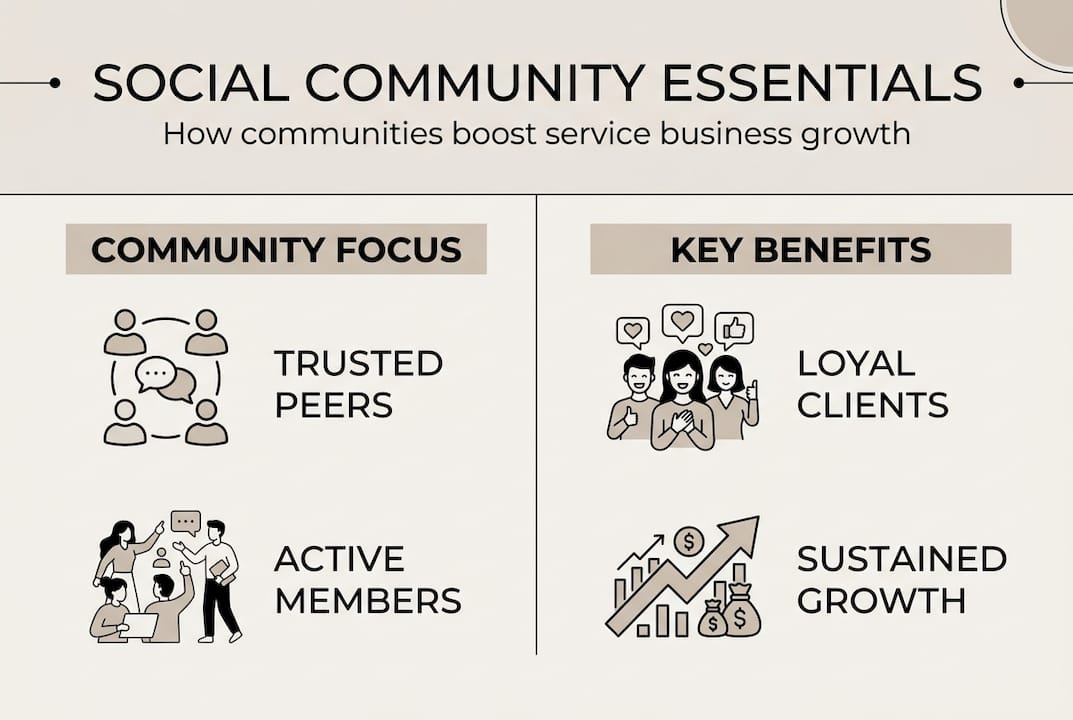
Service businesses particularly excel with communities because high-consideration purchases require extended trust-building. A salon owner can showcase transformations, answer technique questions, and let satisfied clients share their experiences, all whilst building relationships with prospects who aren’t ready to book yet. This approach integrates perfectly with broader social media strategy tips and social media growth strategies that emphasise relationship-building over transactional marketing.
Key mechanics of building effective social communities
Building a community that actually drives business results requires specific structural elements and ongoing management practices. Five key mechanics separate thriving communities from ghost towns.
-
Choose niche platforms based on your audience behaviour. LinkedIn dominates for B2B service businesses like consultancies and professional services because decision-makers actively engage there. Facebook Groups work brilliantly for local service businesses targeting consumers. Discord suits younger, tech-savvy audiences. The platform matters less than matching where your ideal clients already spend time and how they prefer to interact.
-
Provide value first, always. Educational content, peer problem-solving, and genuine expertise sharing must dominate your community. Post actionable tips, host expert sessions, share industry insights, and facilitate member discussions around challenges they face. The value-first approach builds authority and trust that makes promotional content effective when you do share it sparingly.
-
Foster member-to-member engagement over brand broadcasting. Ask questions that spark discussions. Encourage members to share their experiences and advice. Recognise active contributors publicly. The goal is creating a space where members interact with each other, not just consume content from you. This transforms your community from a broadcast channel into a genuine network.
-
Leverage user-generated content and events strategically. Encourage members to share their results, challenges, and questions. Host live Q&A sessions, workshops, or virtual meetups that bring members together. UGC provides authentic social proof whilst events deepen relationships and create memorable touchpoints that strengthen community bonds.
-
Integrate CRM systems for personalised lifecycle marketing. Track member engagement levels, interests, and behaviours within your community. Use this data to personalise follow-up communications, identify high-intent prospects, and nurture relationships strategically. CRM integration transforms community interactions into actionable business intelligence that improves conversion rates and client retention.
Pro Tip: Start small with a pilot community of 50-100 engaged members before scaling. Test content types, engagement tactics, and moderation approaches to identify what resonates with your specific audience. This controlled environment lets you refine your community strategy before investing heavily in growth.
These mechanics work particularly well when combined with understanding the role of social media in B2B contexts and broader B2B lead generation explained strategies that emphasise relationship-building throughout extended sales cycles.
Service business success stories with social communities
Real service businesses have achieved remarkable client acquisition and revenue growth through strategic community building. The data tells a compelling story about what’s possible when you execute correctly.

An HVAC firm increased engagement by 1,546% using AI-generated local content within their Facebook community. They posted neighbourhood-specific maintenance tips, seasonal advice, and answered homeowner questions in real time. This hyper-local approach positioned them as the trusted expert in their service area, directly driving booking enquiries from community members who felt personally connected to the business.
Real estate agents and professional services firms excel on LinkedIn for prospect nurturing through strategic community participation. Rather than creating separate groups, they build personal brands by consistently contributing valuable insights to existing industry communities whilst cultivating their own networks. This approach works because B2B buyers research extensively before engaging, and visible expertise in communities accelerates trust-building that shortens sales cycles.
Restaurants demonstrate the power of real-time community communications. A Perth café used their Instagram community to announce last-minute table availability, share daily specials, and respond to customer questions instantly. This immediate engagement filled seats during slow periods and created a sense of insider access that strengthened customer loyalty and increased visit frequency.
| Service type | Platform | Key tactic | Result |
|---|---|---|---|
| HVAC | Facebook Groups | AI-local content | 1,546% engagement increase |
| Real estate | Thought leadership | Shortened sales cycles | |
| Restaurants | Real-time updates | Increased booking rates | |
| Professional services | Expert positioning | Higher-quality leads |
The pattern across these successes is clear:
- Communities accelerate trust-building compared to traditional advertising
- Real-time engagement creates competitive advantages for local service businesses
- Platform choice matters less than consistent value delivery and authentic interaction
- Community-driven leads convert at higher rates because relationships exist before sales conversations
These results mirror the success stories documented in client wins where strategic digital marketing approaches, including community building, drive measurable business growth for service businesses across industries.
Important nuances and best practices for social communities
Communities aren’t magic solutions. They can backfire spectacularly when misapplied, and they work best as amplifiers rather than primary growth engines. Understanding these nuances separates successful community strategies from expensive failures.
Social communities can backfire if your audience doesn’t align with community participation or if underlying product issues exist. A community amplifies everything, including negativity. If your service quality is inconsistent or your target clients don’t naturally engage in online communities, forcing community building wastes resources and potentially damages your reputation through public complaints.
Most people join communities for belonging and peer connection, not to be sold to constantly. Over-promotion kills engagement faster than anything else. The 80/20 rule applies: 80% pure value, 20% soft promotion at most. Even that 20% should feel helpful rather than pushy. Share client success stories, announce new services that solve discussed problems, and offer community-exclusive benefits rather than aggressive sales pitches.
Moderation and pilot testing are essential for scalable, healthy communities. Start small, establish clear guidelines, and actively moderate to maintain positive culture. Remove spam immediately, redirect off-topic discussions gently, and address conflicts quickly before they escalate. Communities require ongoing management investment, and skipping this step leads to toxic environments that repel quality members.
Communities work best as go-to-market amplifiers, not as primary product fixes or demand creators. If nobody wants your service, a community won’t create demand. If your service has fundamental quality issues, a community will expose them publicly. Communities amplify existing value, accelerate trust with people already interested in your category, and improve retention of existing clients. They’re powerful tools within a broader marketing strategy, not standalone solutions.
| Approach | Time to results | Engagement depth | Longevity | Best for |
|---|---|---|---|---|
| Community-led | 6-12 months | Very high | Long-term loyalty | Service businesses, B2B |
| Viral marketing | Days to weeks | Low to medium | Short-term spikes | Product launches, B2C |
| Paid advertising | Immediate | Low | Campaign duration | Direct response, promotions |
| SEO content | 3-6 months | Medium | Long-term traffic | Educational, consideration |
Community-centric strategies offer long-term loyalty and trust versus viral marketing’s short-term spikes. Viral content gets attention quickly but builds shallow connections. Communities develop slowly but create deep relationships that drive higher lifetime value, better retention, and more referrals. They complement paid advertising and SEO by nurturing prospects throughout extended buying journeys and keeping clients engaged post-purchase.
Pro Tip: Audit your service quality and market demand before investing heavily in community building. If you’re getting consistent referrals and repeat business, communities will amplify that success. If you’re struggling with basic product-market fit, fix that first before building community infrastructure.
These nuances integrate naturally with broader scaling online marketing guide principles that emphasise building sustainable, diversified marketing systems rather than relying on single tactics for growth.
Grow your service business with expert digital marketing support
Building social communities that genuinely drive client acquisition requires expertise across platform strategy, content creation, engagement tactics, and CRM integration. Most service business owners excel at their craft but lack the time and specialised knowledge to execute community strategies effectively whilst running their operations.
Jarrod Harman and the Business Warriors team specialise in tailoring digital marketing strategies specifically for service-based businesses across Australia and globally. We understand the unique challenges you face: building trust with prospects who need high-consideration services, maintaining consistent engagement throughout extended sales cycles, and converting community relationships into booked appointments and loyal clients.
Our approach integrates community building with proven tactics including social media planning, lead nurturing systems, and the Marketing Vortex method that diversifies your marketing risk whilst maximising results. We’ve helped salons, clinics, professional services firms, and other service businesses achieve measurable growth through strategic digital marketing that actually works in real-world conditions. Explore digital marketing ideas to grow your business, review social media strategy tips, and discover our complete digital marketing strategy guide to start improving your approach today.
What is social community: FAQs
How do I start building a social community for my service business?
Start by choosing one platform where your ideal clients already spend time, then create a focused group around a specific problem you solve. Invite your best existing clients first to establish positive culture, then post valuable educational content consistently whilst encouraging member discussions. Aim for 50-100 engaged members before scaling, and moderate actively to maintain quality interactions that build trust naturally.
Which social platforms are best for service-based business communities?
LinkedIn excels for B2B professional services, consultancies, and high-ticket offerings because decision-makers actively engage there. Facebook Groups work brilliantly for local consumer services like salons, clinics, and home services targeting specific geographic areas. Instagram suits visually-driven services, whilst Discord works for younger, tech-savvy audiences. Match your platform to where your specific target clients naturally congregate and how they prefer interacting online, following proven social media strategy tips.
How do I keep my social community engaged without overselling?
Follow the 80/20 rule: 80% pure educational value and peer support, 20% soft promotion at most. Post actionable tips, facilitate member discussions, share industry insights, and recognise active contributors publicly. Ask questions that spark conversations, encourage members to help each other, and position promotional content as helpful solutions to problems being discussed rather than aggressive sales pitches. Engagement thrives when members feel valued for participation, not targeted for constant selling.
Can social communities replace traditional marketing methods?
No, communities amplify existing marketing efforts but don’t replace them entirely. They work best alongside paid advertising, SEO, email marketing, and other tactics within an integrated strategy. Communities excel at nurturing prospects throughout extended buying journeys, building deep trust, and improving client retention, but they take months to generate results and require ongoing management. Use communities to strengthen relationships whilst other channels drive initial awareness and direct response conversions.
What’s the biggest mistake service owners make with social communities?
Launching communities before validating product-market fit and service quality. If your service has fundamental issues or your target audience doesn’t naturally engage in online communities, building one amplifies problems rather than solving them. Start by ensuring you deliver excellent service that generates referrals and repeat business, then build a community to amplify that success. Also avoid over-promotion, inconsistent posting, and neglecting moderation, all of which kill engagement and waste your investment in community building.