

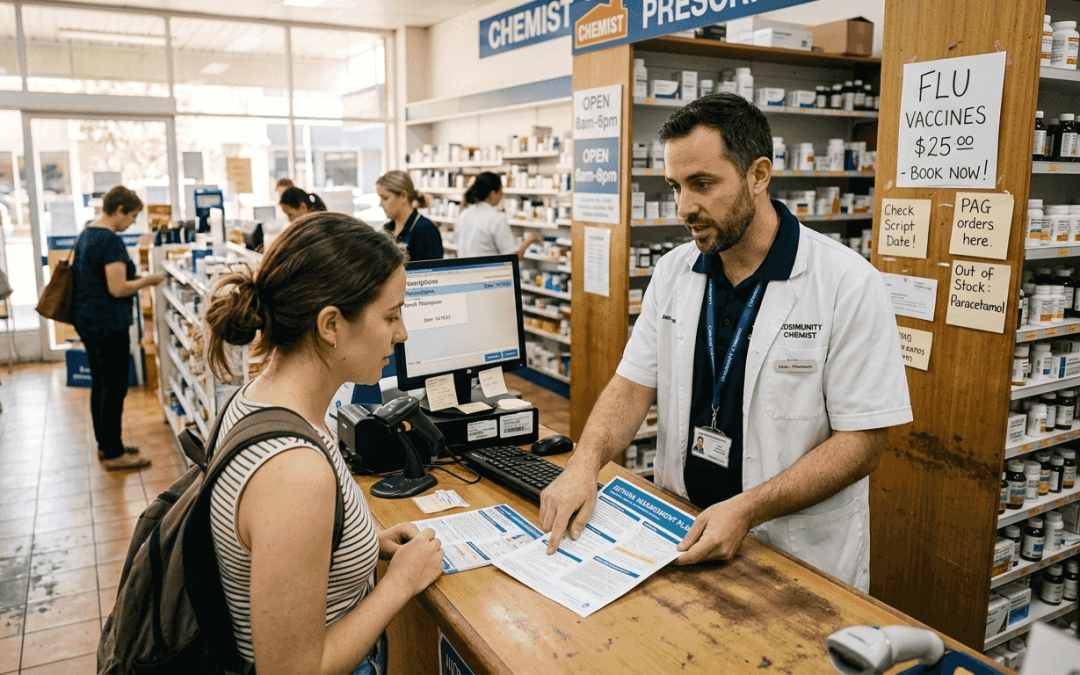
Pharmacists interact with patients nearly twice as often as physicians, creating unmatched opportunities for personalised engagement. Yet most pharmacy owners struggle to convert this trust into sustainable business growth. This guide reveals proven marketing strategies designed specifically for pharmacists in 2026, showing you how to leverage patient relationships, integrate digital channels, and comply with regulations while dramatically boosting client acquisition and retention.
Table of Contents
- Introduction To Pharmacy Marketing In 2026
- Pharmacist-Led Personalised Engagement Strategies
- Omnichannel Marketing Strategies For Pharmacies
- Leveraging Ai And Data Analytics In Pharmacy Marketing
- Regulatory Compliance And Ethical Considerations
- Practical Steps To Enhance Client Acquisition And Retention
- Marketing Support For Pharmacy Businesses
Key takeaways
| Point | Details |
|---|---|
| Pharmacist-led engagement | Trust relationships enable 28% higher patient engagement with personalised communications |
| Omnichannel strategies | Integrated digital and face-to-face channels increase prescription volume by up to 30% |
| AI-powered personalisation | Predictive analytics optimise message timing and content for better adherence outcomes |
| Regulatory compliance | HIPAA and GDPR adherence protects patient data and prevents costly penalties |
| Measurable implementation | Clear KPIs track engagement, registrations, and ROI for continuous improvement |
Introduction to pharmacy marketing in 2026
Pharmacy marketing in 2026 means using targeted communication and engagement strategies to grow your business sustainably while improving patient outcomes. It’s not about pushy sales tactics. It’s about meeting patients where they are with information they actually need.
The healthcare landscape has shifted dramatically. Pharmaceutical marketing in 2026 demands personalisation, compliance, and digital sophistication. Patients now expect tailored experiences and easy access to pharmacy services through multiple channels. They want text reminders for refills, personalised health advice, and convenient communication options.
Your marketing goals should focus on three core outcomes:
- Improving patient medication adherence through consistent engagement
- Expanding your client base within your local community
- Enhancing loyalty by becoming patients’ trusted health partner
Regulatory constraints shape every marketing decision you make. Privacy laws govern how you collect, store, and use patient data. Marketing content must meet strict healthcare communication standards. This complete 2026 pharmacy marketing guide helps you navigate these requirements while building effective campaigns.
Technology enables precision you couldn’t achieve five years ago. Mobile apps, email automation, and AI-powered analytics let you deliver the right message to the right patient at exactly the right moment. The pharmacies thriving in 2026 aren’t necessarily the biggest. They’re the ones that understand how to blend personal touch with digital efficiency.
Pharmacist-led personalised engagement strategies
Your biggest marketing advantage isn’t your location or inventory. It’s you. Patients trust pharmacists more than almost any other healthcare professional, and this trust translates directly into marketing effectiveness.
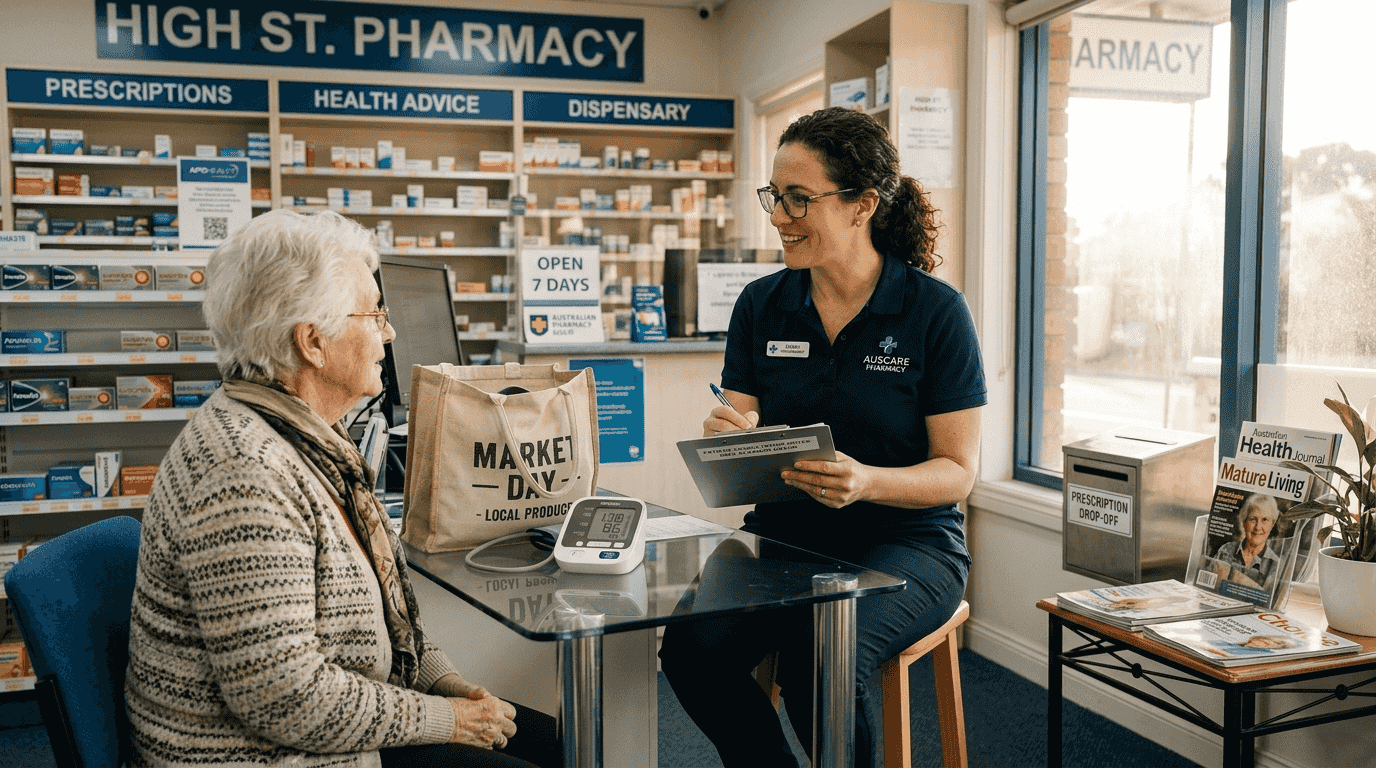
The numbers tell a compelling story. Pharmacists see patients twice as often as primary care physicians, creating more touchpoints for meaningful conversations. Each interaction is a marketing opportunity. When you recommend a supplement, answer a medication question, or counsel on side effects, you’re not just providing care; you’re building the relationship that makes future marketing messages resonate.
Personalised engagement works because it leverages existing trust. Patients are 28% more likely to engage with manufacturer content when contacted by their pharmacy rather than directly by drug companies. This applies to your own marketing too.
Effective pharmacist-led strategies include:
- Medication reminder calls personalised with patient names and prescription details
- Custom care plans for chronic condition management
- Face-to-face consultations that identify unmet health needs
- Follow-up messages checking on treatment progress
Accessibility amplifies your marketing reach. Nearly 90% of Americans live within five miles of a pharmacy, making you more accessible than most healthcare providers. Patients pass your location regularly, seeing your signage and remembering your brand. This physical presence reinforces digital messages.
Pro Tip: Capture patient email addresses and mobile numbers during every face-to-face interaction. Use these immediately to send a welcome message linking to your digital platforms. This bridges offline trust with online engagement, making future pharmacy marketing strategies Australia 2026 campaigns far more effective.
The key is consistency. Every patient interaction should feel personal, whether it happens at the counter, via text, or through email. Document preferences and communication history so every message builds on the last.
Omnichannel marketing strategies for pharmacies
Omnichannel marketing means delivering consistent messages across every platform where patients interact with your pharmacy. It’s not about being everywhere. It’s about creating seamless experiences that guide patients from awareness to action regardless of which channel they use first.
In 2026, omnichannel approaches are essential for pharmacies competing in digitally connected communities. Your channels include:
- Email for detailed health information and appointment reminders
- Social media for community building and health education
- SMS for urgent reminders and quick updates
- Mobile apps for prescription management and loyalty programmes
- Face-to-face interactions that reinforce digital relationships
| Traditional marketing | Omnichannel digital marketing |
|---|---|
| Generic mass messaging to broad audiences | Personalised content based on patient history and preferences |
| Limited reach confined to local area | Extended reach through social and search platforms |
| Difficult to measure ROI accurately | Precise tracking of engagement, conversions, and revenue impact |
| One-way communication with minimal feedback | Two-way conversations building stronger patient relationships |
The results speak clearly. Pharmacy digital marketing incorporating social media and SMS boosts prescription volume by up to 30% while strengthening community engagement. These aren’t separate campaigns. They’re coordinated efforts where each channel reinforces the others.
Consider a flu vaccination campaign. Your email announces the programme with detailed benefits. Social media posts show patients receiving vaccinations and sharing positive experiences. SMS reminders go to high-risk patients. In-store signage catches walk-ins. Your mobile app lets patients book appointments instantly. Each touchpoint guides patients toward the same action through their preferred channel.
Pro Tip: Align your offline and online messaging by using the same language, visuals, and calls-to-action across all channels. When a patient sees your flu shot poster in-store, then receives an email with identical imagery and messaging, recognition is instant and trust deepens. This consistency makes pharmacy marketing leads and sales conversion rates soar.
The technical execution matters too. Integrated platforms let you track patient journeys across channels. You see which combination of touchpoints converts browsers into customers. This data informs smarter budget allocation and message timing, improving pharmacy marketing conversion strategies continuously.
Leveraging AI and data analytics in pharmacy marketing
Artificial intelligence sounds complex, but in marketing terms it simply means using software to analyse patient data and automate personalised communications at scale. You’re not replacing human judgment. You’re enhancing it with insights no human could spot manually.
AI enhances pharmacy marketing through predictive analytics and personalised content delivery. The technology examines patterns in prescription refills, purchase history, and engagement behaviour to predict which patients need intervention.
Practical AI applications include:
- Identifying patients at high risk of non-adherence before they miss refills
- Optimising email send times based on individual open patterns
- Personalising product recommendations based on purchase history
- Automating appointment reminders with customised messaging
- Predicting seasonal demand for better inventory and promotion planning
The benefits compound quickly. Improved adherence means better health outcomes and higher customer lifetime value. Campaign efficiency increases because messages reach receptive audiences at optimal moments. Your marketing ROI climbs as wasted effort drops.
Data analytics answers critical questions: Which patient segments respond best to text versus email? What time of day generates highest engagement? Which services drive most new patient registrations? Armed with answers, you refine campaigns continuously rather than guessing.
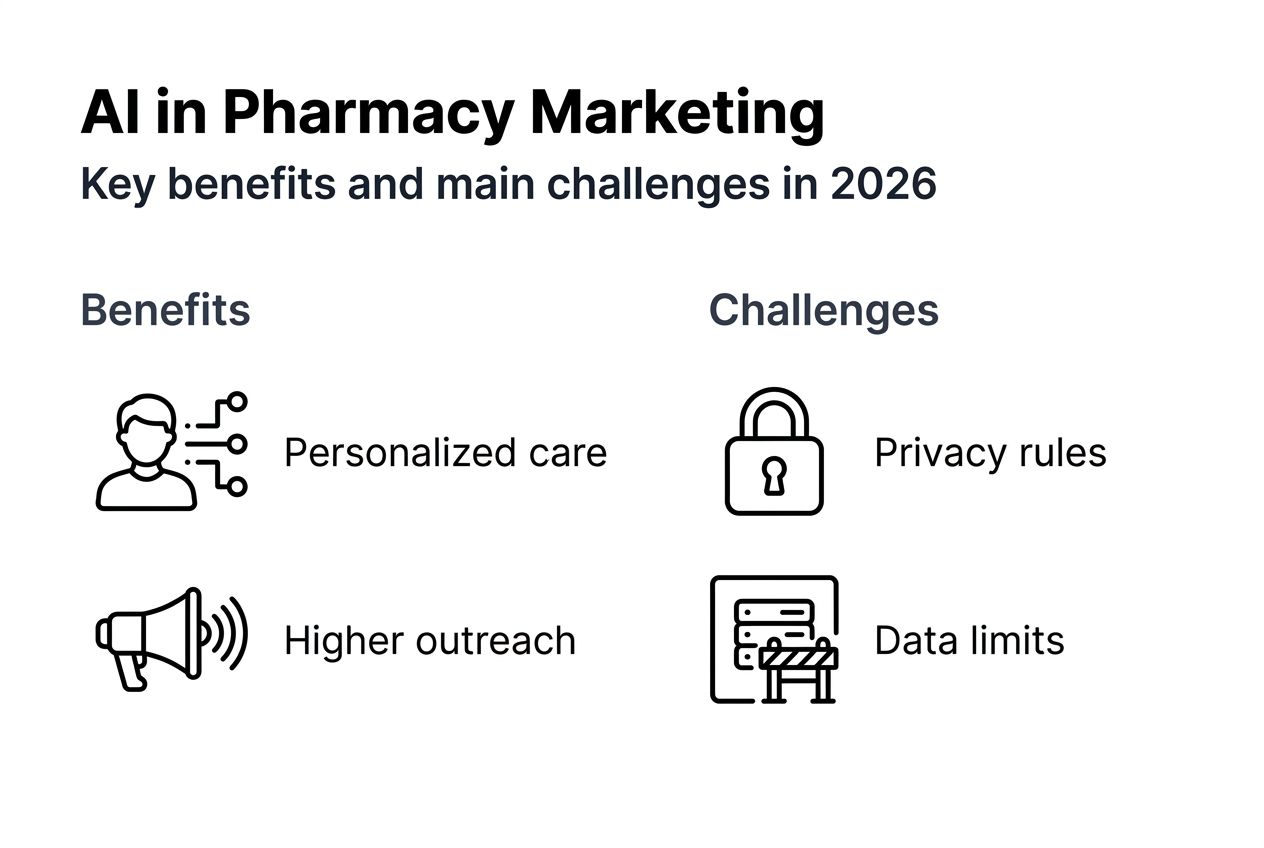
Limitations exist. Privacy concerns require careful data handling and transparent consent processes. Regulatory compliance isn’t optional. Every AI application must respect patient confidentiality and meet healthcare data protection standards. The technology also requires quality data; garbage in means garbage out. Invest in proper data collection and cleaning.
Pro Tip: Start small with AI by automating one high-value task like refill reminders. Track results rigorously, then expand to additional applications as you prove ROI. This approach builds team confidence and demonstrates value before major investment. Explore more about AI in marketing client acquisition to understand implementation pathways.
The competitive advantage comes from combining AI efficiency with pharmacist expertise. Technology handles repetitive tasks and pattern recognition. You provide the human touch and clinical judgment that technology can’t replicate.
Regulatory compliance and ethical considerations
Marketing in healthcare demands stricter compliance than almost any other industry. The regulations exist to protect patient privacy and ensure truthful health communications. Violations carry severe penalties including fines, legal action, and reputation damage that can destroy your business.
Marketing messages must comply with regulations including HIPAA in the United States and GDPR in Europe. Australian pharmacies face Privacy Act requirements and Therapeutic Goods Administration advertising codes. These laws govern how you collect, store, use, and share patient information in marketing.
Core compliance requirements include:
- Obtaining explicit consent before using patient data for marketing
- Securing all patient information with encryption and access controls
- Providing clear opt-out mechanisms in every communication
- Ensuring all health claims are evidence-based and not misleading
- Maintaining detailed records of consent and communications
Data protection isn’t just legal obligation; it’s ethical imperative. Patients trust you with sensitive health information. Breaching that trust through careless marketing practices damages your reputation permanently. Even unintentional violations can trigger investigations and penalties.
Compliance strategies start with education. Train your entire team on privacy requirements and marketing restrictions. Implement regular audits reviewing marketing materials for compliance issues. Use privacy-focused marketing tools that build consent management and data protection into their design.
Risks of non-compliance extend beyond fines. Patients may sue for privacy violations. Regulatory bodies can restrict your practice. Media coverage of breaches destroys community trust. The cost of prevention is minuscule compared to consequences of violation.
Ethical marketing principles guide decisions beyond minimum legal requirements. Be transparent about how you use patient data. Respect patient preferences and communication boundaries. Never manipulate vulnerable populations. Focus on genuinely helping patients rather than maximising short-term sales. This pharmacy marketing compliance guide provides frameworks for ethical decision-making.
Pro Tip: Designate one team member as your compliance officer responsible for reviewing all marketing materials before publication. This single checkpoint catches potential violations before they reach patients, protecting your business and maintaining trust.
Practical steps to enhance client acquisition and retention
Theory means nothing without execution. Here’s your actionable marketing plan integrating personalised engagement, omnichannel strategy, AI tools, and compliance requirements into a cohesive growth system.
-
Identify your target patient segments based on demographics, health conditions, and service needs. Create detailed profiles including preferred communication channels and typical concerns.
-
Develop pharmacist-led communication protocols. Script key conversation prompts that naturally gather contact information and preferences during consultations. Train staff to position digital engagement as patient benefit, not intrusion.
-
Integrate omnichannel campaign infrastructure. Set up email marketing platform, social media business accounts, SMS service, and mobile app if budget allows. Ensure all platforms share patient data through HIPAA-compliant integrations.
-
Implement AI-powered personalisation starting with automated refill reminders. Track open rates, response rates, and prescription fill rates to measure effectiveness. Expand to additional use cases as you prove value.
-
Establish compliance processes including consent documentation, privacy policy updates, and regular marketing audits. Consult legal counsel to ensure full regulatory alignment.
-
Launch pilot campaigns targeting one patient segment with coordinated messages across all channels. Measure engagement at each touchpoint and conversion to desired action.
-
Analyse results using key performance indicators: new patient registrations, prescription volume changes, patient engagement rates, and marketing ROI. Compare results to baseline performance.
-
Optimise based on data. Double down on high-performing channels and messages. Eliminate or redesign underperforming elements. Test variations systematically to improve continuously.
Measurable KPIs keep you focused on outcomes that matter. Track new patient registrations monthly. Monitor prescription volume trends. Calculate customer acquisition cost and lifetime value. Measure email open rates, social media engagement, and SMS response rates. These metrics reveal what’s working and what needs adjustment.
Pro Tip: Small pharmacies should prioritise pharmacist-led engagement and localised digital advertising over expensive broad campaigns. Your personal relationships and community presence provide advantages big chains can’t match. Focus resources on maximising these strengths through advertising ideas for pharmacy that emphasise local expertise and personalised care.
Regular ROI analysis sustains marketing success. Calculate revenue generated per marketing dollar spent quarterly. Compare channel performance to allocate budget optimally. This financial discipline ensures marketing drives profitable growth, not just activity. Learn more through digital marketing step by step resources.
Stay adaptable. Regulations evolve. Technology advances. Patient preferences shift. Review your marketing strategy quarterly, updating approaches to maintain effectiveness in changing conditions. The pharmacies that thrive in 2026 and beyond treat marketing as ongoing strategic capability, not one-time project.
Marketing support for pharmacy businesses
Implementing sophisticated marketing strategies while managing daily pharmacy operations challenges even experienced owners. Professional guidance accelerates results and prevents costly mistakes.
Jarrod Harman specialises in digital marketing for pharmacies and service businesses, bringing deep expertise in AI integration, omnichannel strategy, and compliance frameworks. His Marketing Vortex Method combines SEO, paid advertising, email marketing, and social media into cohesive systems that generate measurable client growth. Working with an SEO consultant Perth expert means accessing proven frameworks tailored to pharmacy-specific challenges and opportunities.
Tailored strategies address your unique patient demographics, competitive landscape, and growth objectives. Whether you’re launching your first digital campaign or optimising existing efforts, personalised consultation identifies highest-impact opportunities. Benefits include improved patient engagement, increased prescription volume, and transparent ROI tracking that proves marketing effectiveness. Explore pharmacy marketing strategies Australia 2026 or discover how AI marketing client acquisition can transform your practice.
FAQ
What are the best digital marketing channels for pharmacists?
Email, social media, SMS, and mobile apps combined with face-to-face touchpoints create the most effective mix for pharmacy marketing strategies Australia 2026. These channels enable personalisation at scale while building on the trust pharmacists already enjoy. The specific combination depends on your patient demographics and resources.
How can pharmacists ensure compliance in their marketing efforts?
Understand healthcare regulations including HIPAA, GDPR, and local privacy laws governing patient data use. Implement clear consent processes, secure data storage, and regular compliance audits. Consult this pharmacy marketing compliance guide for detailed frameworks protecting patient privacy while enabling effective marketing.
What role does AI play in pharmacy marketing?
AI personalises marketing messages based on patient behaviour patterns and predicts adherence risks requiring intervention. It optimises campaign timing, content relevance, and channel selection automatically, improving ROI by delivering right messages at right moments. Explore AI marketing client acquisition to understand practical implementation approaches.
How quickly can pharmacies see results from improved marketing?
Initial engagement metrics like email open rates and social media interactions improve within weeks. Meaningful business outcomes including new patient registrations and prescription volume increases typically emerge within three to six months of consistent, integrated marketing efforts. Patient lifetime value improvements compound over years as loyalty strengthens.
Recommended
- Advertising ideas for pharmacy: boost client acquisition in 2026 – Jarrod Harman
- Pharmacy marketing strategies Australia 2026: boost sales – Jarrod Harman
- Pharmacy marketing company guide: boost client acquisition 2026 – Jarrod Harman
- Marketing for pharmacy Australia 2026: boost leads by 30% – Jarrod Harman
- Interview with Mr. John M Kohlhoff, Managing Partner, Enzymes Marketing – team I